News
IDF and Shin Bet say Khan Yunis PRC commander eliminated
The joint announcement identifies a local Popular Resistance Committees commander and places the strike within Israel’s effort to prevent armed groups from rebuilding in Gaza.
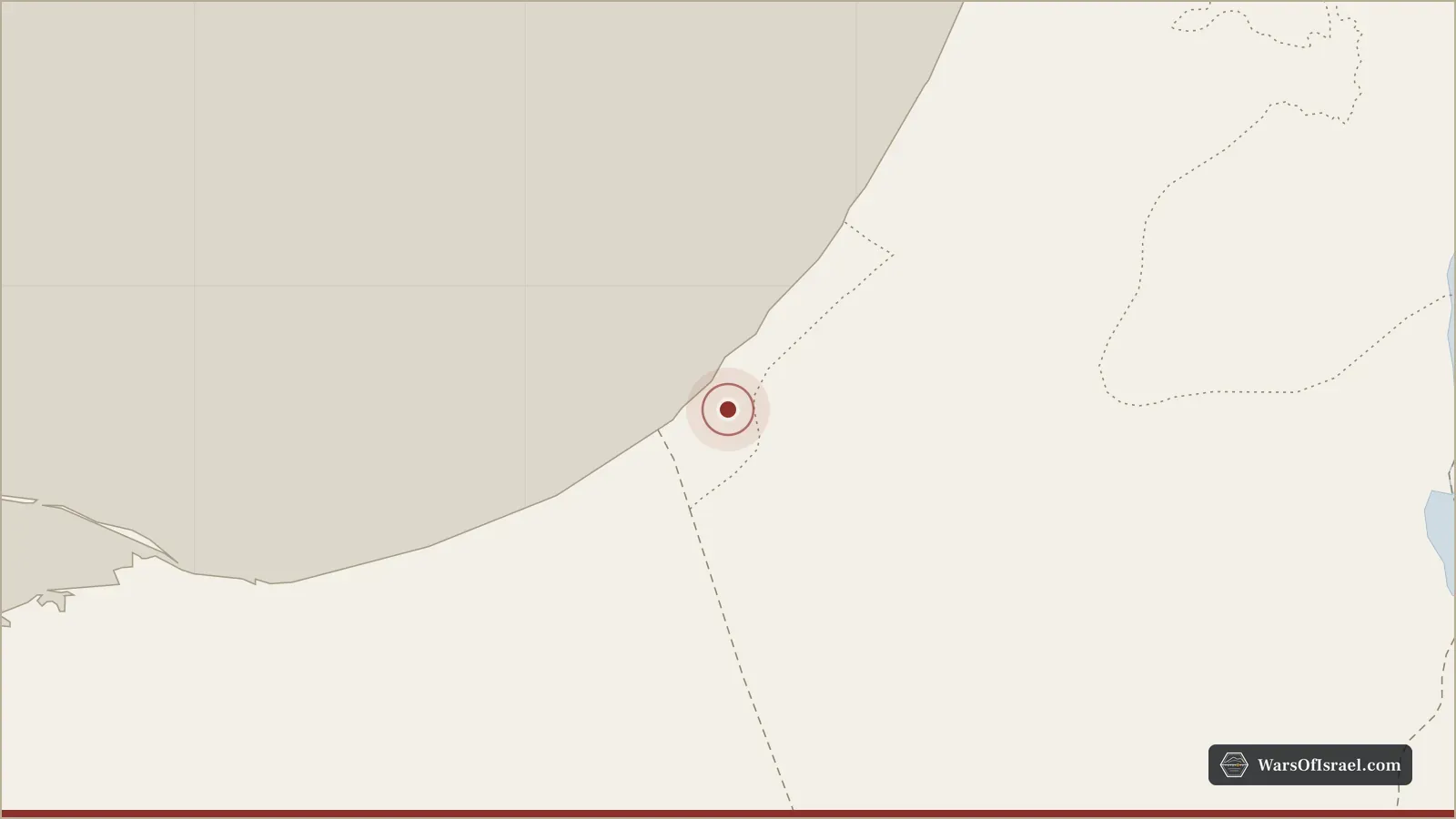
On 22 October 2026, the Israel Defense Forces and the Israel Security Agency, known as Shin Bet, announced that Ramadan Muhammad Ashahada Diab had been eliminated in an airstrike in the Khan Yunis area of Gaza the previous day, 21 October. The agencies identified him as the local head of the Popular Resistance Committees, or PRC.
The joint statement said Diab had advanced attacks against Israeli troops and civilians and worked to rebuild Hamas capabilities. It characterized that activity as a systematic violation of the ceasefire. Those allegations describe the security agencies’ assessment of his role; the announcement did not publish the underlying intelligence.
The geographical qualification is important. Israel identified Diab as the organization’s commander in Khan Yunis, not as the overall head of the PRC throughout Gaza.
Who the strike targeted
The announcement gave Diab’s name and local position and said the operation was intended to remove the threat he posed. It placed particular emphasis on his recent activity, alongside his conduct during the war.
The agencies did not publicly identify a specific planned attack, provide its intended date or describe the intelligence that connected him to it. The claim that he was advancing attacks therefore remains attributed to the IDF and Shin Bet.
The public account also did not give a precise location within the Khan Yunis area, identify the aircraft or weapon used, or provide a detailed reconstruction of the strike. It is consequently possible to report the announced target and operation date without presenting a speculative account of how the operation unfolded.
The distinction also applies to its outcome. The agencies announced Diab’s elimination, but did not provide a broader casualty total in that statement. No additional casualty figure is included here.
An organization operating alongside Hamas
In the joint announcement, the IDF and Shin Bet described the PRC as a Palestinian terrorist organization established in 2000. They said it had formerly been subordinate to Fatah and was now linked to Hamas, Hezbollah and Iran’s Islamic Revolutionary Guard Corps.
The agencies also said members of the organization took part in the invasion of Israel on 7 October 2023, murdering and abducting civilians and soldiers. That is a statement about members of the organization. The announcement did not identify Diab personally as a participant in that attack.
During the war, the agencies said, the PRC carried out numerous attacks against Israeli forces in cooperation with Hamas. Their description places Diab’s alleged work on rebuilding Hamas capabilities within a relationship between separate armed organizations.
That relationship is the relevant point in the new announcement. The target belonged to a group other than Hamas, while Israeli security agencies alleged that his activity contributed to restoring Hamas’s military strength.
The statement does not quantify that contribution or describe a formal command arrangement between the groups. It supports reporting an alleged operational connection without assuming that their organizational structures are identical.
The wider effort against rebuilding military capabilities
The Diab announcement followed other Israeli disclosures that week about strikes against personnel and weapons infrastructure in Gaza. These provide context for the military’s stated objective, rather than proof that every operation was connected to the same intelligence file.
On 20 October, the IDF and Shin Bet announced the elimination of Akram Bassam Shaaban Yassin in Gaza City. They identified him as a senior figure in Hamas’s General Security apparatus and said that apparatus protected senior leaders, moved them between emergency locations and gathered intelligence used in decision-making and attacks.
In another announcement on 20 October, the agencies said strikes on 15 October had destroyed three Hamas weapons stores. They reported that the stores held dozens of weapons and other combat equipment, including rockets, launchers, RPGs and Kalashnikov rifles.
For those warehouse strikes, the IDF said advance warnings, precision munitions and aerial observation were used to reduce the risk to civilians. That description applies to those operations and should not be automatically transferred to the separate strike on Diab.
The week’s announcements identify three different targets of Israel’s stated campaign: a local allied-group commander, a Hamas security official and weapons stocks. They do not provide a public assessment of how much each strike reduced the organizations’ remaining capabilities. The confirmed news is the named Israeli announcement of Diab’s elimination, with the operational allegations and wider objectives kept attached to the agencies making them.