The Israel and Hamas war (from October 7, 2023)
From the Hamas attack on southern Israel to a ceasefire that has held only in part, this is the longest war in Israel's history and it has not formally ended.
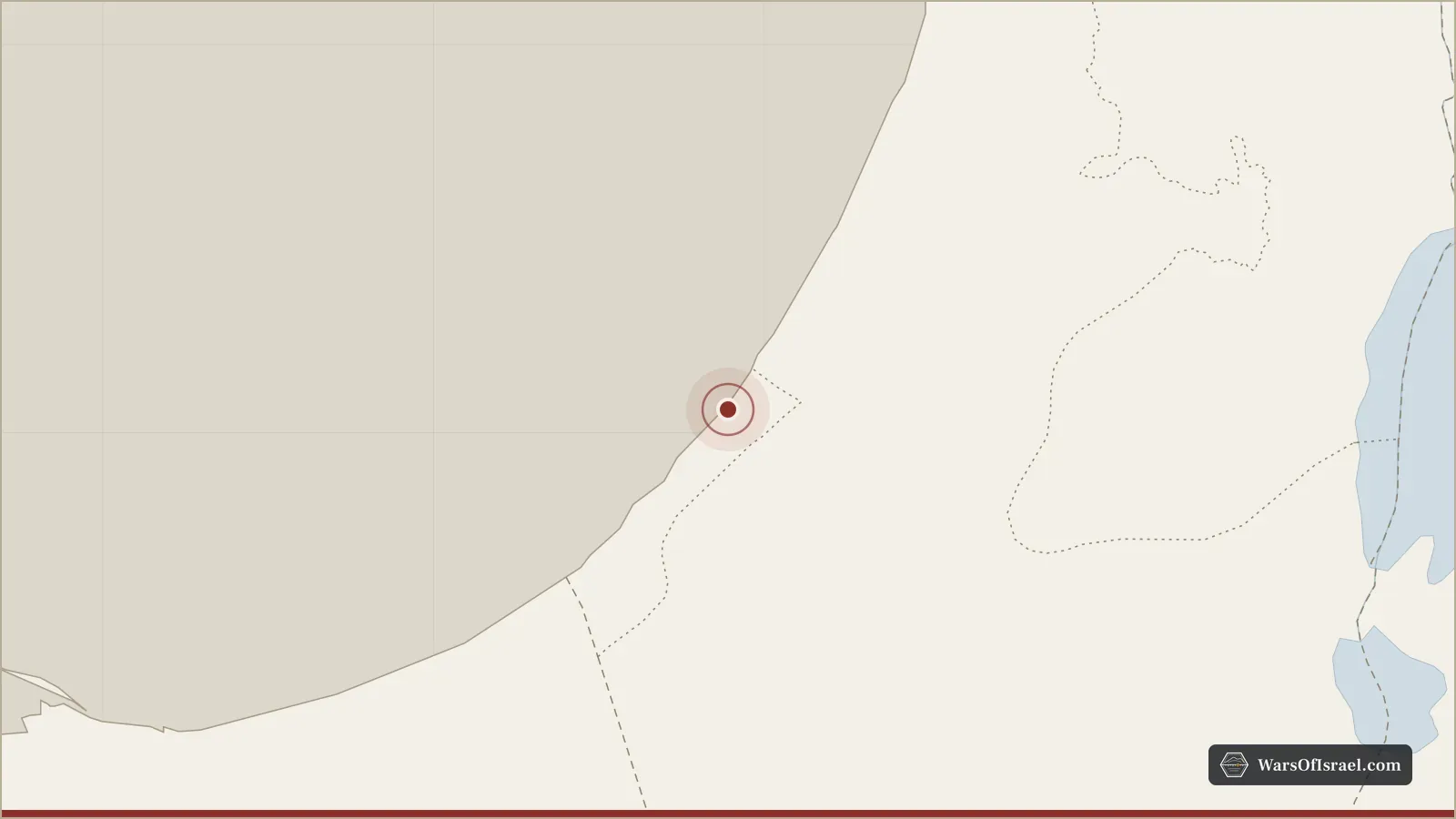
The war that Israelis first called Swords of Iron began at 6:29 on the morning of Saturday, October 7, 2023, when Hamas led thousands of armed men across the Gaza border into southern Israel. About 1,200 people were killed that day, according to Israeli official figures, and 251 were taken to Gaza as hostages. Israel answered with the longest and most destructive war it has ever fought in the Gaza Strip, a war that drew in Hezbollah, the Houthis in Yemen and Iran. A ceasefire took effect on October 10, 2025, and every living hostage came home three days later. Yet as of October 18, 2026, Israel has not declared the war over, its forces hold most of the Strip, and Israeli strikes and Palestinian deaths have continued.
Before the war: Gaza, Hamas and a failed assumption
Israel withdrew its soldiers and settlers from the Gaza Strip in 2005. Hamas won the Palestinian legislative elections in January 2006 and took full control of Gaza from the Palestinian Authority in June 2007. Israel, with Egypt, imposed a blockade on the territory, and the years that followed brought a cycle of rocket fire and short Israeli operations, described in the armed conflict between Gaza and Israel from 2005. Each round ended in a ceasefire that left Hamas in power.
By 2023 the working assumption in Israel's security establishment was that Hamas was deterred and more interested in governing Gaza than in a major war. Work permits for Gazans inside Israel, Qatari cash transfers and economic incentives were part of that approach. In May 2021 Hamas had fought an eleven-day round, but it stayed out of the later rounds of 2022 and 2023, which Israel fought against Palestinian Islamic Jihad. The IDF's own investigations, published on February 27, 2025, later concluded that this conception was wrong and that the army had not prepared for a full-scale surprise invasion.
October 7, 2023 and the declaration of war
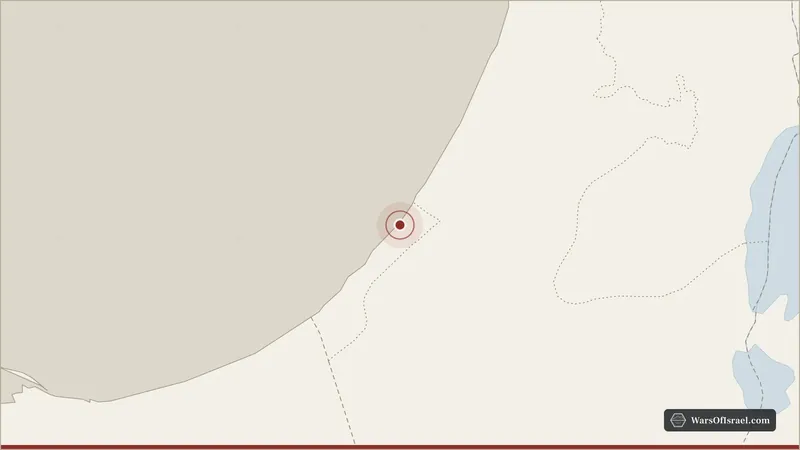
The attack opened with a heavy rocket barrage; Hamas claimed it fired more than 5,000 rockets in the first twenty minutes. Under that cover, fighters from Hamas's military wing, the Izz ad-Din al-Qassam Brigades, broke through the border fence at dozens of points, followed by members of Palestinian Islamic Jihad and other factions and by civilians from Gaza. Later IDF estimates put the number who crossed at about 6,000. They struck army posts, more than twenty communities, the towns of Sderot and Ofakim, and the Nova music festival near Re'im. The full story of that day is told in the October 7 attack.
Most of the dead were civilians, among them dozens of foreign nationals. Families were killed in their homes and safe rooms, and the hostages taken to Gaza ranged from infants to elderly people. Hamas called the operation Al-Aqsa Flood. Prime Minister Benjamin Netanyahu said in a video that morning that Israel was at war, and on October 8 the security cabinet formally invoked Article 40 Aleph of Basic Law: The Government, Israel's first formal declaration of war since 1973. The IDF called up reservists in the largest mobilization in its history.
The forces and the fronts
On one side stood the Israel Defense Forces, the Shin Bet and the Israel Police. On the other were Hamas and its Qassam Brigades, Palestinian Islamic Jihad and its Al-Quds Brigades, and smaller Gaza factions. Hamas fought from a tunnel network that ran for hundreds of kilometers under the Strip's towns, refugee camps and public buildings, according to the IDF, and it held its hostages in tunnels and in homes.
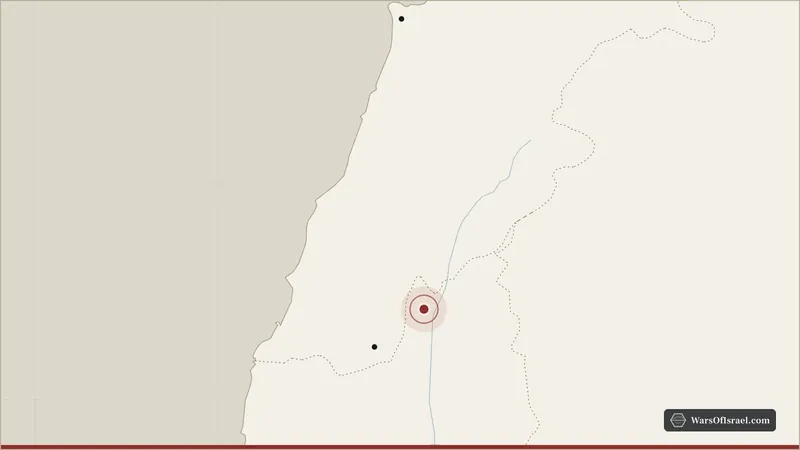
The war did not stay in Gaza. Hezbollah opened fire on northern Israel on October 8, 2023, and tens of thousands of Israelis left their homes in the north, the beginning of the Israel and Hezbollah war. The Houthis in Yemen began launching missiles and drones at Israel and attacking shipping in the Red Sea. Iran attacked Israel directly in April and October 2024, and in June 2025 the two countries fought a twelve-day war.
The course of the war
The ground offensive and the first truce
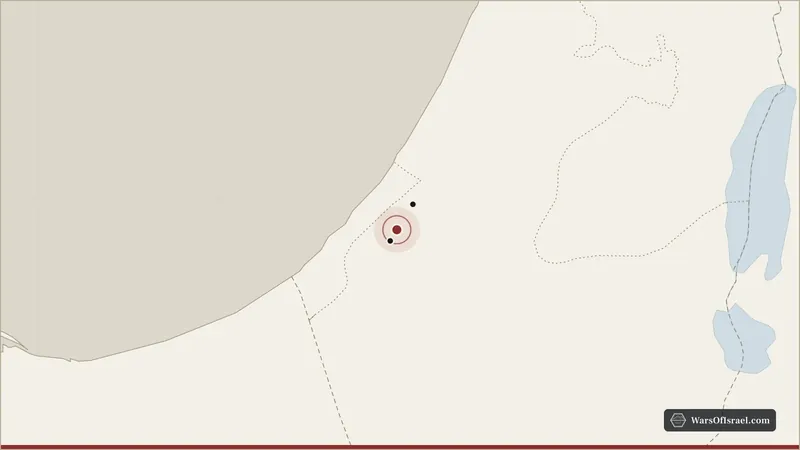
Israel began with an air campaign of unprecedented intensity and, on October 13, 2023, told the population of northern Gaza, about 1.1 million people by the UN's count, to move south of Wadi Gaza. On October 27 it launched the ground offensive, encircled Gaza City in early November and raided the Al-Shifa hospital on November 15, saying Hamas used it as a command site.
A truce mediated by Qatar, Egypt and the United States took hold on November 24, 2023. In a week, 105 civilian hostages were released, 81 of them from Israel, 23 Thai nationals and one Filipino, in exchange for 240 Palestinian prisoners. Fighting resumed on December 1. Two weeks later, on December 15, soldiers in Shuja'iyya mistakenly shot dead three hostages, Yotam Haim, Samer Talalka and Alon Shamriz, who had escaped their captors and were waving a white cloth.
Khan Yunis, Rafah and a war of attrition
In December 2023 the offensive shifted south to Khan Yunis, where the 98th Division fought until April 7, 2024. Israel then left a single brigade on the Netzarim corridor, which cut the Strip in two. On May 6, 2024 it opened the Rafah offensive, seizing the Rafah crossing and the Philadelphi corridor along the Egyptian border. Four hostages were rescued alive from Nuseirat on June 8, 2024, in Operation Arnon, while the bodies of six hostages killed by their captors in a Rafah tunnel were recovered at the end of August.
The war also became a campaign against Hamas's leaders. Israel killed the Qassam commander Mohammed Deif in a strike on July 13, 2024, and Hamas's political leader Ismail Haniyeh was killed in Tehran on July 31, 2024. On October 16, 2024, soldiers on a routine patrol in Rafah killed Yahya Sinwar, the planner of October 7, in a chance encounter. By then Israel's army was fighting repeated rounds in places it had already taken, including Jabalia in northern Gaza.
The January 2025 ceasefire and its collapse
A three-stage ceasefire, agreed on January 15, 2025, took effect on January 19. Over six weeks, Hamas released 33 Israeli hostages, some of them no longer alive, and five Thai nationals were freed separately, while Israel released about 1,800 Palestinian prisoners and detainees. The release ceremonies Hamas staged in Gaza, and the return on February 20 of the bodies of Shiri Bibas and her two small sons, became among the most painful moments of the war for Israelis.
The talks on the second stage failed. Israel halted the entry of aid on March 2 and resumed full-scale strikes on March 18, 2025, saying Hamas had refused to release more hostages. In May it announced Operation Gideon's Chariots to take control of large parts of the Strip, and Mohammed Sinwar, Yahya's brother and successor, was killed in a strike on May 13.
Gaza City and the October 2025 ceasefire
In August 2025 the security cabinet approved a plan to take Gaza City, and the offensive on the city began in mid-September after evacuation orders. On September 29 President Donald Trump presented a 20-point plan for ending the war. Israel and Hamas signed its first phase in Sharm el-Sheikh on October 9, and the ceasefire took effect at noon on October 10, 2025, once Israeli forces had pulled back to an agreed deployment line, later known as the yellow line. On October 13 Hamas released the last 20 living hostages, and Israel freed 250 prisoners serving sentences and 1,718 detainees held from Gaza. The remains of the dead hostages were returned over the following months; on January 26, 2026, the IDF announced that it had recovered the body of the last hostage held in Gaza. The ceasefires are covered in detail in the ceasefires and hostage releases of the war.
The human toll and the humanitarian crisis
The Gaza Health Ministry, which is part of the Hamas-run government, said on June 14, 2026 that more than 73,000 Palestinians had been killed since October 7, 2023, and it put the figure at 73,388 on August 12, 2026. The ministry does not distinguish between civilians and combatants; it says women and children make up around half of the dead. UN agencies and independent researchers have generally treated its records as reliable, while Israel disputes them and says thousands of the dead were members of armed groups. On the Israeli side, the Defense Ministry's commemoration division counted 1,152 members of the security forces killed on all fronts from October 7, 2023 to October 10, 2025, including those killed on the day of the attack.
Most of Gaza's population of more than two million was displaced, many of them several times, and much of the Strip's housing and infrastructure was destroyed. On August 22, 2025 the Integrated Food Security Phase Classification (IPC) declared famine in the Gaza Governorate, a finding Israel rejected; in December 2025 the IPC said famine conditions no longer prevailed. Inside Israel, tens of thousands of residents of the Gaza border area and the north lived for months away from their homes.
Courts, inquiries and the name of the war
In December 2023 South Africa brought a case against Israel at the International Court of Justice under the Genocide Convention. The court ordered provisional measures on January 26, 2024 and, on May 24, 2024, ordered Israel to halt any operation in Rafah that could bring about the physical destruction of the population there. Israel rejects the accusation. On November 21, 2024 the International Criminal Court issued arrest warrants for Netanyahu, former defense minister Yoav Gallant and Mohammed Deif. Israel rejects the court's jurisdiction.
In Israel, the head of military intelligence, Aharon Haliva, resigned in April 2024, and Chief of Staff Herzi Halevi announced his resignation in January 2025, both taking responsibility for the failure of October 7. Bereaved families and opposition parties have pressed for a state commission of inquiry. On October 19, 2025 the cabinet voted to rename the war the War of Revival; critics, among them opposition leader Yair Lapid, said the war would remain "the October 7 war."
Where the war stands as of October 18, 2026
The second phase of the Trump plan was announced on January 14, 2026, with a Palestinian technocratic committee meant to administer Gaza. A Board of Peace chaired by Trump was set up the same month, and the UN Security Council endorsed the framework and an International Stabilization Force in Resolution 2803 of November 17, 2025. In practice the plan has stalled. Hamas said on July 6, 2026 that it was handing over civil administration, and on July 30 Trump announced a disarmament deal for Hamas and other factions; Hamas said Israel must first complete the withdrawals of phase one, and Palestinian Islamic Jihad voiced reservations. The Israeli army killed the head of the Qassam Brigades, Izz al-Din al-Haddad, in Gaza City on May 15, 2026.
According to a Times of Israel report in October 2026, Israeli forces have expanded the area they hold from about 53 percent of the Strip at the start of the ceasefire to about 63 percent, and Israel says it will not withdraw until Hamas disarms. The Gaza Health Ministry says 1,488 people were killed by Israeli fire from the start of the ceasefire through October 11, 2026. Israel says it strikes armed men who approach its lines or plan attacks. Three years after it began, the war has paused without ending.
Timeline
- October 7, 2023: Hamas leads an attack on southern Israel; about 1,200 people are killed and 251 taken hostage.
- October 8, 2023: Israel's security cabinet formally declares war; Hezbollah opens fire from Lebanon.
- October 27, 2023: The IDF launches its ground offensive in the Gaza Strip.
- November 24, 2023: A week-long truce begins; 105 hostages and 240 Palestinian prisoners are released.
- May 6, 2024: Israel begins its offensive in Rafah.
- October 16, 2024: Yahya Sinwar is killed in Rafah.
- January 19, 2025: A ceasefire takes effect; 33 Israeli hostages are released over six weeks.
- March 18, 2025: Israel resumes full-scale fighting.
- October 10, 2025: The ceasefire under the Trump plan takes effect at noon.
- October 13, 2025: The last 20 living hostages are released.
- January 26, 2026: The IDF recovers the body of the last hostage held in Gaza.
- July 30, 2026: Trump announces a Hamas disarmament deal; it remains unimplemented.
Battles and operations in this war
- October 7, 2023 to October 10, 2023The October 7, 2023 attack on IsraelAttack
- October 27, 2023 to April 7, 2024The Gaza ground offensive (2023 to 2024)Military operation
- November 24, 2023 to October 13, 2025Ceasefires and hostage releases in the Gaza war (2023 to 2025)Incident
- December 1, 2023 to April 7, 2024The battle of Khan Yunis (2023 to 2024)Battle
- May 6, 2024 to October 2024The Rafah offensive (2024)Military operation
- June 8, 2024Operation Arnon: the Nuseirat hostage rescue (2024)Military operation