Partner content
The Palmach Museum: connecting a heritage visit with historical research
A practical reading and visiting guide to the Palmach Museum, its narrative approach and the sources that can take a question further.
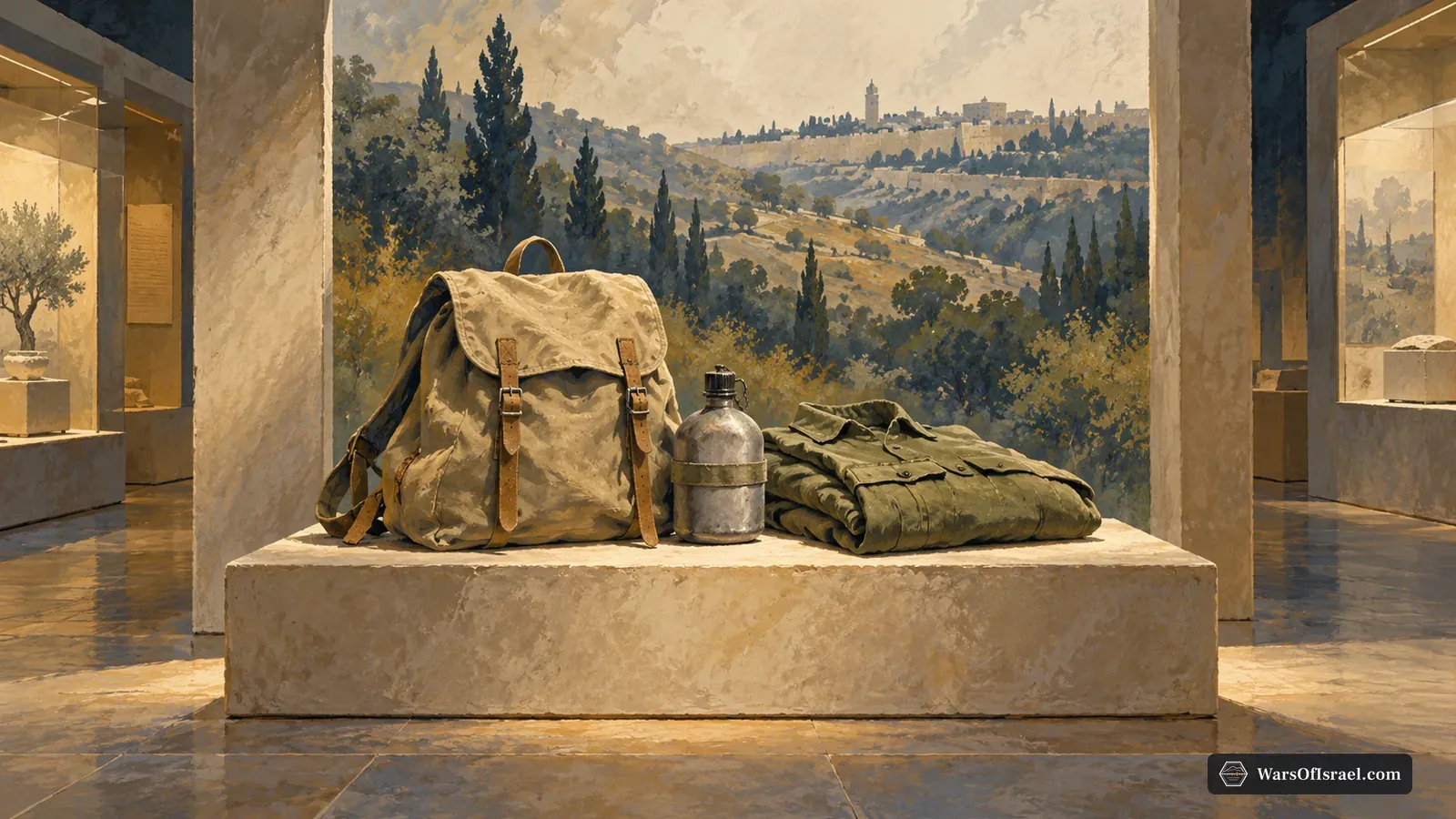
The Palmach Museum in Tel Aviv is useful for readers who know the dates of Israel's War of Independence but want to understand the organization behind many of its stories. Its central presentation follows a group of young recruits through the Palmach's history. The approach makes service a sequence of experiences rather than a list of operations. For a history reader, the productive question is how that personal perspective connects with the wider chronology, and where further evidence is needed.
A museum built around the Palmach's story
The Palmach, short for Plugot Hamachatz, was the Haganah's mobilized striking force. The organization's historical website dates the decision to establish it to May 15, 1941. That starting point matters: its history begins during the Second World War, before the establishment of Israel, rather than with the fighting of 1948. Readers unfamiliar with the institutions of the Jewish community under British rule can first follow the development from Hashomer to the IDF.
The Palmach House was established through the Dor Hapalmach Association's effort to preserve and communicate that heritage. The IDF and Defense Establishment Archives records its inauguration in 2000. The museum stands at 10 Haim Levanon Street in Ramat Aviv, Tel Aviv. It brings a specific organization's history into a public setting, with commemoration integral to the presentation.
The address and the visitor format are also described by outside bodies. The independent city publication Secret Tel Aviv lists its address and describes a museum presenting the Palmach through multimedia and personal stories. The Ministry of Defense's museum directory describes a narrative following recruits through the end of the War of Independence. These descriptions help establish what kind of visit readers should expect. They do not make the exhibition an exhaustive account of every force or community involved in the war.
Following a group through an experiential exhibition
The Palmach Museum's visitor information (opens in a new tab) describes a group-based presentation using constructed settings, film, effects and documentary material. The distinction from a conventional display gallery is important. The main experience is organized around a story, rather than independent browsing from one document case to the next.
That format can help a newcomer keep people, institutions and events connected. It also gives teachers a practical way to frame discussion: ask students to identify a transition in the story, explain what changed, and distinguish the presentation's emotional effect from the historical claim being made. A memorable scene can begin a question without supplying every part of its answer.
The museum says the main route begins and ends in a memorial hall. Visitors should therefore approach it as both historical interpretation and a place of remembrance. Neither role cancels the other. Attention to the lives being commemorated can coexist with careful questions about dates, sources and the experiences represented in a narrative.
For families, the useful preparation is to discuss what a heritage museum does. Younger visitors may need help distinguishing an exhibition's reconstructed environment from an original place of battle. Adults can explain that documentary material, interpretation and a designed setting may appear within the same presentation, while remaining different kinds of evidence.
Placing the museum inside the war's chronology
The broad framework is the War of Independence of 1947 to 1949. Reading that overview before visiting helps keep the organization's story within the course of the conflict. It also prevents an easy misunderstanding: the experience of one formation is a valuable entry point, but cannot stand for the entire war.
A more focused companion is the battle for Jerusalem in 1947 to 1948. Use the article to prepare questions about routes, supply, neighborhoods and the relationship between local action and wider decisions. These are suggested lines of inquiry, not a claim that the museum's presentation reconstructs every event covered on that page.
Keep two sets of notes. One should record the exhibition's own statements, including names and dates that can be checked afterward. The other should record questions raised by the presentation. Separating the two makes it easier to avoid remembering an inference as something the museum explicitly said.
The same discipline helps when comparing family recollections with a museum account. A relative's experience may illuminate one unit or location while leaving other developments outside their view. A difference in emphasis is a reason to establish the scope of each account before deciding whether the accounts actually disagree.
Continuing from the exhibition to archival material
The Palmach website extends beyond the museum's visitor pages. Its English navigation includes historical subjects, member records, testimonies, films, maps and songs. The IDF and Defense Establishment Archives separately describes a Palmach archive and reference resources at the Palmach House. This gives readers a possible next step when the exhibition raises a question about a person, place or account.
Do not assume that everything listed online can be inspected immediately, that all records are digitized, or that an English page reproduces every Hebrew entry. The existence of a category is a starting point for a search. A specific document, its accessibility and its terms of use still need to be checked.
Begin with one name or one clearly defined subject. Record the item's title, creator where supplied, date and reference information. If a testimony was recorded long after the events, note that interval. The distinction between an account made during a war and a later recollection affects the questions a researcher should ask, without automatically invalidating either.
A useful research outcome can be modest: a more precise identification, an additional source, or a clearly documented uncertainty. There is no need to force every family story into a definitive conclusion after a single visit. The museum can provide orientation, while the supporting research proceeds at the pace the evidence allows.
Preparing a visit with a clear purpose
Check the museum's own website before making plans, including current opening arrangements, admission prices, booking requirements, presentation languages and suitability for children. Ask directly about accessibility or any support a member of your group needs. Practical arrangements can change, and an undated saved listing should not determine a journey.
For a school group, choose one question that can be discussed before and after the visit. For a family researching a relative, prepare spelling variants and any unit or location already known. For an international reader, clarify unfamiliar terms such as Haganah and Palmach beforehand so that the presentation's institutional context remains understandable.
Afterward, return to the question you brought. Identify what the museum helped explain, what requires a separate source, and what remains unresolved. That turns an absorbing heritage experience into a usable piece of historical learning, with its human detail preserved and its evidentiary limits understood.