Ancient historyRoman period
The Bar Kokhba revolt (132 to 135 CE)
How Simon bar Kosiba built a short-lived Jewish state in Judea, why Hadrian needed some of Rome's best generals to crush it, and what the letters, coins and caves reveal.
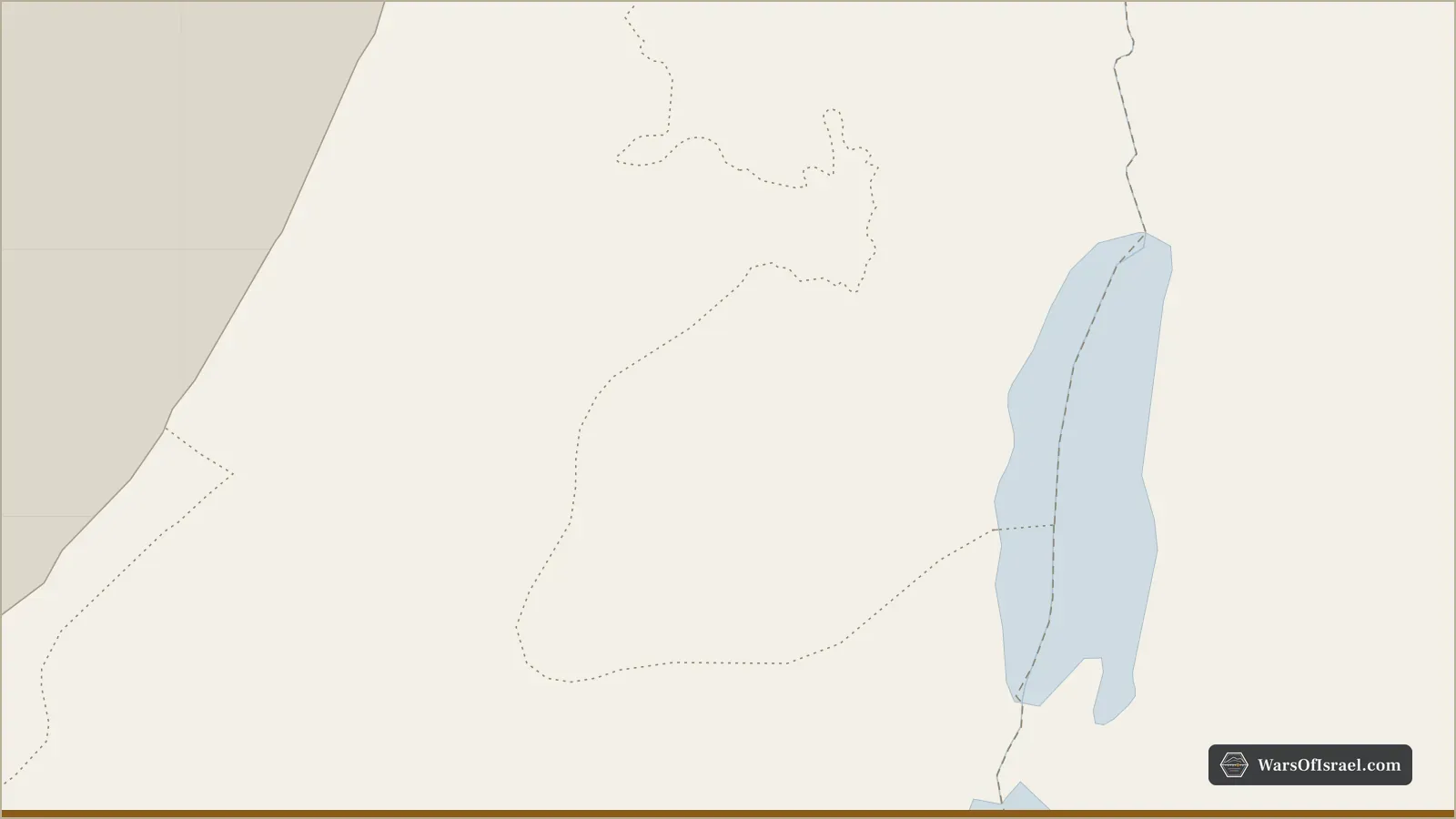
The Bar Kokhba revolt was the third and last of the great Jewish wars against Rome, fought in Judea from 132 to 135 CE and, in its final embers, possibly into 136. It was led by Simon bar Kosiba, whom his followers called Bar Kokhba, "son of the star," and whom later rabbinic sources, after his defeat, called Bar Koziba, "son of the lie." For about three and a half years he ruled a Jewish administration that struck its own coins, leased land and dated documents by "the redemption of Israel." The emperor Hadrian brought in commanders and troops from across the empire to suppress it. The war ended with the fall of the fortress of Betar, southwest of Jerusalem, and with a devastation of Judea that the Roman historian Cassius Dio described in numbers that are still debated. Unlike the Great Revolt of 66 CE, this war had no Josephus. It is known from scattered literary sources, from rabbinic tradition and, above all, from archaeology: coins, hiding complexes and the letters of Bar Kosiba himself, found in caves in the Judean desert.
Why Judea rose again
Two generations after the destruction of the Second Temple in 70 CE, Judea remained a province with a legion, the Tenth Fretensis, stationed in the ruins of Jerusalem, and from about 120 CE a second legion, the Sixth Ferrata, stationed in the north at Legio, near Megiddo. A further Jewish uprising in the diaspora in 115 to 117 CE, the Kitos War, had been crushed in Egypt, Cyrenaica, Cyprus and Mesopotamia.
The ancient sources name two causes for the new revolt, and modern scholars argue over both: - Cassius Dio writes that Hadrian founded a Roman colony, Aelia Capitolina, on the site of Jerusalem and built a temple to Jupiter where the Jewish Temple had stood, and that this provoked the war; - the Historia Augusta, a late and often unreliable Latin collection of imperial biographies, says the Jews rebelled because they were forbidden to practice circumcision.
Coins of Aelia Capitolina found together with Bar Kokhba coins in a cave hoard have strengthened the view that the colony was founded before the war, not as punishment after it. The circumcision ban is more disputed: E. Mary Smallwood argued that a general Roman ban on bodily mutilation, applied to circumcision, preceded the revolt; Peter Schafer and others doubt it was a cause. Historians also point to expectations of redemption about seventy years after the destruction, by analogy with the return from Babylon, and to the loss of land to Roman settlers.
Simon bar Kosiba and Rabbi Akiva
The documents from the Judean desert give the leader's name as Shimon ben Kosiba and his title as nasi Israel, prince of Israel. The name Bar Kokhba is a play on Numbers 24:17, "a star shall come forth out of Jacob," a verse that, according to the Jerusalem Talmud, Rabbi Akiva applied to him, adding, "this is the king messiah." The same passage records the response of Rabbi Yohanan ben Torta: "Akiva, grass will grow from your cheeks and the son of David will still not have come." Rabbinic tradition holds that Akiva was later executed by the Romans; whether he was an active supporter of the revolt or a sympathizer is debated.
The coins struck by the rebels carry their program. Silver tetradrachms show the façade of the Temple with the word Jerusalem, and the lulav and etrog of the festival of Sukkot; inscriptions read "Year One of the Redemption of Israel," "Year Two of the Freedom of Israel" and, on later coins, "For the Freedom of Jerusalem." Some name "Simon" and others "Eleazar the priest." The rebels struck many of these coins over Roman coins, hammering out the emperor's image.
The course of the war
Cassius Dio says the Jews prepared quietly while Hadrian was in the region, deliberately making weapons of poor quality so that the Romans would reject them and leave them in Jewish hands, and rose when he had gone. The revolt probably broke out in 132 CE. The rebels avoided pitched battles at first and fought, Dio says, from fortified positions and underground passages with shafts for light and air.
The archaeology of the Judean foothills bears this out in a way no other ancient war does. Amos Kloner, Boaz Zissu and other researchers have documented hundreds of hiding complexes cut beneath villages, with narrow crawl passages, cisterns and storerooms, many of them dated by coins and pottery to the time of the revolt. Their number and distribution suggest a popular war rooted in the villages of Judea.
How far the rebels' control reached is uncertain. Their documents show an administration in the Judean desert, in the area of Ein Gedi and around Herodium, and in the hill country south of Jerusalem. Whether they took Jerusalem itself is disputed: the coins proclaim it, but only a handful of Bar Kokhba coins have been found in the city, against many thousands elsewhere, and most archaeologists now doubt that the rebels held it. Whether the Galilee took part in the revolt is likewise unclear.
The Roman response was massive. The governor, Tineius Rufus, could not contain the revolt. Hadrian himself seems to have come to Judea, and he brought Sextus Julius Severus from the governorship of Britain, among Rome's most experienced generals. Detachments from many legions and auxiliary units took part; Roman inscriptions honoring officers decorated in the "Jewish expedition" attest units drawn from across the empire. Hadrian later received an acclamation as imperator for the victory, and his letter to the Senate, according to Dio, omitted the usual formula that he and the army were well, a sign of the losses Rome had suffered. The fate of the Twenty-Second Legion, Deiotariana, which disappears from the record at about this time, has often been linked to the war, but there is no direct evidence.
Betar and the letters from the caves
The last stronghold was Betar, at Khirbet al-Yahud near the modern village of Battir, southwest of Jerusalem. The Roman siege wall and camps around it can still be traced. Jewish tradition places its fall on the Ninth of Av, the date of the destruction of both Temples, and the rabbinic sources describe a massacre in exaggerated, legendary terms. Bar Kosiba died there or in the final fighting.
In the last months, refugees from the villages of Ein Gedi and the Dead Sea shore fled to caves in the cliffs of the Judean desert. In 1960 and 1961, expeditions led by Yigael Yadin in Nahal Hever found in the Cave of Letters a bundle of letters sent by Bar Kosiba to his commanders, written in Hebrew, Aramaic and Greek, along with the archive of a woman named Babatha, whose legal documents trace her property disputes from the 90s CE until about 132 CE. The letters show a demanding commander who threatens subordinates, orders arrests, insists that the four species be brought for Sukkot and complains of laxity. Other caves in Nahal Hever and Wadi Murabba'at produced further documents, and at the Cave of Horror the skeletal remains of refugees who had died there. Roman camps were built on the cliffs above the caves to besiege them.
The aftermath
Cassius Dio wrote that 50 of the rebels' strongest outposts and 985 of their best-known villages were destroyed, that 580,000 men were killed in raids and battles, and that the number who died of hunger, disease and fire was beyond counting. Some historians, among them Peter Schafer, consider these figures exaggerated; others, including Hannah Cotton, have argued that they may be broadly reliable, and surveys of Judea do show a sharp break in Jewish settlement in the second century. The slave markets near Hebron and at Gaza, according to later Christian writers, were flooded with captives.
Jerusalem became Aelia Capitolina, a Roman colony that Jews were forbidden to enter, except, according to later sources, on the Ninth of Av to mourn. The province was renamed Syria Palaestina, though the exact date and motive of the change are debated. The center of Jewish life moved north to the Galilee, where the rabbis compiled the Mishnah about two generations later. For centuries, Jewish tradition remembered Bar Kosiba with ambivalence, and the Hanukkah of the Maccabees, told in the Maccabean revolt, remained the only celebrated Jewish victory of antiquity.
Rediscovery and memory
Zionism restored Bar Kokhba as a hero, honored in children's songs about Lag BaOmer and in the names of youth groups and streets. Yadin's finds in the 1960s made him tangible, and in 1982 the remains from the Cave of Letters were buried at a state ceremony. The war also drew criticism: in his 1982 book, the former head of military intelligence Yehoshafat Harkabi argued that the revolt was a catastrophic misjudgment of power and drew lessons for Israel from it, opening a public debate about realism and national myth.
The parallel with Masada, where the end of the Great Revolt came to symbolize resistance to the last, is examined in the Great Revolt and the siege of Masada, and the earliest wars of the region in the overview of the wars of ancient Israel. How modern Israel turns such episodes into days and places of memory is the subject of the guide on commemoration and memorial days.