Ancient historyRoman period
The Great Revolt against Rome and the siege of Masada (66 to 73 or 74 CE)
How a protest in Caesarea became a full-scale war against Rome, why Jerusalem fell, and what Josephus and the excavations do and do not tell us about the end at Masada.
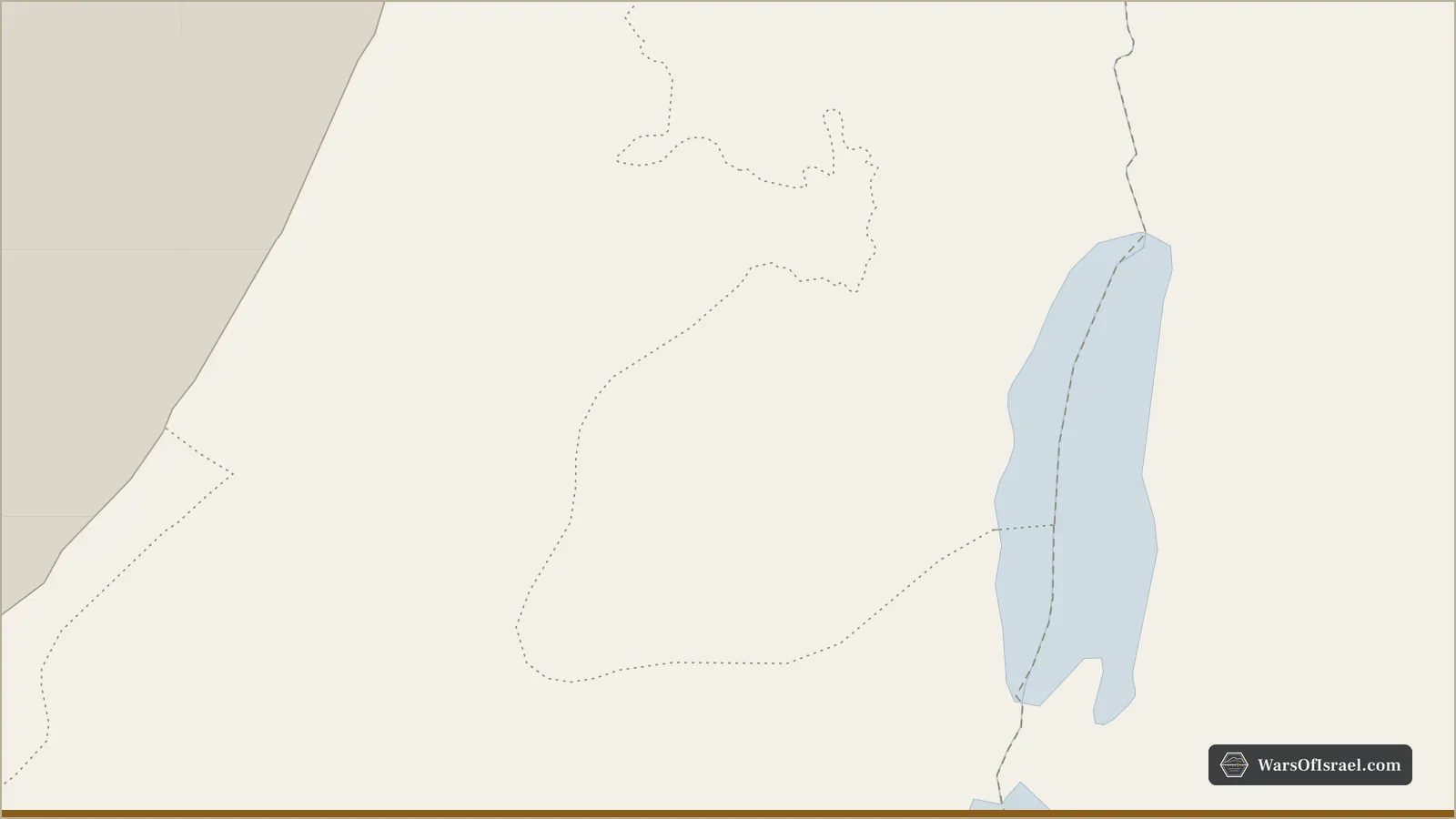
The Great Revolt, known in Hebrew as HaMered HaGadol, was the war fought by the Jews of Judea against the Roman empire from 66 CE until the fall of the last rebel fortresses in 73 or 74 CE. It began with riots in Caesarea and Jerusalem in the spring of 66, grew after the rebels defeated a Roman army at Beth Horon in the autumn of that year, and reached its climax in the summer of 70 CE, when the legions of Titus stormed Jerusalem and burned the Second Temple. The war's epilogue, the siege of Masada above the Dead Sea, became one of the most powerful and contested symbols in modern Israeli memory. Nearly everything we know about the revolt comes from one man, Josephus son of Matthias, who commanded rebel forces in the Galilee, surrendered to the Romans and wrote the history of the war in Rome under the patronage of the emperors he had fought. Archaeology checks him at several points, confirming much and contradicting some.
A province on the edge
Judea had been under Roman influence since Pompey took Jerusalem in 63 BCE, and under direct Roman rule, with interruptions, since 6 CE. The governors, prefects and later procurators of equestrian rank, governed from Caesarea with a small force of auxiliaries, most of them recruited locally from non-Jews. Josephus describes a succession of crises over the following decades: a census and the tax it imposed, the attempt of the emperor Gaius (Caligula) in 40 CE to have his statue set up in the Temple, the growth of armed groups he calls bandits, Sicarii and Zealots, and governors whose greed and brutality inflamed the province. Historians add other causes: tension between Jews and Greeks in the mixed cities, economic strain on the peasantry, a Jewish ruling class that, as Martin Goodman has argued, lost its authority with both Rome and its own people, and expectations of divine deliverance.
From Caesarea to Beth Horon: the outbreak in 66 CE
In the spring of 66 CE a dispute over a synagogue in Caesarea led to clashes between Jews and Greeks. In Jerusalem the governor Gessius Florus took 17 talents from the Temple treasury, and when crowds mocked him he let his troops loose in the city. The Temple officials, led by Eleazar son of the high priest Ananias, then stopped the daily sacrifice offered on behalf of the emperor, which Josephus treats as the formal beginning of the war. The rebels took the fortress of Antonia, and the Roman garrison in the city was killed after it had surrendered. At the same time a group led by Menahem, a descendant of Judas the Galilean, seized Masada from its Roman garrison.
Violence spread through the region, with massacres of Jews in Caesarea, Scythopolis and other cities and attacks by Jews on Greek communities. Cestius Gallus, the governor of Syria, marched on Jerusalem with the Twelfth Legion and auxiliaries, reached the city, and then withdrew for reasons that Josephus himself struggled to explain. On the descent of Beth Horon the rebels ambushed his column and inflicted heavy losses; the Roman historian Suetonius records that a legionary eagle was captured. The victory made compromise impossible. A provisional government in Jerusalem appointed commanders for the districts, among them Josephus for the Galilee.
Vespasian, the Galilee and civil war in Jerusalem
Nero gave the command to Vespasian, an experienced general, who assembled three legions, the Fifth, Tenth and Fifteenth, with his son Titus and allied kings' forces, an army that Josephus's figures put at about 60,000 men. In 67 CE Vespasian advanced into the Galilee. Sepphoris opened its gates to him. Yodfat (Jotapata), where Josephus commanded, held out for 47 days, according to Josephus; when it fell, he hid in a cave with forty others who, he writes, decided to kill one another, and he survived by a lot or a ruse and gave himself up. He then predicted that Vespasian would become emperor. Gamla, on a ridge in the Golan, fell after a bloody siege later the same year, and its excavation, led by Shmarya Gutman from 1976, uncovered the breach in its wall and thousands of arrowheads and ballista stones.
In Jerusalem, the war against Rome turned into a war among Jews. John of Gischala, who had escaped from the Galilee, the Zealots under Eleazar son of Simon, and the forces of Simon bar Giora fought each other for control of the city, and Josephus reports that stores of grain that could have sustained a long siege were burned in the fighting. Vespasian, meanwhile, subdued the rest of the country. After Nero's death in 68 CE and the civil wars that followed, the legions of the East proclaimed Vespasian emperor in July 69, and he left the war to Titus.
The siege of Jerusalem and the destruction of the Temple
Titus arrived before Jerusalem in the spring of 70 CE with four legions, the Fifth, Tenth, Twelfth and Fifteenth. The city was protected by three walls on its exposed northern side. The Romans breached the outer wall in May and the second wall soon after, then built a siege wall around the entire city to starve it. In July they took the fortress of Antonia. The Temple was set on fire in the month of Av; Jewish tradition fixes the destruction on the Ninth of Av, the same day as the destruction of the First Temple. Josephus claims Titus wished to spare the Temple; a later Christian writer, Sulpicius Severus, possibly drawing on a lost passage of Tacitus, says the opposite, and historians remain divided. The upper city fell in September.
Josephus gives the number of those who died during the siege as 1,100,000 and of captives as 97,000. Modern historians regard the first figure as far beyond what the city could have held, while accepting that the loss of life was enormous. Simon bar Giora was led in Titus's triumph in Rome in 71 CE and executed; John of Gischala was imprisoned for life. The Arch of Titus in Rome, completed after Titus's death in 81 CE, shows the spoils of the Temple, among them the menorah, carried in the triumphal procession. A coin series inscribed Iudaea Capta marked the victory across the empire.
Masada: the siege
After Jerusalem, three fortresses remained in rebel hands: Herodium, Machaerus east of the Dead Sea, and Masada. The governor Lucilius Bassus took the first two. His successor, Lucius Flavius Silva, marched on Masada with the Tenth Legion, Fretensis, and auxiliary troops. Masada, a mesa rising above the western shore of the Dead Sea, had been fortified by Herod the Great, who, according to Josephus, built on it palaces, storehouses and cisterns. In 66 CE it had been taken by Sicarii, and Eleazar son of Yair commanded the community there.
The Roman siege works are still among the best preserved anywhere in the empire: a siege wall surrounding the mountain, eight camps and, on the western side, a great assault ramp. Geological work in the 1990s showed that the ramp was built on a natural spur, which reduced the scale of the construction but not its effectiveness. The Romans brought a ram up the ramp and breached the wall; the defenders built an inner wall of wood and earth, which the Romans set on fire.
The date of the fall is debated. Josephus says it took place on the 15th of Xanthicus, in the spring. The traditional year is 73 CE, but inscriptions showing that Silva's term as governor began later than previously thought have led many scholars, including Hannah Cotton, to argue for 74 CE.
Masada: the end and the evidence
According to Josephus, when the wall was breached Eleazar son of Yair persuaded the defenders to die rather than be enslaved. The men killed their families, then ten were chosen by lot to kill the rest, and the last man killed himself after setting fire to the palace. Josephus says 960 people died, and that two women and five children survived by hiding and told the story to the Romans. He places in Eleazar's mouth two long speeches, composed in the manner of Greek historians, which cannot be taken as a record of his words.
Yigael Yadin's excavations in 1963 to 1965, carried out with thousands of volunteers from Israel and abroad, uncovered Herod's palaces, storerooms, a synagogue, ritual baths and the living quarters of the rebels in the casemate wall. Two finds seemed to echo Josephus directly: the remains of three people in the Northern Palace, and a group of small inscribed potsherds, one bearing the name ben Yair, which Yadin linked to the lots. In a cave below the southern cliff, the remains of about 25 individuals were found; they were buried with state honors in 1969 as defenders of Masada. Researchers have since questioned both identifications. The anthropologist Joe Zias and others argued that the cave remains may not be those of rebels, and the lots cannot be proven to be the lots of the story. Most scholars accept that the siege ended with the death of the defenders; the precise manner, and the number, rest on Josephus alone.
Memory: from the Temple to "Masada shall not fall again"
The destruction of the Second Temple reshaped Judaism. With the sacrificial cult gone, the rabbis gathered at Yavneh built a religion of prayer, study and law, and the Ninth of Av became the central day of mourning. Masada itself was nearly forgotten in Jewish tradition, because Josephus was read little by Jews until the modern era.
In the 20th century the story was revived. The poem Masada by Yitzhak Lamdan, published in 1927, gave a generation the line "Masada shall not fall again." Youth movements and the Palmach climbed the mountain, and for decades some IDF units held swearing-in ceremonies on its summit. The sociologist Nachman Ben-Yehuda argued in 1995 that the heroic national narrative had selected and reshaped Josephus's account, leaving out the Sicarii's raid on the village of Ein Gedi and the suicide that Jewish law forbids; others defended the symbol as a legitimate reading of resistance. UNESCO inscribed the site on its World Heritage List entry for Masada (opens in a new tab) in 2001, citing in particular the Roman siege works.
The revolt that preceded this one, against the Seleucids, is told in the Maccabean revolt, and the last great war against Rome in the Bar Kokhba revolt. How Israel's memorial culture uses such sites is the subject of the guide on commemoration and memorial days.