Ancient historyJudges and the Israelite kingdoms
The wars of King David in the biblical account and in archaeology
What the Books of Samuel say about David's battles, what later tradition made of them, and how far inscriptions and excavations can confirm a warrior king of the 10th century BCE.
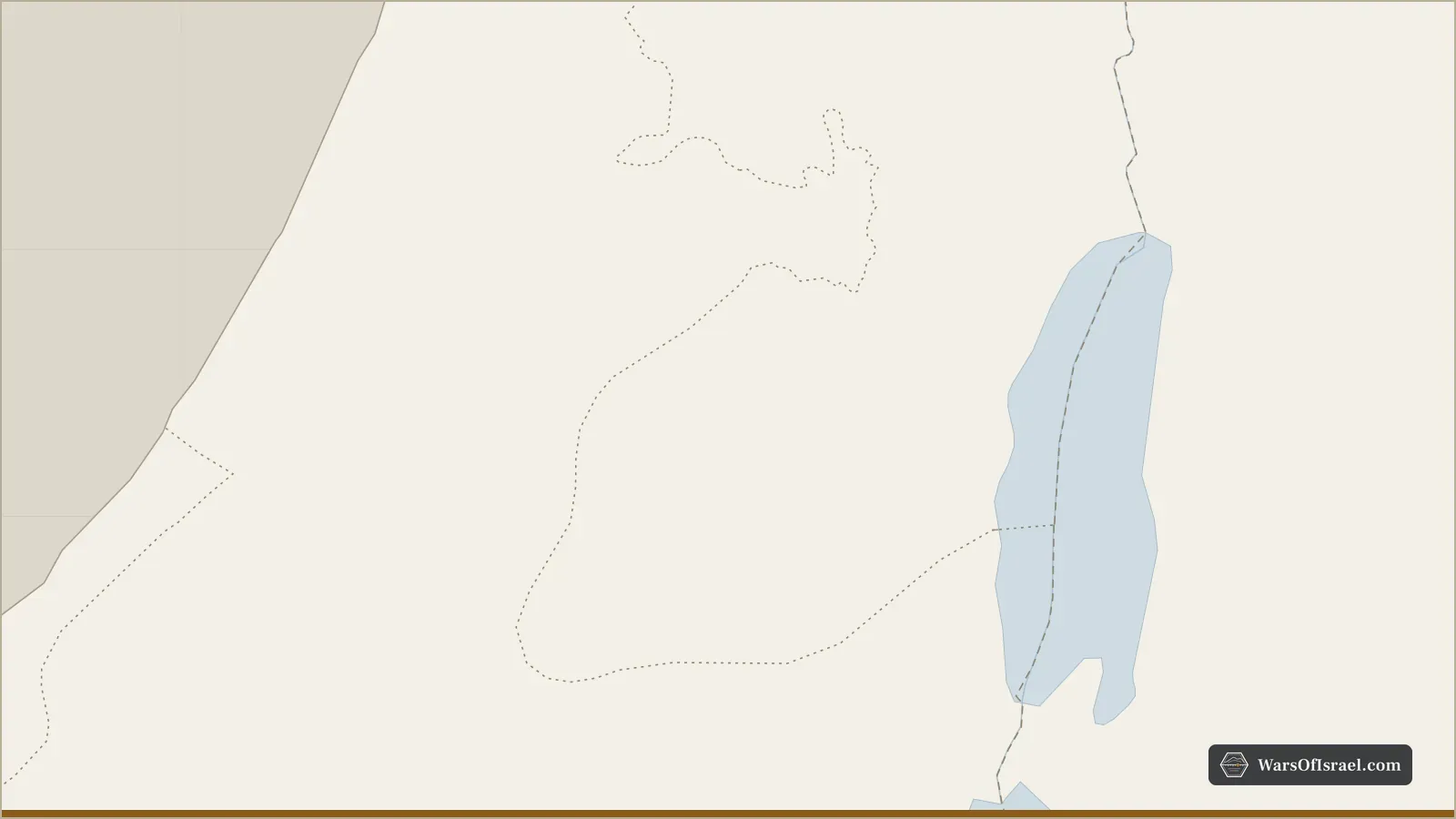
King David is the great warrior of the Hebrew Bible. In the Books of Samuel he enters the story by killing the Philistine champion Goliath, survives years as an outlaw with a band of fighters, becomes king of Judah at Hebron and then of all Israel, takes Jerusalem, and defeats in turn the Philistines, Moab, the Aramean kingdoms, Edom and Ammon. His reign is conventionally dated to about 1010 to 970 BCE. The same books tell, with unusual frankness, of the civil wars that nearly destroyed him, including the revolt of his own son Absalom. Outside the Bible, an Aramaic inscription from Tel Dan, written more than a century after his death, names the "house of David," and most scholars accept it as evidence that a dynasty of that name ruled in Judah. Whether David's wars built an empire from the Euphrates to the border of Egypt, or a modest highland kingdom, is a question the evidence still leaves open.
From Goliath to Hebron: the rise of a fighter
According to 1 Samuel 17, the Philistines and the army of Saul faced each other across the valley of Elah, in the Judean foothills, when the young David, sent to bring food to his brothers, accepted the challenge of the Philistine champion Goliath of Gath and killed him with a stone from his sling. The story is the most famous single combat in literature. The Bible itself preserves a complication: 2 Samuel 21:19 credits the killing of Goliath the Gittite to Elhanan son of Jaare-oregim of Bethlehem, and the later Book of Chronicles resolves the tension by saying that Elhanan killed Goliath's brother. Many scholars think a heroic deed was transferred to the most famous hero.
David then became one of Saul's commanders, and his success, the text says, made the king jealous. Driven out, he gathered around himself men who were in distress, in debt or discontented, some 400 at first and later 600, and lived as a freebooter in the Judean wilderness and the Negev. For a time he served Achish, the Philistine king of Gath, as a vassal and was given the town of Ziklag. While he was away, the Amalekites raided and burned Ziklag; David pursued them and recovered the captives. He was absent from the battle of Gilboa, where Saul and Jonathan fell.
After Saul's death, David was anointed king of Judah at Hebron. A long war followed against the house of Saul, whose surviving son Ish-bosheth ruled the north with the support of the army commander Abner. The rivalry between Abner and David's commander Joab produced the duel by the pool of Gibeon and ended with the murder of both Abner and Ish-bosheth. The elders of Israel then came to Hebron and made David king over all the tribes.
Jerusalem and the Philistine wars
The capture of Jerusalem is told in a few cryptic verses in 2 Samuel 5. The Jebusites taunted David that even the blind and the lame could hold off his men; David's men took the stronghold of Zion, and the text mentions a tsinnor, often translated as "water shaft," as the route of the attack. The Book of Chronicles adds that Joab was the first to go up. In the 19th century the British engineer Charles Warren found a vertical shaft in the City of David, and for a long time "Warren's Shaft" was identified with the biblical tsinnor; later excavations by Ronny Reich and Eli Shukron showed that the shaft was probably a natural fissure not used in this period, and the meaning of the word remains uncertain.
The Philistines responded to David's new power by marching into the valley of Rephaim, southwest of Jerusalem. According to 2 Samuel 5, David defeated them twice there, the second time by circling behind them and attacking from the direction of the baka trees, and drove them back as far as Gezer. Chapter 8 sums up the result: David subdued the Philistines and took Metheg-ammah from their hands. Archaeologically, the Philistine cities do show a decline in the 10th century BCE, though how much of it should be attributed to Judah is uncertain.
Moab, Aram, Edom and Ammon
2 Samuel 8 and 10 describe a run of wars beyond the Jordan and to the north: - Moab was defeated and became tributary, and the text records a harsh treatment of prisoners; - Hadadezer son of Rehob, king of Zobah, was beaten when he went to restore his power at the Euphrates, and David captured 1,700 horsemen and 20,000 foot soldiers, hamstringing most of the chariot horses; - the Arameans of Damascus who came to help Hadadezer were also defeated, and David placed garrisons in Damascus; - in the valley of salt 18,000 of the enemy were killed according to the text, which the received text of Samuel names as Aram and Chronicles as Edom, and garrisons were placed throughout Edom.
The Ammonite war, in chapters 10 to 12, is told in the most detail. It began, according to the narrative, when the new Ammonite king humiliated David's envoys by shaving off half their beards. The Ammonites hired Aramean troops; Joab and his brother Abishai divided the army to fight on two fronts, then besieged the Ammonite capital Rabbah, today's Amman. During this siege the story of Bathsheba unfolds: David orders Joab to place her husband, Uriah the Hittite, one of his own warriors, where the fighting is fiercest, and Uriah is killed. Rabbah fell, and David took the crown of its king.
These chapters also describe the institutions of David's army: the commander Joab over the host, Benaiah son of Jehoiada over the Cherethites and Pelethites, a royal guard probably recruited from foreigners, and the list of David's mighty men, "the thirty," whose individual feats are recorded in 2 Samuel 23. The history of the people's army, the professional guard and the mercenaries of the ancient world is a theme that returns, in very different forms, in the modern guide from Hashomer to the IDF.
The civil wars of David's reign
Not all of David's wars were against foreigners. His son Absalom, after years of courting the people at the city gate, had himself proclaimed king at Hebron. David fled Jerusalem across the Jordan to Mahanaim. In the decisive battle in the forest of Ephraim, David's veterans defeated Absalom's levies; Absalom was caught by his hair in the branches of a terebinth and killed by Joab, against David's order. The king's lament, "O my son Absalom," turned a military victory into one of the Bible's most famous scenes of grief.
A second revolt followed under Sheba son of Bichri, a Benjaminite, who called the northern tribes to leave David. Joab pursued him to Abel Beth Maacah, in the far north, and besieged the town until its people threw Sheba's head over the wall. The two revolts foreshadow the split between north and south that, according to the Book of Kings, would come after the death of Solomon, a story told in the article on King Solomon and his kingdom.
What the evidence outside the Bible shows
The firmest piece of evidence is the Tel Dan inscription. Fragments of a basalt stele in Aramaic, found at Tel Dan in northern Israel by Avraham Biran's expedition in 1993 and 1994, describe the victory of an Aramean king, usually identified as Hazael of Damascus, over a king of Israel and a king of bytdwd, the "house of David." The inscription dates from the second half of the 9th century BCE. A minority of scholars have read the phrase differently, but most accept it as the earliest reference outside the Bible to David's dynasty. Its context, the wars of Hazael and the coup of Jehu, is explained in the article on Jehu and the Black Obelisk.
Other evidence is weaker or debated. André Lemaire proposed in 1994 that a damaged line of the Mesha Stele also reads "house of David"; the reading is possible but not certain. Kenneth Kitchen suggested that a place name in the list of Pharaoh Sheshonq I could be read as "the heights of David"; this too is disputed.
Excavations have produced arguments rather than proofs. At Khirbet Qeiyafa, above the valley of Elah, Yosef Garfinkel and Saar Ganor uncovered a fortified town with two gates dated by radiocarbon to around 1000 BCE, which they see as a Judahite outpost of the time of Saul or David; others regard it as Philistine, Canaanite or the center of an independent local polity. In the City of David, the Stepped Stone Structure and the Large Stone Structure have been dated by some to the 10th century BCE and associated with David's rule, while critics place parts of them earlier or later.
Two broad positions frame the debate. Israel Finkelstein and others argue that 10th-century Judah was a sparsely settled highland chiefdom and that the image of a great Davidic kingdom was shaped centuries later, in the time of the Judahite kings of the 8th and 7th centuries BCE. Amihai Mazar, Garfinkel and others accept a smaller kingdom than the Bible describes, but a real one, capable of building fortifications and fighting regional wars. Neither side doubts that David existed as the founder of a dynasty; the argument is about scale.
David in later tradition
David's wars made him a model in Jewish memory. The Book of Chronicles retold his reign without the Bathsheba affair, and the tradition that he composed the Psalms turned the warrior into a poet. In the prophets, a future king from the house of David became the image of the messiah. Medieval Christian kings were compared to him, and the six-pointed figure called the Magen David, the "shield of David," became a Jewish symbol only much later, in the Middle Ages and the modern era, without any link to his own time.
The overview of the wars of ancient Israel places David's reign between the wars of the judges and those of the divided kingdoms. Read on its own terms, the story in Samuel is a remarkable piece of ancient historical writing: it praises its hero's military genius and condemns his abuse of power in the same breath, and it leaves the reader to weigh both.