Guides
From Hashomer to the IDF: how the Jewish defense forces developed
Four decades of watchmen, militias, undergrounds and volunteer units, and the decisions of 1948 that turned them into one army.
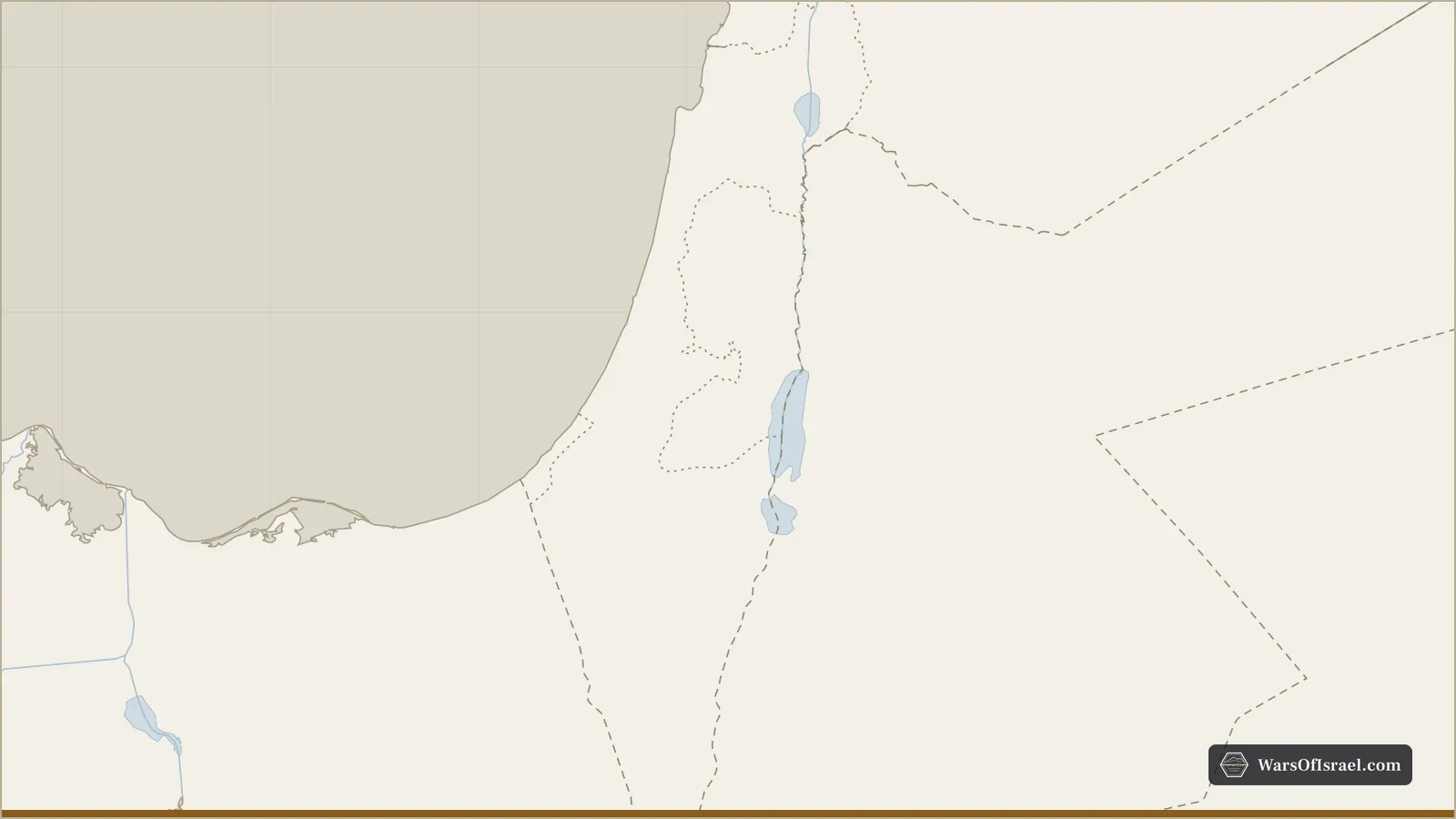
The Israel Defense Forces were founded by an order of Israel's provisional government in late May 1948, but the army that order created was built from parts assembled over the previous four decades: the watchmen of Hashomer, the Haganah militia and its strike force the Palmach, the breakaway undergrounds of the Irgun and Lehi, police auxiliaries trained by the British, and tens of thousands of Jewish volunteers who had served in the British Army in two world wars. The story of how these pieces became one army is a story about competence, but also about authority: who commands armed men, and in whose name.
Watchmen and volunteers in the Ottoman years
The first organized Jewish defense in the country was small and proud of it. In 1907 a group of young immigrants of the Second Aliyah, influenced by Russian revolutionary circles and the self-defense groups formed after the pogroms, founded a secret society called Bar-Giora. Two years later, in 1909, its members created Hashomer, "the Watchman," which offered to guard Jewish settlements in the Galilee and later elsewhere in place of the Arab or Circassian guards the farmers had hired until then. Its leaders included Israel Shochat and Manya Shochat, and the organization was as much a social experiment as a guard service, with collective discipline and a strong sense of being an elite. Hashomer never numbered more than about a hundred full members, and its contribution was more symbolic than military: it established the idea that Jews in the country would defend themselves, and it left behind an image of mounted watchmen in Arab dress that later generations admired.
The First World War offered a different model. Jewish volunteers, many of them deportees from Ottoman Palestine, formed the Zion Mule Corps, which served at Gallipoli in 1915. From 1917 Jewish battalions of the Royal Fusiliers, known as the Jewish Legion, were raised in Britain, the United States and later in the country itself, and took part in the final stage of the Sinai and Palestine campaign. Among their soldiers were David Ben-Gurion and Yitzhak Ben-Zvi. The Legion was disbanded soon after the war, but the experience of uniformed, disciplined service under a regular army would matter again.
The Haganah and its rivals under the Mandate
The riots of April 1920 in Jerusalem, in which the British authorities were slow to protect Jewish residents, convinced the labor movement that a wider and better organized force was needed. In June 1920 the Haganah, "the Defense," was founded, and Hashomer dissolved itself into it. For most of the 1920s the Haganah was a loose network of local branches under the Histadrut labor federation, poorly armed and largely dependent on volunteers. The riots of 1929, and above all the killing of Jews in Hebron and Safed, exposed its weakness and led to reorganization under a broader national authority.
Not everyone accepted that authority. In 1931 a group of commanders, many close to the Revisionist movement of Ze'ev Jabotinsky, left the Haganah in protest at what they saw as its passive policy. Their organization split again in 1937, and the larger part became the Irgun Zvai Leumi (Etzel). In 1940, after the Irgun agreed to suspend operations against Britain for the duration of the war against Germany, Avraham Stern led a further breakaway that became Lehi, known to the British as the Stern Gang. These three organizations would cooperate, compete and at times fight each other for the rest of the Mandate.
Beneath the politics, the Haganah spent the 1930s and 1940s building the quiet infrastructure an army needs. It ran an intelligence service, known as Shai, that penetrated British offices and Arab organizations. It bought weapons abroad and smuggled them into the country in an effort called Rekhesh, literally "acquisition." It manufactured its own arms in hidden workshops, the best known of which, the Ayalon Institute, produced ammunition for Sten submachine guns beneath a kibbutz laundry near Rehovot under the noses of the British. And it trained women as well as men: women served as signalers, medics, instructors and, in the Palmach, in combat roles, a precedent that later shaped the IDF's conscription of women.
The Arab Revolt of 1936 to 1939 transformed the Haganah. Its doctrine of havlaga, or restraint, which limited retaliation, gave way to more active defense. Mobile field companies under Yitzhak Sadeh began going out to meet attackers rather than waiting behind fences. The British authorities armed thousands of Jewish supernumerary police, a legal framework the Haganah used to train its members. And Captain Orde Wingate, a British intelligence officer, formed the Special Night Squads of British and Jewish fighters, whose night raids in 1938 shaped a generation of Haganah commanders, Moshe Dayan and Yigal Allon among them.
The Palmach and the Second World War
The Second World War brought the Yishuv into an awkward partnership with Britain, whose 1939 White Paper had sharply restricted Jewish immigration. In May 1941, with German forces threatening the Middle East, the Haganah established the Palmach, its first full-time mobilized force, with British cooperation at the start. Palmach companies helped guide the Allied invasion of Vichy-held Syria and Lebanon in June 1941, the operation in which Moshe Dayan lost his eye. When the British withdrew their support, the Palmach went underground and sustained itself by combining agricultural work on kibbutzim with training, a pattern that gave it a distinctive culture of informality, initiative and youth-movement camaraderie.
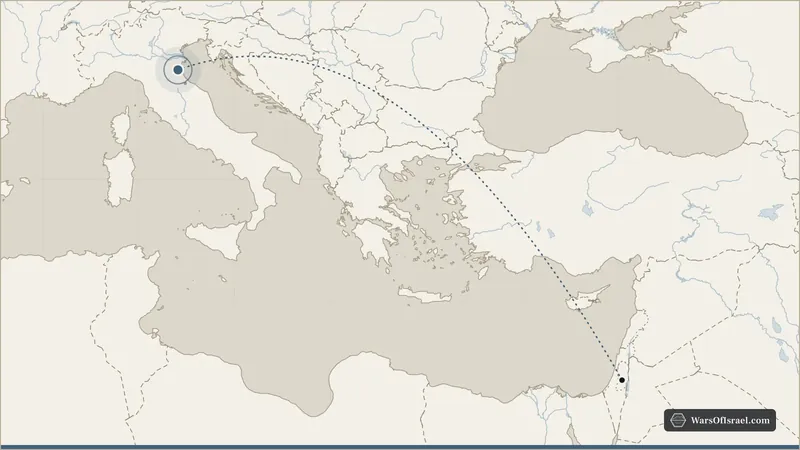
At the same time, tens of thousands of Jews from the country enlisted in the British forces. In 1944, after long Zionist lobbying, Britain agreed to form the Jewish Brigade, which fought in Italy in the spring of 1945 and afterward helped organize the movement of Holocaust survivors toward the Mediterranean. The veterans of British service brought with them something the underground could not provide: experience of staff work, logistics, artillery and the administration of large units.
When the war ended and Britain kept its restrictions, the three undergrounds briefly joined forces in the Jewish Resistance Movement and conducted coordinated attacks, including the Night of the Bridges in June 1946. The alliance collapsed after the Irgun's bombing of the King David Hotel in July 1946, which killed 91 people. The record on the Jewish insurgency of 1944 to 1947 follows that campaign in detail.
One army: the decisions of 1948
When fighting broke out after the UN partition vote of November 29, 1947, the Haganah was the backbone of the Jewish war effort, with brigades organized from its field corps and the Palmach. On May 26, 1948, less than two weeks after the declaration of independence, the provisional government issued the ordinance establishing the Israel Defense Forces. The ordinance also prohibited any other armed force. Making that prohibition real was the hard part.
Two crises decided it. The first was the Altalena affair in June 1948, when a ship carrying Irgun volunteers and weapons arrived during the first truce and the government, led by Ben-Gurion, ordered the army to prevent the Irgun from unloading the arms under its own control. Shelling set the ship on fire off Tel Aviv, and sixteen Irgun members and three IDF soldiers were killed in the fighting on the beach and at sea, according to most accounts. The Irgun's battalions were then absorbed into the IDF, and the remaining independent Irgun and Lehi units in Jerusalem were dissolved after Lehi members assassinated the UN mediator, Count Folke Bernadotte, in September 1948.
The second crisis was quieter and in some ways more painful. Ben-Gurion insisted that the Palmach's separate headquarters be dissolved, arguing that an army could not have a unit with its own command structure and close ties to one political party, Mapam. The headquarters was disbanded in late 1948, over the strong objection of many of its commanders, and its brigades continued to fight as ordinary IDF formations.
What carried over into the IDF
The army that emerged in 1949 kept much from its predecessors. A selection of what it inherited:
- From the Haganah: a national command structure subordinate to elected civilian leaders, and the principle of defending every settlement.
- From the Palmach: a culture of field initiative, small-unit leadership and officers who lead from the front, along with many of the commanders who would run the IDF for its first two decades.
- From British service: staff methods, training systems and the technical branches.
- From the Special Night Squads and the field companies: the preference for taking the fight to the enemy.
Universal conscription for men and women was fixed in the Defense Service Law of 1949, and a reserve system grew around it that made the citizen-soldier the core of the army. The rivalries did not vanish overnight, and memories of the Altalena and of the Palmach's dissolution shaped Israeli politics for decades. Even the name records the lineage. In Hebrew the army is Tzva HaHagana LeYisrael, the Defense Army of Israel, and the word hagana, defense, deliberately preserved the name of the militia from which most of its officers came. But the essential decision of 1948, that the state alone would hold the means of force, was made, enforced and has held since.