BattleSecond intifada to the Gaza operationsReference entry
The battle of Wadi Saluki (2006)
How the final major battle of the Second Lebanon War was fought after the Security Council had already voted to end it.
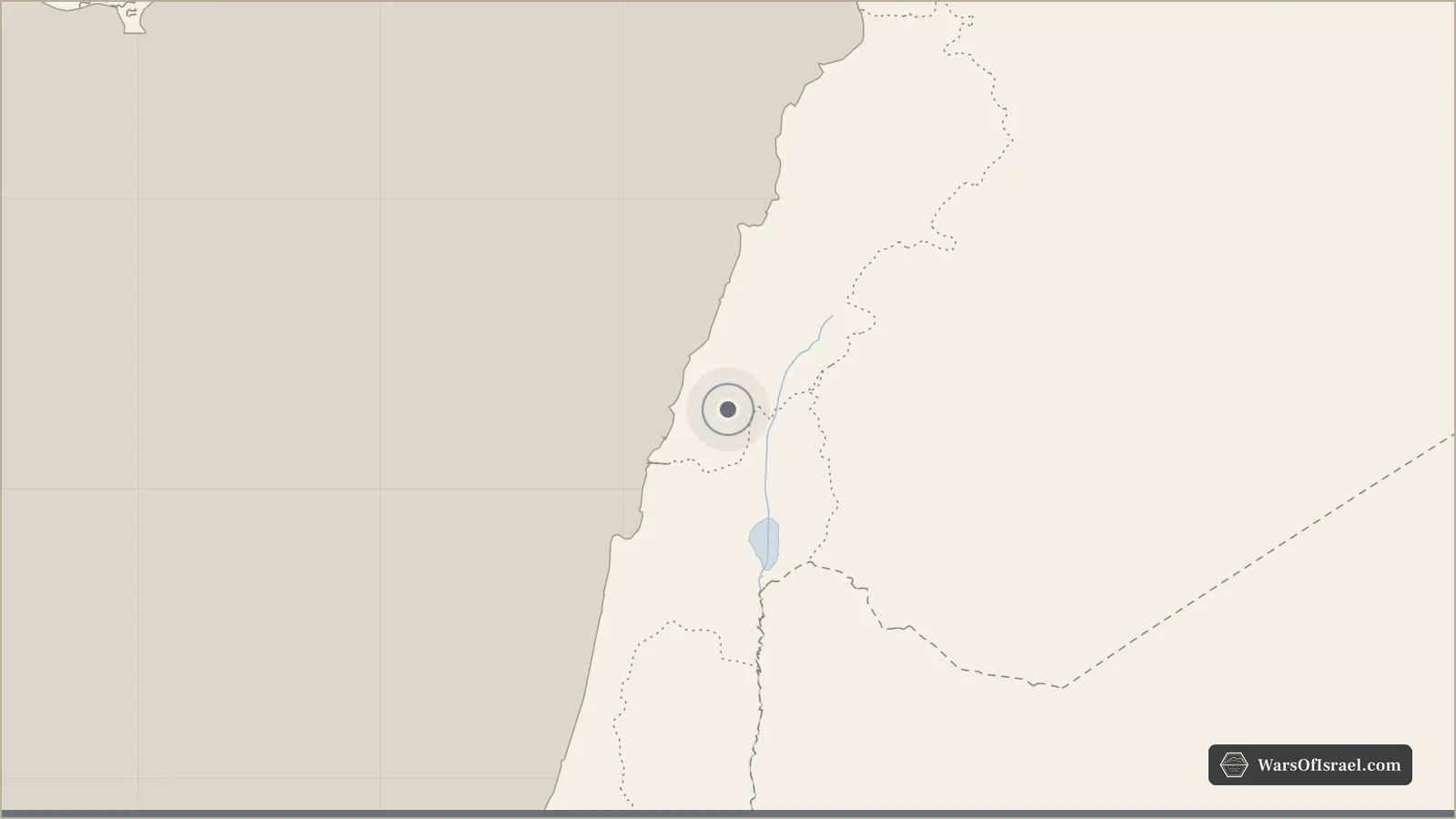
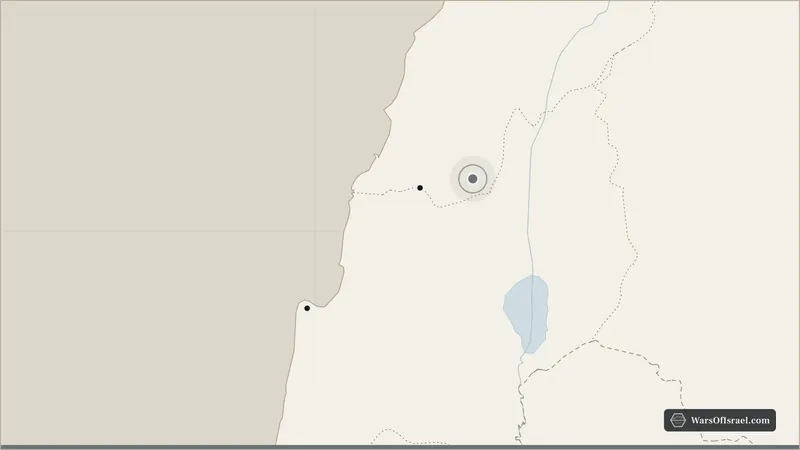
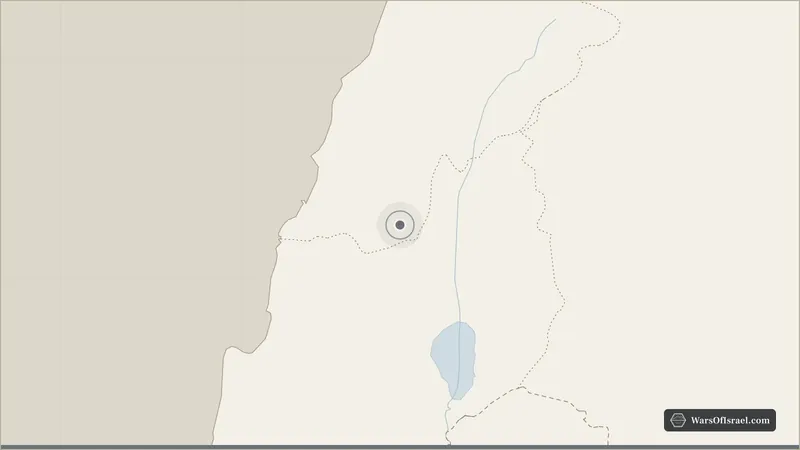
The battle of Wadi Saluki was fought on August 12 and 13, 2006, in the last days of the Second Lebanon War, when an armored column of the IDF's 401st Brigade, with infantry of the Nahal Brigade, crossed the Saluki stream valley in southern Lebanon and was ambushed by Hezbollah anti-tank teams. According to Israeli accounts, 11 of the roughly 24 Merkava tanks in the column were hit, and the IDF later put its dead in the battle at 12: eight tank crewmen, including two company commanders, and four Nahal soldiers. The battle took place after the UN Security Council had adopted Resolution 1701, and two days before the ceasefire took effect, which is why it became the most bitterly debated engagement of the war.
Background: the final push
By the second week of August 2006, Israel had been fighting Hezbollah for a month. Rocket fire on the north had not stopped, ground forces held a strip of villages along the border, and diplomats in New York were close to a ceasefire resolution. The government of Ehud Olmert approved a last, larger ground operation, called Change of Direction 11, intended to push to the Litani River, seize the high ground in southern Lebanon and improve Israel's position before the fighting ended.
The Saluki is a deep, winding valley that runs from the border area northwest toward the Litani. For the 162nd Division, the plan was to cross it and take the ridge around the village of Ghandouriyah on the far side, opening a route west. Its steep, wooded slopes gave defenders good cover.
On August 11 the Security Council adopted Resolution 1701. According to Israeli reporting at the time, the order for the crossing was given, then canceled and given again, and the armored force waited for hours at the edge of the valley before moving. It moved on August 12.
What happened
Infantry of the Nahal Brigade were to secure the high ground around Ghandouriyah and cover the tank column's crossing. On the morning of August 12, tanks of the 401st Brigade's 9th Battalion, commanded by Lt. Col. Efi Defrin, began to descend into the valley and climb toward the ridge. As the column moved along the narrow road, Hezbollah anti-tank teams positioned on the slopes and in nearby villages opened fire with Kornet guided missiles.
Defrin's own tank was hit and he was seriously wounded. In the afternoon two missiles hit the tank of company commander Shai Bernstein. Bernstein and two of his crew were killed, and the driver, wounded, was pulled out by his comrades. Other tanks were hit in quick succession. Crews and infantry fought under fire through the day to evacuate the wounded and keep the column moving, and forces did reach the Ghandouriyah area and link up with the infantry there.
That night, after landing troops in the area as part of the same operation, a CH-53 transport helicopter was shot down by a Hezbollah missile, and its five crew members were killed.
According to the IDF, 12 soldiers were killed in the battle. Hezbollah said nine of its fighters were killed; Israeli estimates were higher, and no agreed figure exists.
Outcome and significance
Israel accepted Resolution 1701 on August 13, and the ceasefire took effect at 8 a.m. on August 14. The forces that had crossed the valley withdrew in the following weeks as the Lebanese army and an enlarged UNIFIL deployed in the south. The final offensive had not reached the Litani, and the gain from it, if any, was hard to point to.
The battle quickly became a symbol of the war's failures. A Jerusalem Post account published on August 29, 2006, called it a microcosm of the war's mistakes (opens in a new tab), pointing to the orders that were given and canceled and to the hours the tanks spent waiting in view of the enemy. The Winograd Commission examined the decision to launch the final operation and found that it had been taken in good faith and within the government's authority, while still describing serious failures in the conduct of the war as a whole. Bereaved families and many in the public were not persuaded, and the question of whether the last 48 hours of fighting were worth their cost remained open.
For the armored corps, the battle sharpened lessons about the vulnerability of tanks in close terrain to modern guided missiles. The years that followed saw the Merkava fleet fitted with the Trophy active protection system, designed to intercept such missiles before they strike. Efi Defrin, who recovered from his wounds, stayed in the army and later became the IDF spokesperson. As with Bint Jbeil, the soldiers' courage was never doubted; the argument was about the decisions behind the battle.