WarSecond intifada to the Gaza operations
The Second Lebanon War (2006)
How a cross-border raid became a 34-day war that Israel fought with overwhelming firepower and still ended in a public reckoning.
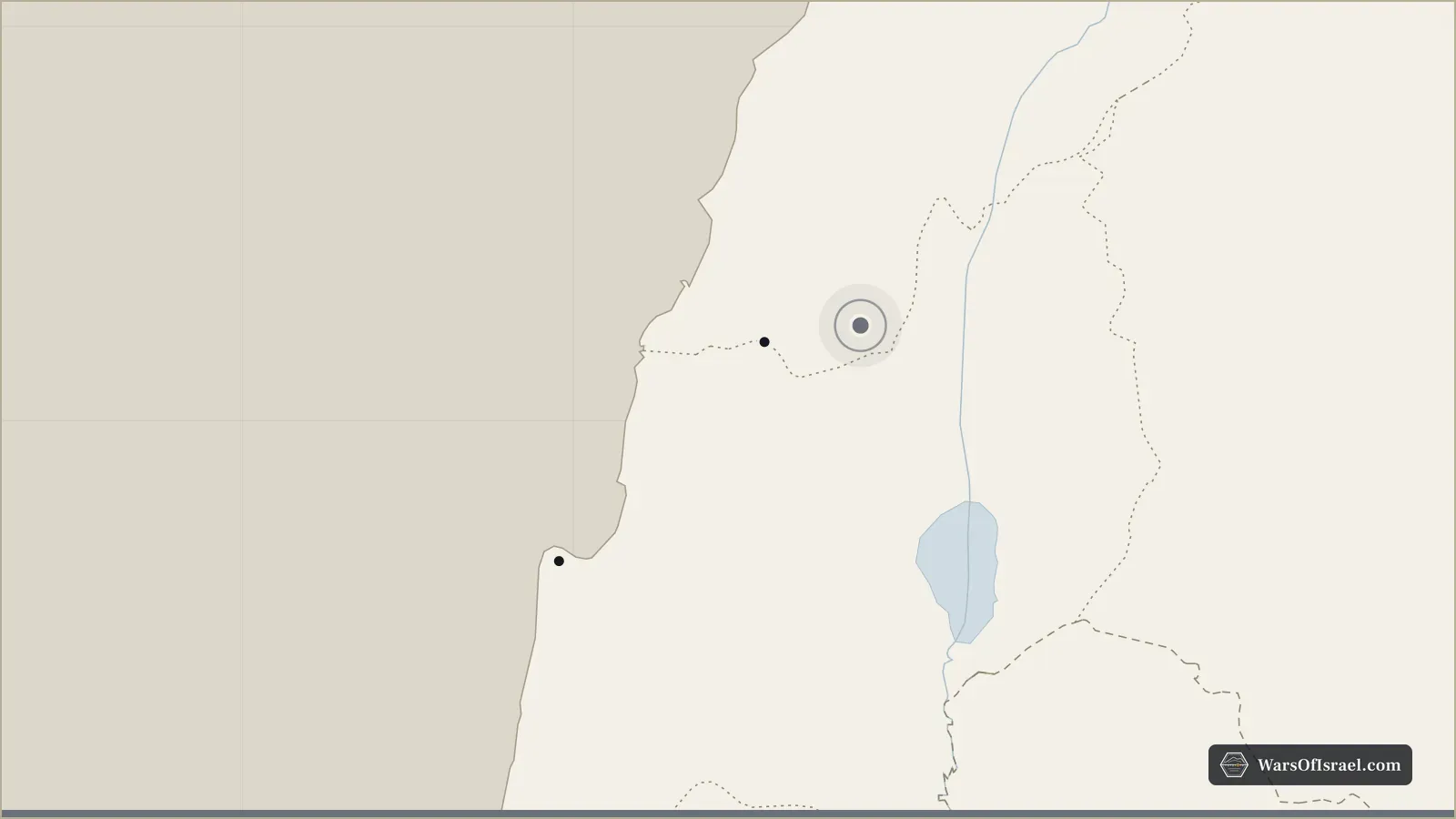
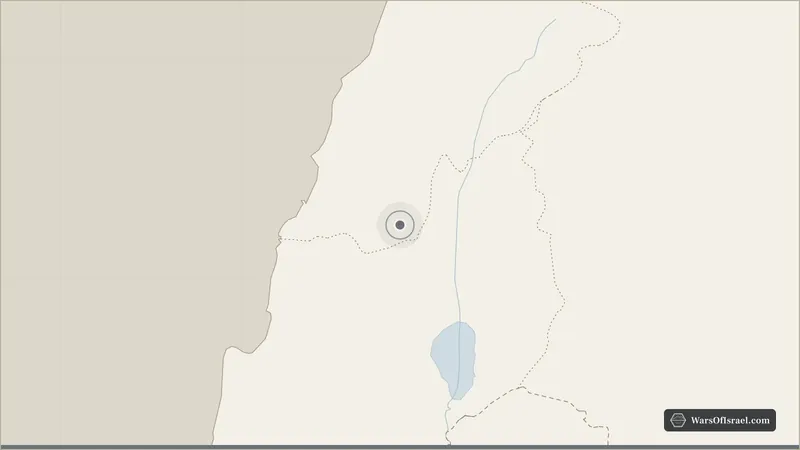
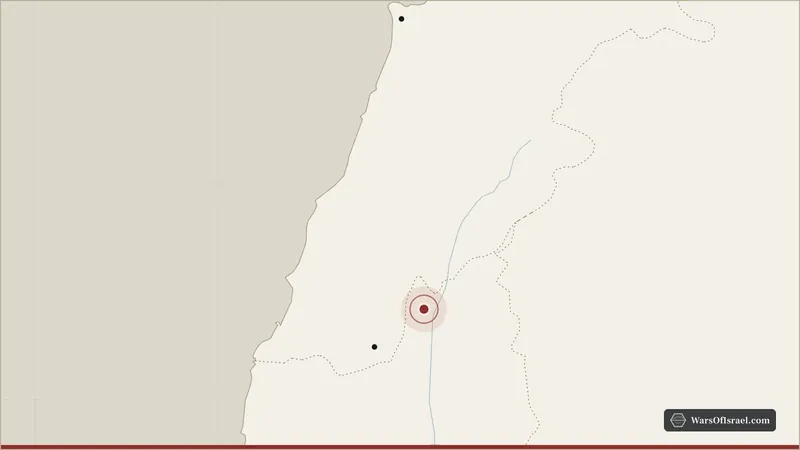
The Second Lebanon War was a 34-day war between Israel and Hezbollah, fought from July 12 to August 14, 2006. It began with a raid across the border near the village of Zar'it, in which Hezbollah fighters killed three soldiers and captured two, Ehud Goldwasser and Eldad Regev. Israel answered with an air campaign across Lebanon and later a ground offensive in the south; Hezbollah fired close to 4,000 rockets into northern Israel, according to Israeli figures. The war ended with UN Security Council Resolution 1701, not with a decision on the battlefield, and in Israel it was followed by a state commission of inquiry whose findings reshaped the army and the careers of the men who led it.
Background: six years after the withdrawal
In May 2000 Israel withdrew from the security zone it had held in southern Lebanon since 1985, ending the long South Lebanon conflict. The United Nations certified that the withdrawal reached the international border, a line known as the Blue Line. Hezbollah, the Shia movement founded with Iranian backing during the 1982 Lebanon War, presented the withdrawal as its victory. On May 26, 2000, its secretary-general, Hassan Nasrallah, spoke in the town of Bint Jbeil and described Israel as "weaker than a spider's web."
Hezbollah did not disarm. It claimed that Israel still occupied Lebanese territory in the Shebaa Farms area, a claim the UN did not accept, and it used the following six years to build a dense military infrastructure in the villages and valleys south of the Litani River. With Iranian and Syrian help it accumulated a rocket arsenal that Israeli intelligence estimated at more than ten thousand short-range rockets, along with longer-range missiles and modern anti-tank weapons. It also kept trying to capture Israeli soldiers. In October 2000 it seized three soldiers on Mount Dov, and in November 2005 a raid on the village of Ghajar was beaten back.
Israel's policy in those years was largely one of containment. Its attention was on the Second Intifada and then on Gaza, and the army's ground forces, especially the reserves, trained far less than before. In late June 2006, Gilad Shalit was captured on the Gaza border and Israel opened Operation Summer Rains. Two weeks later, the northern front exploded.
The raid and the decision to go to war
On the morning of July 12, 2006, Hezbollah fired rockets and mortars at Israeli positions and communities as a diversion, while a team crossed the border fence and ambushed two Humvees on a patrol road near Zar'it. Three soldiers were killed and Goldwasser and Regev, both reservists, were taken into Lebanon. A Merkava tank sent in pursuit hit a large explosive charge, killing its four crewmen, and another soldier was killed trying to recover them. Eight soldiers died that day.
The government of Ehud Olmert, in office for less than three months, met that evening. The cabinet authorized a wide military response. Defense Minister Amir Peretz, a former union leader with no senior military background, and Chief of Staff Dan Halutz, the first air force officer to command the IDF, both supported an operation built mainly on air power. The war was given the name Change of Direction (Shinui Kivun) at the time; the Knesset later named it the Second Lebanon War.
The forces and parties
Israel fought with the Israeli Air Force, the navy, and ground forces of Northern Command under Maj. Gen. Udi Adam, including the 91st Division on the central sector and, later, several reserve divisions. Air power was used on a scale Lebanon had not seen since 1982.
Hezbollah fought with a force that Israeli officials estimated in the low thousands of trained fighters, supported by local village units. It did not try to hold ground in the classic sense. Instead it prepared fortified positions, bunkers and tunnels in the villages and in open terrain near the border, stocked them with rockets and anti-tank missiles, and planned to keep firing at Israel for as long as possible while bleeding any Israeli advance. Its anti-tank teams were armed with modern guided missiles, including the Russian-made Kornet.
The government of Lebanon was not a party to the fighting and the Lebanese army stayed out of it, although Lebanese infrastructure and some army positions were hit.
The course of the war
The air campaign and the rockets, July 12 to 22
In the first hours of the war the Israeli Air Force struck a large share of Hezbollah's long-range rocket launchers, an operation that Israeli accounts describe as among the most effective in its history. It went on to hit Beirut's airport, roads and bridges, and Hezbollah's headquarters in the Dahiya neighborhoods of south Beirut, and imposed a naval and air blockade on Lebanon.
The short-range rockets could not be stopped from the air. Every day Hezbollah fired more than a hundred, sometimes far more, at Kiryat Shmona, Nahariya, Safed, Tiberias, Haifa and dozens of smaller communities. On July 14 a C-802 anti-ship missile hit the Israeli corvette INS Hanit off Beirut, killing four sailors. On July 16 a rocket hit the Israel Railways maintenance depot in Haifa and killed eight workers. Hundreds of thousands of residents of the north left their homes for the center of the country; many of those who stayed lived for weeks in shelters.
Border battles, July 17 to August 1
Ground forces began to operate across the border within a week. Paratroopers and special forces fought at Maroun al-Ras, a village on high ground overlooking Avivim, in some of the first close combat of the war. On July 23 the 91st Division moved on Bint Jbeil, the town where Nasrallah had given his spider-web speech. On July 26, eight soldiers of the Golani Brigade's 51st Battalion were killed in a battle on the edge of the town. The IDF entered and left Bint Jbeil several times but never took it.
On July 30, an Israeli airstrike on a building in Qana killed 28 civilians, 16 of them children, according to Human Rights Watch (opens in a new tab), which revised initial reports of a higher toll. Israel said it had targeted rocket launchers in the area and expressed regret. The strike brought international pressure for a ceasefire, and Israel suspended most air activity for 48 hours.
Wider ground operations, August 1 to 14
In August Israel called up more reserve divisions and widened the ground offensive, taking villages along the border strip and pushing toward the Litani in several sectors. Critics, including later the Winograd Commission, described these moves as hesitant and changing from day to day. Rocket fire did not fall; some of the heaviest days came at the end of the war.
On August 11 the UN Security Council unanimously adopted Resolution 1701. The same day the Israeli cabinet approved a final, larger ground push toward the Litani, Operation Change of Direction 11. On August 12 an armored column of the 401st Brigade crossing Wadi Saluki was ambushed with anti-tank missiles; that night a CH-53 helicopter was shot down after landing troops and its five crew members were killed. According to Israeli accounts, 34 soldiers were killed in the last three days. Israel accepted the resolution on August 13, and the ceasefire took effect at 8 a.m. on August 14.
Casualties and damage
Casualty figures for the war come from different sources and are not identical:
- Israelis: according to the Israeli Foreign Ministry, 121 soldiers and 44 civilians were killed.
- Lebanese: the Lebanese government put the toll at 1,191 dead; Human Rights Watch identified 1,109 dead, the majority of them civilians.
- Hezbollah fighters: Hezbollah acknowledged about 250 dead; Israeli intelligence estimates ran above 600.
In Lebanon about one million people were displaced, according to Lebanon's Higher Relief Council, and whole neighborhoods of south Beirut and many southern villages were badly damaged. Israel was criticized by human rights organizations for strikes in populated areas and for its widespread use of cluster munitions, much of it in the last days of the war. Hezbollah was criticized for firing rockets at Israeli cities and for operating from within villages.
Outcome and consequences
Resolution 1701 called for a full cessation of hostilities, the withdrawal of Israeli forces in parallel with the deployment of the Lebanese army in the south, an enlarged UN force (UNIFIL) of up to 15,000 troops, and an area between the Blue Line and the Litani River free of armed personnel other than the Lebanese army and UNIFIL. It also reaffirmed earlier resolutions calling for the disarmament of all armed groups in Lebanon. The Lebanese army and an enlarged UNIFIL deployed in the south; Hezbollah was never disarmed and, over the following years, rebuilt and greatly expanded its arsenal.
The fate of Goldwasser and Regev was not known for two years. On July 16, 2008, Hezbollah returned their bodies in an exchange in which Israel released five Lebanese prisoners, among them Samir Kuntar, and returned the remains of Hezbollah fighters.
In Israel, public anger over the conduct of the war led the government to appoint a commission of inquiry under retired judge Eliyahu Winograd. Its interim report of April 30, 2007 found "severe failures" in the decisions of the prime minister, the defense minister and the chief of staff. Halutz had already resigned in January 2007; Peretz left the Defense Ministry later that year. The final report, published on January 30, 2008, called the war "a missed opportunity" and described serious shortcomings in the army's preparedness, in the high command and in decision-making, but it found that the decision to launch the final ground operation had been taken in good faith.
Legacy and memory
The war produced its own vocabulary in Israel and in the wider region. The "Dahiya doctrine," a phrase used after the war by Israeli officers for the threat of massive strikes on areas from which an enemy fires, entered strategic debate. The army rebuilt its ground forces and reserve training under Chief of Staff Gabi Ashkenazi, and the experience of being hit by thousands of short-range rockets helped drive the development of Iron Dome.
Hezbollah declared a "divine victory" and held mass rallies in Beirut. Yet in a television interview at the end of August 2006, Nasrallah said that had he known the raid would lead to a war of this scale, he would not have ordered it. In Lebanon, the war deepened the political divide between Hezbollah and its opponents over the movement's weapons, a dispute that has not been resolved. In Israel, the war is commemorated in the communities of the north and in memorials to the units that fought it, and the bereaved families of soldiers killed in its last days, after Resolution 1701 had been adopted, have long asked whether those final operations were needed.
The northern border stayed relatively quiet for seventeen years, longer than many observers expected in August 2006. Supporters of the war's outcome point to that quiet as evidence of deterrence; critics point to the arsenal that Hezbollah built behind it. Both readings were tested from October 8, 2023, when Hezbollah opened fire on Israel in support of Hamas and a new war between Israel and Hezbollah began.
Timeline
- May 26, 2000: Nasrallah gives his "spider web" speech in Bint Jbeil after Israel's withdrawal.
- July 12, 2006: Hezbollah raid near Zar'it; eight soldiers killed and two captured; the war begins.
- July 14, 2006: A Hezbollah missile hits the corvette INS Hanit, killing four sailors.
- July 16, 2006: A rocket kills eight workers at the Israel Railways depot in Haifa.
- July 26, 2006: Eight Golani soldiers are killed at Bint Jbeil.
- July 30, 2006: An Israeli airstrike in Qana kills 28 civilians, according to Human Rights Watch.
- August 11, 2006: The Security Council adopts Resolution 1701.
- August 12, 2006: The battle of Wadi Saluki; a CH-53 helicopter is shot down.
- August 14, 2006: The ceasefire takes effect at 8 a.m.
- April 30, 2007: The Winograd Commission publishes its interim report.
- January 30, 2008: The Winograd Commission publishes its final report.
- July 16, 2008: Hezbollah returns the bodies of Ehud Goldwasser and Eldad Regev.