News
IDF says Gaza strikes killed Hamas commander involved in holding 12 hostages
Israeli announcements identify men accused of holding hostages and describe separate strikes on Hamas personnel and weapons stores during the ceasefire.
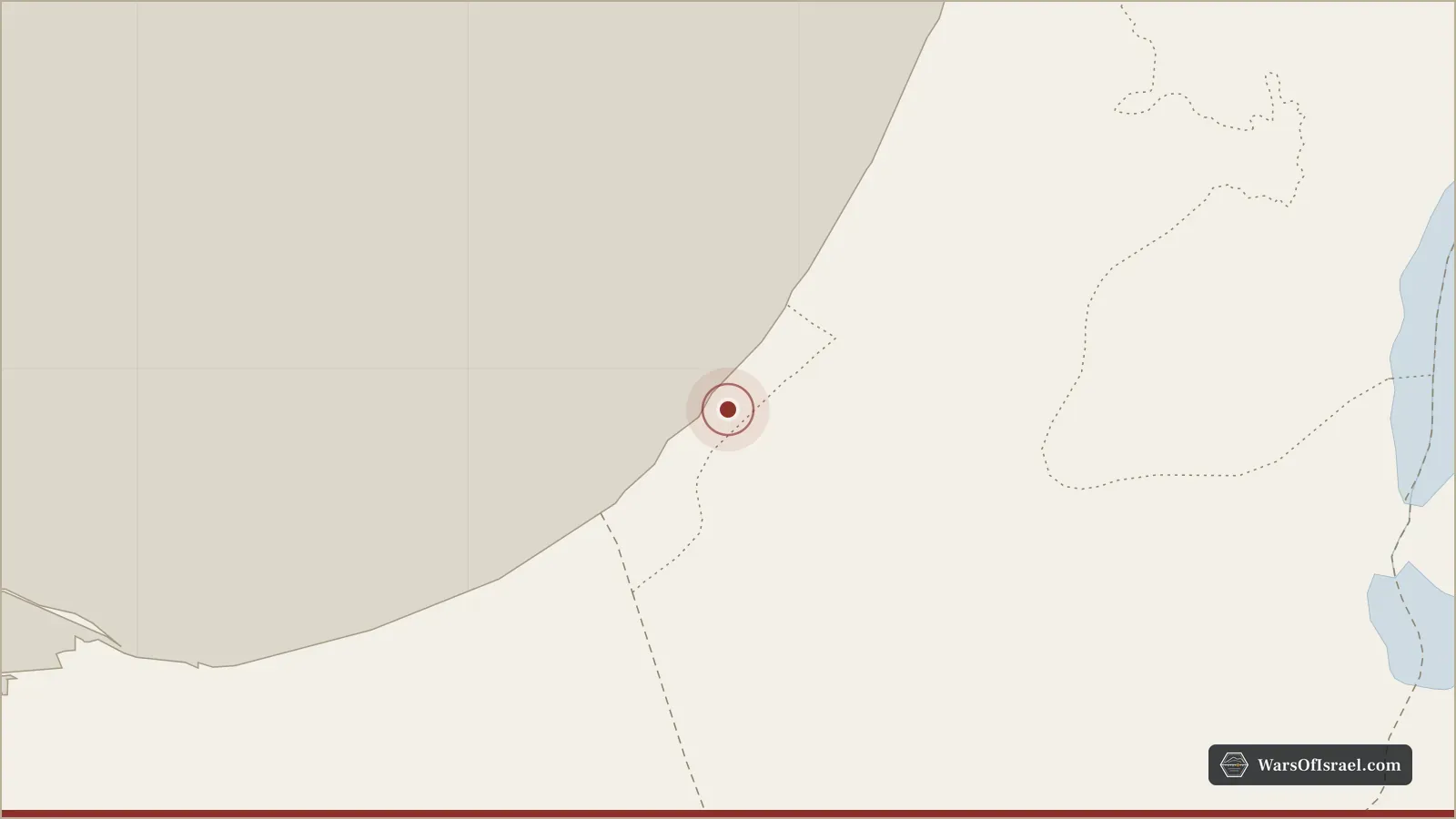
As of October 30, 2026, the IDF and Shin Bet said Israeli airstrikes in Gaza had killed Hamas commanders and operatives, including Ihab Jamil Abu Taqiya, whom they accused of helping hold hostages abducted on October 7, 2023. The announcements covered strikes on October 28 and 29, including one in Nuseirat, while a ceasefire remained in place. Israel described the targets as continuing to prepare attacks and rebuild Hamas's capabilities.
The announcements connect two distinct parts of the war: responsibility for holding hostages at its beginning and the military's assessment of threats during the ceasefire. The Israeli statements make both claims, but provide different levels of detail about them. They name former captives associated with Abu Taqiya while giving no comparable public chronology of the attacks he was said to be preparing in October 2026.
The Nuseirat strike and the hostages named
The IDF's October 30 announcement said Abu Taqiya, a squad commander in Hamas's military wing, was killed in Nuseirat on October 29. It identified a second man killed in the same strike as Ibrahim Gihad Muhammad Abu Oshaiba, a Hamas platoon commander. The Jerusalem Post reported the announcement as a joint IDF and Shin Bet statement; Israel National News also carried the military's account.
The military named 12 hostages whom it said Abu Taqiya had helped hold: Raya Rotem, Hila Rotem Shoshani, Emily Hand, Ohad Ben Ami, Noa Argamani, Andrey Kozlov, Shlomi Ziv, Almog Meir Jan, Maxim Herkin, Yosef Haim Ohana, Segev Kalfon and Alexander Lobanov.
That list is an Israeli security-service attribution of Abu Taqiya's role. It does not establish that all 12 were held together, at one location, or throughout their captivity by the same man. The statement placed his involvement at the beginning of the war without publishing a separate account for each hostage.
Nuseirat also links the announcement to Operation Arnon, the June 2024 hostage rescue. Israeli forces rescued Argamani, Kozlov, Ziv and Meir Jan there on June 8, 2024, according to the IDF's contemporary account. Their inclusion in the October 2026 list does not, by itself, locate Abu Taqiya at the rescue sites or establish his role during that operation.
Separate attacks in central and southern Gaza
The IDF's dated October 30 bulletin (opens in a new tab) also records an announcement that the IDF and Shin Bet destroyed two Hamas weapons stores in Al-Bureij and Gaza City on October 29. The military said they contained RPG weapons, explosive devices, rockets, Kalashnikov rifles, grenades, ammunition magazines and other equipment.
The southern strikes took place a day earlier, on October 28. According to the security services, Muhammad Alian Biyuk, identified as a member of Hamas's Nukhba force, was killed in the Khan Yunis area. A separate strike in Rafah killed Hamas commander Al-Hamam Jaber Al-Sayed Abu Labda and operatives Mahmoud Abu Naama and Muhammad Hamad Shreiki Sultan.
These were separate incidents announced on the same date, not one operation at a single site. The statements named four men in the southern strikes and two in Nuseirat. Those names should not be treated as a comprehensive casualty count for every strike announced on October 30, including the weapons-store attacks.
What the military said about the ceasefire
The IDF said the targeted men had advanced attacks on soldiers and Israeli civilians and were rebuilding Hamas's military capabilities in violation of the ceasefire. Its stated justification therefore extended beyond their wartime affiliations: it described them as presenting continuing threats that required action.
Those remain the military's claims about the targets and the ceasefire. The published announcements did not supply enough detail to reconstruct each purported violation independently or assess every strike against the agreement's terms.
Israel National News reported the military's statement that precision weapons and aerial surveillance were used before the strikes against personnel. The Jerusalem Post separately reported advance warnings before the weapons-store attacks. The latter claim should not be generalized into a statement that every person targeted in the series received a warning.
Measures intended to reduce civilian harm do not establish that no civilians were harmed. The cited announcements do not provide a complete civilian casualty assessment, and this report does not infer one from their silence.
Continued operations under the agreement
The IDF said Southern Command troops remained deployed in Gaza under the agreement and would continue acting against threats. The October 30 announcements therefore describe military action during a ceasefire, without announcing a replacement agreement or a new withdrawal timetable.
The site's account of Gaza ceasefires and hostage releases provides the earlier chronology. The new development is narrower: Israel has publicly identified additional men it says held hostages and described separate attacks on personnel and weapons stores. Whether those attacks alter the ceasefire's implementation cannot be determined from these military announcements alone.