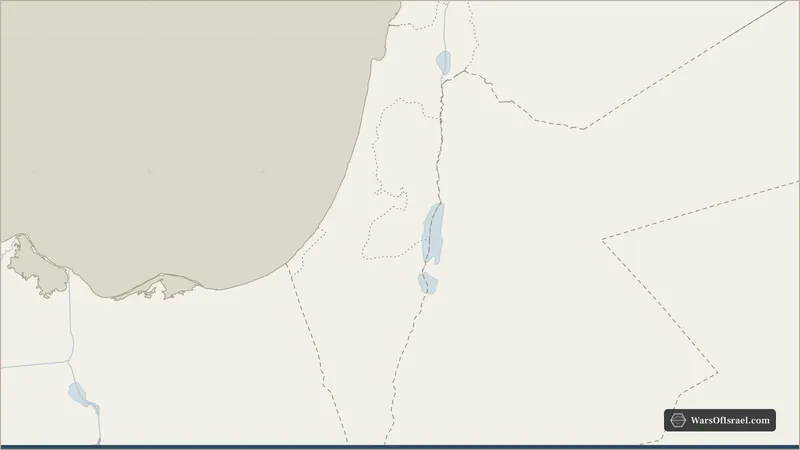
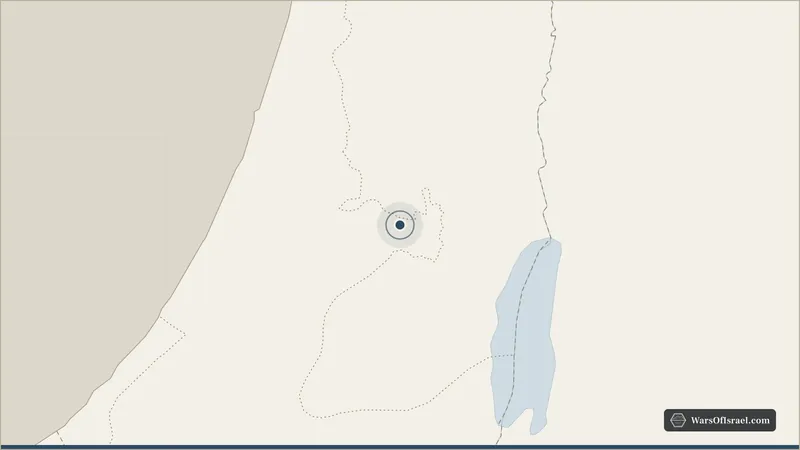
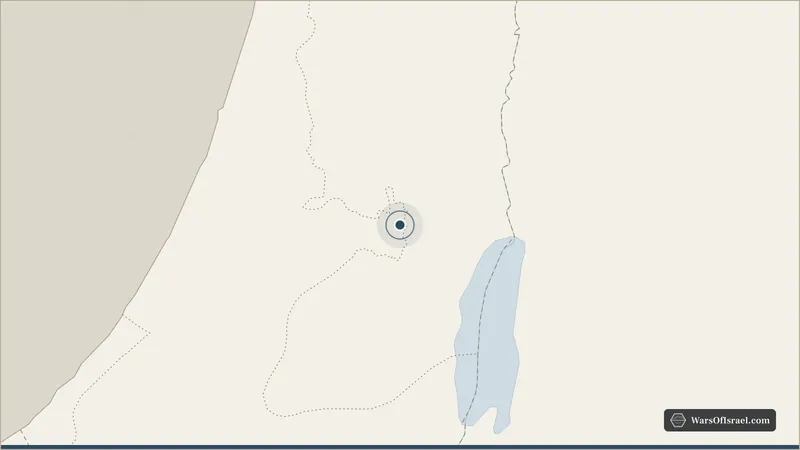
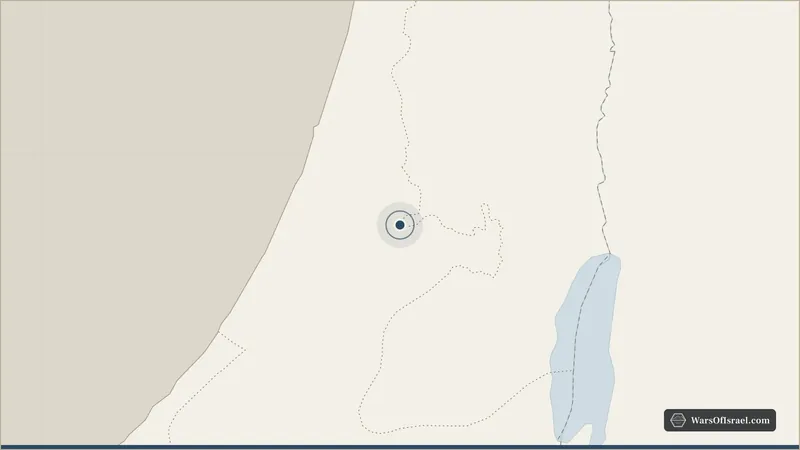
The battle for Jerusalem (1947 to 1948)
The story of the eight months in which Jerusalem was besieged, fought over street by street, and finally split between Israel and Jordan.
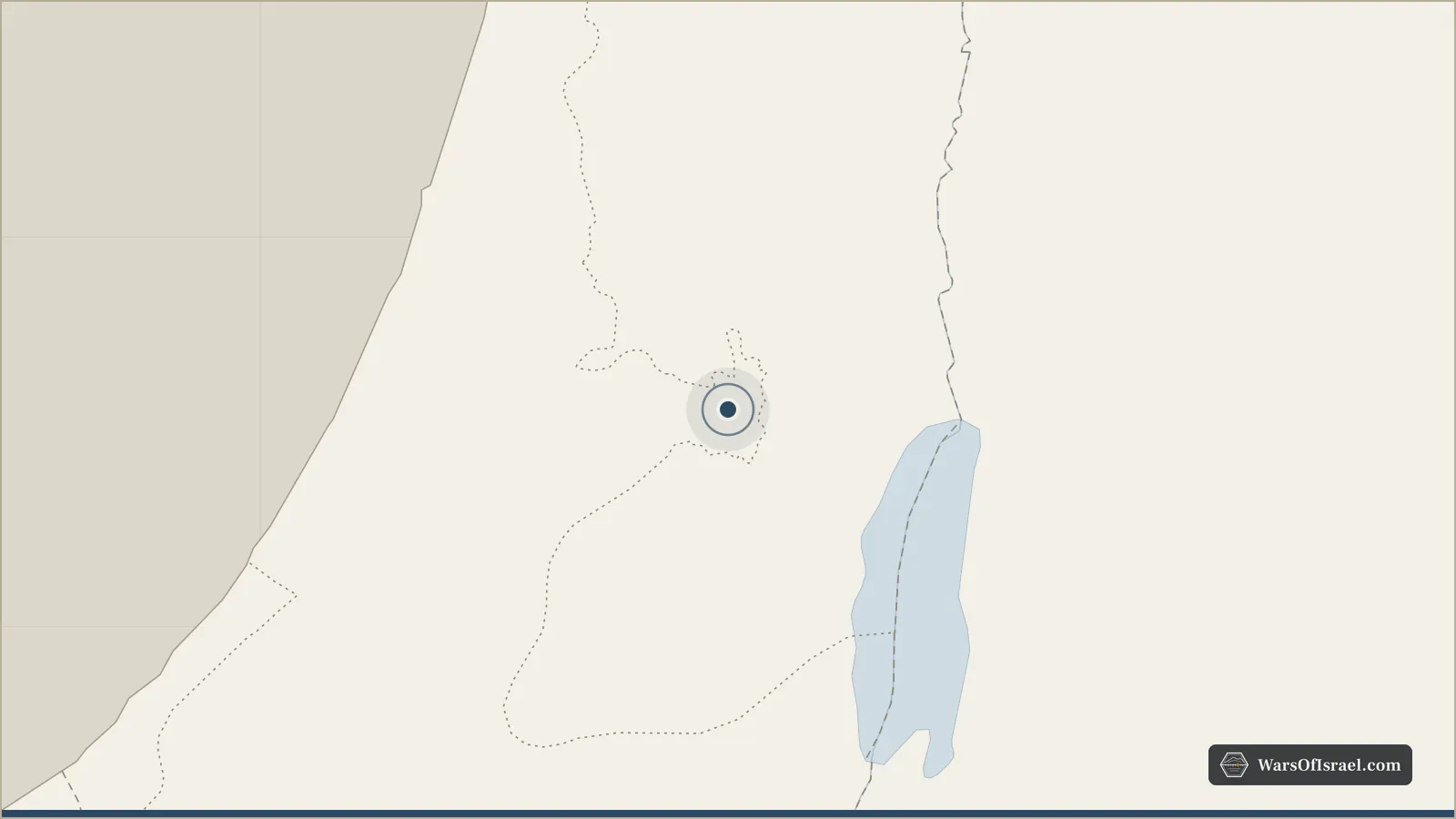
Jerusalem was the one place in the country where the United Nations had promised neither side sovereignty, and it became the place both fought for hardest. From December 1947 until the second truce of July 18, 1948, about 100,000 Jews in the city lived through bombings, a blockade of the only road to the coast, rationed water and weeks of artillery fire. They held the new city. The Jewish Quarter inside the Old City walls did not hold, and it surrendered to the Arab Legion on May 28, 1948. The lines on which the fighting stopped split Jerusalem into Israeli and Jordanian halves for nineteen years.
A city that partition left to the world
The UN partition plan of November 29, 1947, placed Jerusalem and Bethlehem under an international regime, a corpus separatum. On paper this solved the hardest question. On the ground it meant that the city's Jewish majority, concentrated in the western neighborhoods and in the Jewish Quarter of the Old City, would be surrounded by Arab villages and connected to the Jewish state only by a highway that climbed some 60 kilometers through the hills from the coast.
Fighting began within days. On December 2, 1947, an Arab crowd attacked and burned the Jewish commercial center near Jaffa Gate. Snipers began working along the seam between neighborhoods, and the city broke into armed enclaves. The Haganah's Etzioni Brigade, under David Shaltiel from February 1948, held the Jewish areas, alongside units of the Irgun and Lehi that answered to their own commanders.
The war of bombs and convoys
The first months were fought with explosives as much as rifles. On January 5, 1948, the Haganah blew up the Semiramis Hotel in the Katamon neighborhood, killing about two dozen people, most of them civilians. Arab forces, led in the Jerusalem area by Abd al-Qadir al-Husayni's Army of the Holy War, answered with car bombs driven into the heart of Jewish Jerusalem with the help of British deserters. The Palestine Post building was bombed on the night of February 1. On February 22 three trucks exploded on Ben Yehuda Street, killing between 49 and 58 people according to differing counts. On March 11 a car bomb inside the Jewish Agency compound killed about a dozen.
The deeper threat was hunger. Supplies came up from Tel Aviv in convoys of trucks with armored escorts, and Arab fighters ambushed them at Bab al-Wad, where the road entered a narrow gorge. According to Dov Joseph, who ran the Jewish community's emergency committee, food rationing began on March 31, and the number of trucks reaching the city fell from about 30 a day in January to six a day by March. The Haganah's response, Operation Nachshon, opened the road in April. Large convoys arrived on April 15, 17 and 20, and then the road closed again for weeks.
Inside the city, two events of April defined the war's character for both peoples. On April 9, Irgun and Lehi fighters attacked Deir Yassin, on the western edge of the city, and about 100 villagers were killed. On April 13, Arab forces ambushed the Hadassah medical convoy on its way to Mount Scopus and killed 78 Jews.
The Arab Legion enters the city
As the British evacuated their security zones on May 14, both sides raced to take them. Haganah and Irgun units seized the Russian Compound, the main post office and the neighborhoods of Katamon and Talbiyeh, which had largely emptied of their Arab residents. Outlying Jewish communities could not be held: Atarot and Neve Yaakov to the north were evacuated on May 17 and 18, and to the south Gush Etzion had already fallen on May 13.
King Abdullah of Transjordan had hoped to avoid a battle for the city, but the Jewish advance and Arab pressure changed his mind. He ordered John Glubb, the British commander of the Arab Legion, into Jerusalem on May 17, and Legion units entered from the north on May 19. Their attacks on the Notre Dame compound opposite the New Gate were stopped, and the line along the Old City walls hardened.
The fall of the Jewish Quarter
The Jewish Quarter inside the walls was home to about 2,000 people, mostly elderly and religious, defended by a few hundred Haganah and Irgun fighters under siege since the winter. On the night of May 18 to 19, a Palmach force of the Harel Brigade broke through the Zion Gate and brought in reinforcements and supplies, but it could not hold the breach. The Legion closed the gate the next day and began clearing the quarter house by house with artillery and explosives.
The Hurva synagogue, the largest in the Old City, was blown up on May 27. The next day, May 28, 1948, the remaining defenders surrendered. About 1,200 residents were escorted out to the Jewish side through the Zion Gate. Some 290 able-bodied men and about 50 wounded were taken as prisoners of war to Transjordan. Under Jordanian rule the quarter's synagogues were destroyed or left in ruins, and Jews were barred from the Western Wall until 1967.
Siege, shelling and the Burma Road
For Jewish west Jerusalem, the second half of May was the hardest stretch of the war. The Legion's artillery shelled the city daily. Water came from cisterns, distributed from carts, and from May 12 the ration was set at two gallons per person a day. To the south, kibbutz Ramat Rachel changed hands several times in fighting with Egyptian forces and Muslim Brotherhood volunteers but ended in Israeli hands.
The road to the coast was blocked by the Legion at Latrun, and the Israeli assaults there failed. Engineers instead cleared a track through the hills to the south, which became known as the Burma Road. Its steepest section opened to vehicles on June 10, the day before the first UN truce took effect on June 11. A water pipeline was laid alongside it within days. The siege was broken, not by a victory at Latrun, but by a bypass.
The last attempt and a divided city
Fighting resumed briefly in July. In Operation Kedem, on the night of July 16 to 17, Irgun and Lehi fighters, with units of the Etzioni Brigade, attacked the Old City. The Irgun broke through at the New Gate, but the other attacks failed, and Shaltiel ordered a withdrawal before dawn. The second truce took effect on July 18.
On November 30, 1948, Moshe Dayan, the Israeli commander in Jerusalem, and Abdullah al-Tell, the Legion's commander in the city, signed a ceasefire that fixed the front lines. The armistice with Jordan of April 3, 1949, confirmed them. Mount Scopus, with the Hebrew University and the Hadassah hospital, became a demilitarized Israeli enclave reached by a fortnightly convoy through Jordanian territory. Between the two halves ran a strip of no man's land, concrete walls and barbed wire.
Outcome and significance
The Jewish city survived because the road was reopened in time and because west Jerusalem's civilians endured weeks of shelling and thirst. The Jordanians kept the Old City and the holy places, and the Arab neighborhoods in the west of the city emptied of their residents, who did not return. Israel declared west Jerusalem its capital in December 1949; the international community did not recognize the move and kept its embassies in Tel Aviv.
For Israelis, the battle left its own symbols: the burned-out armored cars at Shaar HaGai, the empty Jewish Quarter seen from the walls of Mount Zion, and Dov Joseph's account of the rationed city, The Faithful City. For Palestinians, west Jerusalem's lost neighborhoods, Katamon, Talbiyeh and Baqa among them, became part of the memory of the Nakba. The city would not be united again until the 1967 war, and only within the larger 1947 to 1949 war can the battle be understood at all.
Timeline
- December 2, 1947: An Arab crowd burns the Jewish commercial center near Jaffa Gate.
- January 5, 1948: The Haganah bombs the Semiramis Hotel in Katamon.
- February 22, 1948: A bombing on Ben Yehuda Street kills between 49 and 58 people.
- April 13, 1948: The Hadassah convoy to Mount Scopus is ambushed in Sheikh Jarrah.
- May 19, 1948: The Arab Legion enters Jerusalem; a Palmach force briefly breaks through the Zion Gate.
- May 28, 1948: The defenders of the Jewish Quarter surrender.
- June 10, 1948: The steepest section of the Burma Road opens to vehicles.
- June 11, 1948: The first truce takes effect.
- July 16 to 17, 1948: Operation Kedem fails to take the Old City.
- November 30, 1948: Moshe Dayan and Abdullah al-Tell sign a ceasefire in Jerusalem.