BattleSecond intifada to the Gaza operationsReference entry
The battle of Jenin (2002)
The entry explains the fighting in the Jenin refugee camp during Operation Defensive Shield, its toll on both sides and the long dispute over what happened there.
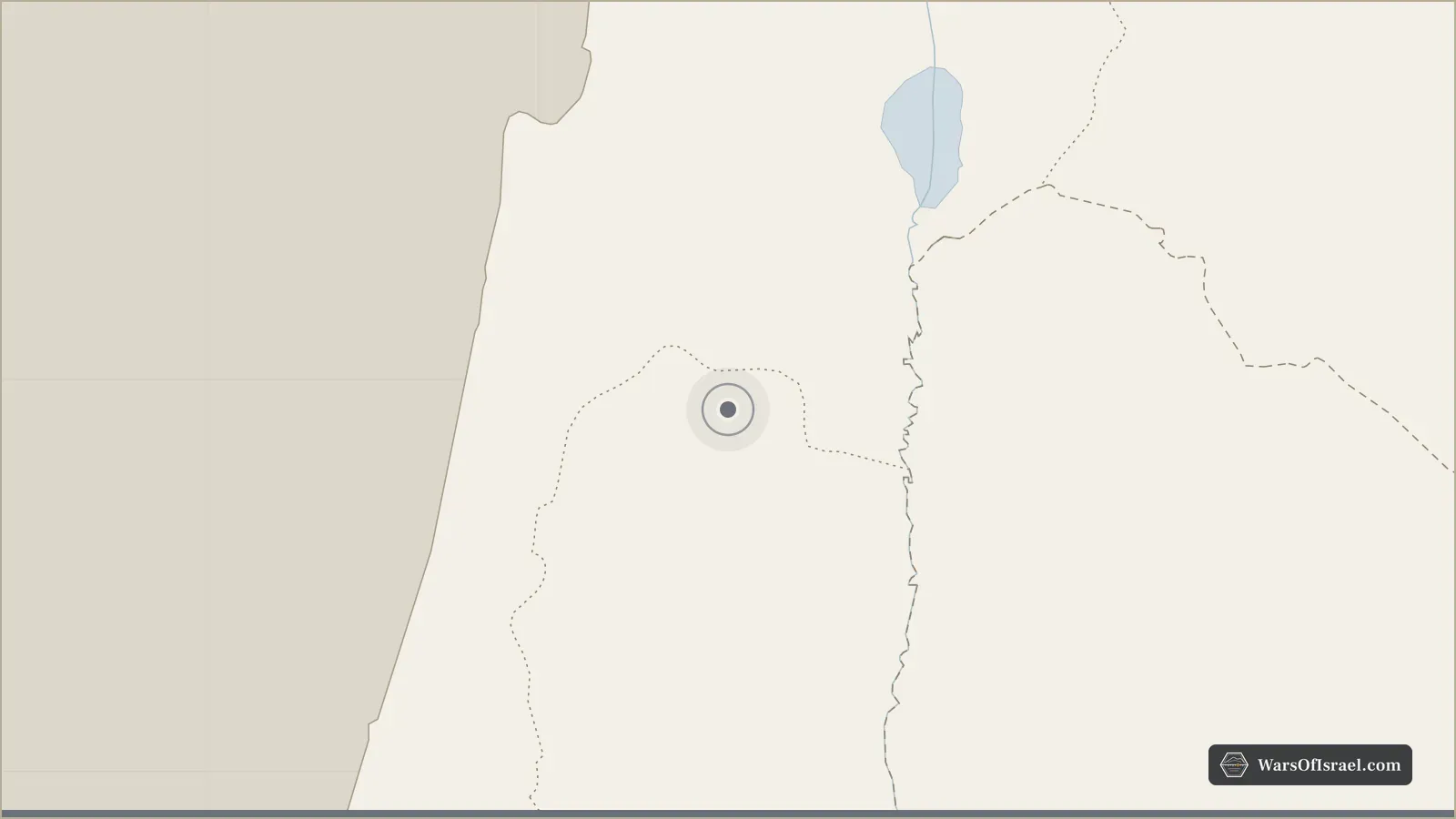
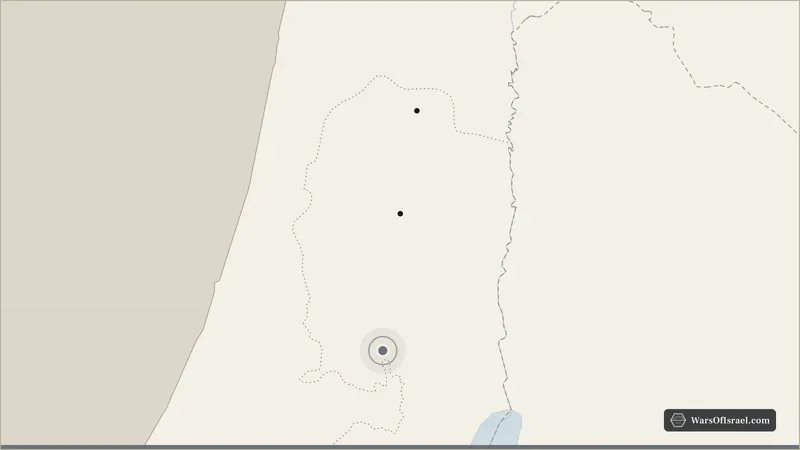
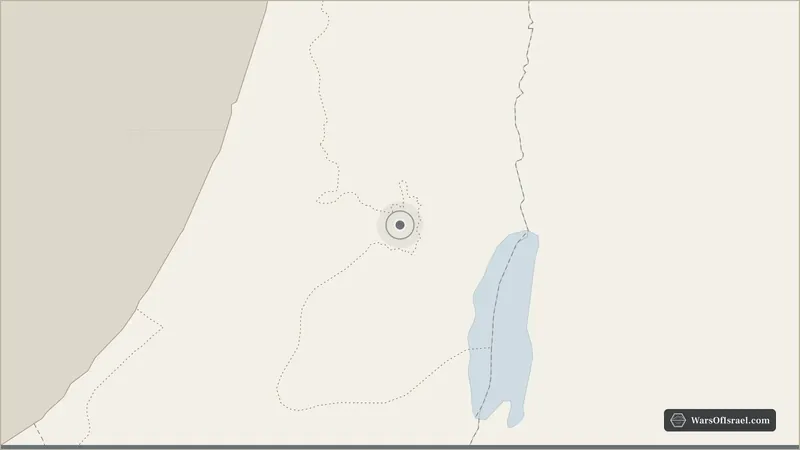
The battle of Jenin was the fiercest fighting of Operation Defensive Shield, Israel's offensive in the West Bank in the spring of 2002. From April 3 to 11, 2002, IDF infantry, armor and engineering units fought their way into the Jenin refugee camp, a crowded area of less than half a square kilometer beside the city of Jenin, against fighters of Palestinian Islamic Jihad, Hamas, Fatah's al-Aqsa Martyrs' Brigades and other groups. According to the United Nations, 23 Israeli soldiers and at least 52 Palestinians were killed, up to half of the Palestinians possibly civilians. Palestinian officials' claims during the fighting that hundreds had been massacred were not substantiated by the UN or by human rights investigators, but the battle remains one of the most disputed episodes of the second intifada.
Why the camp
The Jenin camp was established in the 1950s for refugees of the 1948 war, and by 2002, according to Human Rights Watch, about 14,000 people lived there. Israeli security services regarded it as one of the main bases of the bombing campaign: Israeli officials said that a large number of the suicide bombers sent into Israel in 2001 and 2002 had come from the Jenin area. After the Park Hotel bombing in Netanya on March 27, 2002, the camp was an obvious objective of the operation.
The fighters in the camp, estimated by Human Rights Watch at 80 to 100 armed men, had prepared for an assault. They laid explosive charges and booby traps in the alleys and houses, and the dense layout of the camp, with buildings separated by passages too narrow for vehicles, favored the defenders.
The fighting
The IDF entered the camp from several directions on April 3, 2002, with reserve infantry, regular infantry and special forces, supported by tanks and helicopters. Progress was slow and costly. Rather than bomb the camp from the air, the Israeli command chose to fight through it on foot, a decision Israeli officers later described as a way to limit civilian casualties at the price of soldiers' lives. As casualties grew, the IDF brought in armored D9 bulldozers, which cleared paths by demolishing houses, especially in the Hawashin neighborhood at the center of the camp.
The worst day for the IDF came on April 9, when 13 reserve soldiers were killed in an ambush in the alleys of the camp; with another soldier killed later that day, it was the IDF's deadliest day of combat since the 1982 Lebanon War. The remaining armed men surrendered on April 11. The IDF kept the camp closed until it withdrew on April 18, and humanitarian and press access during the fighting was largely blocked, which helped rumors grow.
The dispute over what happened
During and immediately after the fighting, senior Palestinian officials accused Israel of massacring hundreds of people in the camp. The UN Secretary-General's report of August 2002 found that the claims of 500 or more dead were not substantiated by later evidence, and counted at least 52 Palestinians killed, up to half of whom may have been civilians. Human Rights Watch, which investigated on the ground, found no evidence of a massacre, but documented 52 Palestinian deaths, at least 22 of them civilians, and concluded that the IDF had committed serious violations, some of which, in its view, appeared to be war crimes, including the use of civilians as human shields and the obstruction of medical care. It also found that at least 140 buildings had been destroyed and about 4,000 people made homeless. The IDF rejected the accusation that it had acted unlawfully and said its opponents had fought from among the civilian population.
A UN fact-finding mission, authorized by Security Council Resolution 1405 on April 19, 2002, was disbanded in early May after Israel refused to cooperate with it. The dispute continued in culture and the courts. The 2002 documentary "Jenin, Jenin" by Mohammad Bakri presented Palestinian testimonies of atrocities, and in 2022 Israel's Supreme Court upheld a ban on screening it in Israel, after a lower court found that it defamed an IDF officer who appeared in it.
Significance
For the IDF, Jenin became the reference point for urban warfare in the West Bank, studied for its tactics and its cost. For Palestinians, the camp became a symbol of resistance and of destruction, and it was a center of armed activity again in later years, the target of repeated Israeli operations in the 2020s.