BattleWar of IndependenceReference entry
The battle of Mishmar HaEmek (1948)
Why a kibbutz on the Jenin to Haifa road became the target of the largest Arab offensive of the civil war, and how the attack turned into a defeat.
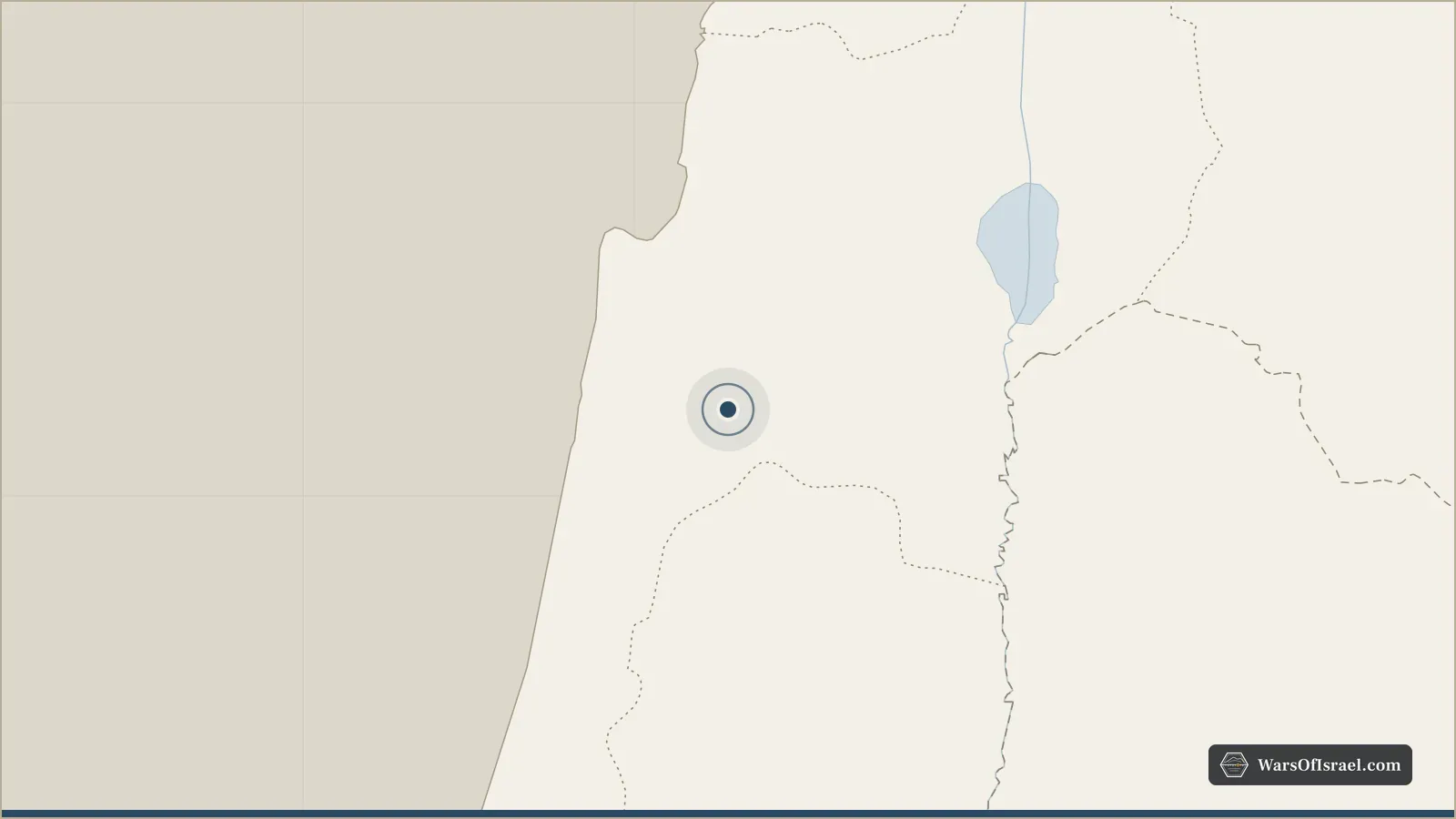
The battle of Mishmar HaEmek, fought from April 4 to 15, 1948, was the Arab Liberation Army's biggest attempt to take a Jewish settlement during the civil war that preceded Israel's independence, and it ended in a clear defeat for the attackers. Fawzi al-Qawuqji's troops shelled the kibbutz with artillery, according to several accounts the first use of artillery in the war, but could not break in. A Haganah counteroffensive led by Yitzhak Sadeh then drove them back toward Jenin and captured the Arab villages around the kibbutz.
Background: a kibbutz on the road to Haifa
Mishmar HaEmek, founded in 1926 by the Hashomer Hatzair movement, sat on the western edge of the Jezreel Valley, beside the road that ran from Jenin through the hills of Menashe to Haifa. In 1947 it had about 550 residents. Whoever controlled the area controlled one of the main approaches to Haifa, the country's largest port, which was itself divided between Jewish and Arab neighborhoods.
The Arab Liberation Army was a force of volunteers from Syria, Iraq, Lebanon and other Arab countries, organized by the Arab League and commanded by al-Qawuqji, a veteran of the 1936 revolt. It entered the country from January 1948, had failed to take kibbutz Tirat Zvi in February, and was looking for a success. Its main units were concentrated in the hills around Jenin and Nablus, the so-called triangle.
What happened
On the afternoon of April 4, 1948, al-Qawuqji's forces, about 1,000 men supported by several guns supplied by the Syrian army, opened fire on the kibbutz. The shelling destroyed many of its buildings and killed and wounded several residents. The kibbutz was defended at first by about 170 members and Haganah fighters, later reinforced by two Palmach companies. Infantry attacks were beaten back.
On April 7 a British unit arranged a 24-hour ceasefire, during which al-Qawuqji demanded the surrender of the kibbutz. The kibbutz refused. David Ben-Gurion and the Haganah command decided not merely to defend but to counterattack.
From the night of April 8 to 9, a Haganah force under Yitzhak Sadeh, the founder of the Palmach, and Dan Laner went on the offensive in the hills around the kibbutz. Over the following days it captured the villages of Ghubayya al-Tahta, Ghubayya al-Fauqa, Abu Shusha, Abu Zurayq, al-Kafrayn and al-Mansi, among others. Al-Qawuqji's troops, threatened with encirclement, withdrew toward Jenin on April 12, and the fighting ended by April 15. Most of the villages' residents fled or were driven out during the fighting, and the Haganah destroyed most of the villages.
A related battle followed to the northwest. The Druze battalion of the Arab Liberation Army attacked Jewish positions near Ramat Yohanan, east of Haifa, and was repulsed on April 16 with heavy losses. Some of its soldiers deserted in the weeks that followed, and the battalion's commander later agreed to cooperate with the Haganah.
Outcome and significance
The battle ended the Arab Liberation Army's ambitions in the Jezreel Valley and secured the southeastern approaches to Haifa. John Glubb, the British commander of Transjordan's Arab Legion, later called the attack a fiasco. Its failure, coming in the same days as Operation Nachshon near Jerusalem, marked the moment when the initiative in the civil war passed to the Haganah.
The victory also opened the way to the battle of Haifa, which ended with the city in Jewish hands on April 22. For the Palestinian Arab villages around Mishmar HaEmek, the battle meant the end: none was rebuilt, and their residents became part of the refugee population that the 1947 to 1949 war created. Historians such as Benny Morris see the villages' fate as an early example of the Haganah's practice, under Plan D, of clearing villages that lay along vital routes.