Military operationWar of Independence
Operation Nachshon (1948)
How the Haganah's first brigade-size operation opened the road to Jerusalem for two weeks, and why it marked a turning point in the 1947 to 1949 war.
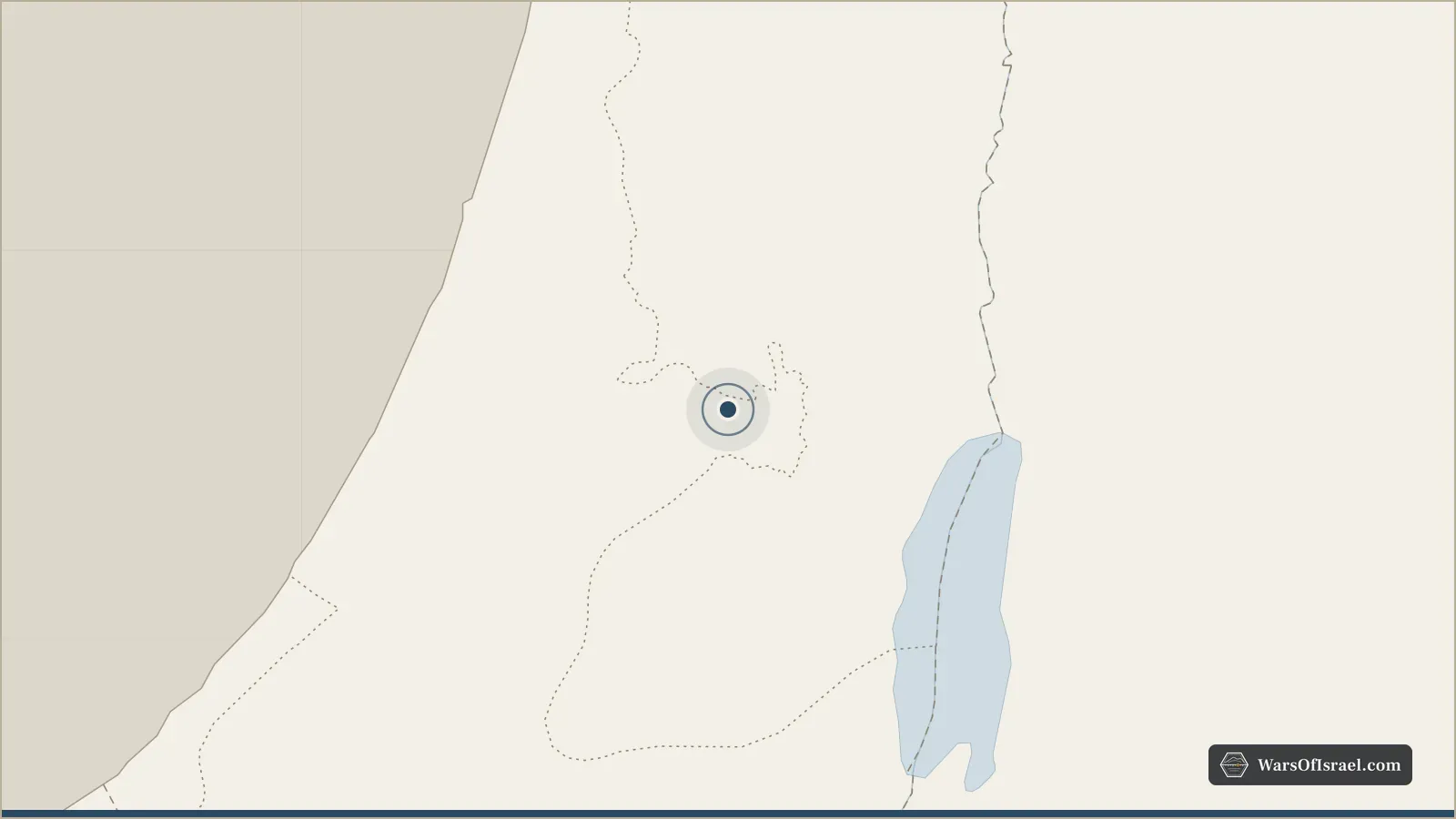
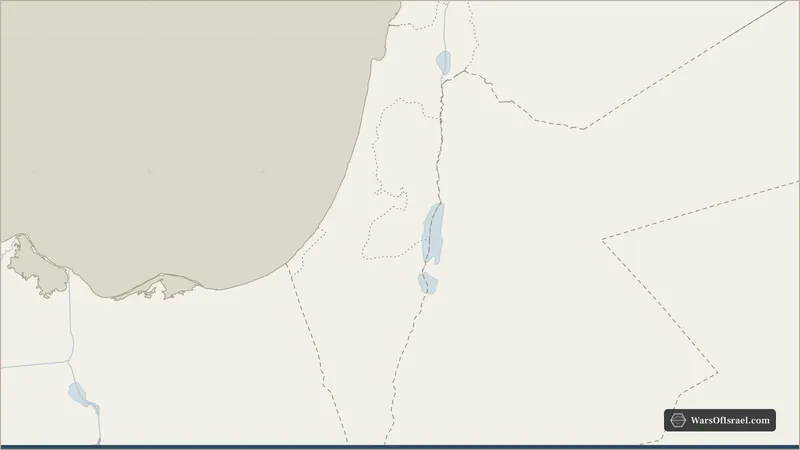
Operation Nachshon was the Haganah's answer to a question that in late March 1948 looked as if it had no answer: how to keep 100,000 Jews in Jerusalem alive when every convoy up the mountain road was being destroyed. Launched on the night of April 5, 1948, with about 1,500 fighters, it was the first time the Haganah fielded a force the size of a brigade. In two weeks of fighting it captured the villages that commanded the road, saw the Arab commander Abd al-Qadir al-Husayni killed at al-Qastal, and pushed several large convoys into the city. The road closed again within days, but the Haganah had changed from a defensive militia into an army that attacked.
The road to Jerusalem in March 1948
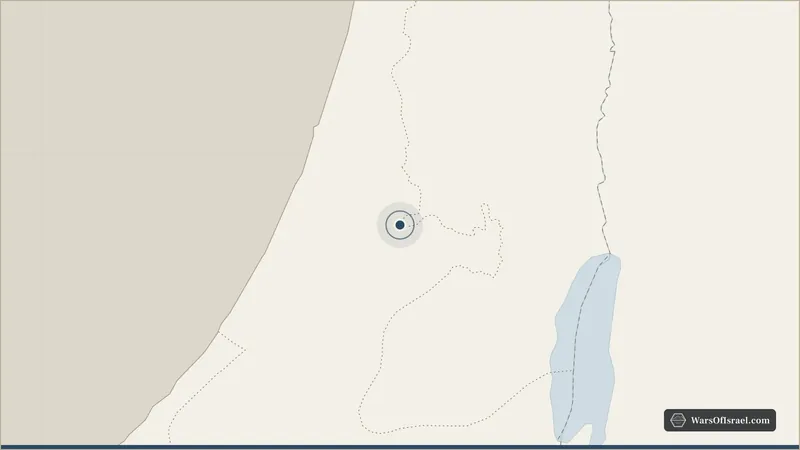
The highway from the coast to Jerusalem left the plain at Bab al-Wad, Shaar HaGai in Hebrew, and climbed through a narrow wooded gorge overlooked by Arab villages. From December 1947 local fighters and the Army of the Holy War, led in the Jerusalem area by Abd al-Qadir al-Husayni, ambushed the Jewish convoys that used it.
By the end of March the system had broken down. On March 27 the Nebi Daniel convoy returning from Gush Etzion was trapped and lost its armored vehicles. On March 31 a convoy of some 60 vehicles was ambushed near Hulda, five vehicles were lost and 17 men were killed. According to Dov Joseph, the head of the Jewish community's emergency committee in Jerusalem, food rationing in the city began the same day, and the number of trucks getting through had fallen from about 30 a day in January to six a day in March.
At a meeting of the Haganah command on April 1, David Ben-Gurion insisted that the road be opened by a single concentrated force rather than by escorts spread along the convoys. Commanders proposed a few hundred men. Ben-Gurion demanded more, and the figure settled at about 1,500, drawn from almost every unit the Haganah could spare.
Plan D and the forces assembled
Nachshon became the first operation under Plan D (Tochnit Dalet), the Haganah's plan for securing the territory of the Jewish state and the routes to Jewish settlements beyond it before the British departure and the expected Arab invasion. The plan allowed the capture of hostile villages along those routes and, where they resisted, their destruction or the expulsion of their residents. In Benny Morris's account, Nachshon was the first time the Haganah systematically took and destroyed villages along a strategic route.
The force, named after Nachshon ben Aminadav, who according to Jewish tradition was the first to step into the Red Sea, was commanded by Shimon Avidan of the Givati Brigade. It drew three battalions from Givati, the Palmach and other units. Its timing depended on weapons. On the night of March 31 to April 1, a chartered aircraft landed at a makeshift airstrip near Beit Daras with 200 rifles and 40 machine guns from Czechoslovakia. On April 2 the ship Nora reached Tel Aviv with some 4,500 rifles and 200 machine guns hidden under a cargo of onions and potatoes. Many of the rifles were rushed straight to the units preparing for Nachshon.
The battle for al-Qastal
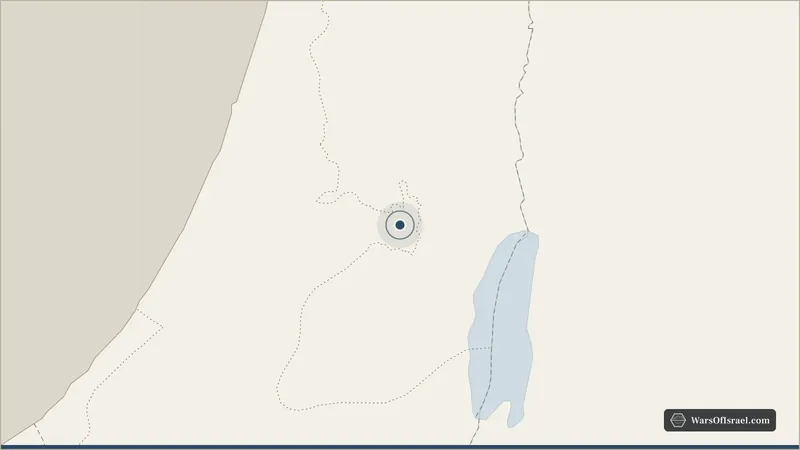
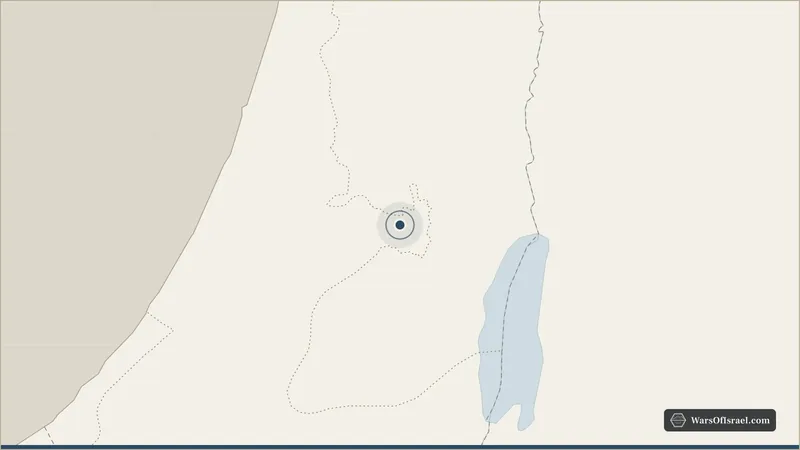
The key to the road was al-Qastal, a hilltop village west of Jerusalem with a commanding view of the highway. A Palmach force had already taken it on April 3, a few days before the main operation began, and its defenders now faced repeated counterattacks.
Abd al-Qadir al-Husayni had just returned from Damascus, where he had asked the Arab League's military committee for arms and been sent back largely empty-handed. He took personal command of the attack on al-Qastal. On the night of April 7 to 8, in fog, he walked toward the Haganah positions and was shot dead. His men, learning of his death the next morning, stormed the village in fury and retook it on the afternoon of April 8. But many of them then left the hill to attend his funeral in Jerusalem, held on April 9 on the Temple Mount, al-Haram al-Sharif, and attended, according to Dov Joseph, by about 30,000 people. A Palmach force recaptured al-Qastal almost unopposed on the night of April 8 to 9 and this time blew up the village's houses.
His death removed the most capable Palestinian Arab commander of the war. Historians on all sides agree that it badly weakened Arab organization around Jerusalem in the weeks that followed.
The convoys reach the city
Elsewhere along the corridor, Givati and Palmach units took villages including Hulda and Deir Muheisin near the western end of the corridor, and the road was secured for the first time in months. The first large convoy, according to Dov Joseph about 130 trucks carrying some 550 tons of food, reached Jerusalem on April 15. A second, of about 300 trucks, arrived on April 17. The third, on April 20, was attacked at Bab al-Wad and fought its way up the road; Ben-Gurion was among those who traveled in it.
The operation's planners had hoped for much more. In all, about 1,800 tons reached the city, against a target of some 3,000. The Palmach's Harel Brigade, formed during the operation, continued the fighting in the hills in Operation Harel. By the end of April the Arab forces had regrouped and the road was closed again. Jerusalem would not be supplied regularly until the Burma Road opened in June.
Deir Yassin and the wider war
On April 9, the day of al-Husayni's funeral, Irgun and Lehi fighters attacked the village of Deir Yassin on the western edge of Jerusalem, near the operation's area. They acted independently, with covering fire and later reinforcements from the Haganah and Palmach, and about 100 villagers were killed. The killings were not part of Nachshon's orders, and the Jewish Agency condemned them, but they took place during the same struggle for the western approaches to the city, and the fear they spread had effects far beyond it. They are told in a separate entry on the Deir Yassin massacre.
Outcome and significance
In military terms Nachshon was a limited success: it took every objective but did not hold the road. Its larger importance was the change it marked. For the first time the Haganah had concentrated a large force under one commander, seized ground and kept it, and in doing so moved from defense to offense across the country. Within weeks the Haganah had won at Mishmar HaEmek and taken Tiberias, Haifa, Safed and Jaffa.
For the Palestinian Arabs, the loss of Abd al-Qadir al-Husayni and the destruction of the villages along the road began the unraveling of their military position around Jerusalem. The villages captured during the operation were not rebuilt, and their people became refugees. The supplies that did get through helped Jerusalem survive the hardest weeks of the siege that came after the Arab Legion entered the city in May, and the fight for the road would continue at Latrun. Nachshon is one of the opening chapters of the decisive phase of the 1947 to 1949 war.
Timeline
- March 31, 1948: A convoy is ambushed near Hulda and 17 men are killed; rationing begins in Jerusalem.
- April 1, 1948: A Czechoslovak arms flight lands near Beit Daras; the Haganah command approves a 1,500-man operation.
- April 3, 1948: A Palmach force captures al-Qastal.
- April 5, 1948: Operation Nachshon begins.
- April 8, 1948: Abd al-Qadir al-Husayni is killed at al-Qastal, and his men retake the village.
- April 9, 1948: The Palmach retakes al-Qastal; al-Husayni is buried in Jerusalem; Deir Yassin is attacked.
- April 15, 1948: The first large convoy reaches Jerusalem.
- April 20, 1948: A convoy fights its way through Bab al-Wad; the operation ends.