The battle of Haifa (1948)
How a British pullback, a two-day Haganah offensive and a mass departure turned mixed Haifa into a Jewish-held port weeks before the state was declared.
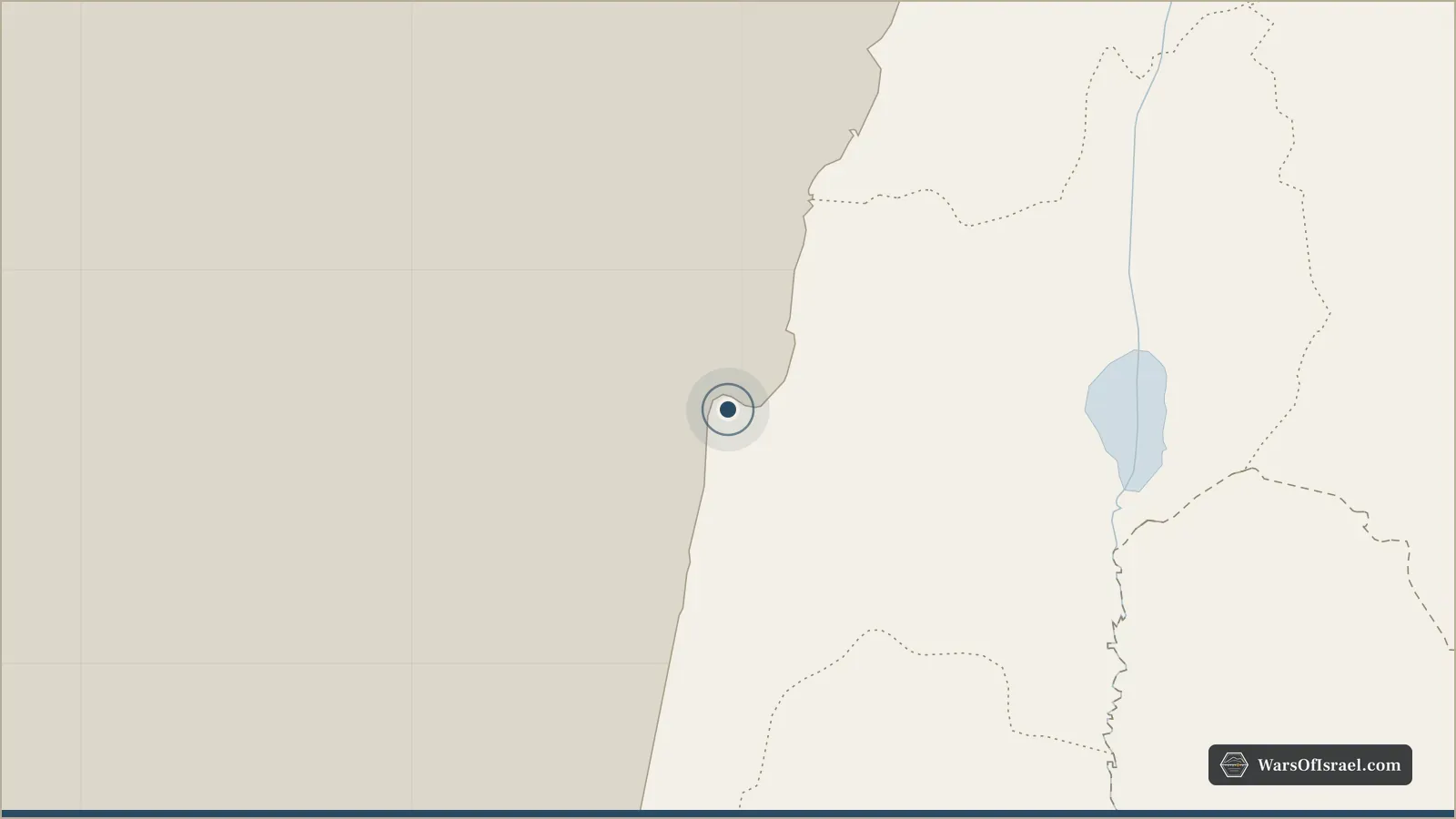
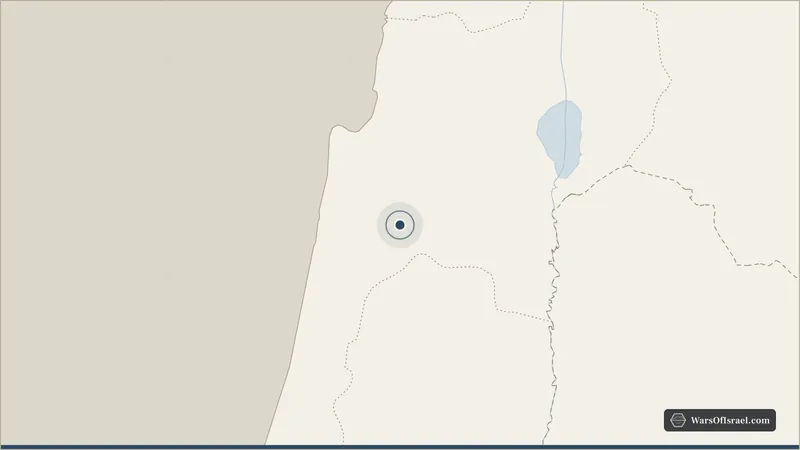
Haifa changed hands in little more than a day. On the morning of April 21, 1948, British troops pulled back from the lines that had separated the Jewish and Arab quarters of the city, and by the evening of April 22 the Haganah's Carmeli Brigade controlled every part of Haifa except the port, which the British kept for their own evacuation. The military result was swift. The human result was larger and slower: of a prewar Arab population of roughly 65,000 to 70,000, only about 4,000 were still in the city by mid-May, according to historian Benny Morris. Why they left, and how much of their departure was driven by fear, by orders or by the conduct of the fighting, is one of the oldest arguments about the 1947 to 1949 war.
A mixed city on the bay
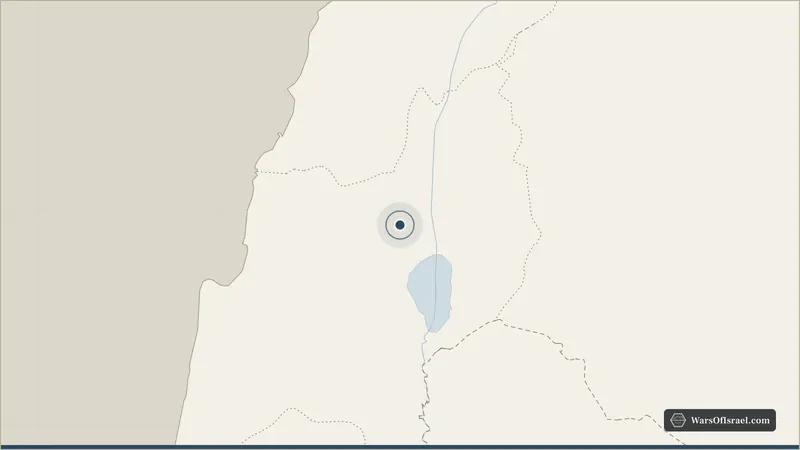
Under the British Mandate, Haifa was the most important port in the country, the terminus of the oil pipeline from Iraq and the site of a large refinery and railway workshops. Its geography also shaped its politics. Jewish neighborhoods such as Hadar HaCarmel sat on the slopes of Mount Carmel, while the Arab population lived largely in the lower city near the harbor, in districts such as Wadi Nisnas, Wadi Salib and Halisa. Morris and other historians put the city's total population before the war at about 135,000 to 140,000, roughly half of them Jews.
The city was also a test of coexistence that had partly worked. Jewish and Arab workers shared workplaces at the port, the refinery and the railways, and the municipality was run by a Jewish mayor, Shabtai Levy, from the early 1940s. That shared life began to fail after the United Nations partition vote of November 29, 1947, which placed Haifa inside the proposed Jewish state.
From partition to open fighting
The months between the partition vote and April 1948 brought a cycle of attacks and reprisals. On December 30, 1947, Irgun members threw bombs into a crowd of Arab laborers waiting outside the gate of the Haifa oil refinery, killing six. Arab workers inside the refinery then turned on their Jewish colleagues and killed 39 of them. The Haganah answered with a raid on the nearby village of Balad al-Shaykh in which, according to most accounts, about 60 to 70 villagers were killed.
Through the winter, sniping, bombings and ambushes became routine along the seams between neighborhoods. Haganah intelligence intercepted most of the arms convoys bound for Arab Haifa, according to the journalist and historian Jon Kimche. On March 17, 1948, Muhammad al-Hunayti, the commander of the Arab militia in the city, was killed when a convoy carrying weapons and explosives from Lebanon was ambushed north of Haifa. His men were demoralized, and the Arab Liberation Army's military committee in Damascus sent a replacement, Captain Amin Izz al-Din, at the end of March.
Many Arab families did not wait for the outcome. According to Morris, between 25,000 and 30,000 Arabs, a large share of them from the wealthier and middle classes, had left Haifa by mid-March 1948, many for Lebanon and Egypt. Their departure weakened the community's leadership just before the decisive test.
The forces in the city
The Haganah force in Haifa was the Carmeli Brigade under Moshe Carmel. For the April operation it fielded five companies of the Field Corps (Hish), a Palmach company and Guard Corps units, with Mordechai Maklef as one of its senior officers. The Arab defense was a mixture of local militia and Arab Liberation Army volunteers under Izz al-Din, perhaps 450 men at the start of April and fewer as desertions grew. Each side's total strength is usually given at somewhere between 500 and 1,000 fighters, though estimates vary widely.
Above both stood the British Army. Major General Hugh Stockwell, who commanded the northern sector, had to evacuate British troops and stores through Haifa's port before the Mandate ended on May 15, 1948. On April 18 he told a representative of the Jewish Agency that his troops would withdraw from the borders between the neighborhoods and concentrate on the port and the routes leading to it. The Haganah understood at once that the lines of contact would soon be open.
Two days in April
The plan
The Haganah had drawn up a plan for Haifa earlier in the spring under the name Misparayim (Scissors). After Stockwell's announcement it was revised and renamed Bi'ur Hametz, a Hebrew phrase for the removal of leavened bread before Passover, which fell that week. The plan called for a three-pronged attack: from Hadar HaCarmel down into Wadi Nisnas and Wadi Salib, and from Neve Sha'anan toward Halisa, with the aim of reaching the lower city, where the Arab headquarters stood near the port and the railway depot.
The attack
The offensive began on April 21. Haganah units pushed downhill from Hadar while mortars shelled the Arab neighborhoods. Loudspeaker vans and radio broadcasts urged residents to leave the combat zones. Morris and Ilan Pappé both quote orders from the brigade's command showing that harsh measures were authorized, and a British officer reported fire falling on civilians who were sheltering or trying to flee. The Haganah also issued instructions to respect places of worship.
Arab resistance began to break on the night of April 21 to 22. Izz al-Din left the city, by most accounts, and the remaining fighters lost cohesion. Thousands of residents streamed toward the harbor, where British troops held the area and boats carried people north to Acre and Lebanon. According to Morris, about 15,000 Arabs left during the two days of fighting alone.
The town hall meeting
On April 22, with the Haganah in control of most of the city, Arab and Jewish representatives met at the town hall, with Stockwell present, to discuss truce terms. The Haifa Arab Emergency Committee told the meeting that it could not sign a truce, because it had no control over the Arab armed elements in the city, and that the Arab population wished to evacuate. Jewish leaders, including Mayor Levy, urged the Arab notables to stay. A British police report from Haifa dated April 26 noted that the Jews were making every effort to persuade the Arab population to remain.
Casualties and the debate over the exodus
Casualty figures for the battle are uncertain and come largely from later estimates. Haganah losses are usually given as about 16 to 20 killed. Estimates of Arab dead vary considerably: about 300 according to Kimche, 100 to 150 in Morris's 2004 study, and about 100 dead and 150 to 200 wounded by Stockwell's own estimate, as cited by Morris.
The departure of Haifa's Arabs has been read in sharply different ways. Morris concludes that the local Arab leadership decided on and organized the evacuation after the defeat, a decision later endorsed by the Arab Higher Committee, while also documenting that Haganah mortar fire and the collapse of the militia drove the panic of the first hours. Khalidi rejects the claim of an Arab evacuation order as without foundation and describes the flight as a direct reaction to Haganah terror tactics. Other historians, including Ilan Pappé, describe the events as an expulsion. Yoav Gelber stresses the earlier collapse of Arab society in the city and the departure of its elites. The documented record supports parts of several of these accounts: Jewish leaders did ask Arabs to stay on April 22, and the military pressure that preceded the meeting was severe.
Aftermath and significance
On April 23, Moshe Carmel declared military rule in Haifa. Irgun units that entered the lower city were pushed out by the Haganah two days later, and widespread looting of abandoned property followed. In July 1948 most of the few thousand Arabs who remained were concentrated in Wadi Nisnas under military administration.
The fall of Haifa came days after the battle of Mishmar HaEmek on the approaches to the city and Operation Nachshon on the Jerusalem road, as the Haganah shifted from defense to offense. It gave the Yishuv the country's main harbor weeks before the British left and before regular Arab armies invaded. Within weeks a second mixed city, Jaffa, collapsed in a similar way, and in May the Palmach took Safed during Operation Yiftach. Haifa remained in Israeli hands throughout the war and became the main gateway for the mass immigration of the following years. In Arab memory, the scenes at the harbor in April 1948 became one of the defining images of the Nakba.
Timeline
- November 29, 1947: The UN General Assembly adopts the partition plan, placing Haifa in the proposed Jewish state.
- December 30, 1947: The Irgun bombing at the oil refinery gate and the killing of 39 Jewish refinery workers.
- March 17, 1948: Arab militia commander Muhammad al-Hunayti is killed in an ambush of an arms convoy.
- April 18, 1948: Maj. Gen. Hugh Stockwell announces the British pullback from the city's lines of contact.
- April 21, 1948: The Haganah launches Operation Bi'ur Hametz.
- April 22, 1948: The Carmeli Brigade controls the city outside the port; truce talks at the town hall.
- April 23, 1948: Moshe Carmel declares military rule in Haifa.
- Mid-May 1948: About 4,000 Arab residents remain in the city, according to Benny Morris.