BattleSix-Day War to Yom KippurReference entry
The battle of Suez city (1973)
The last major battle of the Yom Kippur War: an Israeli armored and paratroop attack into the city of Suez on October 24 to 25, 1973, and the Egyptian defense that stopped it.
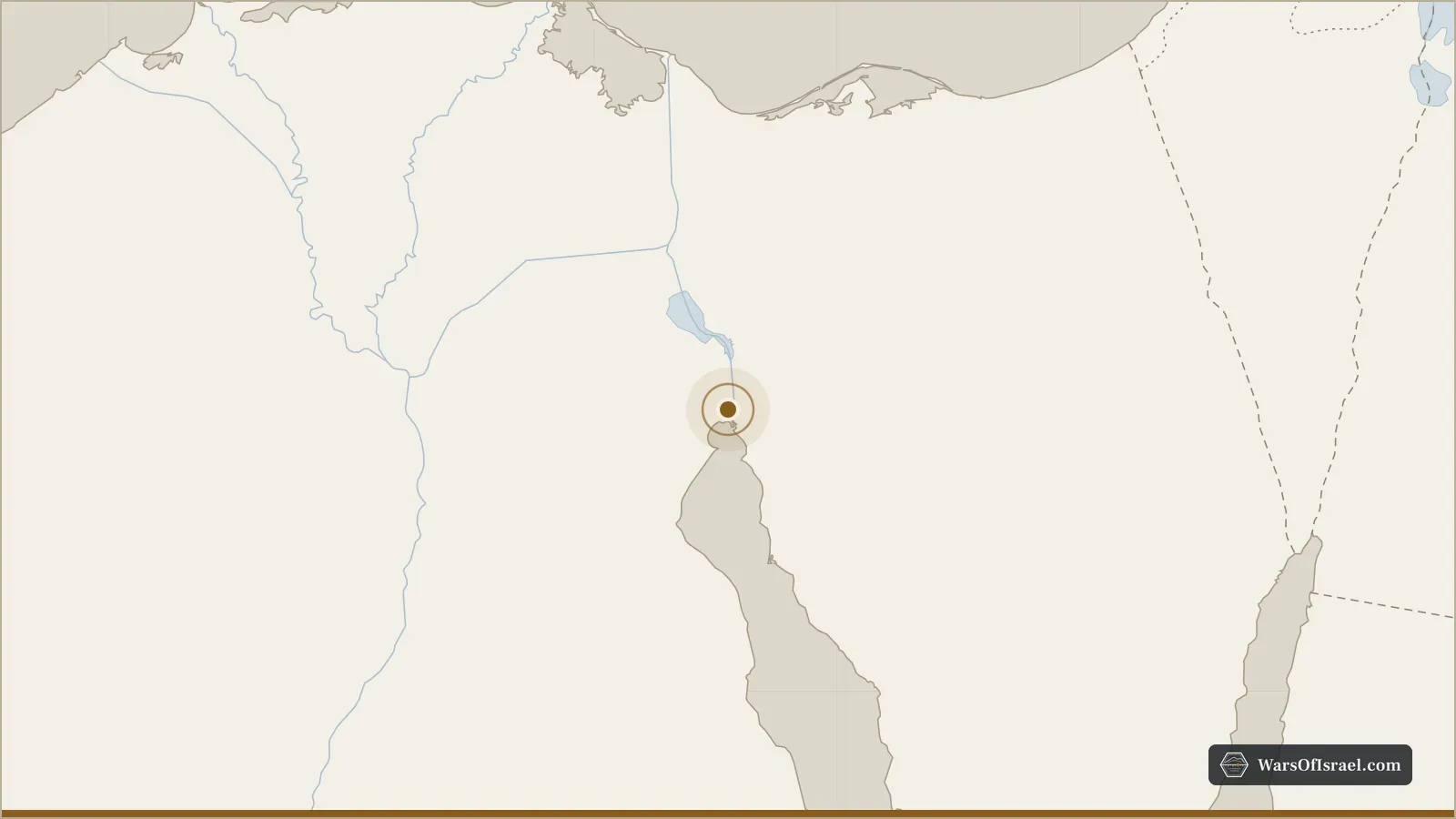
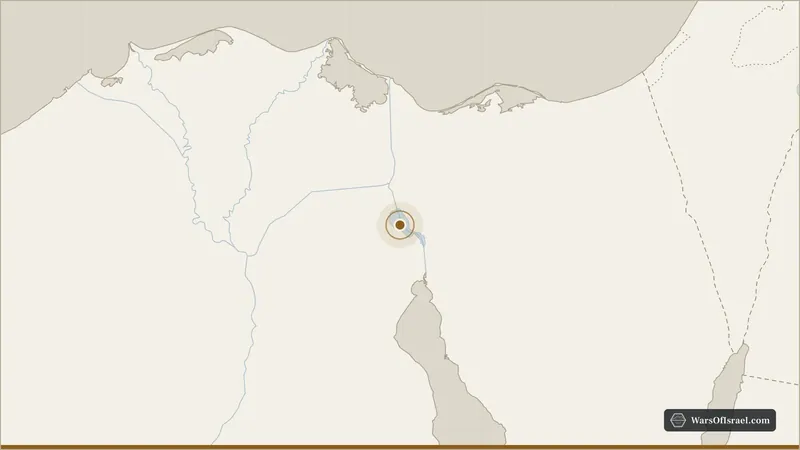
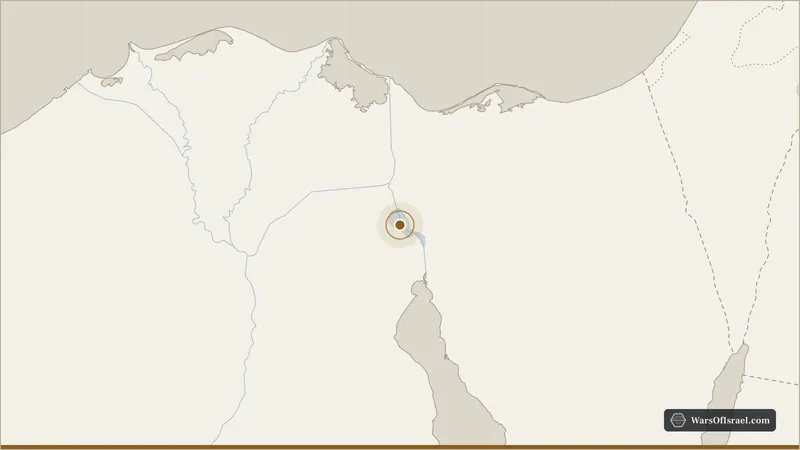
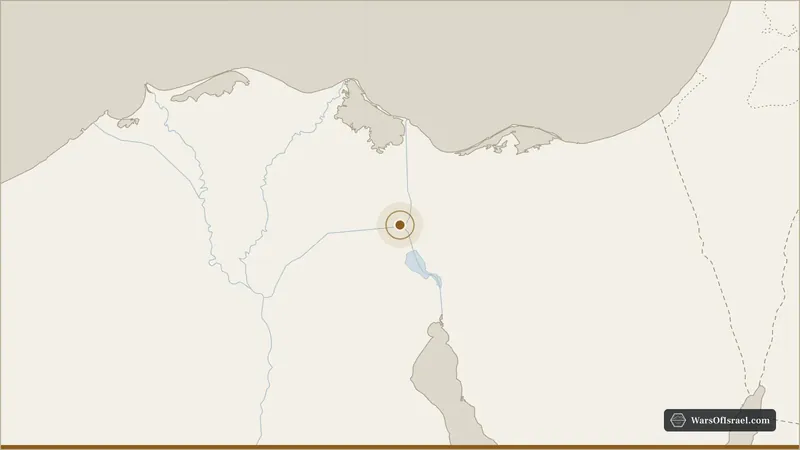
The battle of Suez city was fought on October 24 and 25, 1973, at the southern end of the Suez Canal, in the last hours of the Yom Kippur War. After the first UN ceasefire collapsed, Israeli forces west of the canal completed the encirclement of the Egyptian Third Army and then sent an armored brigade with attached paratroopers into the city of Suez, expecting little resistance. Egyptian soldiers, police and armed local residents ambushed the column in the streets. Israeli units were trapped inside for most of a day and withdrew after dark. The city remained in Egyptian hands, and in Egypt the battle is remembered as a symbol of popular resistance.
Background
By October 23 the divisions of Avraham Adan and Kalman Magen had advanced south on the west bank after the canal crossing. The ceasefire set by UN Security Council Resolution 338 for the evening of October 22 broke down within hours, and both sides blamed the other. Israeli forces continued south, and on October 24 Magen's division reached the Gulf of Suez, cutting off the Third Army on the east bank. Suez, a city of considerable size on the gulf, was largely evacuated of civilians but still held by Egyptian troops, including remnants of several divisions, a commando unit and local militia. Adan's division was ordered to take it, on the assumption that the garrison was demoralized and that the city could be secured before a new ceasefire, which took effect on the morning of October 24.
The battle
The attack began on the morning of October 24. Adan's plan sent the brigade of Colonel Aryeh Keren, with a tank battalion under Lieutenant Colonel Nahum Zaken and paratroopers under Lieutenant Colonel Yossi Yoffe, down the main avenue into the center, while other brigades secured the industrial zone and the outskirts. The column moved fast and with little infantry on the ground. Inside the city it came under fire from anti-tank missiles, RPGs and small arms from buildings on both sides of the street. Many tank commanders, who fought with their heads out of the hatches, were killed or wounded in the first minutes.
The column broke into separate groups. Some tanks pushed through and out the other side; paratroopers took refuge in buildings, among them a police station, where they were surrounded. Through the afternoon Israeli commanders tried to reach them, and the trapped soldiers held their positions. After dark, on the night of October 24 to 25, the paratroopers left the buildings and made their way out of the city on foot, guided by radio. A smaller group left the next morning.
Figures for Israeli losses vary between sources. Rabinovich gives 80 killed and 120 wounded; the West Point Modern War Institute study gives 88 killed and 120 wounded, with 28 armored vehicles lost. Egyptian losses were not recorded in a reliable way. The Modern War Institute case study (opens in a new tab) is the most detailed English-language account of the urban fighting.
Outcome and significance
The battle ended in an Israeli withdrawal, though Israeli forces remained around the city until the separation of forces agreement of January 18, 1974. In Egypt, October 24 is commemorated in Suez as the day of the city's popular resistance. In Israeli military thinking the battle became a lesson about urban fighting: armor entering a defended city without infantry and without good intelligence was exposed to an enemy hidden in buildings, and a last-minute attempt to gain ground before a ceasefire carried a high price for a limited objective. Together with the battle of Ismailia, it marked the limit of the Israeli advance on the west bank.