Military operationSix-Day War to Yom Kippur
Operation Abirey-Halev: crossing the Suez Canal (1973)
The plan, the crossing on the night of October 15 to 16, 1973, the fight to bring bridges to the water and the advance on the west bank that changed the outcome of the war in Sinai.
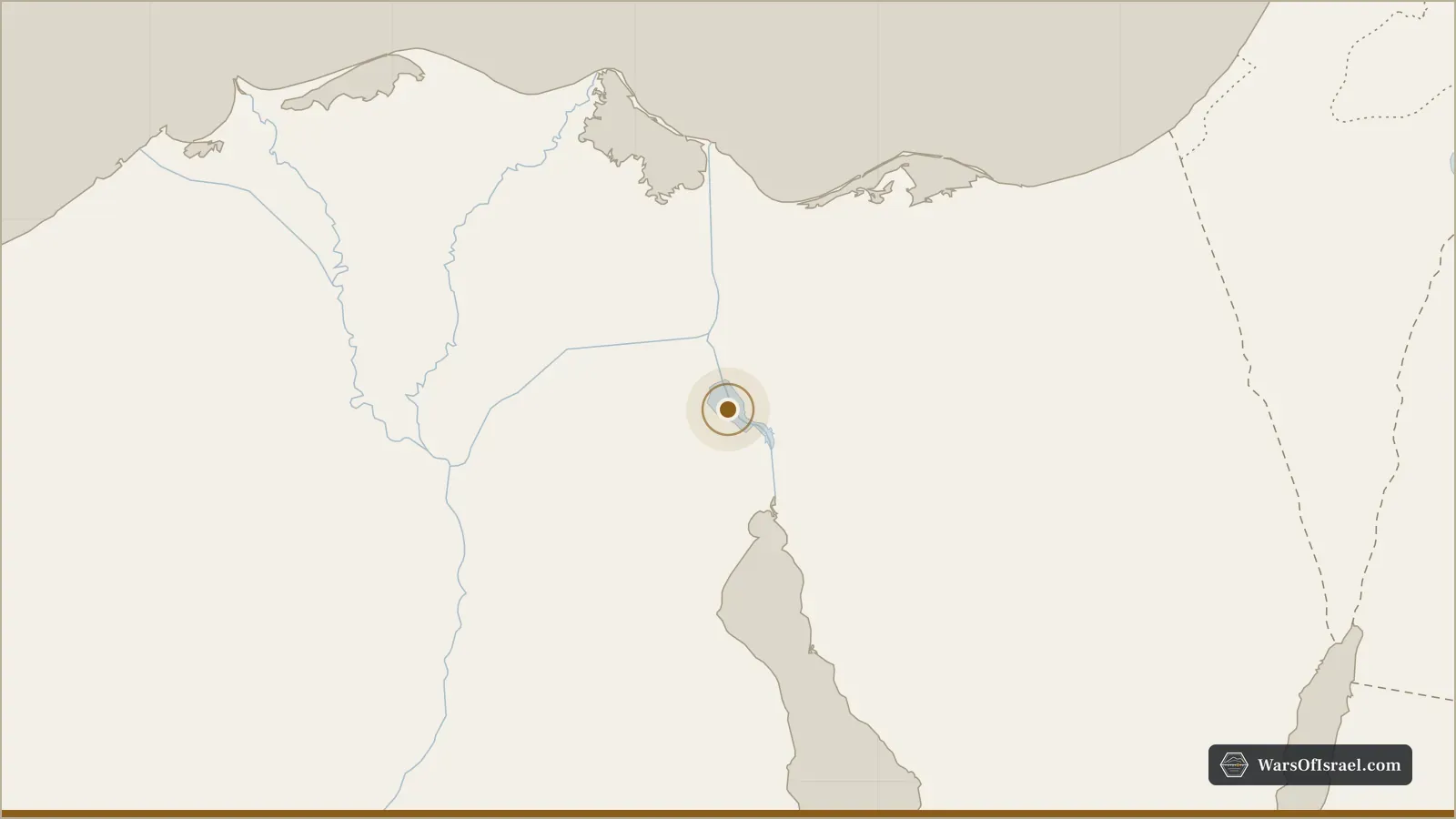
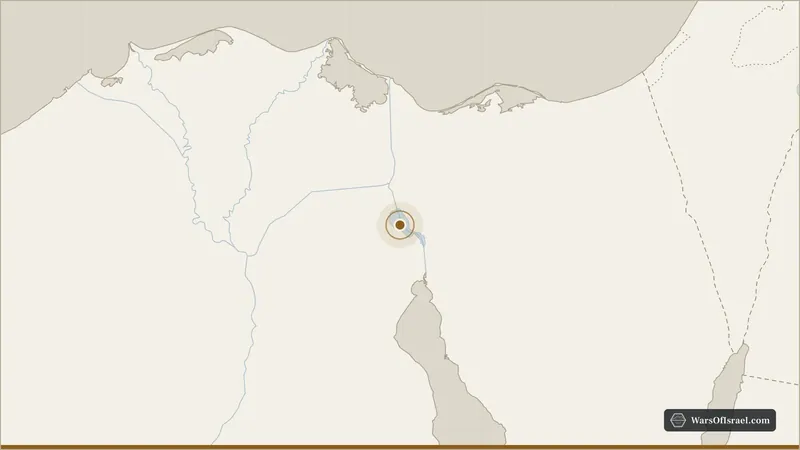
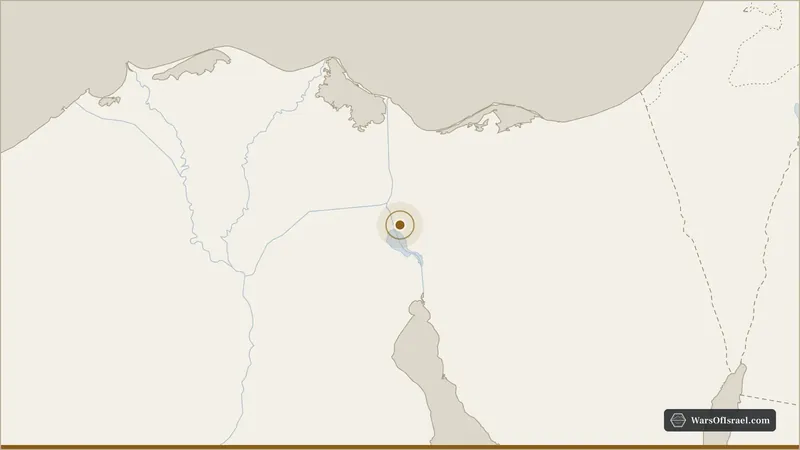
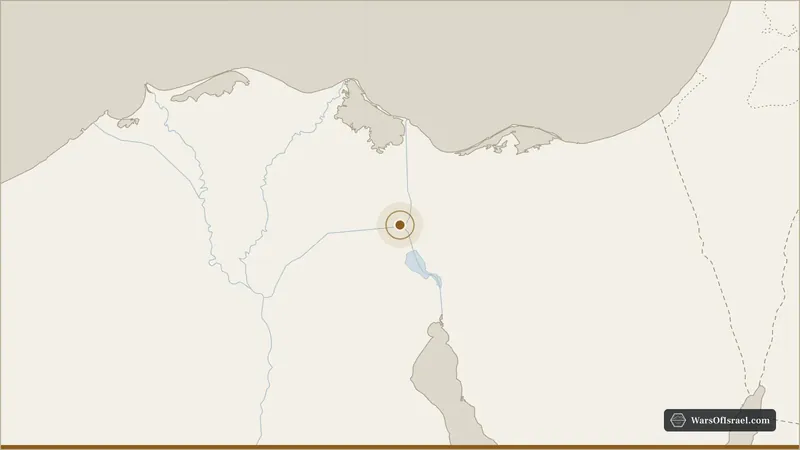
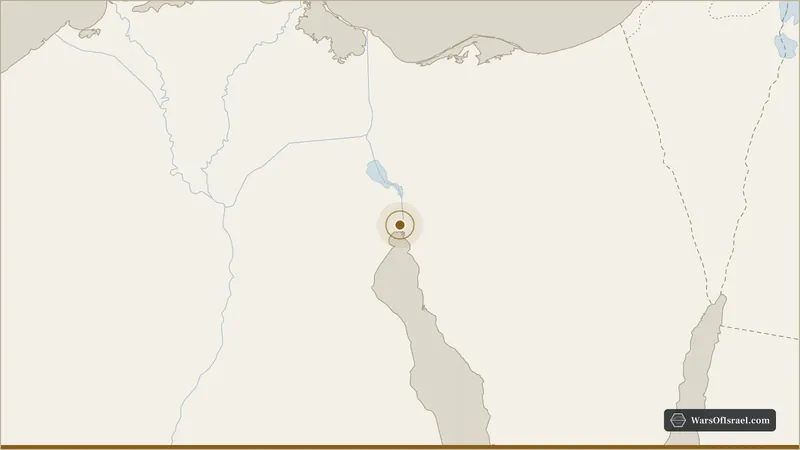
Operation Abirey-Halev (Hebrew for "stouthearted men") was the Israeli crossing of the Suez Canal during the Yom Kippur War. It began on the night of October 15 to 16, 1973, at Deversoir, near the northern end of the Great Bitter Lake, where the sectors of the Egyptian Second and Third Armies met. Paratroopers crossed first in rubber boats and found the west bank almost undefended, but the roads to the crossing ran past strong Egyptian positions, and for more than a day the bridgehead hung on a thin and bloody corridor. Once bridges were in place, two Israeli armored divisions crossed, destroyed Egyptian air-defense sites and, by October 24, cut off the Egyptian Third Army. The operation turned a defensive war in Sinai into one that ended with Israeli forces about 101 kilometers from Cairo.
Why Israel decided to cross
A crossing of the canal had been part of Israeli planning since the War of Attrition. When Ariel Sharon headed Southern Command in the early 1970s, engineers prepared a crossing site near Deversoir: a walled enclosure in the sand rampart, known as "the yard," where the rampart was thinned and marked so that it could be breached quickly. Bridging equipment was stored in Sinai, including a heavy roller bridge designed to be towed to the water in one piece and motorized rafts.
In the first week of the war the plan seemed unreachable. Egyptian forces held the whole east bank, and the counterattack of October 8 had failed. The debate inside the Israeli command, between those who wanted to cross as soon as possible and those who wanted first to wear down the Egyptian armor, was settled by the Egyptians themselves. On October 14 Egypt sent its armored reserves east, out of the protection of its missile umbrella, and lost them in the Sinai tank battle of October 14. That evening Chief of Staff David Elazar presented the crossing plan to the cabinet, which approved it, and Haim Bar-Lev, commanding the southern front, set it for the following night.
The plan and the forces
The plan assigned three divisions. Sharon's 143rd Division was to open the corridor to the canal, seize a bridgehead on both banks and lay the bridges. It was reinforced by the 247th Paratroop Brigade, a reserve brigade under Colonel Danny Matt, which was to cross first. Avraham Adan's 162nd Division would then cross and break out to the west and south, followed by the division of Kalman Magen, who had taken over the southern division after its commander, Albert Mandler, was killed on October 13. The aim was to destroy the surface-to-air missile batteries that protected the Egyptian armies, so that the Israeli Air Force could operate freely, and then to cut the supply lines of the Egyptian forces on the east bank.
Two roads led to the crossing site: Akavish, a paved road, and Tirtur, a dirt road built for the roller bridge. Both passed close to the northern flank of the Egyptian Third Army bridgehead and to the positions of the Egyptian 16th Infantry Division and 21st Armored Division at an agricultural station north of the Great Bitter Lake, which Israeli maps called the Chinese Farm.
The crossing
The night of October 15 to 16
Sharon's plan sent Colonel Amnon Reshef's 14th Armored Brigade in a wide hook around the southern edge of the Egyptian positions, to clear the roads from the west while a diversionary attack held the Egyptians from the east. Reshef's tanks reached the canal and the abandoned Matzmed strongpoint without resistance, then turned north into the Egyptian rear and ran into the heart of the Egyptian defenses. What followed was the battle of the Chinese Farm, one of the costliest of the war.
The paratroopers were hours behind schedule, delayed by traffic on the roads. The first boats crossed at about 1:35 a.m. on October 16. According to most accounts, about 750 of Matt's paratroopers crossed in the first wave; by morning roughly 2,000 were on the west bank, joined by about 20 tanks of Colonel Haim Erez's brigade ferried over on rafts. The Egyptian command was slow to understand what had happened. Its first reports described a small raiding force, and the Israeli units on the west bank were able to spread out and raid missile sites before a serious response arrived.
The struggle for the bridges
The bridgehead was safe; the corridor behind it was not. The roller bridge broke down on its way to the canal, and the pontoon sections that could have replaced it could not move while Egyptian forces held positions overlooking Tirtur and Akavish. On October 16 Israeli leaders debated whether to pull the paratroopers back. Sharon pressed to reinforce the west bank at once; Bar-Lev, Gonen and Elazar insisted that the corridor first be secured and the bridge laid, and the dispute between them later became one of the best-known controversies of the war.
On the night of October 16 to 17 Adan's division moved the pontoons down Akavish while paratroopers of a brigade under Colonel Uzi Ya'iri attacked the Egyptian positions along Tirtur, at heavy cost. During October 17 Adan's tanks defeated Egyptian armored counterattacks against the corridor, including an ambush in which, according to Israeli accounts, the Egyptian 25th Independent Armored Brigade lost most of its tanks near the Great Bitter Lake. The first pontoon bridge was completed late on October 17, and Adan's division crossed that night.
The advance on the west bank
From October 18 the battle moved west of the canal. Adan's division and Magen's division advanced south through the agricultural belt and the desert beyond it, destroying missile batteries. With the air-defense umbrella breached, Israeli aircraft could strike Egyptian forces again. Sharon's division held the bridgehead and attacked north toward Ismailia, where it was stopped by Egyptian paratroopers and commandos in the battle of Ismailia.
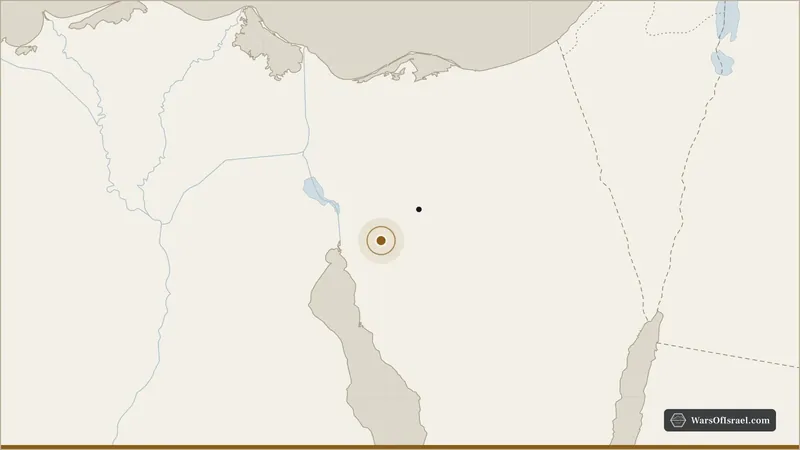
UN Security Council Resolution 338 called for a ceasefire on the evening of October 22. When it broke down, the Israeli divisions continued south. By October 24 Magen's forces had reached the Gulf of Suez at Adabiya, and the Egyptian Third Army, with two divisions on the east bank, was cut off from its supplies. An attempt that day to take the city of Suez failed in the battle of Suez city. The fighting ended on October 25.
Results and debate
The crossing achieved its operational aims. It reversed the situation of the first week, removed the missile shield over the canal and left Israel holding an area west of the canal from north of the Great Bitter Lake to the Gulf of Suez. The encirclement of the Third Army gave Israel a strong position in the ceasefire diplomacy; it also produced the crisis of October 24 and 25 between the United States and the Soviet Union, and pressure from Washington led Israel to allow supplies to reach the trapped army.
Its cost was high and its conduct remains debated. Israeli historians and participants have argued for decades over Sharon's insistence on expanding the bridgehead before the corridor was secure, over the delays in bringing up the bridges, and over whether the encirclement could have been completed before the first ceasefire. Egyptian accounts, including those of Saad el-Shazly, the chief of staff, describe a bitter argument in Cairo over whether to withdraw forces from the east bank to meet the crossing, which Sadat refused. Under the separation of forces agreement of January 18, 1974, Israel withdrew from the west bank of the canal.
Timeline
- October 14, 1973: After the failed Egyptian armored offensive, the cabinet approves the crossing plan.
- October 15, 1973: In the evening Reshef's brigade moves toward the canal and engages Egyptian forces at the Chinese Farm.
- October 16, 1973: The first paratroopers cross the canal at about 1:35 a.m.; by morning about 2,000 are on the west bank.
- October 17, 1973: Egyptian armored counterattacks against the corridor are defeated; the first pontoon bridge is completed late in the day.
- October 18, 1973: Adan's division breaks out on the west bank and begins its advance south.
- October 22, 1973: Resolution 338 calls for a ceasefire that evening; it breaks down within hours.
- October 24, 1973: Israeli forces reach the Gulf of Suez and complete the encirclement of the Egyptian Third Army.