The Yom Kippur War (1973)
A complete account of the October 1973 war: the intelligence failure, the fighting on two fronts, the canal crossing, the ceasefires and the inquiry that followed.
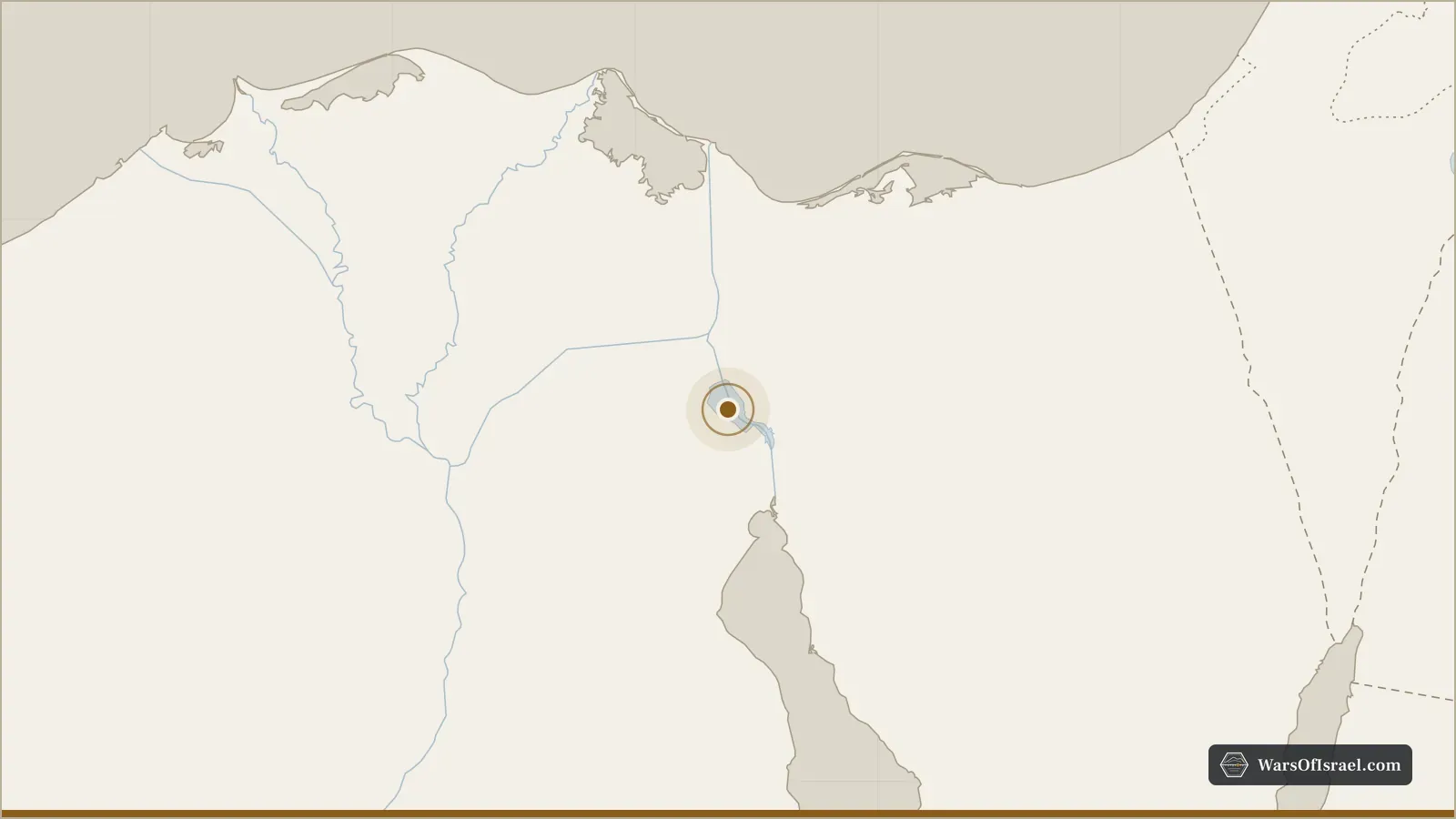
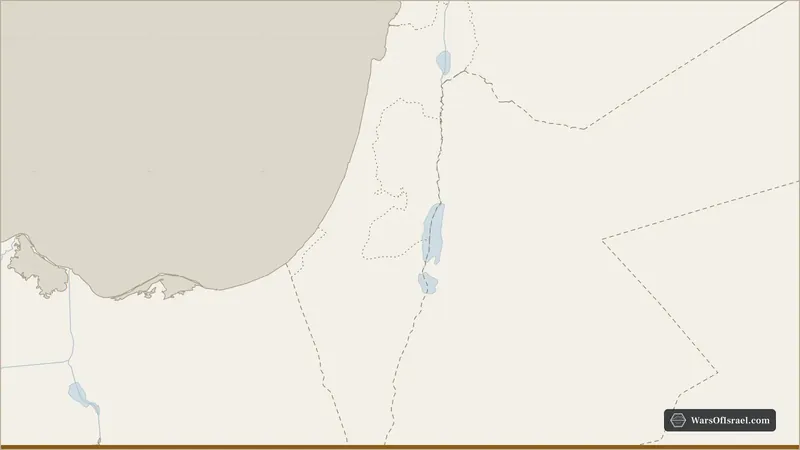
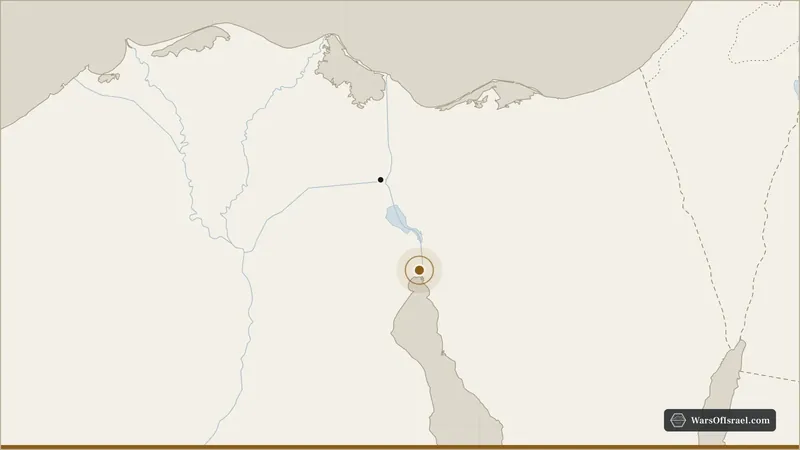
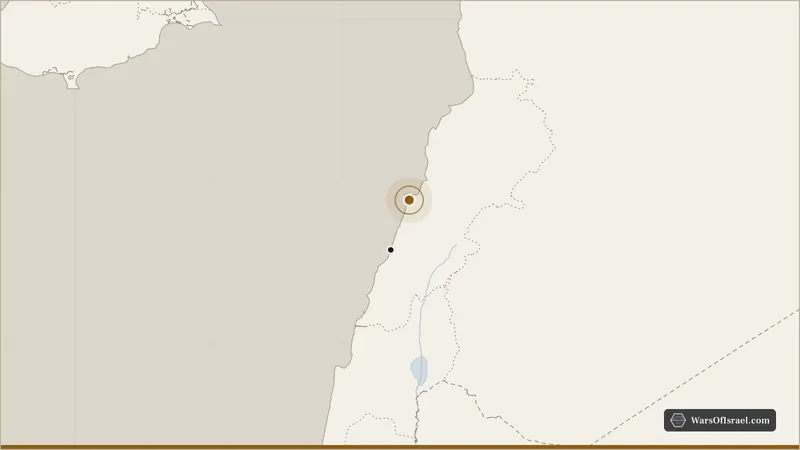
At about two in the afternoon on October 6, 1973, the holiest day of the Jewish year, Egypt and Syria opened a coordinated attack on Israel along the Suez Canal and across the Golan Heights. Israel had believed for six years that its 1967 victory made such an attack unlikely, and when it came the army was only partly mobilized. In the first days Egyptian forces crossed the canal and broke the Bar-Lev Line, while Syrian armor came close to the edge of the Golan plateau above the Sea of Galilee. By the time the last ceasefire held on October 25, Israeli forces were inside Syria within artillery range of the outskirts of Damascus and on the west bank of the canal, encircling an Egyptian army. The military outcome favored Israel; the political and psychological outcome was far more mixed, and it led within six years to the peace treaty with Egypt.
Background: the six years after 1967
The Six-Day War left Israel holding the Sinai Peninsula up to the Suez Canal and the Golan Heights, with the canal itself turned into a front line. Egypt never accepted that line. Between 1967 and 1970 it fought the War of Attrition, an artillery and commando war along the canal that ended with a ceasefire in August 1970 but no settlement. To hold the waterline Israel built the Bar-Lev Line, a chain of fortified strongpoints along the eastern bank behind a high sand rampart, backed by armor deployed in the Sinai.
Anwar Sadat, who became Egypt's president after Gamal Abdel Nasser's death in September 1970, tried diplomacy first and then concluded that only a war, even a limited one, would break the deadlock. His aim was not to destroy Israel's army but to cross the canal, hold a strip of the east bank and force the superpowers to reopen the question of the Sinai. Syria's president, Hafez al-Assad, wanted the Golan back. The two leaders coordinated the timing in secret, and the Soviet Union rebuilt both armies with modern air-defense missiles, tanks and portable anti-tank weapons.
Why the warnings failed
Israel's military intelligence directorate, Aman, under Major General Eli Zeira, worked with an assessment that later became known in Hebrew simply as "the concept." It held that Egypt would not go to war until it had long-range aircraft able to strike Israeli air bases, and that Syria would not attack without Egypt. Through the summer and early autumn of 1973 the signs multiplied: Egyptian exercises near the canal, a Syrian buildup on the Golan, the evacuation of Soviet advisers' families from Egypt and Syria in the first days of October. Each was explained away within the concept.
The decisive warning arrived on the night of October 5, when Ashraf Marwan, a senior Egyptian figure who had been passing information to the Mossad, told its head, Zvi Zamir, in London that war would start the next day. On the morning of October 6 Prime Minister Golda Meir approved a large call-up of reserves but decided against a preemptive air strike, a choice she later explained by the need to keep American support. The Israel State Archives has published the main government documents of those hours in its collection on the Yom Kippur War (opens in a new tab). Historians such as Uri Bar-Joseph have argued that the failure lay less in a lack of information than in how senior officers interpreted it, and the Agranat Commission later reached a similar conclusion about the intelligence leadership.
The forces and the parties
Egypt and Syria were the main belligerents. Egypt fielded two field armies along the canal, the Second Army in the north and the Third Army in the south, under a general staff led by Saad el-Shazly and the war minister, Ahmad Ismail Ali. Syria attacked with three infantry divisions reinforced by armor, followed by two armored divisions. During the war expeditionary forces from Iraq and Jordan fought on the Syrian front, and smaller contingents came from other Arab states. The Soviet Union resupplied Egypt and Syria by air and sea; the United States began its own airlift to Israel on October 14.
On the Israeli side, the defense minister was Moshe Dayan and the chief of staff was Lieutenant General David Elazar. Southern Command was led by Major General Shmuel Gonen, with former chief of staff Haim Bar-Lev sent to the front as Elazar's representative during the fighting. Northern Command was under Major General Yitzhak Hofi. On the first afternoon Israel had fewer than 200 tanks on the Golan against well over 1,000 Syrian tanks, and a few hundred soldiers in the canal strongpoints facing the bulk of the Egyptian army. Most of Israel's strength was in its reserves, which needed between one and three days to reach the fronts.
The course of the war
The Golan front
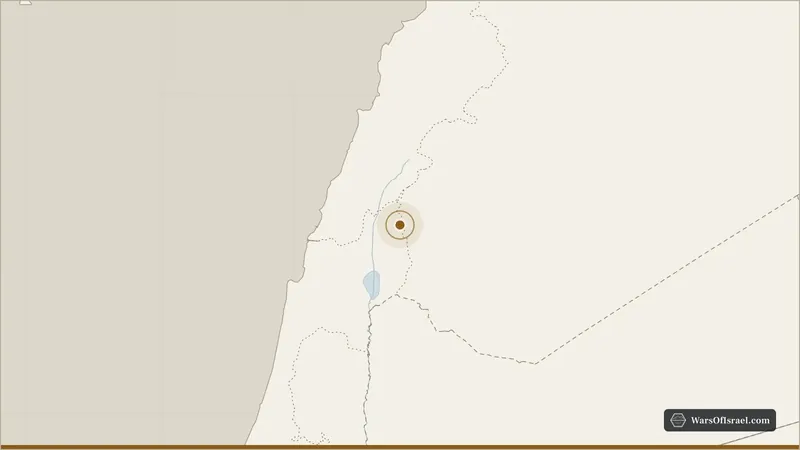
The Syrian assault struck along the whole ceasefire line. In the north the 7th Armored Brigade held the ground between Mount Hermonit and the ridge known as Booster for four days, in the fighting remembered as the battle of the Valley of Tears. In the south the Barak Brigade was overwhelmed; its commander, Colonel Yitzhak Ben-Shoham, was killed, and Syrian columns advanced toward Nafah and the slopes above the Jordan valley. On the first day Syrian commandos landed by helicopter and took the Israeli outpost on Mount Hermon, the beginning of the battles of Mount Hermon.
Reserve brigades arriving from October 7 halted the Syrian advance and then pushed it back to the 1967 line by October 10. On October 11 Israeli divisions attacked into Syria itself and created an enclave reaching toward Saasa, close enough to bring the outskirts of Damascus within artillery range. Iraqi and Jordanian forces counterattacked the southern flank of the enclave in the following days without dislodging it. On the night of October 21 to 22 the Golani Brigade and paratroopers recaptured the Hermon, the last major action in the north.
The Sinai front
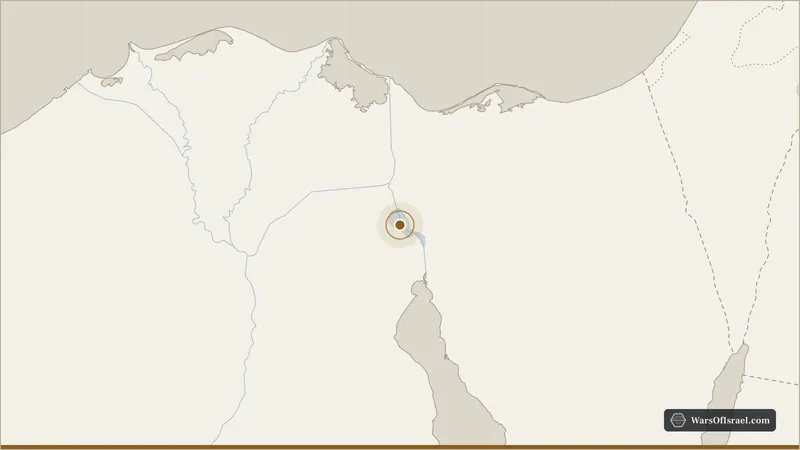
On the Egyptian front the crossing began in the first minutes of the war. Egyptian infantry crossed the canal in boats, used high-pressure water pumps to cut passages through the sand rampart and built bridges for their tanks behind them. Within hours most strongpoints of the Bar-Lev Line were surrounded; almost all fell or were evacuated in the following days, and only the Budapest strongpoint in the north held throughout. Israeli tanks that rushed to the canal ran into Egyptian infantry armed with Sagger and RPG anti-tank weapons, operating under a dense umbrella of surface-to-air missiles that limited what the Israeli Air Force could do.
On October 8 an Israeli counterattack by the reserve divisions of Avraham Adan and Ariel Sharon failed, at heavy cost. For the next five days the front stabilized, with Egyptian forces holding a strip several kilometers deep along the east bank. Then, on October 14, Egypt sent its armored reserves forward beyond the cover of its missile umbrella, partly in response to Syrian pressure for relief. The result was the Sinai tank battle of October 14, one of the largest armored battles since the Second World War, in which the Egyptian attack was repulsed with heavy losses.
The crossing and the race to the ceasefire
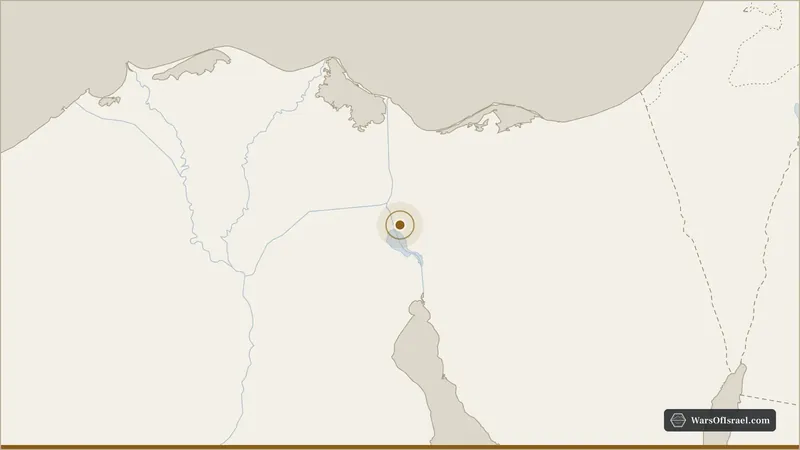
The failed Egyptian offensive opened the way for the Israeli counterstroke planned for weeks: Operation Abirey-Halev, a crossing of the canal at Deversoir, at the seam between the two Egyptian armies, on the night of October 15 to 16. Paratroopers crossed first in rubber boats, but the corridor leading to the crossing ran past the Egyptian positions at the agricultural station the Israelis called the Chinese Farm. The battle of the Chinese Farm was among the costliest of the war, and only after it did a bridge carry Israeli divisions across in strength.
On the west bank Adan's division and the division of Kalman Magen turned south toward the city of Suez, destroying air-defense sites and cutting the supply lines of the Egyptian Third Army. Sharon's division tried to push north toward Ismailia and was stopped in the battle of Ismailia. UN Security Council Resolution 338, adopted on October 22, called for a ceasefire that evening. It broke down within hours, and over the next two days Israeli forces completed the encirclement of the Third Army. A final attempt to take the city itself, the battle of Suez city on October 24 and 25, failed with significant Israeli losses.
The superpowers, the airlift and the ceasefires
The war quickly became a test between Washington and Moscow. After heavy Israeli losses of aircraft and tanks in the first days, the United States began Operation Nickel Grass on October 14; according to U.S. figures the airlift delivered more than 22,000 tons of equipment by mid-November. Arab oil producers answered with an embargo on the United States and several other countries, which caused an energy crisis in the West.
The ceasefire diplomacy was conducted largely by Secretary of State Henry Kissinger, who flew to Moscow and then to Israel in the days around Resolution 338. When the ceasefire collapsed and the Third Army was cut off, the Soviet leader Leonid Brezhnev warned that the Soviet Union might act alone. On October 25 the United States raised the alert level of its forces worldwide, and the same day the Security Council adopted Resolution 340, which demanded a return to the October 22 positions and created a UN Emergency Force. The fighting ended, although the encirclement remained.
Outcome and consequences
In military terms Israel ended the war deep in Syrian territory and on the west bank of the Suez Canal, about 101 kilometers from Cairo. Yet the cost was the heaviest since the 1947 to 1949 war. Published estimates of Israeli military dead range from about 2,520 to 2,800; historian Abraham Rabinovich gives 2,656 killed. Egypt and Syria never published full figures; scholarly estimates of their dead vary widely, roughly 5,000 to 15,000 for Egypt and 3,000 to 3,500 for Syria.
The first direct talks between Israeli and Egyptian officers in decades took place in a tent at Kilometer 101 on the Cairo to Suez road, and a six-point agreement on supplies to the Third Army and the exchange of prisoners was signed there on November 11, 1973. Kissinger's shuttle diplomacy produced a separation of forces agreement with Egypt on January 18, 1974, under which Israel withdrew from the west bank of the canal, and an agreement with Syria signed in Geneva on May 31, 1974, under which Israel left the enclave and the city of Quneitra and a UN observer force took up positions between the armies. A second interim agreement with Egypt followed in 1975, and Sadat's visit to Jerusalem in November 1977 opened the road to the peace treaty of March 1979.
At home the war ended an era. The government appointed the Agranat Commission on November 21, 1973. Its interim report, published on April 1, 1974, recommended removing the head of military intelligence and other senior intelligence officers and the head of Southern Command; Elazar resigned. The commission did not assign personal responsibility to Meir or Dayan, but public protest, begun by reservists such as Motti Ashkenazi, the commander of the Budapest strongpoint, grew until Meir announced her resignation in April 1974. Yitzhak Rabin formed a new government that June. The commission's findings shaped the rebuilding of the army, and the full report was opened to the public only in stages, the last in 2006.
Memory and legacy
In Israel the war is remembered first as a failure of warning and then as a story of units that held when the plan had collapsed: the tank crews of the Golan, the soldiers of the strongpoints, the paratroopers of the Chinese Farm. The commemoration each autumn falls on the Hebrew calendar date, Yom Kippur 5734, and the national memorial ceremonies for the fallen are held on Yom HaZikaron. Debate over the decisions of October 5 and 6 has continued for five decades, renewed with each release of documents from the archives.
In Egypt the war is celebrated on October 6 as a national victory, centered on the crossing of the canal and the breaking of the Bar-Lev Line. Syria commemorates it as the October Liberation War. These different memories are not contradictions so much as answers to different questions: Israel asks how it was surprised, Egypt and Syria ask what their armies achieved, and both answers are part of the record. The war also changed Israeli military doctrine, with new emphasis on combined arms, infantry with armor and the threat of anti-tank and air-defense missiles.
Timeline
- October 5, 1973: Ashraf Marwan warns Mossad chief Zvi Zamir in London that war will begin the next day.
- October 6, 1973: Egypt and Syria attack at about 2 p.m.; Egyptian forces cross the Suez Canal and Syrian forces take the Hermon outpost.
- October 8, 1973: An Israeli counterattack in Sinai fails; reserves stabilize the Golan front.
- October 11, 1973: Israeli forces attack into Syria and begin to form an enclave toward Damascus.
- October 14, 1973: The Egyptian armored offensive in Sinai is repulsed; the U.S. airlift to Israel begins.
- October 16, 1973: Israeli paratroopers established on the west bank of the canal at Deversoir.
- October 22, 1973: UN Security Council Resolution 338 calls for a ceasefire; Israel recaptures Mount Hermon.
- October 25, 1973: Resolution 340 is adopted and the fighting ends.
- November 11, 1973: The six-point agreement is signed at Kilometer 101.
- January 18, 1974: Israel and Egypt sign the separation of forces agreement.
- April 1, 1974: The Agranat Commission publishes its interim report.
- May 31, 1974: Israel and Syria sign the separation of forces agreement in Geneva.
Battles and operations in this war
- October 6, 1973 to October 9, 1973The battle of the Valley of Tears (1973)Battle
- October 6, 1973 to October 22, 1973The battles of Mount Hermon (1973)Battle
- October 14, 1973The Sinai tank battle of October 14 (1973)Battle
- October 15, 1973 to October 24, 1973Operation Abirey-Halev: crossing the Suez Canal (1973)Military operation
- October 15, 1973 to October 17, 1973The battle of the Chinese Farm (1973)Battle
- October 18, 1973 to October 22, 1973The battle of Ismailia (1973)Battle
- October 24, 1973 to October 25, 1973The battle of Suez city (1973)Battle