BattleSix-Day War to Yom KippurReference entry
The battles of Mount Hermon (1973)
The three battles for the Hermon in October 1973: the loss of Israel's intelligence outpost, a failed counterattack and the recapture of the summit on the last night of the war in the north.
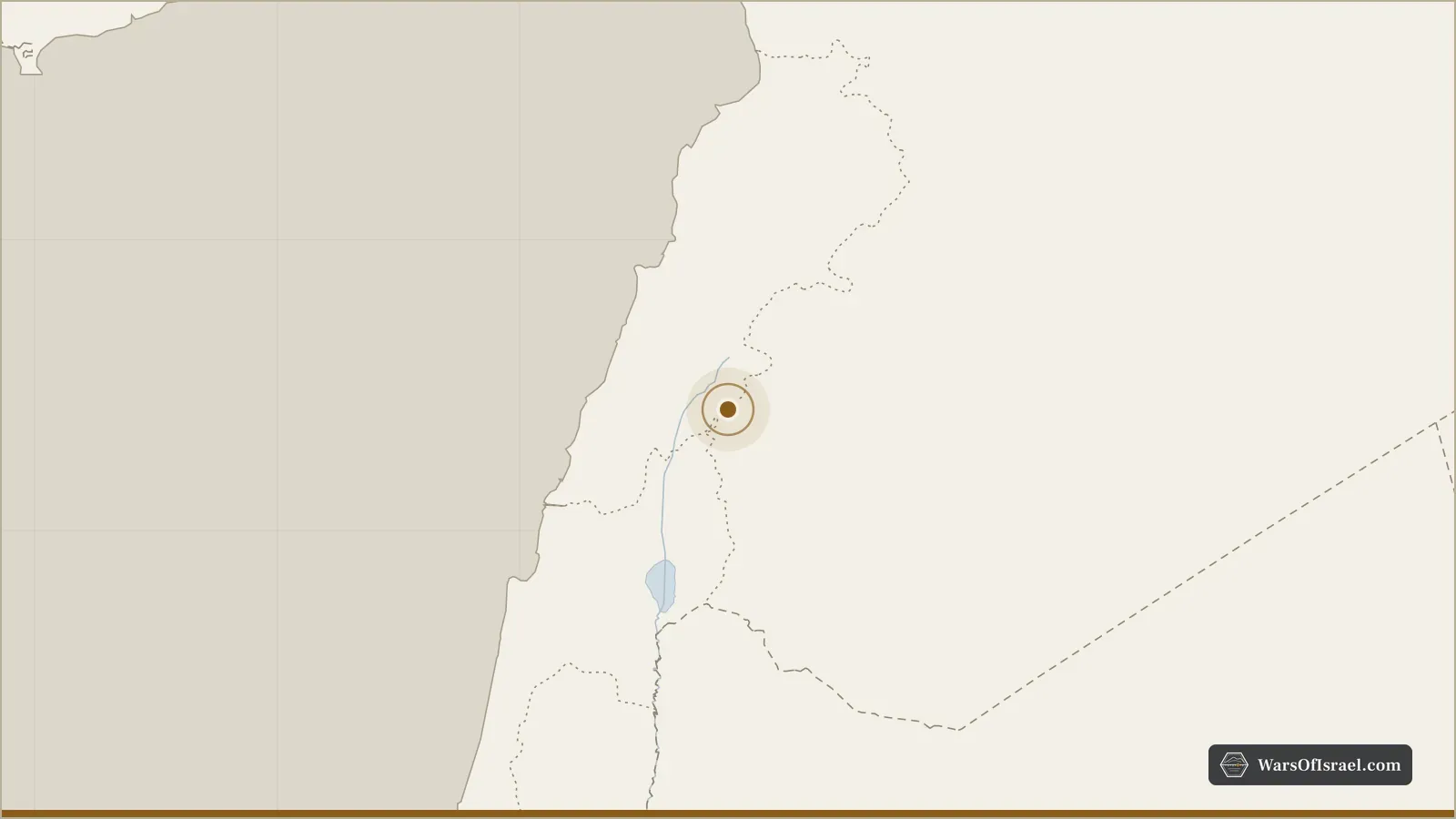
The battles of Mount Hermon were three engagements fought in October 1973, during the Yom Kippur War, for the highest ground on the Golan front. On October 6 Syrian commandos captured the Israeli outpost on the mountain, one of the IDF's most important intelligence installations. An Israeli attempt to retake it on October 8 failed. On the night of October 21 to 22 the Golani Brigade recaptured the outpost and a paratroop brigade took the Syrian positions on the summit ridge, the last major action of the war in the north.
Background: the "eyes" of the north
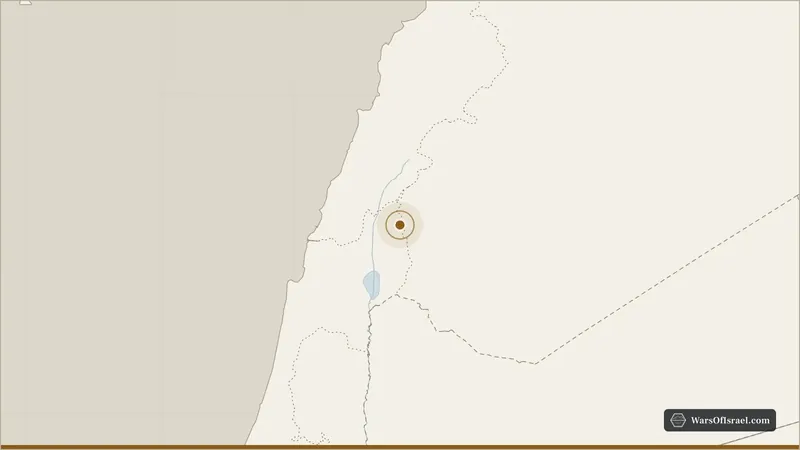
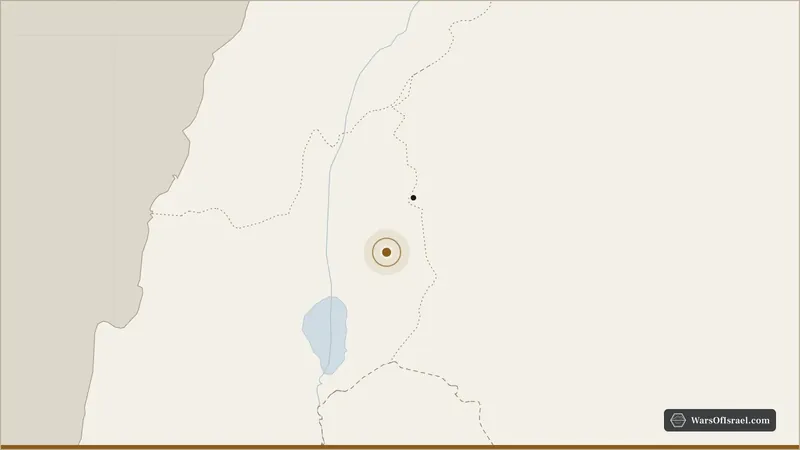
Israel took the southern slopes of Mount Hermon in the Golan Heights battles of 1967 and built an outpost at a height of about 2,000 meters. Its view over the Golan, the Galilee and the Damascus plain, and the electronic equipment housed in its underground levels, made it a central part of Israel's early-warning and signals-intelligence system on the Syrian front. Further up, the higher summit ridge remained in Syrian hands. In October 1973 the outpost was still being expanded; according to Israeli accounts some of its trenches and firing positions were incomplete, and most of the soldiers inside were technicians and intelligence personnel rather than infantry. Accounts of the garrison put it at about 55 to 60 people, of whom only a small number were combat soldiers from the Golani Brigade.
What happened
October 6: the fall of the outpost
On the afternoon of October 6 Syrian helicopters landed a company of the 82nd Paratroop Battalion near the outpost while other commandos climbed from the Syrian side. The defenders were driven into the underground levels, and the fighting continued into October 7. According to the Israeli study edited by Dani Asher, 16 Israelis were killed in and around the outpost and 31 were taken prisoner, while Syrian losses in the assault were reported as 15 killed. The equipment inside fell into Syrian hands largely intact.
October 8: a failed counterattack
On October 8 two battalions of the Golani Brigade attacked up the slope. Syrian commandos and paratroopers held high points above the outpost, and the attack was beaten back. According to the same accounts, the Israelis lost 23 killed and 55 wounded. The mountain remained in Syrian hands for the next two weeks while the main battles of the Golan were fought below it.
October 21 to 22: Operation Kinuach
As the ceasefire approached, Israel's high command ordered the mountain retaken before the fighting stopped. In Operation Kinuach ("Dessert"), Golani, under Colonel Amir Drori, attacked the Israeli outpost on foot through the night of October 21 to 22, while a reserve paratroop brigade under Colonel Haim Nadel was landed by helicopter on the Syrian summit ridge. The paratroopers took their objectives with light losses. Golani's attack met determined resistance and became one of the hardest infantry battles of the war. Rabinovich gives Golani losses of 55 killed and 79 wounded. By the morning of October 22 both the Israeli outpost and the Syrian summit positions were in Israeli hands.
Outcome and significance
The recapture restored Israel's intelligence position in the north before the ceasefire took effect. Under the separation of forces agreement with Syria of May 31, 1974, Israel returned the Syrian summit positions and kept the outpost. The loss of the outpost on the first day became, for Israelis, a symbol of the surprise of October 6; its recapture became a symbol of Golani's war. A soldier interviewed after the battle described the Hermon as "the eyes of the country," a phrase that has since stayed with the mountain in Israeli memory. The battles took place above and alongside the fighting in the Valley of Tears, and the article on the war describes how they fit into the struggle for the Golan.