BattleSix-Day War to Yom KippurReference entry
The battles for the Golan Heights and Tel Faher (1967)
How two days of fighting up the Golan escarpment in June 1967 ended nineteen years of Syrian guns above the Galilee.
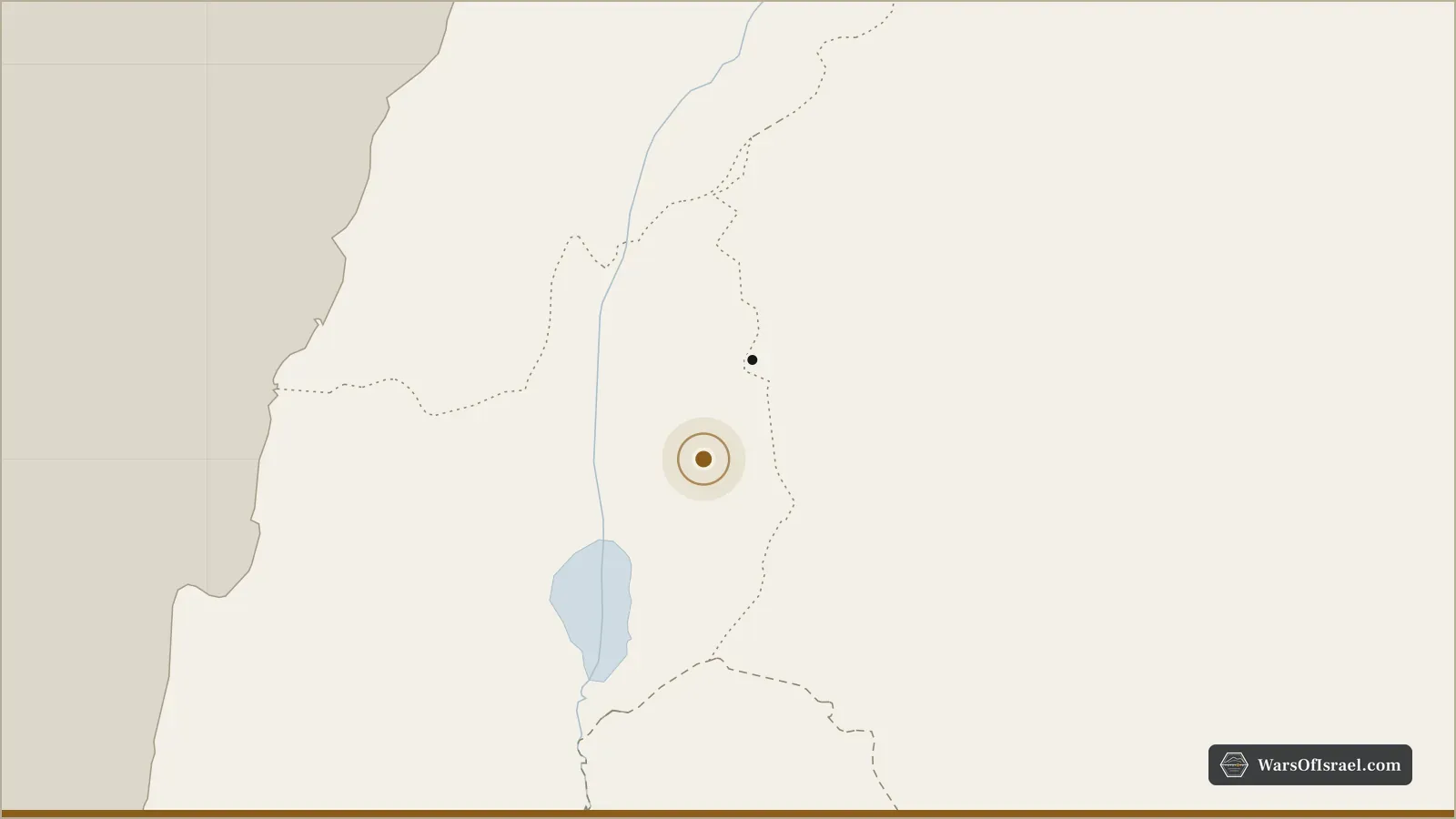
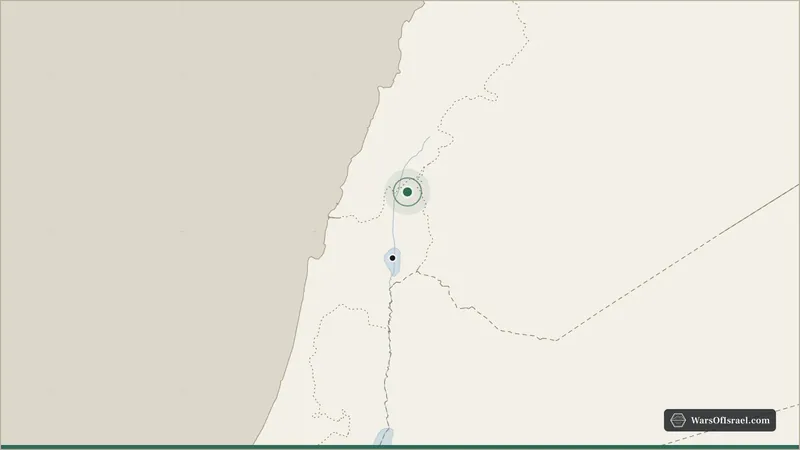
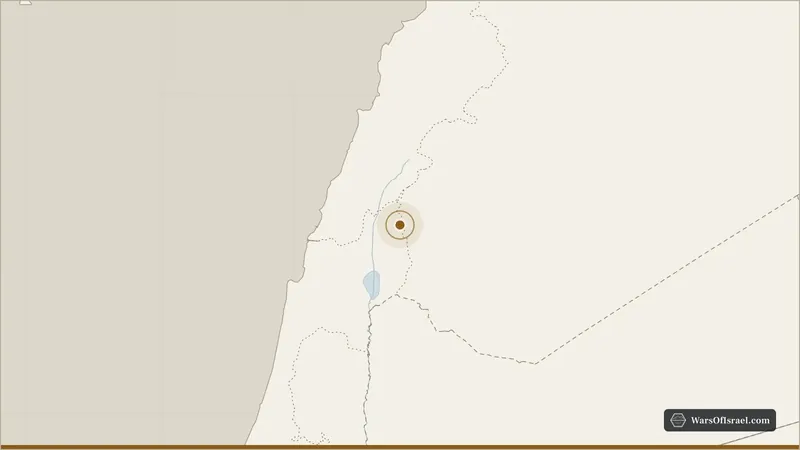
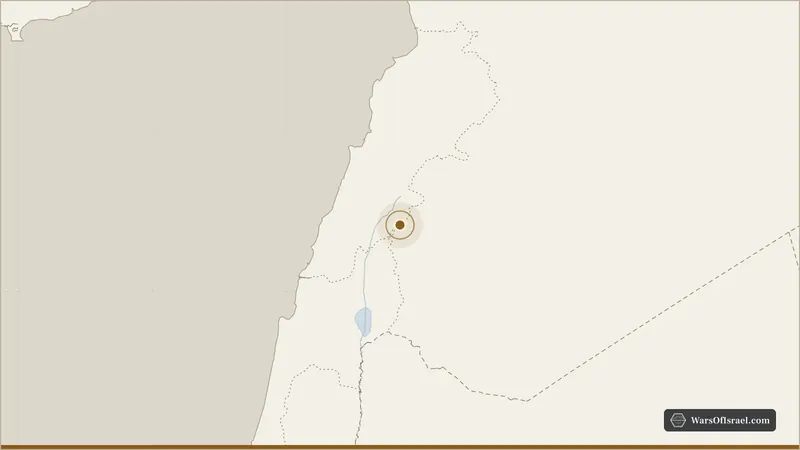
The battles for the Golan Heights were the last campaign of the Six-Day War. On June 9 and 10, 1967, Israel's Northern Command attacked up the steep western escarpment of the plateau against Syrian fortifications that had overlooked the Hula Valley and the Sea of Galilee for nineteen years. The hardest single fight was at Tel Faher, where the Golani Brigade lost 34 men, according to Israeli sources. By the evening of June 10 Israeli forces had reached Quneitra, and the ceasefire left the Golan in Israeli hands.
Background: nineteen years under the guns
After the 1949 armistice, Syrian positions on the Golan looked down on the Israeli communities of the Hula Valley and the eastern shore of the Sea of Galilee. Clashes over the demilitarized zones, over cultivation of disputed land and over fishing in the lake were frequent. In 1964 Syria began work on a plan to divert the headwaters of the Jordan River, and Israel struck the earthmoving equipment, the struggle known as the war over water.
When the war began on June 5, 1967, Syria shelled northern Israeli communities and made a limited attempt to attack toward the kibbutzim of Dan and Shear Yashuv, which was repulsed. Israeli aircraft destroyed much of the Syrian air force the same evening. For four days, however, Defense Minister Moshe Dayan refused to authorize a full offensive in the north. According to the IDF and Defense Establishment Archives, he would approve only a limited plan to take the Syrian position at Tel Azaziat and rejected the proposals of Northern Command chief Maj. Gen. David Elazar, fearing Soviet intervention and a costly fight. Delegations from the shelled settlements pressed the government to act. On the morning of June 9, after Egypt had accepted a ceasefire, Dayan changed his mind and ordered the attack.
The fighting on June 9 and 10
Elazar chose to break in at the northern end of the front, where the escarpment was steep but the Syrian defenders expected an attack less. Engineers' bulldozers cut paths up the slopes for the tanks, under fire. The forces included the Golani Brigade under Col. Yona Efrat, the 8th Armored Brigade under Col. Avraham Mandler, and Brigades 37 and 45, which had fought on the West Bank days earlier.
The 8th Armored Brigade climbed the escarpment near Kfar Szold and fought its way to the Syrian strongholds at Qala and Za'ura, losing many tanks to Syrian anti-tank fire on the narrow tracks. To its north, Golani attacked a chain of fortified positions. The most difficult of them was Tel Faher, a hill surrounded by trenches, bunkers and minefields. Golani's Barak Battalion assaulted it from the west in the afternoon of June 9; its commander, Lt. Col. Moshe (Musa) Klein, was killed leading the clearing of the trenches, and most of the force's officers were wounded. The position fell toward dusk, after the brigade's reconnaissance company was brought in. According to Israeli sources, 34 Golani soldiers were killed at Tel Faher. Syrian losses there are not reliably documented.
Further south, other Israeli forces climbed the slopes from the Sea of Galilee and the Jordan Valley. During the night the Syrian line began to give way. On the morning of June 10 Syrian radio announced that Quneitra, the main town of the Golan, had fallen, although Israeli forces had not yet reached it; the announcement contributed to a disorderly Syrian retreat. Israeli troops entered the deserted town in the early afternoon. Fighting ended that evening, when the ceasefire took effect.
Outcome and significance
At the end of two days Israel held the Golan Heights from the slopes of Mount Hermon to the Yarmouk River, an area of about 1,200 square kilometers. According to historians' estimates, Syria lost between 1,000 and 2,500 soldiers killed over the whole war, most of them on the Golan. About 100,000 Syrian residents of the area fled or were expelled during and after the fighting; the Druze villages in the north remained.
For the communities of the Hula Valley and the Galilee, the end of Syrian shelling from the heights changed daily life. For Syria, the loss of the Golan became the central grievance of its policy toward Israel. In 1973 Syrian armor attacked across the 1967 ceasefire line in the Yom Kippur War, and the battles of that war were fought over the same ground. In 1981 Israel applied its law to the Golan Heights, a step the UN Security Council declared null and void.
Tel Faher was later renamed Mitzpe Golani and is now a memorial site to the brigade's dead.