BattleSix-Day War to Yom Kippur
The battle of the Valley of Tears (1973)
The four-day defense of the northern Golan Heights in October 1973: who fought, how the line held at its lowest point and what the battle meant for the war.
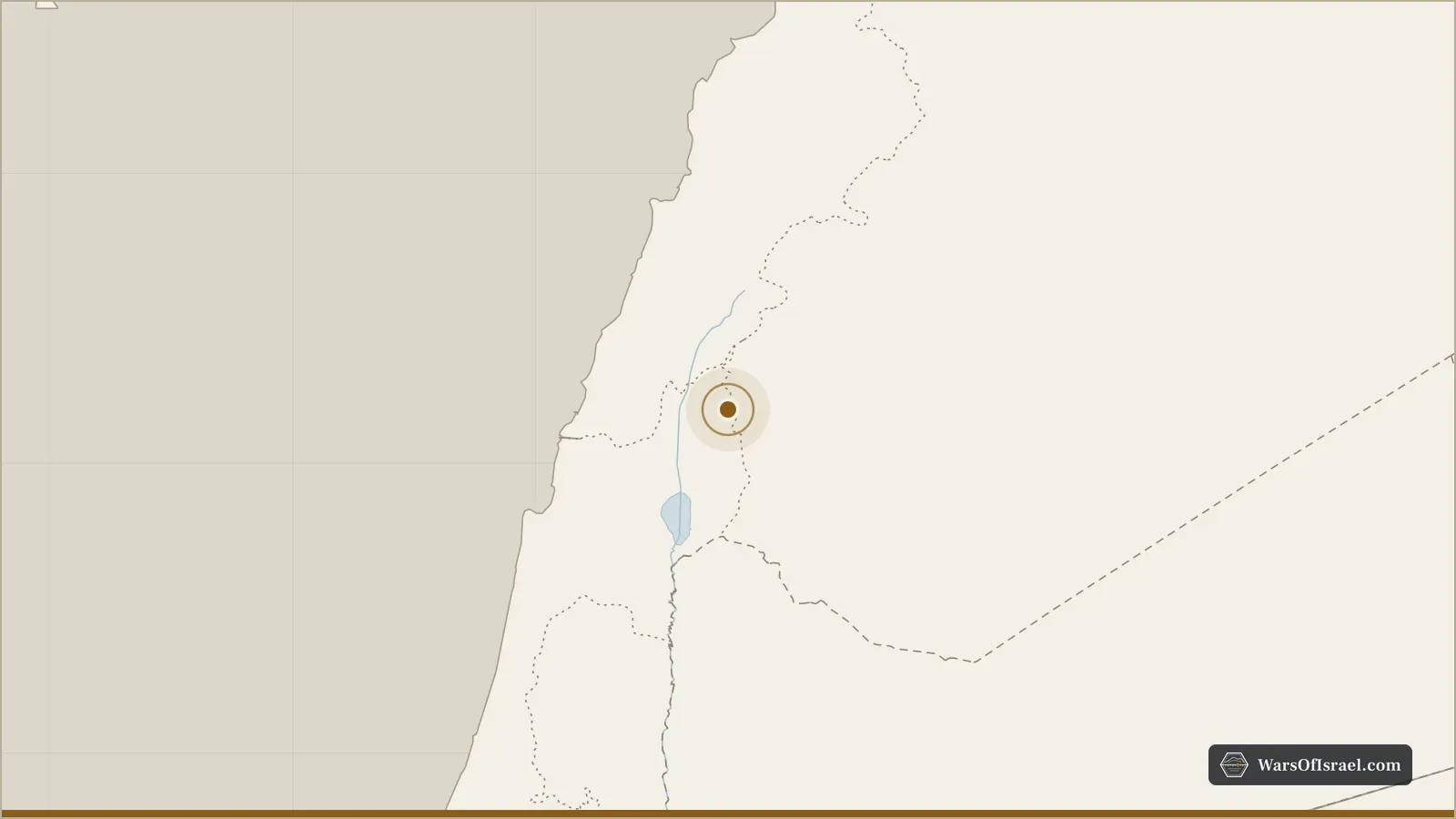
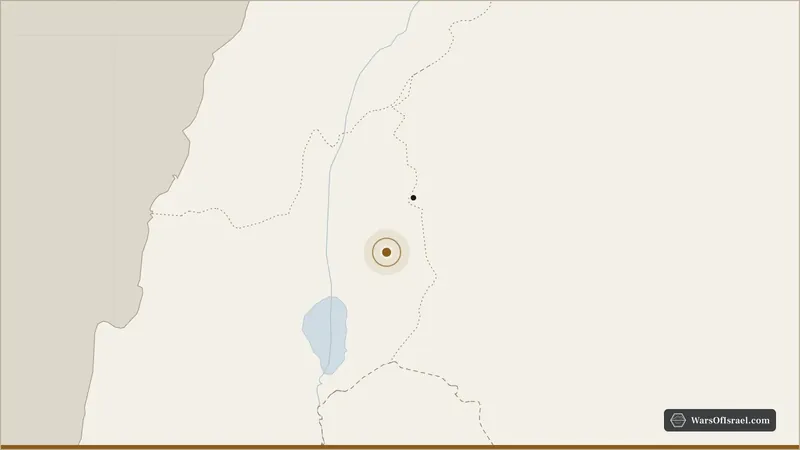
The battle of the Valley of Tears was the defense of the northern Golan Heights by Israel's 7th Armored Brigade during the first four days of the Yom Kippur War, from October 6 to 9, 1973. Outnumbered several times over, the brigade held a line of low hills between Mount Hermonit and the ridge known to Israeli soldiers as Booster while Syrian divisions attacked again and again, mostly at night. By the afternoon of October 9 the brigade was down to a handful of working tanks, and then the Syrian assault broke off. The shallow valley in front of its positions, filled with abandoned and burned-out Syrian vehicles, has been called the Valley of Tears (Emek HaBakha) ever since.
The northern Golan in October 1973
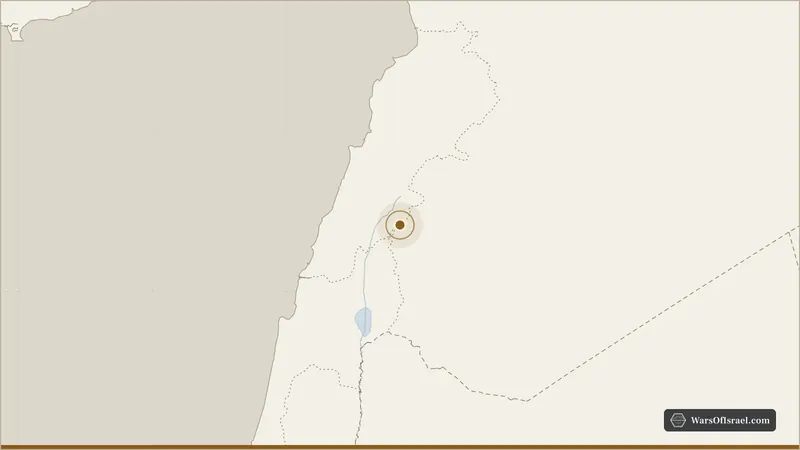
After the Golan Heights battles of 1967 Israel held the plateau up to a ceasefire line known as the Purple Line. In the north the ground between the line and the Israeli rear was narrow. Behind Hermonit and Booster ran the road to Mas'ada and the Hula valley, and a Syrian breakthrough there would have exposed the Israeli communities of the Upper Galilee. Along the line stood a chain of small fortified outposts, numbered from north to south, and in front of them an anti-tank ditch.
Israel's defense plan for the Golan assumed a warning of several days that would allow reserve divisions to deploy. On October 6 that warning amounted to a few hours. Israel had two armored brigades on the plateau: the Barak Brigade (the 188th), the regular brigade of the sector, responsible for the whole line, and the 7th Armored Brigade under Colonel Avigdor Ben-Gal, which had been moved up to the Golan in the days before the war as a precaution. Together they had about 170 tanks. Ben-Gal took over the northern sector, with about 100 tanks, and the Barak Brigade concentrated in the south. Both brigades were under the 36th Division, commanded by Brigadier General Rafael Eitan, and Northern Command under Major General Yitzhak Hofi.
The opposing forces
The Syrian army attacked with three mechanized infantry divisions along the whole front, each reinforced by armor, and held two armored divisions in reserve. In the north the main effort fell on the Syrian 7th Infantry Division under Brigadier General Omar Abrash, which had several hundred tanks of its own and was reinforced during the battle by armored brigades brought forward from the reserve. Syria's tank force on the Golan front numbered well over 1,000, against about 170 Israeli tanks on the plateau. Syrian infantry carried Sagger anti-tank missiles and RPGs, and the Syrian tanks, T-55s and T-62s, were equipped with infrared night-fighting equipment that most Israeli tanks lacked.
Israel's Centurion tanks, known in the IDF as Sho't, were slower but had good guns and crews trained to fire from prepared ramps that let them shoot over a crest while exposing little of the hull. That technique, and the choice of positions on high ground with the Syrian approach routes below them, explains much of what followed.
Four days on the line
October 6: the first assault
The Syrian artillery opened fire shortly before 2 p.m. on October 6, and armored columns advanced across the ceasefire line behind bridging tanks and mine-clearing vehicles. The 7th Brigade's battalions moved up to their ramps. In the north the 77th Battalion under Lieutenant Colonel Avigdor Kahalani held the area around Hermonit; the 74th Battalion of the Barak Brigade under Lieutenant Colonel Yair Nafshi, attached to Ben-Gal, held Booster and the outposts around it. The first attacks were stopped at the anti-tank ditch, where Syrian engineers worked under fire to lay bridges.
The nights of October 6 to 8
The heaviest fighting came after dark. Syrian columns attacked through the night with infrared searchlights, and Israeli tank commanders, with almost no night-vision equipment, fought by the light of flares and burning vehicles. Accounts drawn from Israeli participants, collected by Jerry Asher and Eric Hammel, describe crews that fired at the outlines of tanks at a few dozen meters. By the morning of October 7 the floor of the valley between Hermonit and Booster was covered with destroyed and abandoned Syrian vehicles. The fighting continued through October 7 and 8. Abrash, the commander of the Syrian 7th Division, was killed on October 8.
Meanwhile the situation in the south of the Golan collapsed. The Barak Brigade was overwhelmed, its commander, Colonel Yitzhak Ben-Shoham, was killed, and Syrian forces reached the Nafah area, close to the headquarters of the 36th Division. The 7th Brigade could not expect reinforcements from the south; reserve brigades arriving from the Galilee were committed to stopping the southern breakthrough.
October 9: the lowest point
On the morning of October 9 the Syrians launched their final assault in the north, including armored units from the Republican Guard. Under a heavy bombardment, Israeli tanks pulled back from some of their ramps, and for a period the Syrians reached the high ground. Kahalani, who took command of what remained of the brigade's tanks in the sector, rallied them for a counterattack to retake the positions. According to his own account and that of Herzog, the brigade had only a few tanks still in action at the worst moment of the morning, and Ben-Gal considered withdrawing.
Relief came from an unexpected direction. Lieutenant Colonel Yossi Ben-Hanan, a former battalion commander in the Barak Brigade who had returned from his honeymoon abroad when the war began, assembled a small force of repaired tanks and crews and arrived on the flank of the Syrian attack. His intervention, together with Kahalani's counterattack, tipped the balance. Early in the afternoon of October 9 the Syrian forces began to withdraw toward the ceasefire line, and the remaining Israeli tanks pursued them to the anti-tank ditch.
The cost
Exact figures for the battle are difficult to separate from those for the whole Golan front. Herzog, who served as a commentator on Israel Radio during the war and later as Israel's president, wrote that about 260 Syrian tanks lay in the valley at the end of the battle, together with hundreds of armored personnel carriers and other vehicles. Some later accounts give higher figures for Syrian tanks and armored vehicles lost in the northern sector as a whole. Israeli losses in the 7th Brigade and the attached battalions were also heavy; estimates of the Israeli tanks put out of action, many of them later repaired, are in the range of 60 to 80. Neither side published a definitive count of the dead for this battle alone.
Kahalani received the Medal of Valor, Israel's highest military decoration, for his conduct during the battle. Several other tank commanders of the brigade were also decorated.
Significance and memory
Historians agree that the defense of the northern Golan prevented a Syrian breakthrough toward the Galilee in the hours when Israel was most vulnerable. Combined with the reserve brigades that stopped the Syrians in the south, it allowed Northern Command to push the Syrian army back to the Purple Line by October 10 and to attack into Syria from October 11. It also gave the Israeli army a lesson it would repeat in later decades: that a well-positioned, well-trained small force can hold for a time against much larger numbers, but only at a cost that the planners of 1973 had not anticipated.
The site of the battle is now one of the main places of memory of the war on the Golan. A memorial to the 7th Brigade stands on the ridge at the Oz 77 lookout, overlooking the valley and the Syrian border, and visitors can see the ramps and the ground on which the fighting took place. The name of the valley has entered Hebrew as shorthand for the price of the war. The later fighting in the north, including the battles of Mount Hermon, is described in the article on the war.
Timeline
- October 6, 1973: Syrian artillery opens fire at about 2 p.m.; Syrian armor attacks across the Purple Line and is stopped at the anti-tank ditch in the north.
- October 7, 1973: After a night of fighting, the valley between Hermonit and Booster is covered with Syrian vehicles; the Barak Brigade in the south is under heavy pressure.
- October 8, 1973: Fighting continues in the north; the commander of the Syrian 7th Division, Omar Abrash, is killed.
- October 9, 1973: The final Syrian assault reaches part of the high ground; Kahalani's counterattack and Ben-Hanan's force restore the line and the Syrians withdraw.
- October 10, 1973: Israeli forces reach the Purple Line along most of the Golan front.