AttackEarly statehoodReference entry
The Kafr Qasim massacre (1956)
How a curfew order on the eve of war led Border Police soldiers to kill dozens of Arab citizens of Israel, and how the trial that followed shaped Israeli law on illegal orders.
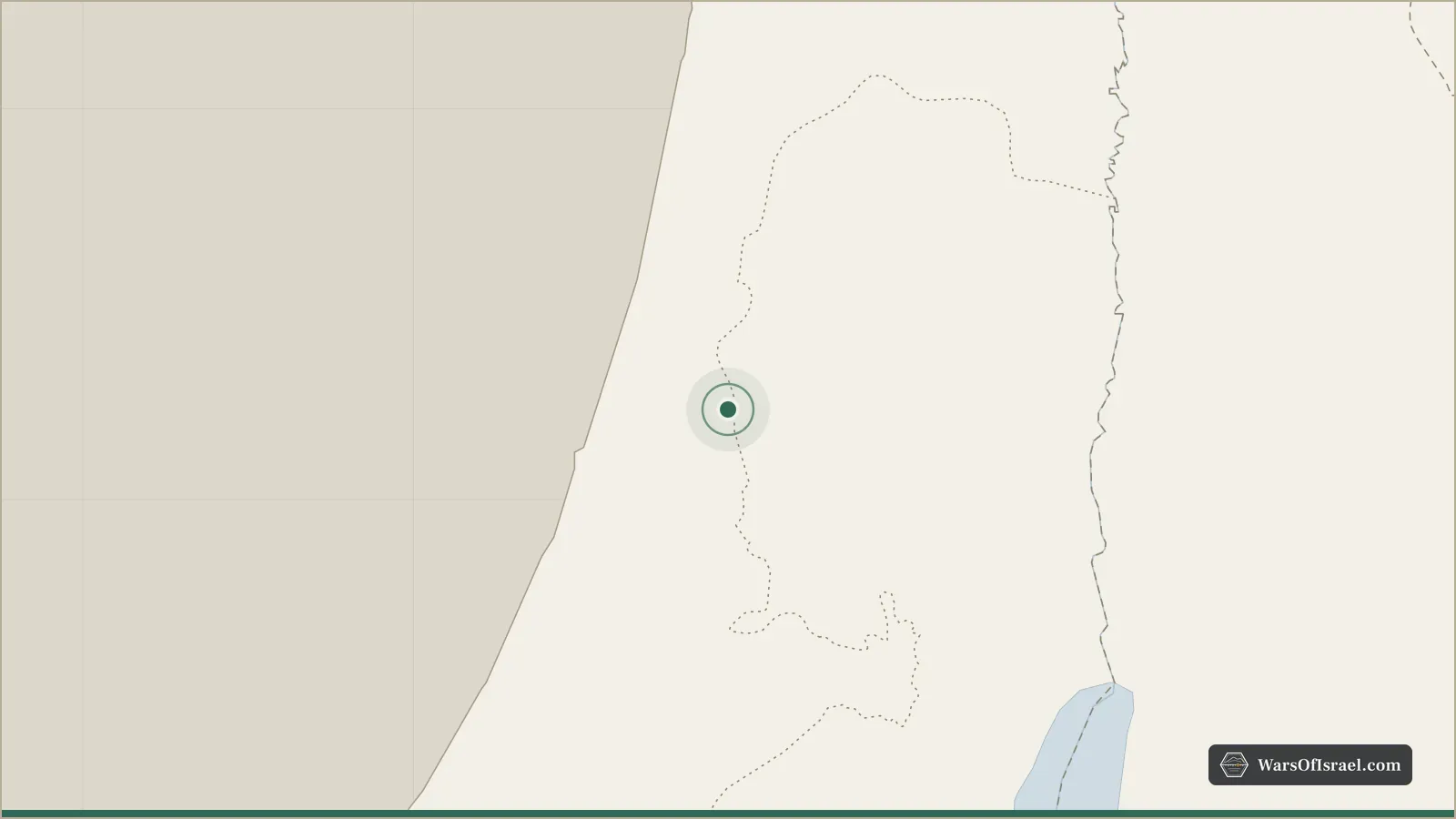
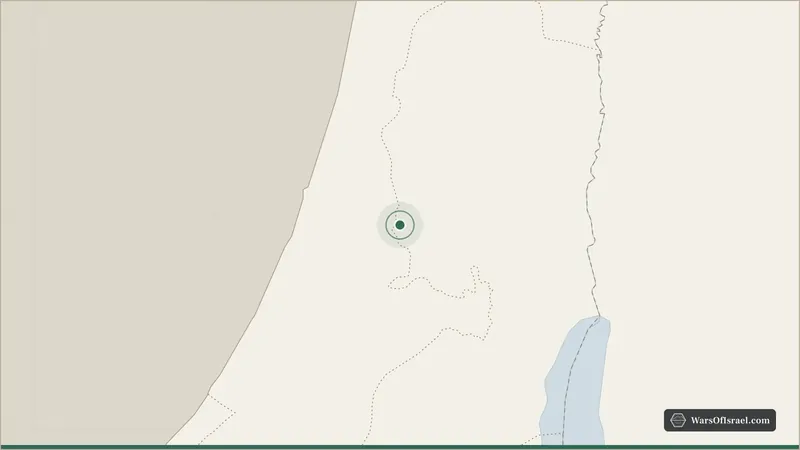
On the evening of October 29, 1956, the day the Sinai campaign began, soldiers of an Israeli Border Police unit shot dead dozens of Arab citizens of Israel as they returned home to the village of Kafr Qasim, near the border with Jordan, after a work day in the fields and nearby towns. The villagers did not know that a curfew had been moved forward that afternoon from 10 p.m. to 5 p.m. Most counts give 48 or 49 dead, among them women and children; the Akevot Institute, counting the unborn child of a pregnant woman and victims in nearby villages, gives 51. An Israeli military court convicted eight officers and soldiers of murder in 1958, and its judgment on "manifestly illegal" orders became a foundation of Israeli military law.
The curfew order
On the eve of the attack on Egypt, the IDF feared that Jordan might join the war and placed the Arab villages near the Jordanian border, the area known as the Little Triangle, under heightened security. A Border Police battalion was attached to the brigade of Colonel Issachar Shadmi, who ordered a curfew from 5 p.m. to 6 a.m. in the villages of his sector. Asked by the battalion commander, Major Shmuel Melinki, what should be done with villagers returning from work who did not know of the curfew, Shadmi's answer, according to the testimony accepted by the court, was "Allah yarhamu," Arabic for "may God have mercy on him." Melinki passed on to his officers an order to shoot anyone found outside after the curfew.
In Kafr Qasim, the village mukhtar was told of the new curfew time at about 4:30 p.m., half an hour before it took effect. Hundreds of residents were still at work outside the village and had no way of hearing it.
What happened at the village entrance
From 5 p.m. onward, a platoon under Lieutenant Gabriel Dahan stopped villagers as they arrived on foot, by bicycle, on carts and in trucks at the western entrance to the village, and shot them. The killings continued for about an hour, in several separate groups. The dead included men, women, teenagers and young children.
The government at first imposed military censorship on the news. When it could no longer be held back, Prime Minister David Ben-Gurion addressed the Knesset and expressed shock, and a commission of inquiry was appointed. Archival material on the massacre, including court records long kept secret, has since been released, partly after legal action by researchers; the Akevot Institute maintains an online document library on the Kafr Qasim massacre (opens in a new tab).
The trial and its legacy
Eleven officers and soldiers were tried before a military court. On October 16, 1958, eight were convicted and sentenced to prison terms of 7 to 17 years; Melinki received 17 years and Dahan 15. The court's presiding judge, Benjamin Halevy, wrote that the illegality of a manifestly unlawful order must "wave like a black flag" above it, and that a soldier must refuse such an order. The phrase has been quoted in Israeli courts, military academies and public debate ever since.
The sentences, however, were reduced on appeal, by the Chief of Staff and by presidential pardons, and all of those convicted were free by November 1959. Shadmi was tried separately, acquitted of murder and convicted only of exceeding his authority in setting the curfew, for which he was fined one agora, a sum that became a byword in Israel for impunity.
The residents of Kafr Qasim mark the anniversary every year, and a memorial museum opened in the village in 2006. President Shimon Peres apologized for the massacre in December 2007. In October 2014, Reuven Rivlin became the first sitting Israeli president to attend the annual commemoration, where he called the killings a terrible crime. Proposals for formal state recognition have been put to the Knesset, but none has passed; on October 26, 2021, a bill to that effect was voted down. The massacre remains a central memory for Arab citizens of Israel, and in Israeli Jewish society a lasting lesson about the duty to refuse illegal orders, alongside the Qibya raid as a reference point in debates about the conduct of the army in the 1950s.