BattleEarly statehoodReference entry
The battle of the Mitla Pass (1956)
The opening move of the Sinai campaign and its bloodiest battle, fought by paratroopers in a narrow desert defile that Israel's chief of staff had told them not to enter.
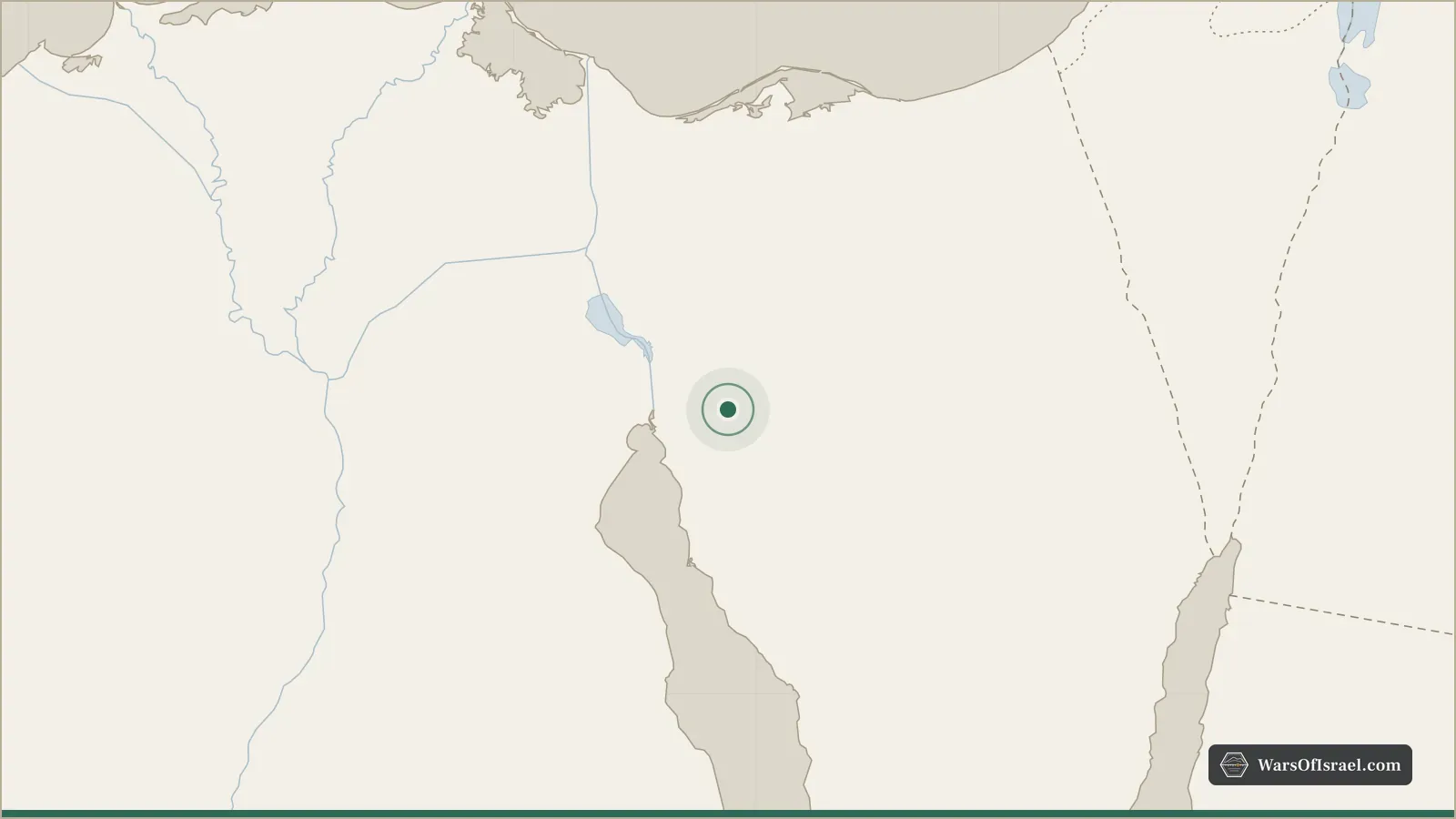
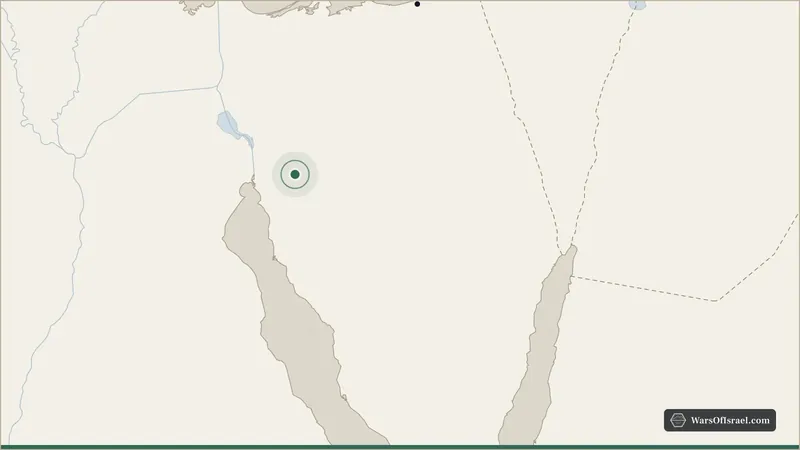
The battle of the Mitla Pass was fought on October 31, 1956, in a narrow defile in western Sinai about 50 kilometers east of Suez. It began two days earlier, when about 400 Israeli paratroopers dropped near the eastern entrance of the pass at the opening of the Sinai campaign. When a strong paratroop force entered the pass against the chief of staff's instructions, Egyptian troops dug into the cliffs trapped it in crossfire. By nightfall the paratroopers had cleared the pass, but 38 of them had been killed, according to the figure cited by historian Derek Varble, along with about 260 Egyptian soldiers. It was the costliest Israeli battle of the war.
A drop designed as a deception
Moshe Dayan's plan for Operation Kadesh began with a deliberate ambiguity. Under the secret Sèvres agreement, Israel's opening move had to look serious enough to give Britain and France their pretext to intervene at the canal, yet limited enough that, if the allies failed to act, Israel could present it as a large raid rather than a war. A paratroop battalion dropped deep in Sinai, close to the canal, met both needs.
In the late afternoon of October 29, Battalion 890 of the Paratroop Brigade, under Lieutenant Colonel Rafael Eitan, jumped from transport planes near Parker's Memorial, a monument at the eastern end of the pass. A navigation error put the drop a few kilometers from the planned zone, but the battalion dug in without opposition. The rest of Ariel Sharon's 202nd Paratroop Brigade set off overland from the border near Kuntilla, fighting through Egyptian positions at Themed and Nakhl over some 200 kilometers of desert, and reached the paratroopers on the night of October 30, after many of its vehicles had broken down along the way.
The fight in the pass
By October 31, the brigade was concentrated at the eastern entrance to the pass, and Egyptian aircraft and armor were reported moving toward it. Dayan's orders allowed only limited action. Sharon pressed for permission to advance into the pass to secure it, and received approval to send a patrol. He sent a much larger force, of half-tracks, tanks and mortars, with Mordechai Gur among its commanders, that entered the pass in the early afternoon.
The Egyptians had placed troops of their 2nd Brigade in caves and positions along both walls of the defile. Gur's column drove into a killing ground. Vehicles were hit, and the lead units were pinned down in the narrow road through the afternoon. The paratroopers then fought their way up the slopes. Between about six and nine in the evening, two companies sent by Aharon Davidi and Eitan cleared the positions on both sides of the pass in close fighting. The Egyptian force withdrew during the night.
The cost was severe on both sides. Israeli losses are usually given as 38 killed and about 120 wounded; Egyptian losses as about 260 killed.
Controversy and legacy
The battle was controversial from the moment it ended. In military terms the pass had limited value: the decisive fighting of the campaign was in the north, and the Egyptians were already pulling back toward the canal. Dayan, who learned of the attack after the fact, defended the decision to take the pass in public but criticized Sharon's frontal tactics as costing unnecessary lives. Critics, among them officers who had fought in the pass, later charged that describing a battalion-size advance as a patrol had misled the General Staff. The episode opened a long rift between Sharon and parts of the paratroop officer corps and shaped his reputation as a brilliant but insubordinate commander, a reputation that followed him into later wars.
For the paratroopers, many of whom had come up through the retribution operations, the Mitla became a defining story of courage and loss. The pass returned to Israeli history in 1967 and 1973, when it was again a key route between the canal and central Sinai. The drop itself, on the first evening of the campaign, remains the moment when Israel's war of 1956 began; the Kafr Qasim massacre took place inside Israel the same evening.