The 1956 Suez crisis and the Sinai campaign (Operation Kadesh)
How a secret pact at Sèvres, a paratroop drop at the Mitla Pass and eight days of desert fighting gave Israel a military victory and a decade of quiet in the south, at a political price.
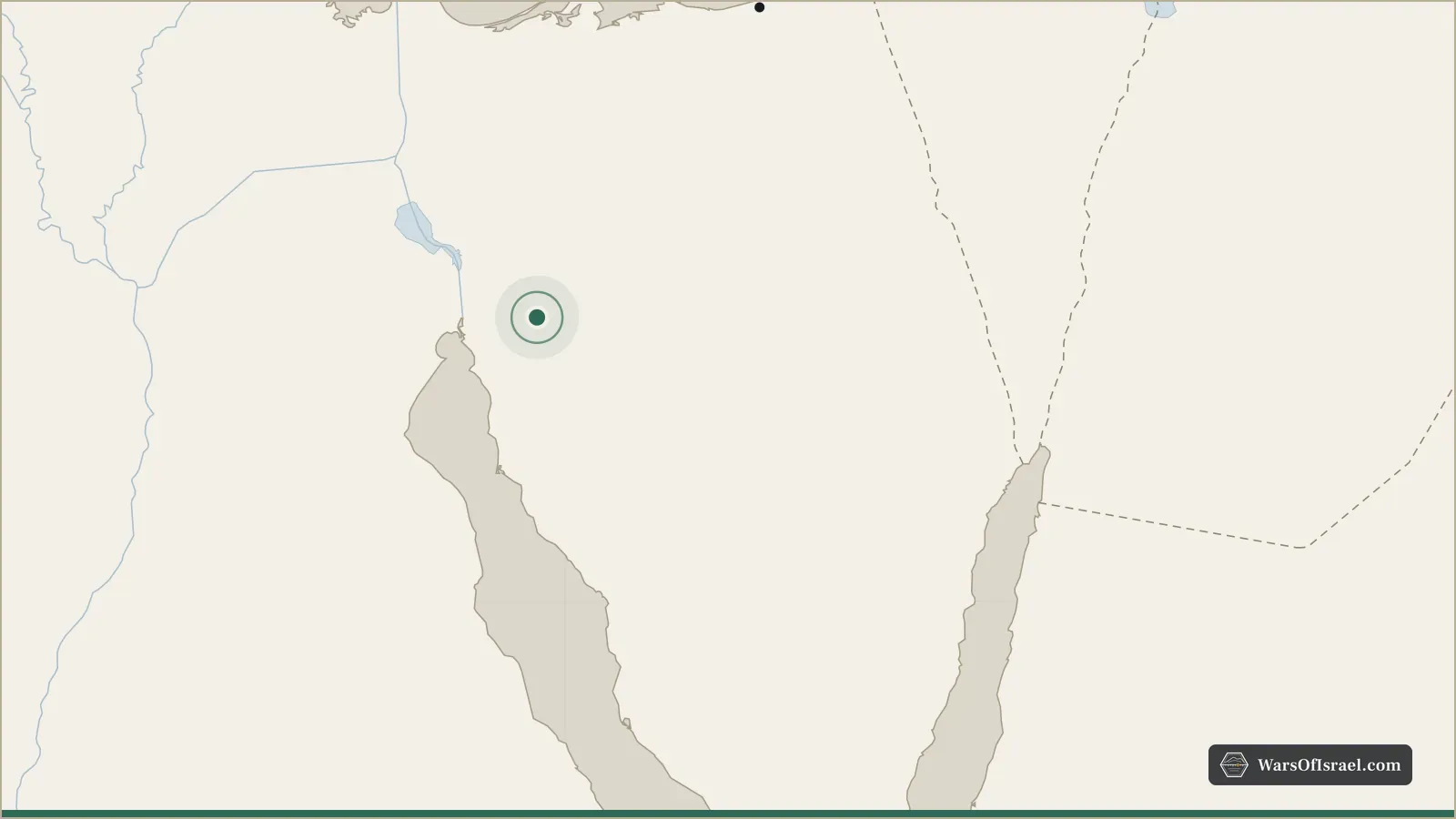
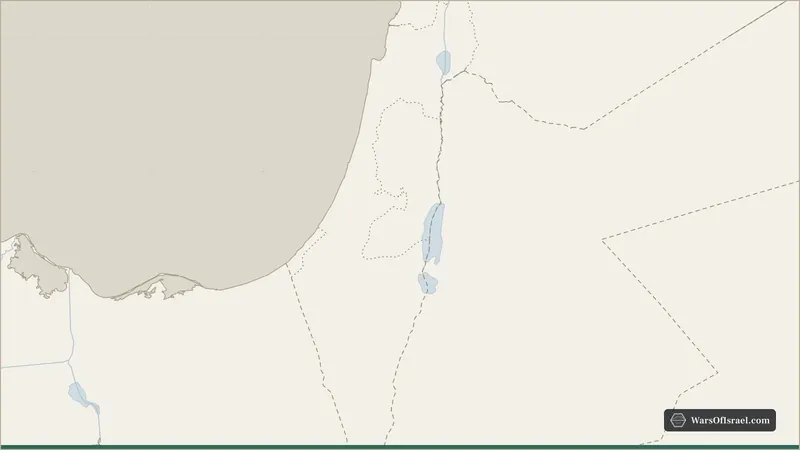
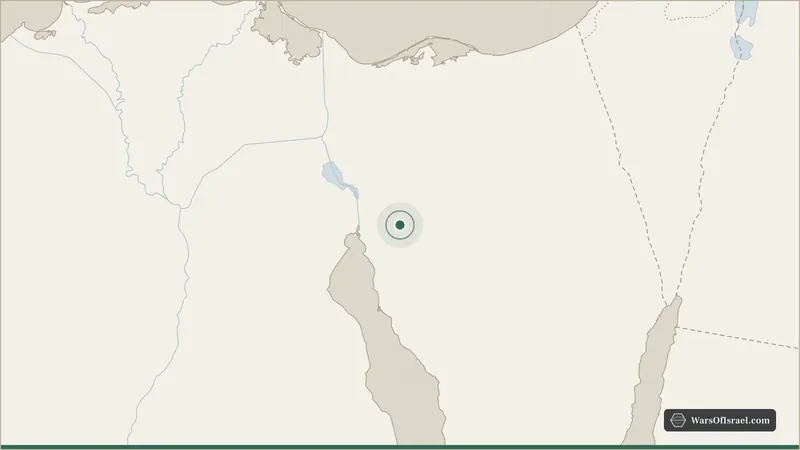
On October 29, 1956, Israeli paratroopers dropped into the Sinai desert near the Mitla Pass, about 50 kilometers from the Suez Canal. Within eight days the Israel Defense Forces had taken almost the whole Sinai Peninsula and the Gaza Strip, while Britain and France, by secret prior agreement, attacked Egypt along the canal. Israelis call the war Operation Kadesh (Mivtza Kadesh) or the Sinai campaign; the wider world knows it as the Suez crisis. Militarily it was a decisive Israeli victory. Politically it ended with an American-led demand for withdrawal that Israel could not refuse, and with gains that turned out to be real but limited: the opening of the Straits of Tiran and ten years of relative quiet on the Egyptian border.
The road to war
Israel came to 1956 after five years of a grinding border war. Fedayeen raids and the retribution operations had made the Gaza line and the Jordanian frontier the center of Israeli security concerns, and in 1955 Egyptian military intelligence had begun to organize and send fedayeen units from Gaza deep into Israel. Egypt had also closed the Straits of Tiran, at the southern tip of Sinai, to Israeli shipping, cutting Eilat off from the Red Sea, and it barred Israeli ships from the Suez Canal.
Two developments in 1955 turned Israeli anxiety into a sense of urgency. The first was the Czechoslovak arms deal, announced by Gamal Abdel Nasser on September 27, 1955, which promised Egypt Soviet-bloc tanks, MiG-15 fighters and Ilyushin bombers in quantities that threatened to overturn the military balance within a year or two. The second was Israel's failure to obtain comparable weapons from the United States. Chief of Staff Moshe Dayan and David Ben-Gurion, who returned to the premiership in November 1955, came to believe that a war with Egypt was coming and that it would be better fought sooner than later.
France offered the way out. Paris, fighting a war in Algeria and convinced that Nasser was arming the Algerian rebels, began secretly supplying Israel with modern arms in 1956, including Mystère jet fighters and AMX-13 light tanks. Then, on July 26, 1956, Nasser announced in Alexandria the nationalization of the Suez Canal Company, owned mainly by British and French shareholders. Britain's prime minister, Anthony Eden, saw Nasser as a new dictator who had to be stopped. By the autumn, London and Paris were planning a military operation to retake the canal and looking for a pretext.
The secret pact at Sèvres
The pretext was Israel. On October 22 to 24, 1956, Ben-Gurion, Dayan and Shimon Peres, director-general of the Defense Ministry, met French and British representatives at a villa in Sèvres, outside Paris. The plan they settled, recorded in what became known as the Protocol of Sèvres, was simple and cynical. Israel would attack in Sinai and threaten the canal. Britain and France would then issue an ultimatum to both sides to withdraw from the canal zone and, when Egypt refused, would intervene to "separate the combatants" and seize the canal. Israel received a promise of air cover for its cities and naval support, and the assurance that it would not fight Egypt alone.
The existence of the agreement was denied for years by the British government. It is now fully documented, and the Israeli copy of the protocol was later made public. Historians across the spectrum agree on the basic facts. They differ on emphasis: some, such as Avi Shlaim, stress Ben-Gurion's long-standing wish for a preventive war and his reservations about relying on Britain, while others stress the genuine pressure of the fedayeen raids and the Egyptian blockade.
The forces
The IDF that went to war in 1956 was still largely a reserve army. It mobilized its reserves within days, under the cover of rumors that the target was Jordan, which had been the scene of the last major reprisal raid at Qalqilya on October 10. Its striking forces included the 202nd Paratroop Brigade under Ariel Sharon, the 7th Armored Brigade, the 9th Infantry Brigade under Avraham Yoffe, and several other infantry and armored brigades organized into divisional task forces. The Israeli Air Force, newly reinforced with French jets, faced an Egyptian air force that had only begun to absorb its Soviet-bloc aircraft.
Egypt's forces in Sinai were concentrated in a fortified triangle in the northeast, around Abu Ageila and Umm Qataf, at Rafah and El Arish, and in the Gaza Strip, with smaller garrisons along the central routes and at Sharm el-Sheikh. After the British and French ultimatum, the Egyptian high command ordered most units in Sinai to withdraw toward the canal to meet the larger threat.
The course of the war
The opening move at the Mitla Pass
Dayan's plan began not with a frontal attack but with a deep strike designed to look, to Egypt, like a large raid rather than a war, and to give the British and French their pretext. In the late afternoon of October 29, Battalion 890 of the Paratroop Brigade, under Lieutenant Colonel Rafael Eitan, was dropped near Parker's Memorial, at the eastern end of the Mitla Pass. Four Israeli P-51 Mustangs had earlier cut Egyptian overhead telephone lines in Sinai with their propellers and wings. The rest of Sharon's brigade drove across the desert by way of Kuntilla, Themed and Nakhl, and linked up with the paratroopers on October 30.
The next day produced the war's most controversial battle. Against Dayan's instructions to hold rather than advance, Sharon sent a strong force into the pass, where Egyptian troops dug into its walls caught it in a deadly crossfire. By the time the paratroopers cleared the pass that night, 38 Israeli soldiers had been killed, according to the figure cited by historian Derek Varble, and about 260 Egyptian soldiers. The full story is told in the entry on the battle of the Mitla Pass.
The northern axis and the Gaza Strip
The heavier fighting took place in the north. Israeli armor and infantry attacked the fortified Egyptian positions at Umm Qataf and Abu Ageila from October 30, and after an initial failed attack the 7th Armored Brigade swung around the defenses and reached the rear. The Egyptian positions fell or were abandoned on the night of November 1 to 2. Rafah fell on November 1, El Arish on November 2, and Israeli forces reached the canal zone area on the central and northern routes.
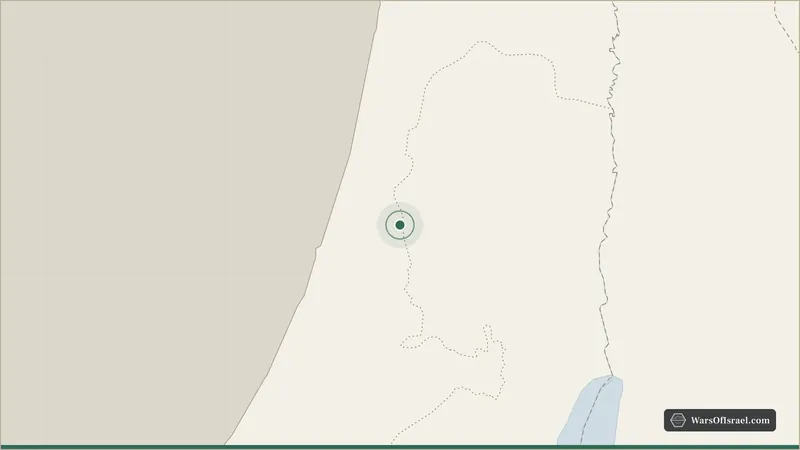
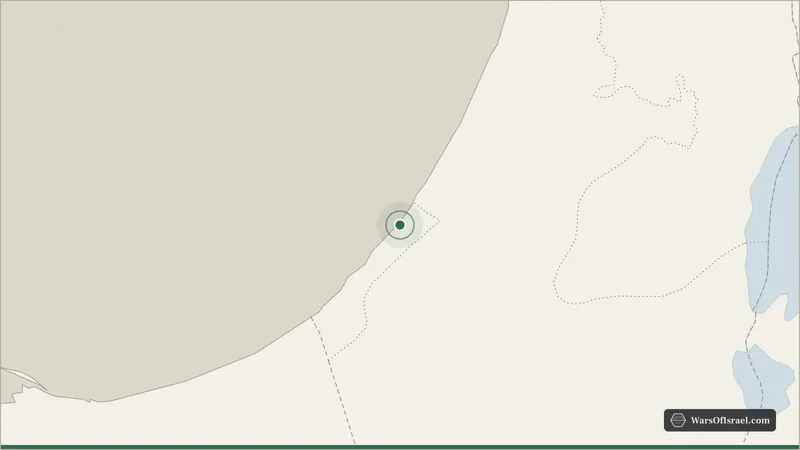
The Gaza Strip was taken on November 2 and 3. Gaza City surrendered on November 2 and Khan Yunis fell on November 3. The occupation of the Strip, crowded with refugees, was marked by killings of Palestinian civilians and men suspected of being fedayeen in Khan Yunis on November 3 and Rafah on November 12. The UN Relief and Works Agency's director reported in December 1956 that it had received lists of 275 people killed in Khan Yunis. Historian Benny Morris puts the total for the two towns at about 200, and Palestinian sources give higher figures. The Israeli account at the time described fighting with armed resistance. These killings, like the Kafr Qasim massacre inside Israel on the first evening of the war, are part of the record of the campaign.
At sea and in the south
On October 31 the Egyptian destroyer Ibrahim el Awal shelled Haifa. Damaged by Israeli and French warships and Israeli aircraft, it surrendered the same day and was taken into the Israeli navy as INS Haifa. In the far south, Yoffe's 9th Brigade drove down the barren western coast of the Gulf of Aqaba, a route considered almost impassable for vehicles, while paratroopers moved down the western side of the peninsula. Sharm el-Sheikh surrendered at 9:30 on the morning of November 5. With it, the Straits of Tiran were in Israeli hands.
The Anglo-French intervention
The British and French ultimatum was issued on October 30. Egypt rejected it, and from October 31 British and French aircraft bombed Egyptian airfields. Paratroopers landed near Port Said on November 5 and seaborne forces followed on November 6. By then the political situation had collapsed. On November 2 the UN General Assembly, meeting in emergency session because Britain and France had vetoed action in the Security Council, called for a ceasefire by 64 votes to 5, with Israel, Britain, France, Australia and New Zealand voting against. The United States, furious at having been kept in the dark during the final days of its presidential election campaign, applied financial pressure on Britain. On November 5 the Soviet premier, Nikolai Bulganin, sent Ben-Gurion a letter warning that Israel's actions placed "a question mark upon the very existence of Israel as a State." A ceasefire took hold on November 6 to 7.
Outcome and consequences
On the battlefield, the results were one-sided. According to Ben-Gurion's report to the Knesset on March 5, 1957, the IDF lost 170 killed and one soldier taken prisoner; other counts give 172 killed. Egyptian losses were never reliably established: estimates of Egyptians killed in the fighting with Israel range from about 1,000 to 3,000, and thousands were taken prisoner. Britain and France lost a few dozen soldiers.
Politically, the gains were narrower. The General Assembly established the UN Emergency Force, the first UN peacekeeping force, which entered Egyptian territory with Egypt's consent to supervise the withdrawals. Britain and France left the canal zone by December 22, 1956. Israel tried to hold on to Gaza and Sharm el-Sheikh, and only after months of American pressure and assurances on freedom of navigation did it agree to leave. On March 1, 1957, Foreign Minister Golda Meir announced at the UN that Israel would withdraw, and the withdrawal was completed by March 8, 1957, according to the United Nations. You can read the UN's own account of the first UN Emergency Force (opens in a new tab).
What Israel gained was real. UNEF troops were stationed at Sharm el-Sheikh and along the Gaza line, the Straits of Tiran stayed open to Israeli shipping for more than ten years, Eilat grew into a port, and the fedayeen raids from Gaza ended. The IDF emerged with new confidence and a new emphasis on armor, which Dayan had underestimated before the war. Israel's partnership with France deepened, leading to further arms deals and cooperation in nuclear research.
The costs were also real. Israel's collusion with the two old colonial powers confirmed, in Arab eyes, the image of Israel as an outpost of the West. Nasser, defeated on the battlefield, emerged as a political victor and the hero of Arab nationalism. In Britain, the crisis ended Eden's career: he resigned in January 1957. And the arrangement that kept the peace depended on Egypt's consent. When Nasser asked UNEF to leave in May 1967 and announced a renewed blockade of the straits, the road to the Six-Day War opened.
Legacy and memory
In Israel, the Sinai campaign is remembered as the war that proved the young state could take the offensive, and as the war of the paratroopers, of the Mitla drop and of the long drive to Sharm el-Sheikh. On November 7, after the conquest of the peninsula, Ben-Gurion spoke to the Knesset in terms of historic triumph, and within a day he was forced to announce that Israel would withdraw. The distance between those two moments has become a lesson often cited in Israeli strategic writing: battlefield victories need political backing from at least one great power. In Egypt the war is remembered as the "Tripartite Aggression," and in Britain as the moment the empire discovered the limits of its power.
Timeline
- July 26, 1956: Nasser announces the nationalization of the Suez Canal Company.
- October 22 to 24, 1956: Israeli, French and British representatives agree on the Protocol of Sèvres.
- October 29, 1956: Paratroopers drop near the Mitla Pass; the Sinai campaign begins.
- October 30, 1956: Britain and France issue their ultimatum; Sharon's brigade links up with the paratroopers.
- October 31, 1956: The battle of the Mitla Pass; the Egyptian destroyer Ibrahim el Awal is captured off Haifa.
- November 2, 1956: El Arish and Gaza City fall; the UN General Assembly calls for a ceasefire.
- November 5, 1956: Sharm el-Sheikh surrenders; Anglo-French paratroopers land near Port Said.
- November 6, 1956: Britain and France accept a ceasefire.
- March 1, 1957: Golda Meir announces Israel's withdrawal at the UN.
- March 8, 1957: The Israeli withdrawal from Sinai and Gaza is completed.