Military operationSecond intifada to the Gaza operationsReference entry
Operation Orchard: the strike on Syria's reactor site (2007)
How Israel destroyed a secret reactor in the Syrian desert, said nothing for more than ten years, and why Syria never answered.
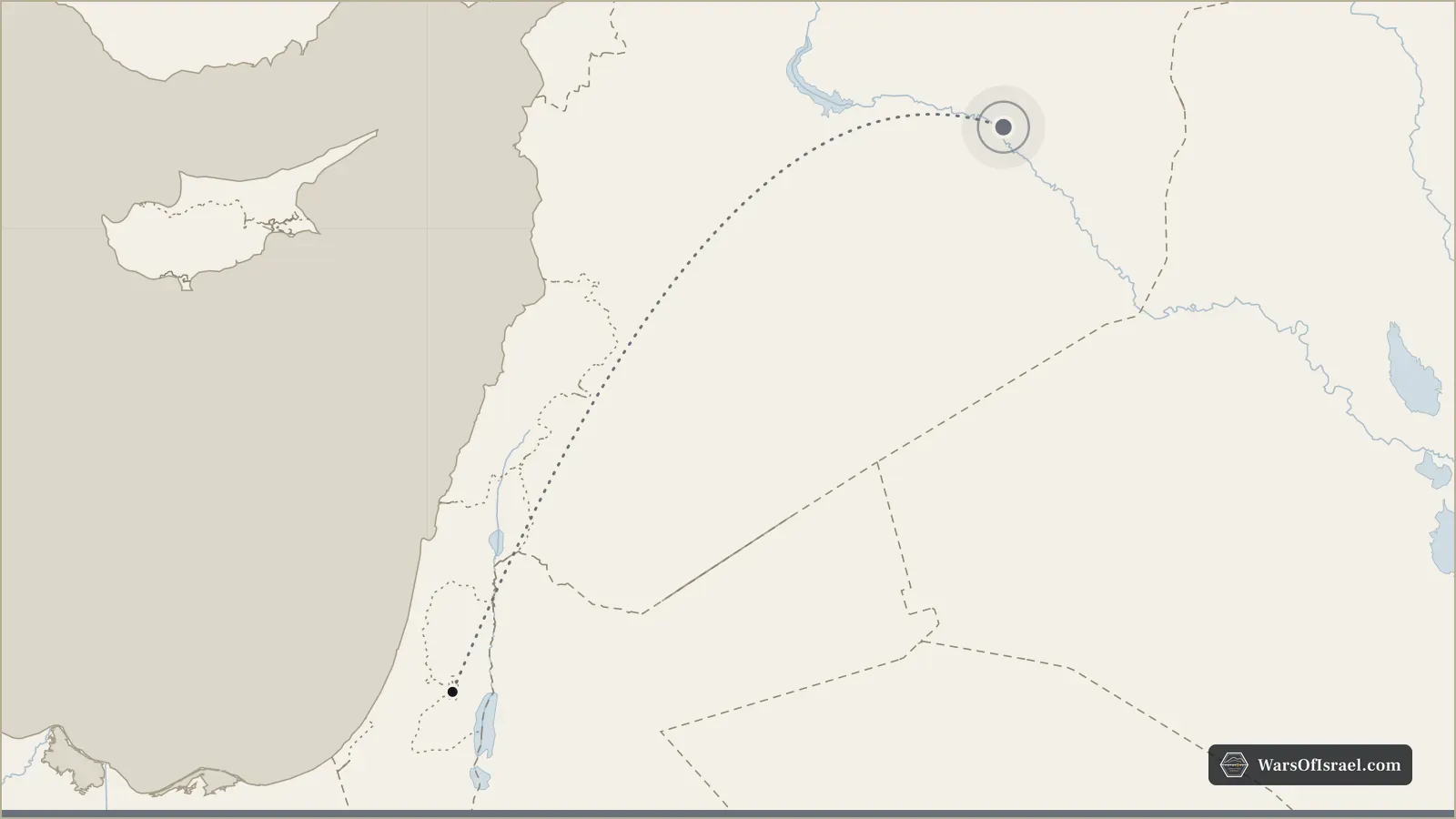
Operation Orchard, known in Israel by its official name Outside the Box (Mivtza Mihutz LaKufsa), was the Israeli airstrike that destroyed a building at Al Kibar, in the Deir ez-Zor region of eastern Syria, shortly after midnight on September 6, 2007. Israel and the United States said the building housed a nuclear reactor under construction with North Korean assistance, and the International Atomic Energy Agency later concluded that it was very likely an undeclared reactor. Israel said nothing in public about the operation for more than ten years and formally confirmed it only on March 21, 2018. Syria did not retaliate. The strike followed the logic of Operation Opera, the 1981 attack on Iraq's Osirak reactor, but its quiet aftermath was very different.
Background: a reactor in the desert
Israeli intelligence began to suspect in the mid-2000s that Syria was building a nuclear facility with help from North Korea. According to later published accounts, the decisive evidence included photographs from inside the building at Al Kibar showing a structure resembling the gas-cooled, graphite-moderated reactor at Yongbyon in North Korea, a type suited to producing plutonium. Mossad passed its findings to the United States in the spring of 2007.
The administration of President George W. Bush examined the evidence and debated military options. Bush later wrote in his memoir that he told Prime Minister Ehud Olmert the United States would not strike, since its intelligence agencies could not confirm with high confidence that Syria had a weapons program, and preferred to pursue diplomacy and a public exposure of the site. Olmert told him that Israel saw the reactor as an existential threat and would act on its own. According to Bush, Olmert did not ask for a green light and did not receive one.
The Israeli decision was taken by Olmert together with Defense Minister Ehud Barak, Chief of Staff Gabi Ashkenazi and Mossad director Meir Dagan, among others, after months of preparation. A central concern was to carry out the strike in a way that would allow Syrian President Bashar al-Assad to avoid a war: if Israel did not boast, Assad would not be forced to respond.
What happened
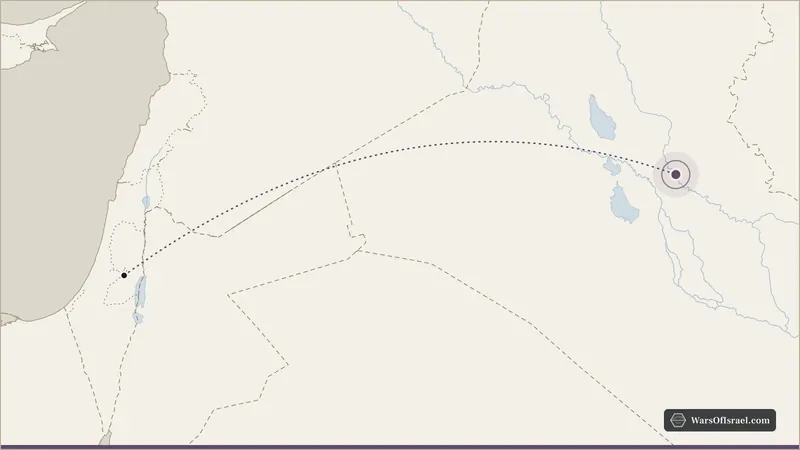
On the night of September 5 to 6, 2007, Israeli F-15I and F-16I fighter jets flew to the site and struck it with precision-guided bombs shortly after midnight. The building was destroyed. No Israeli aircraft was lost.
Israel imposed strict censorship and made no comment. Syria at first said its air defenses had confronted Israeli aircraft that dropped munitions over empty desert, and later described the target as an unused military building. Within weeks, Syria leveled the site and covered it; satellite photographs published by independent analysts showed the ground cleared and a new structure built over it.
On April 24, 2008, the CIA and other US officials gave a public briefing with photographs and a video, presenting their assessment that the site had been a reactor built with North Korean help and that it had been close to completion. Syria rejected the claims.
The IAEA was able to inspect the site only once, in June 2008, and found particles of processed uranium that Syria could not adequately explain. In a report issued in May 2011, the agency concluded that the destroyed building was very likely a nuclear reactor that Syria should have declared. Its board then referred the case to the UN Security Council.
Outcome and significance
The strike achieved its aim without the war that many had feared. Assad chose not to answer, and the silence on both sides allowed him that choice. In this the operation differed sharply from the Iraqi case of 1981, which Israel acknowledged at once and which drew international condemnation, including from the United States.
The approach of acting against an emerging nuclear capability in a hostile state, before it is completed and even without a US partner, came to be described as the Begin Doctrine, after the prime minister who ordered the 1981 strike. Al Kibar was its second application. When Israel lifted censorship in March 2018, its leaders presented the operation as a message to Iran.
The strike also mattered in hindsight. Al Kibar lay in the Deir ez-Zor region, which from 2014 fell for years under the control of the Islamic State group during the Syrian civil war. Israeli officials and many analysts have argued that a working reactor there could have produced material that ended up in the hands of armed groups. Syria's own later history, and the Israeli air campaign that unfolded in the country in the following decade, the campaign between the wars, gave that argument added weight.