Military operationLebanon and the first intifada
Operation Opera: the strike on Iraq's Osirak reactor (1981)
How Israel planned and flew a long-range raid on a French-built reactor near Baghdad, why it saw the strike as unavoidable, and why historians still argue over what it achieved.
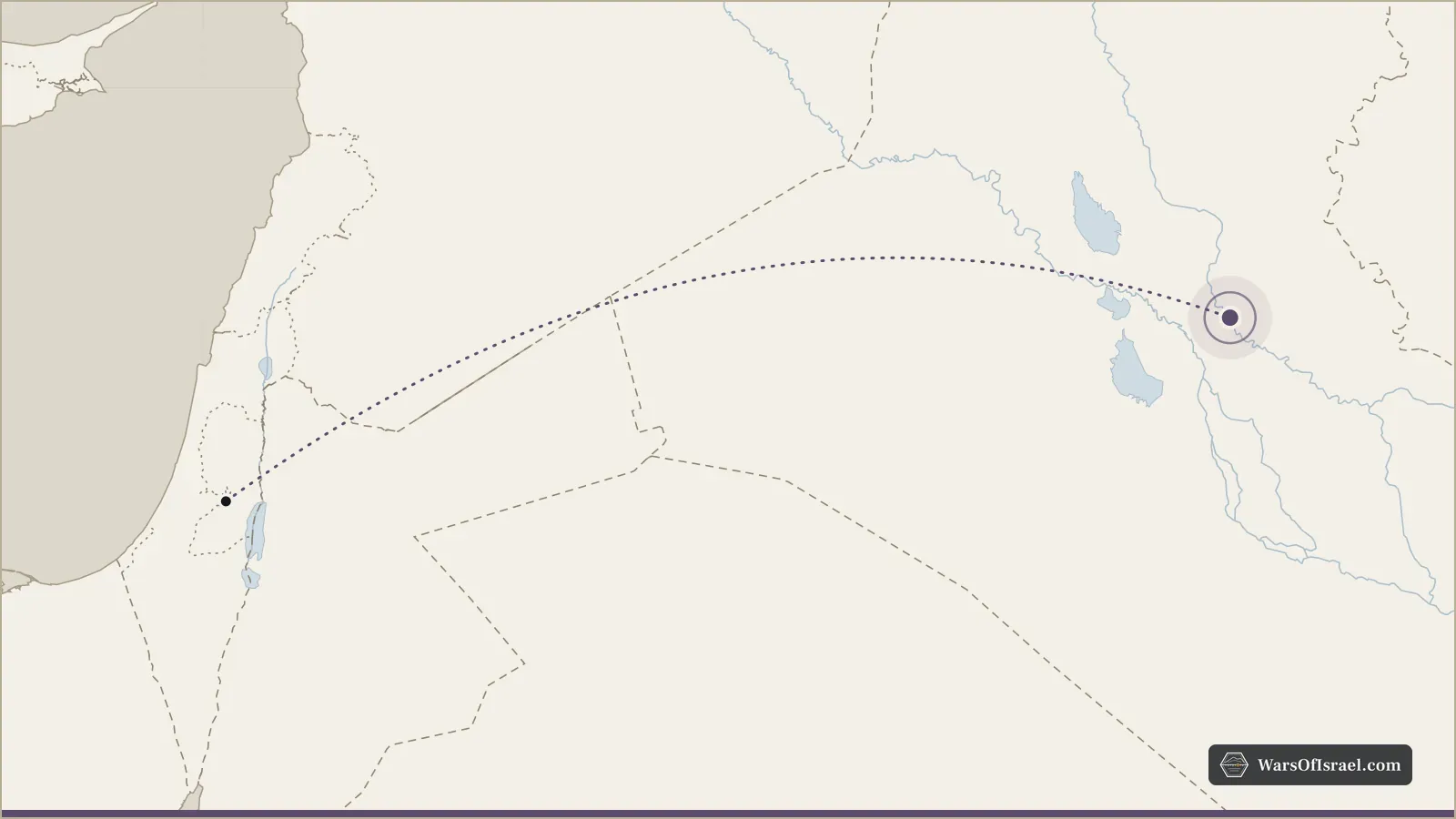
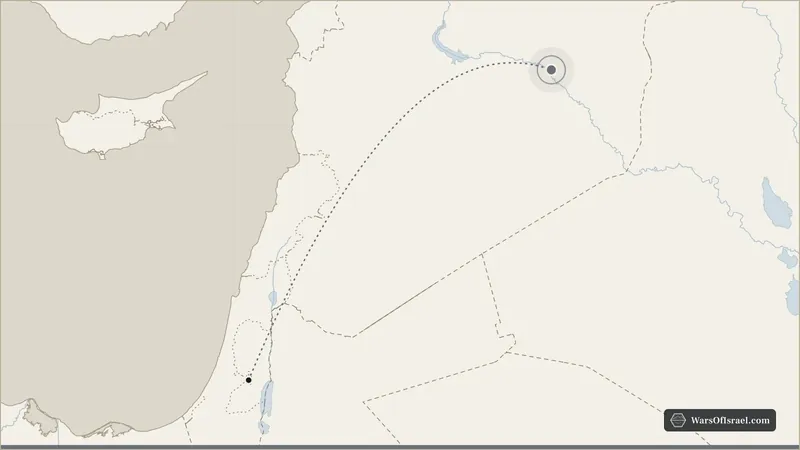
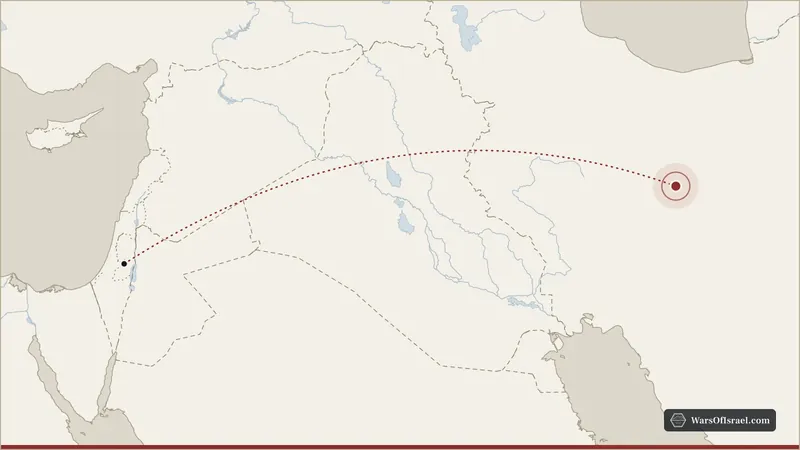
On the afternoon of June 7, 1981, eight Israeli Air Force F-16 fighter-bombers, escorted by six F-15s, flew more than 1,000 kilometers across Jordanian and Saudi airspace and bombed the Osirak nuclear reactor at the Tuwaitha research center, about 17 kilometers southeast of Baghdad. The attack over the target lasted less than two minutes; all the aircraft returned. Ten Iraqi soldiers and a French civilian engineer were killed. Israel said the reactor was weeks from being able to start up and would have given Saddam Hussein the means to build nuclear weapons. The UN Security Council unanimously condemned the strike. Operation Opera, also known as Operation Babylon, became the first case of what Israelis call the Begin doctrine: Israel will not allow a hostile state in the region to acquire nuclear weapons.
Background: Iraq, France and the Osiris reactor
In the mid-1970s Iraq, then ruled by the Baath party with Saddam Hussein as its rising strongman, bought a research reactor from France. The deal, completed in 1976, covered a 40-megawatt light-water reactor of the Osiris class, which the French called Osirak and Iraq named Tammuz 1, together with a smaller companion reactor. It was to be fueled with highly enriched uranium supplied by France, and Iraq, a signatory of the Nuclear Non-Proliferation Treaty, accepted inspections by the International Atomic Energy Agency.
Israel's leaders were not reassured. They pointed to the choice of a large reactor fueled with weapons-grade uranium, to Iraq's oil wealth, which made a research program for energy purposes hard to explain, and to Saddam's public hostility toward Israel. Diplomatic efforts to persuade France and Italy to stop cooperating failed. In April 1979, before the reactor cores were shipped, some of the components were damaged in a sabotage attack in a warehouse in La Seyne-sur-Mer, near Toulon, and in June 1980 an Egyptian nuclear scientist working for the Iraqi program, Yahya El Mashad, was killed in a Paris hotel. Responsibility for these acts has been widely attributed to Israel, which has never officially confirmed it.
On September 30, 1980, days after the start of the Iran-Iraq War, Iranian F-4 Phantoms struck the Tuwaitha site in an operation that caused only limited damage. The attempt confirmed both that the reactor could be attacked from the air and that a half-hearted strike would not stop it.
The decision in Jerusalem
The cabinet of Prime Minister Menachem Begin had debated a military option for months. In October 1980 it voted, by ten to six, to authorize an attack in principle, with ministers divided over timing and over the risk to relations with the United States and Egypt, with which Israel had signed a peace treaty in 1979. Opponents within the security establishment and the opposition, including Shimon Peres, warned of diplomatic isolation.
Begin's argument rested on the timing of the reactor's start-up. Once it went critical and was loaded with fuel, a strike would scatter radioactive material over Baghdad, so Israel would be left with a choice between attacking before start-up and never attacking at all. The mission was postponed several times, partly out of fear of leaks, before it was set for Sunday, June 7.
Planning was led by the commander of the Israeli Air Force, Major General David Ivry, under Chief of Staff Rafael Eitan. The squadrons trained against a replica target and rehearsed long-distance navigation at low level. The F-16s, delivered to Israel only from 1980, had been intended for Iran before the fall of the Shah.
The strike on June 7, 1981
The formation took off from Etzion air base in the Sinai, then still under Israeli control, at about 4 p.m. local time. Flying low and, according to pilots' later accounts, in tight formation so as to look like a single large aircraft on radar, the jets crossed the Gulf of Aqaba and southern Jordan and continued over northern Saudi Arabia. The pilots dropped their external fuel tanks over the desert to save weight for the final stretch.
The eight F-16s, led by Ze'ev Raz, carried two 2,000-pound Mark 84 bombs each. Among the pilots was Ilan Ramon, the youngest, who would become Israel's first astronaut and died in the Columbia shuttle disaster in 2003. Near the target the aircraft climbed, rolled in and dived on the reactor dome one after another. At least eight of the 16 bombs hit the reactor's containment dome, according to most accounts. The Iraqi air defenses fired late and to no effect. The F-15 escort covered the withdrawal, and the formation returned to Israel at high altitude.
Ten Iraqi soldiers were killed, and Damien Chaussepied, a young French engineer working for the French atomic energy program, also died. Israel later agreed to pay compensation to his family.
International reaction
The response was almost uniformly critical. On June 19, 1981, the Security Council unanimously adopted Resolution 487 (opens in a new tab), which strongly condemned the attack as a clear violation of the UN Charter and the norms of international conduct, and called on Israel to place its own nuclear facilities under IAEA safeguards. The United States, under President Ronald Reagan, voted in favor of a resolution that its own diplomats had helped soften, and briefly suspended the delivery of further F-16s to Israel before lifting the suspension.
Egypt, three days after a summit between Begin and Anwar Sadat in Sharm el-Sheikh, was embarrassed and angry. France condemned the raid and initially undertook to help rebuild the reactor, but its cooperation dwindled and ended in the mid-1980s. At home, the strike was popular. It came three weeks before the Knesset election of June 30, 1981, in which Begin's Likud narrowly won, and the opposition accused him of exploiting the timing.
Did it work: a debate that has not ended
The question of what Operation Opera achieved is still open, and the main positions can be stated plainly:
- Israel's official view, and that of many strategists, is that the strike removed the most direct path Iraq had to a nuclear weapon and that its value was proven in 1991, when the coalition in the Gulf War did not face a nuclear-armed Iraq, and Israel absorbed the Iraqi Scud attacks without the shadow of an Iraqi bomb.
- The physicist Richard Wilson, who inspected the site in 1982, argued that the reactor was poorly suited to producing weapons plutonium under safeguards, so the danger was smaller than Israel claimed.
- Political scientist Målfrid Braut-Hegghammer, working from Iraqi records captured after 2003, concluded that the raid pushed Saddam's leadership to create a dedicated, secret weapons program that had not existed in that form before, and that the strike may therefore have increased the long-term proliferation risk while also setting the program back.
What is beyond dispute is that the Tuwaitha reactor never operated. The site remained damaged, and American strikes in the 1991 Gulf War destroyed what remained.
Legacy
Operation Opera set a precedent that Israel repeated. In 2007 Israeli aircraft destroyed a Syrian reactor under construction at Deir ez-Zor, in an attack known as Operation Orchard, and the confrontation over Iran's nuclear program led eventually to the open strikes of the June 2025 Israel-Iran war. Each time the government invoked the principle it stated in 1981, that the strike was a precedent for every future Israeli government. The raid also remains a case study in long-range air operations, and a reference point for debates over the legality and effectiveness of preventive war.
Timeline
- April 1979: Reactor components awaiting shipment to Iraq are damaged in a sabotage attack near Toulon, France.
- September 30, 1980: Iranian aircraft strike the Tuwaitha site, causing limited damage.
- October 1980: The Israeli cabinet votes in principle to authorize an attack on the reactor.
- June 7, 1981: Eight Israeli F-16s, escorted by F-15s, destroy the Osirak reactor near Baghdad.
- June 19, 1981: The UN Security Council unanimously adopts Resolution 487, condemning the attack.
- June 30, 1981: Begin's Likud narrowly wins the Knesset election.
- January 1991: Coalition air strikes in the Gulf War destroy what remains of the Tuwaitha reactor complex.