The Israel and Iran war of June 2025 (Operation Rising Lion)
How decades of shadow war became twelve days of open war between Israel and Iran, what each side hit, what it cost, and why it was not the end.
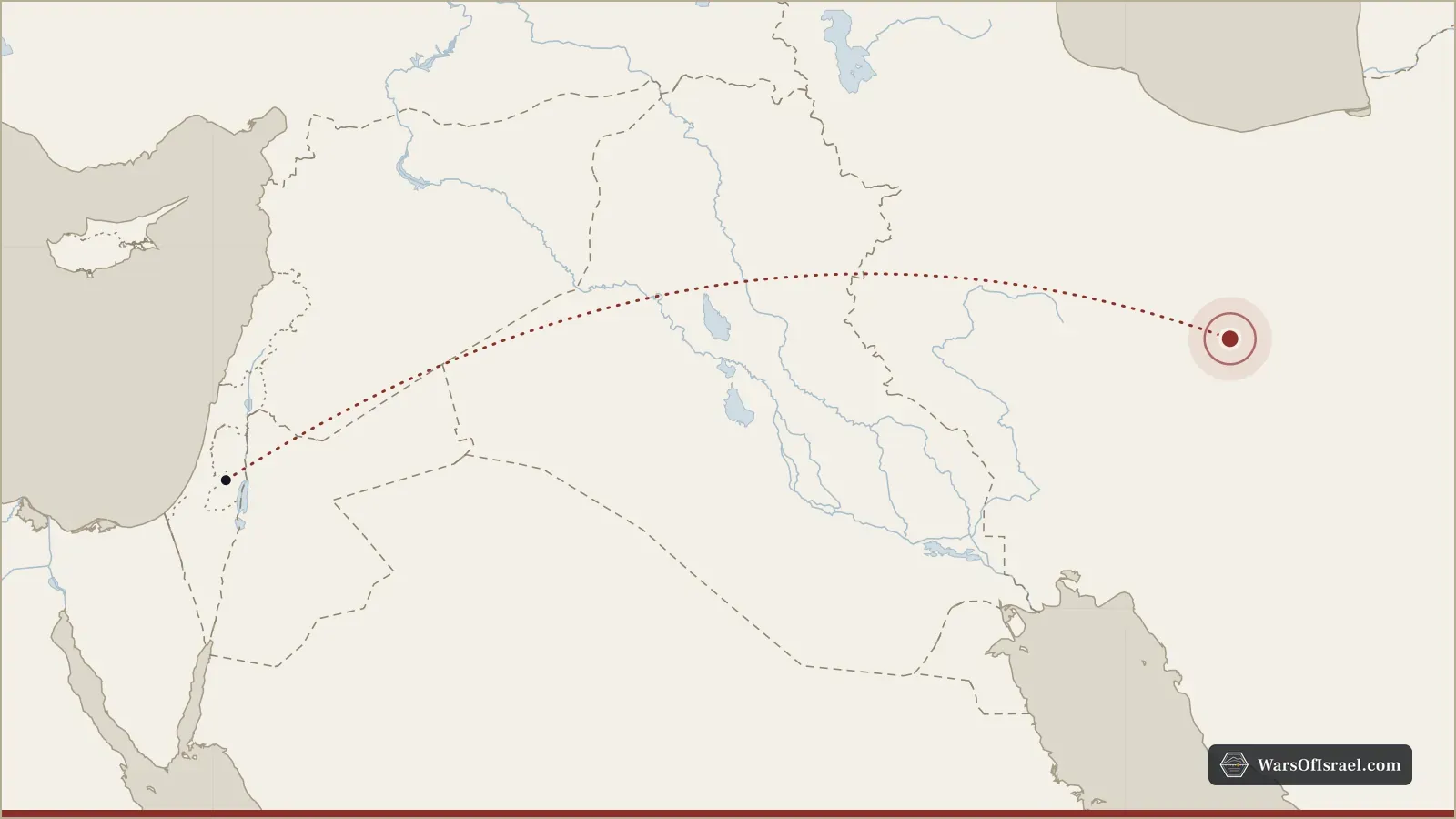
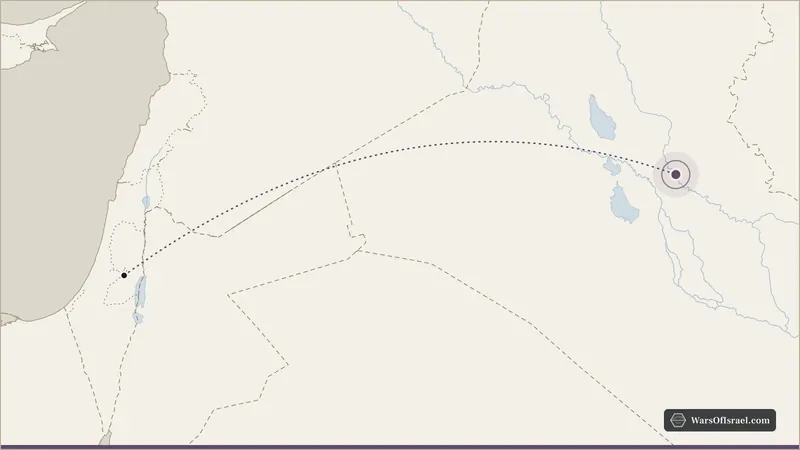
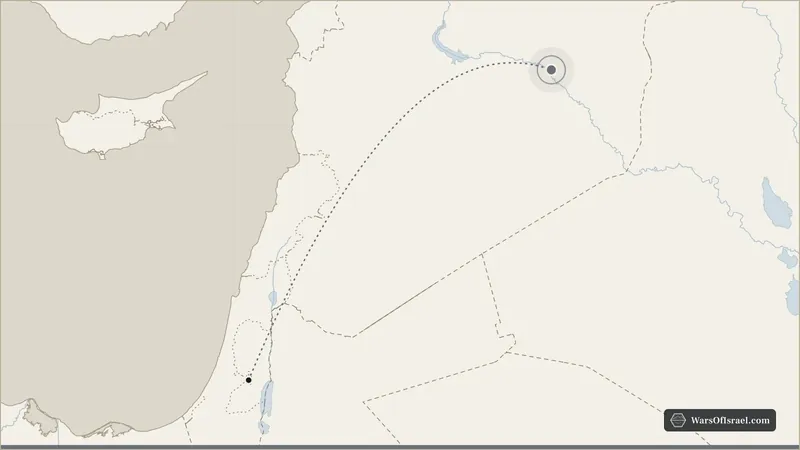
In the early hours of June 13, 2025, Israeli aircraft and drones began striking targets across Iran. Within hours the chief of Iran's armed forces, the commander of the Revolutionary Guards and a string of senior nuclear scientists were dead, and the enrichment plant at Natanz had been hit. Prime Minister Benjamin Netanyahu named the operation Rising Lion (Am KeLavi) and said it would go on for as many days as needed to remove the threat of an Iranian nuclear weapon. Iran answered that night with ballistic missiles fired at Israeli cities. Twelve days later, after the United States had bombed the underground enrichment site at Fordow, a ceasefire announced by President Donald Trump took effect on June 24. It was the first full war fought between the two states, and it changed what both believed the other was willing to do. It was not the last: in February 2026 they were at war again.
From shadow war to open war
Israel had treated an Iranian nuclear weapon as an existential threat since the 1990s. Its preventive doctrine had been shown twice before, in the destruction of Iraq's Osirak reactor in Operation Opera in 1981 and of a Syrian reactor in Operation Orchard in 2007. With Iran it fought instead a long covert campaign: cyber sabotage, the killing of nuclear scientists, explosions at Natanz and the theft of Iran's nuclear archive in 2018, all of them attributed to Israel.
The confrontation surfaced in 2024. After a strike on an Iranian compound in Damascus, Iran attacked Israel directly for the first time in April 2024, and again in October 2024, after the killing of Hezbollah's leader. Israel's answer on October 26, 2024 damaged Iran's air defenses and its missile production. At the same time Iran's allies were weakened: Hezbollah's leadership was decimated in the autumn of 2024 during the war in Lebanon, and the Assad regime in Syria fell in December 2024.
The nuclear question in 2025
Iran had expanded its program since the United States withdrew from the 2015 nuclear agreement in 2018. According to the International Atomic Energy Agency, by mid-2025 it held more than 400 kilograms of uranium enriched to 60 percent, a short technical step from weapons grade, and IAEA inspectors had lost much of their access. On June 12, 2025, the IAEA Board of Governors found Iran in breach of its safeguards obligations for the first time in almost 20 years. The United States and Iran had held several rounds of talks, mediated by Oman, from April 2025, and a further round was planned. Israel argued that Iran was approaching a point at which its program could no longer be stopped by force and said it had intelligence on work related to weapons. Iran denied seeking nuclear weapons and said its program was peaceful.
The forces
Israel relied on its air force, which flew more than 1,000 sorties according to the IDF and refueled in the air hundreds of times on the way to targets 1,500 kilometers and more from home; on intelligence, including Mossad units that Israel said had operated drones and precision weapons from inside Iran in the first hours; and on a layered air defense of Arrow 2 and 3, David's Sling and Iron Dome, reinforced by US THAAD batteries and US warships. The IDF estimated that Iran began the war with about 2,500 ballistic missiles. Iran's forces included the Revolutionary Guards Aerospace Force, responsible for the missile arsenal, the regular army and air defenses already weakened in October 2024.
The course of the war
The opening blow, June 13
The first wave struck air defense sites, missile launchers and the nuclear sites at Natanz and later Isfahan. It also targeted Iran's military leadership. The chief of the armed forces general staff, Mohammad Bagheri, the commander of the Revolutionary Guards, Hossein Salami, the commander of the Guards' aerospace force, Amir Ali Hajizadeh, and the head of the Khatam al-Anbiya central headquarters, Gholam Ali Rashid, were all killed, and the IDF said about 30 senior commanders died in the opening strikes. According to Israeli figures at least ten, and later about 15, senior nuclear scientists were killed in their homes. Within days the Israeli Air Force said it had gained air superiority over western Iran and Tehran.
Iran's missiles, June 13 to 24
Iran's response, which it called Operation True Promise III, began on the night of June 13. Over twelve days, according to the IDF, Iran fired about 550 ballistic missiles and about 1,000 drones at Israel. About 90 percent of the missiles were intercepted and nearly all the drones that posed a threat were shot down, but the missiles that got through caused the heaviest damage to Israel's home front in any war. The Times of Israel's tally of the war (opens in a new tab) counted at least 31 impacts in populated areas or on critical infrastructure, including:
- the area of the Bazan refinery in Haifa, hit on June 14 and again later in the war;
- a residential building in Bat Yam, where nine people were killed on June 15;
- buildings of the Weizmann Institute of Science in Rehovot, on June 15;
- Soroka Medical Center in Beersheba, struck directly on June 19;
- a residential building in Beersheba where four people were killed on the morning of June 24, hours before the ceasefire.
On June 14 four women of one family were killed when a missile hit their home in the Arab town of Tamra in the Galilee. According to the Times of Israel tally of June 24, 28 people were killed in Israel, all of them civilians except one off-duty soldier, and the Health Ministry recorded 3,238 people taken to hospital, most of them lightly hurt or treated for anxiety. More than 9,000 people were displaced from damaged homes.
Israel's campaign, June 14 to 23
Israel widened its targets day by day: missile launchers and production plants, the Isfahan nuclear technology center, the Arak heavy water reactor, the Iranian state broadcaster in Tehran on June 16, energy installations and, on June 23, the gate of Evin prison in Tehran, where political prisoners were held. Iran's judiciary later said 79 people were killed at Evin. The IDF estimated that it had destroyed about two-thirds of Iran's missile launchers and more than 80 air defense batteries.
The US strike, June 22
The deeply buried enrichment plant at Fordow was beyond Israel's weapons. On the night of June 21 to 22, in Operation Midnight Hammer, US B-2 bombers dropped massive GBU-57 bunker-buster bombs on Fordow and Natanz, and a US submarine fired Tomahawk missiles at Isfahan. Trump said the sites had been "obliterated." Later US intelligence assessments differed on how far the program had been set back, with estimates reported in the media ranging from months to one or two years. On June 23 Iran fired missiles at the US Al Udeid Air Base in Qatar, after warning in advance; Qatar said they were intercepted and there were no casualties.
The ceasefire and its aftermath
On the evening of June 23 (US Eastern time), Trump announced that Israel and Iran had agreed to a ceasefire, which took effect in stages on June 24. Both sides accused each other of violations in its first hours, and Trump publicly pressed Israel to call back aircraft on their way to Iran. By the end of June 24 the guns were silent.
Iranian figures for the war vary by source. Iran's Health Ministry said at least 610 civilians had been killed by June 24; the Foundation of Martyrs and Veterans Affairs later put the total at 1,060 killed. The US-based Human Rights Activists News Agency (HRANA) counted 1,190 dead, among them 436 civilians and 435 members of the security forces. The guide to reading casualty figures explains why such counts diverge.
Iran suspended cooperation with the IAEA in July 2025, and the fate of its stock of highly enriched uranium was not publicly established. At the end of September 2025, after Britain, France and Germany triggered the "snapback" mechanism of the 2015 agreement, UN sanctions on Iran were reimposed.
The ceasefire held for eight months. On February 28, 2026, the United States and Israel began a new war with Iran; Israel called its part Operation Roaring Lion. The first strikes killed Supreme Leader Ali Khamenei, and on March 8, 2026 his son Mojtaba Khamenei was named his successor. Iran fired missiles and drones at Israel and at US bases and Gulf states, blocked the Strait of Hormuz, and drew Hezbollah and the Houthis back into the war. A ceasefire took effect on April 8, 2026, and a US and Iran memorandum was signed on June 17, 2026, but the arrangement broke down on July 8, 2026 after Iranian attacks on shipping in the Strait of Hormuz. In its update of October 15, 2026, the Institute for the Study of War reported nothing significant on US military operations or Iranian strikes, while noting Iranian concern over renewed US strikes. The June 2025 war had answered the question of whether Israel and Iran would fight openly; it had not answered whether either could end the conflict on its own terms.
Weighing the results
The two sides drew opposite conclusions from the same twelve days. Israeli leaders described a historic achievement: the IDF said Iran's nuclear project had been set back by years, about two-thirds of its missile launchers destroyed and its senior command decimated, at a cost to Israel that its planners had feared would be much higher. Iran's leaders described a victory of endurance: the regime had survived, its missiles had struck Israeli cities day after day, and the United States had been drawn in and then pressed for a ceasefire.
The nuclear balance sheet was the hardest to read. A preliminary assessment by the US Defense Intelligence Agency, reported by CNN on June 24, 2025, said the strikes had set the program back by only months; the White House rejected that reading, and the Pentagon later said its estimate was one to two years. IAEA Director General Rafael Grossi said at the end of June 2025 that Iran could resume enrichment within months if it chose to. The central uncertainty was Iran's stock of highly enriched uranium, which inspectors could no longer verify after the war.
For Israel's home front the war was a new experience. For the first time, cities in the center of the country took repeated hits from heavy ballistic missiles, and whole streets in Bat Yam, Ramat Gan, Rishon LeZion and Beersheba were left in ruins. Israel's airspace was closed for most of the war, and tens of thousands of Israelis abroad could not return until special flights were arranged. Inside Iran, the authorities answered the exposure of Israeli intelligence networks with mass arrests of people accused of collaboration, and in the months after the war several men convicted of spying for Israel were executed, according to Iranian state media and human rights groups.
Internationally, the leaders of the G7, meeting in Canada on June 16, 2025, affirmed Israel's right to defend itself and said Iran must never have a nuclear weapon, while Russia, China and most Arab and Muslim states condemned the Israeli attack as a violation of Iran's sovereignty. The war also ended the old assumption, held in Jerusalem and Tehran alike, that a direct war between the two would inevitably become a regional conflagration. It did not, in June 2025. In 2026 it came much closer.
Timeline
- June 12, 2025: The IAEA Board of Governors finds Iran in breach of its safeguards obligations.
- June 13, 2025: Israel opens Operation Rising Lion; Iran's top commanders and nuclear scientists are killed, and Iran fires its first missiles at Israel that night.
- June 15, 2025: A missile kills nine people in Bat Yam; the Weizmann Institute in Rehovot is hit.
- June 19, 2025: An Iranian missile strikes Soroka Medical Center in Beersheba.
- June 22, 2025: US B-2 bombers strike Fordow and Natanz in Operation Midnight Hammer.
- June 23, 2025: Iran fires missiles at Al Udeid Air Base in Qatar; Trump announces a ceasefire.
- June 24, 2025: The ceasefire takes effect after a final Iranian missile kills four people in Beersheba.
- February 28, 2026: The United States and Israel begin a new war with Iran.
- April 8, 2026: A ceasefire takes effect in the 2026 war.