ConflictSecond intifada to the Gaza operationsReference entry
The campaign between the wars: Israeli strikes in Syria (2013 to 2024)
How Israel fought a largely silent war in Syria for more than a decade, aimed at Iran and Hezbollah rather than at the Syrian regime.
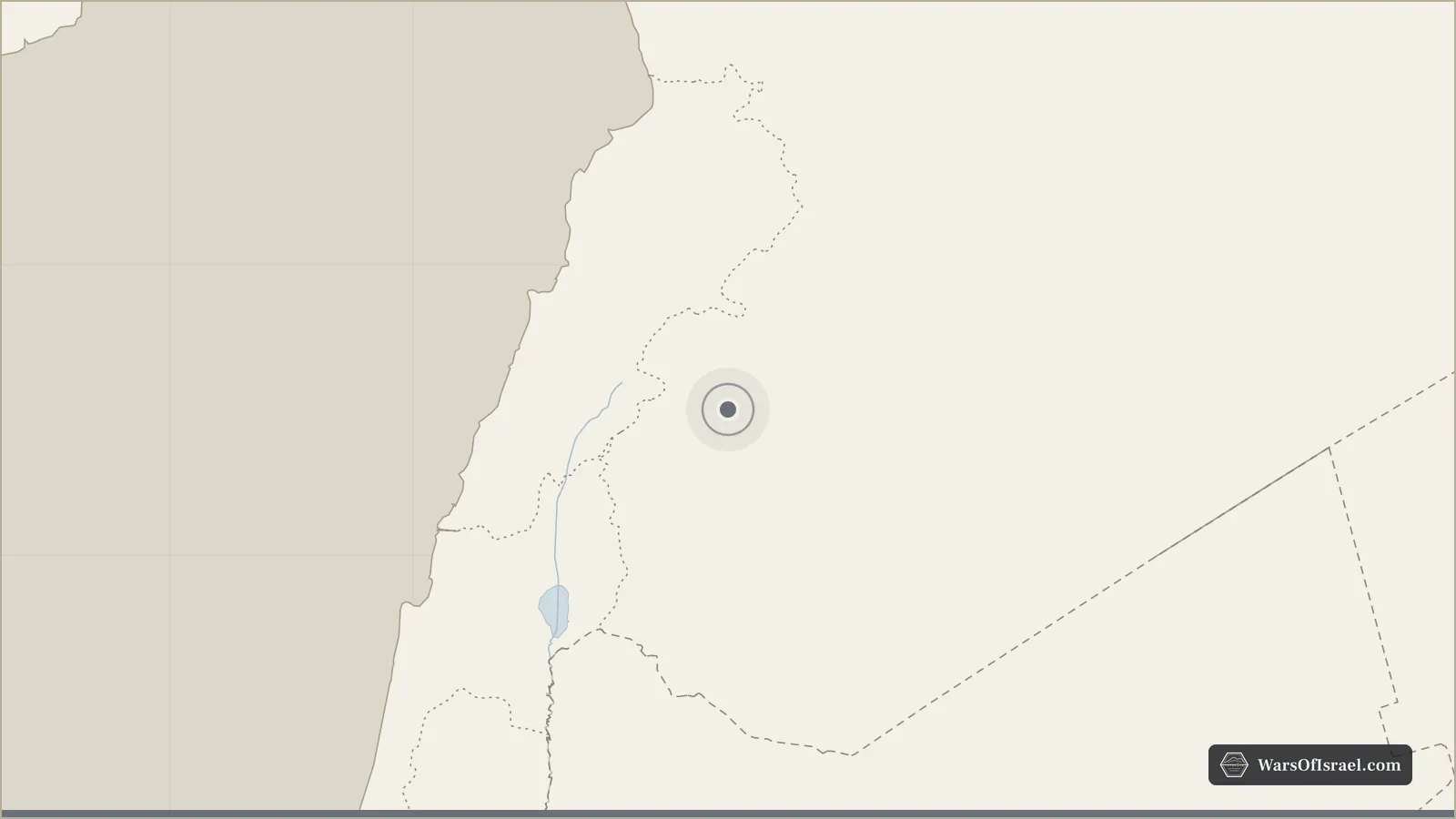
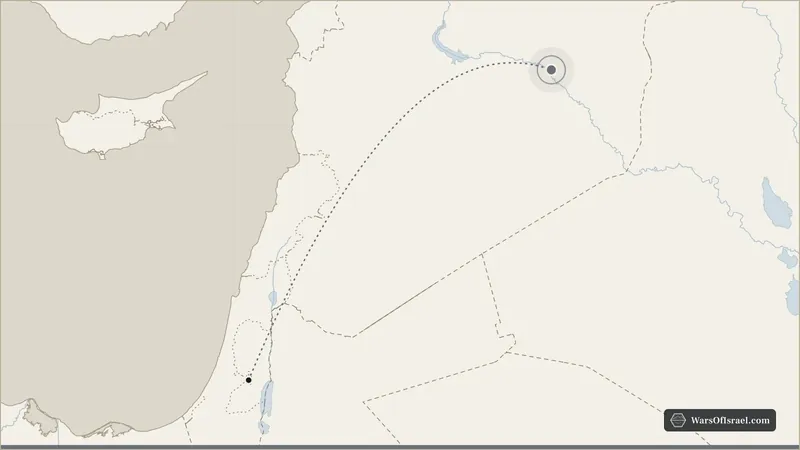
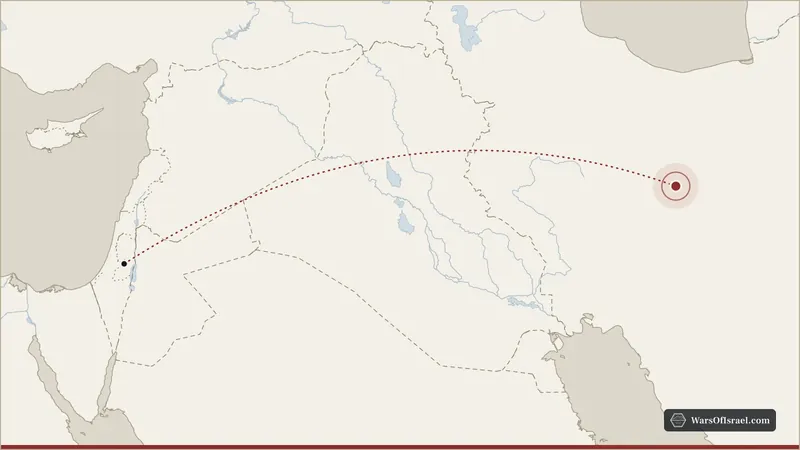
The campaign between the wars (in Hebrew, ha-Ma'arakha she-bein ha-Milhamot, often shortened to Mabam) is the Israeli name for a long series of military actions below the threshold of open war, and its best-known arena was Syria. From the first reported strike near Damascus on January 30, 2013, to the fall of the Assad regime on December 8, 2024, Israeli aircraft, missiles and drones struck hundreds of targets in Syria, most of them without any official claim of responsibility. The targets were not the Syrian regime as such but the weapons shipments flowing through Syria to Hezbollah, and the military infrastructure that Iran's Revolutionary Guards and the militias they sponsored built there during the Syrian civil war. In January 2019 the outgoing chief of staff, Gadi Eisenkot, said in interviews reported by Ynet (opens in a new tab) that Israel had struck thousands of targets and dropped about 2,000 bombs in Syria in 2018 alone.
Background: a civil war and an opportunity
When the uprising against Bashar al-Assad turned into civil war in 2011 and 2012, Israel adopted a policy of staying out of the fighting itself. It set a small number of red lines instead. The two that mattered most were the transfer of advanced weapons, such as precision missiles and air-defense systems, from Syria or through it to Hezbollah in Lebanon, and the creation of an Iranian military presence close to the Golan Heights.
The logic drew on the Second Lebanon War, after which Hezbollah had rebuilt and greatly enlarged its arsenal, and on Israel's earlier experience of acting quietly in Syria, as in the strike on the reactor at Al Kibar in 2007. The concept, developed in the IDF in those years, held that between wars Israel should act continuously to weaken its enemies' buildup, delay the next war and improve the conditions under which it would be fought, while keeping each action small and deniable enough not to trigger it.
What happened
Weapons convoys and depots, 2013 to 2016
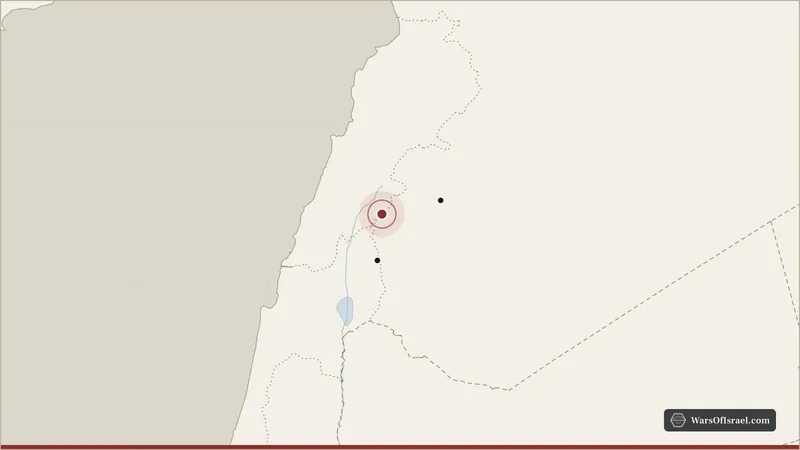
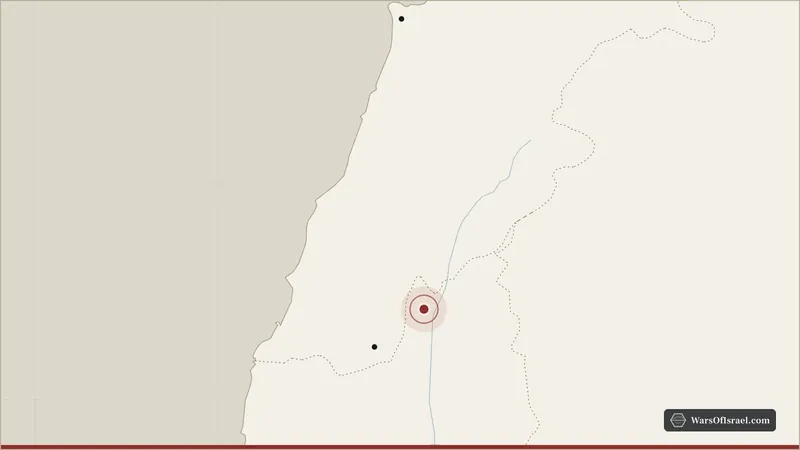
The early strikes, attributed to Israel by foreign and Syrian sources, targeted convoys and depots around Damascus and near the Lebanese border. Israel rarely commented. The intervention of Russia's military in Syria in September 2015 changed the setting: Israel and Russia set up a coordination mechanism to avoid clashes between their aircraft, and Israel continued to strike.
Against Iran's entrenchment, 2017 to 2019
As the war against the Islamic State group wound down, Iran's Revolutionary Guards and the Quds Force, together with Hezbollah and Shia militias recruited from Iraq, Afghanistan and Pakistan, spread across Syria. According to Eisenkot, Israel began striking almost daily from January 2017. On February 10, 2018, an Iranian drone launched from Syria was shot down over northern Israel; in the strikes that followed, an Israeli F-16I was downed by Syrian anti-aircraft fire, and both crew members ejected over Israel. On May 10, 2018, after Iranian forces fired about 20 rockets at Israeli positions on the Golan, Israel struck dozens of Iranian targets across Syria in one of its largest operations there.
On September 17, 2018, during an Israeli strike near Latakia, Syrian air defenses shot down a Russian Il-20 reconnaissance plane by mistake, killing its 15 crew members. Russia blamed Israel, and for a time relations were tense.
Steady pressure, 2019 to 2024
Strikes continued at a regular pace on airports, depots, research facilities and Iranian-linked sites. After October 7, 2023, and the war with Hezbollah that followed, their tempo and targets widened. On April 1, 2024, a strike destroyed a building next to the Iranian embassy in Damascus that Iran described as its consulate; according to the Revolutionary Guards, seven of its officers were killed, among them Brig. Gen. Mohammad Reza Zahedi, the senior Quds Force commander for Syria and Lebanon. Israel did not formally claim the strike. Iran responded with its first direct attack on Israel, on the night of April 13 to 14, 2024, in the April 2024 exchange of strikes.
Outcome and significance
The campaign slowed the transfer of advanced weapons to Hezbollah and limited Iran's ability to turn Syria into a second front, but it did not prevent either. Supporters in Israel saw it as a model of sustained, intelligence-driven pressure that kept wars small; critics noted that Hezbollah's arsenal kept growing and that the campaign risked clashes with Russia and escalation with Iran.
The campaign ended in practice with the collapse of the Assad regime on December 8, 2024, after a rapid rebel offensive. In the days that followed, Israel carried out a wide series of strikes on the former Syrian army's weapons and moved forces into the buffer zone on the Golan, opening a new chapter covered in Israel's operations in Syria from 2024.