Military operationSecond intifada to the Gaza operations
Operation Pillar of Defense (2012)
How an eight-day air war in November 2012 tested Iron Dome, brought rockets to Tel Aviv and Jerusalem, and ended without Israeli troops entering Gaza.
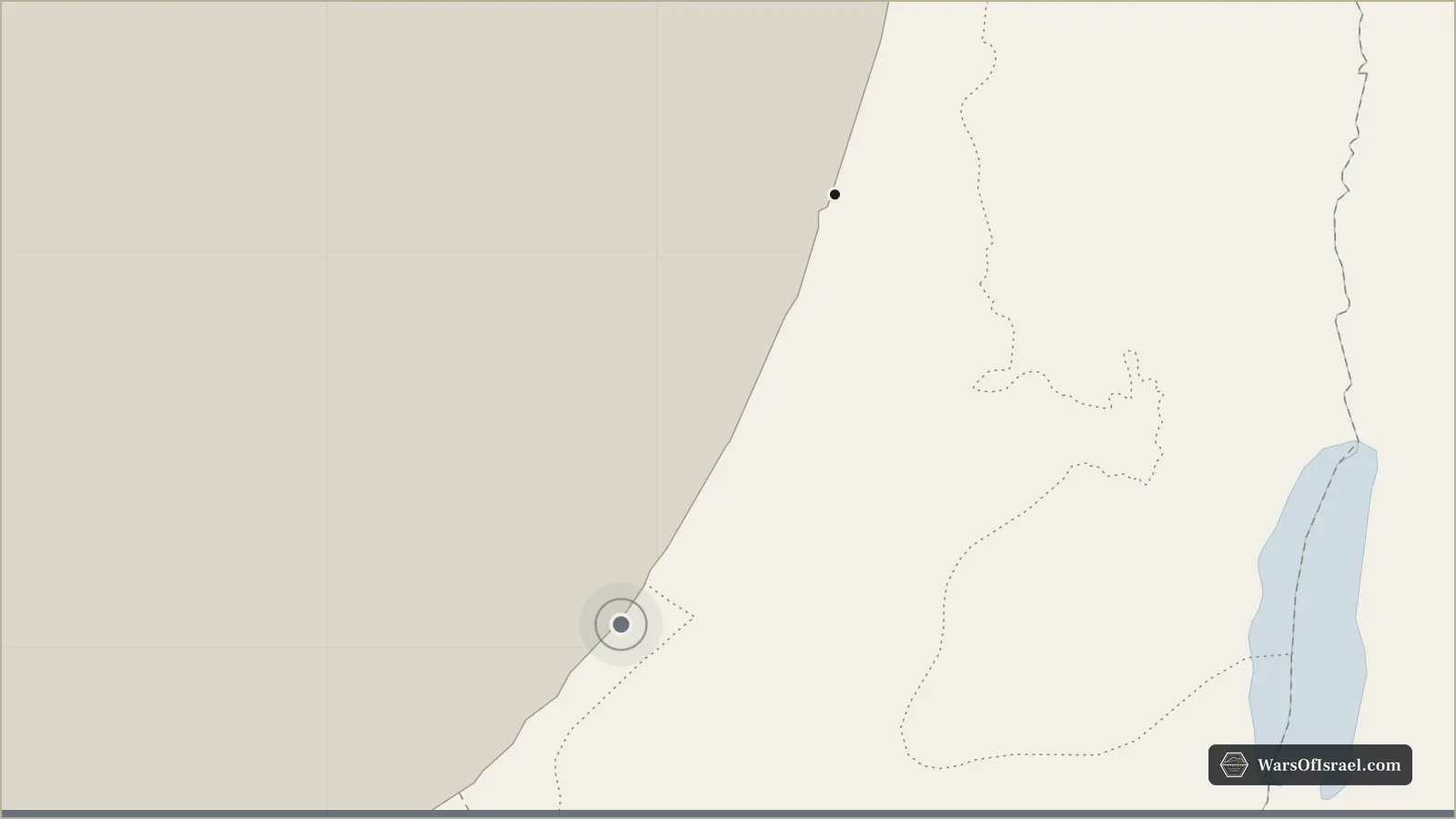
Operation Pillar of Defense was an eight-day Israeli air and naval campaign against Hamas and the other armed groups in the Gaza Strip, from November 14 to 21, 2012. It opened with an airstrike that killed Ahmed Jabari, the commander of Hamas's armed wing, and ended with a ceasefire mediated by Egypt. In between, according to the Israeli Foreign Ministry, 1,506 rockets were fired from Gaza, some reaching the Tel Aviv area and setting off sirens in Jerusalem, and the Iron Dome system made 421 interceptions. Israel mobilized reserves and massed forces on the border but did not send them in. Its Hebrew name, Amud Anan, means "pillar of cloud," the biblical column that guided and shielded the Israelites in the desert; the English name chosen by the IDF stressed defense. It was the second of the major rounds of the conflict between Israel and Gaza after 2005.
Background: the years after Cast Lead
Operation Cast Lead in the winter of 2008 to 2009 had been followed by a period of relatively lower fire, but never real quiet. Through 2011 and 2012 the pattern was one of short escalations: a strike on a cell preparing an attack or a rocket launch, rocket fire in response, then a few days of exchanges before Egyptian mediators restored calm. Hamas often let smaller groups such as Palestinian Islamic Jihad and the Popular Resistance Committees fire while its own forces held back, and Israel held Hamas responsible for all fire from the territory it ruled.
The regional setting had changed. In Egypt, President Hosni Mubarak had fallen in February 2011, and in June 2012 Mohamed Morsi of the Muslim Brotherhood, the movement from which Hamas had emerged, became president. Hamas had acquired, mostly from Iran and through smuggling tunnels in Sinai, rockets with ranges long enough to reach central Israel, among them the Iranian-designed Fajr-5. Israel, for its part, now had several Iron Dome batteries, the first of which had made its debut interception in April 2011.
In early November 2012, the escalation sharpened: an anti-tank missile hit an Israeli army jeep on the border on November 10, wounding four soldiers, and rocket fire on southern Israel intensified over the following days.
The opening strike and the aims
On the afternoon of November 14, 2012, a precision strike hit Ahmed Jabari's car in Gaza City and killed him. Jabari had headed the Izz ad-Din al-Qassam Brigades in practice for years and had overseen the captivity of Gilad Shalit and his release in October 2011. Minutes later the air force struck dozens of underground launch sites holding long-range rockets.
The government of Prime Minister Benjamin Netanyahu, with Defense Minister Ehud Barak and Chief of Staff Benny Gantz, defined the aims as strengthening deterrence, damaging the rocket arsenal and the infrastructure of the armed groups, and reducing the harm to Israel's home front. As in 2008, toppling Hamas was not a goal.
The course of the fighting
Rockets on the center of the country
Hamas and the other groups answered with intense fire across southern Israel. On November 15, three civilians were killed when a rocket hit an apartment building in Kiryat Malachi. The same day, two Fajr rockets landed in the Tel Aviv area, the first time the Gush Dan region had been targeted since the Iraqi missile attacks of the 1991 Gulf War, and on November 16 a rocket fire alert sounded in Jerusalem. Most of the rockets aimed at cities were intercepted or fell in open ground, but the attacks reached a population that had until then lived outside the range of fire from Gaza.
The Israeli Foreign Ministry's summary of the operation (opens in a new tab) recorded the scale day by day, from 75 launches on the first day to 316 on the second. Of the 1,506 rockets fired, 875 fell in open areas, 58 in urban areas, and 152 were failed launches that came down inside Gaza; Iron Dome made 421 interceptions, with the Foreign Ministry reporting a success rate of 84 percent. It was the system's first prolonged test against intense fire, and its performance changed Israeli thinking about how such rounds could be fought.
The air campaign over Gaza
According to the same Israeli summary, the air force and navy struck more than 1,500 targets, among them rocket launch sites, weapons manufacturing and storage facilities, smuggling and attack tunnels, command centers and the homes of commanders. The IDF issued warnings by phone and leaflet before some strikes on buildings.
The most widely reported single strike was on November 18, when a bomb destroyed the home of the al-Dalu family in Gaza City, killing ten members of the family and two neighbors. Israel said it had targeted a member of an armed group; human rights organizations described the strike as disproportionate.
Mobilization without invasion
Israel called up reserve forces and concentrated infantry and armor near the border, and the cabinet approved a large call-up. The government held off on a ground entry while Egypt, with the involvement of Turkey, Qatar and the United States, worked toward a ceasefire. On November 21, a bomb exploded on a bus in central Tel Aviv and wounded at least 28 people, in what Israel called a terrorist attack; Hamas praised the bombing but did not claim it. That evening the Egyptian foreign minister, Mohamed Kamel Amr, and US Secretary of State Hillary Clinton announced the ceasefire in Cairo. It took effect at 9 p.m.
Casualties
Six Israelis were killed: four civilians and two soldiers. According to the Israeli Foreign Ministry, about 240 people were injured.
The numbers of Palestinian dead differ by source:
- B'Tselem counted 167 Palestinians killed, of whom it said 62 took part in hostilities.
- The UN Office of the High Commissioner for Human Rights counted 174 killed, 107 of them civilians.
- The IDF put the number at 177, of whom it said 120 were members of armed groups.
Outcome and significance
The ceasefire terms, published in general language, called on Israel to stop hostilities, including targeted killings, and on the Palestinian groups to stop rocket fire and cross-border attacks, and provided for later talks on easing the crossings. Both sides claimed success. Israel pointed to the killing of Jabari, the destruction of much of the long-range arsenal and the performance of Iron Dome. Hamas presented the strikes on Tel Aviv and Jerusalem and the absence of an Israeli ground invasion as its achievement, and its leaders celebrated in Gaza.
For the residents of the south, the eight days were a familiar ordeal on a larger scale: schools closed from Beersheba to Ashdod, and life moved into shelters and protected rooms. For Gaza's population, who had no shelters and nowhere outside the Strip to go, they were days of strikes in crowded neighborhoods, power cuts and fear, only four years after Cast Lead.
The operation showed that Gaza's groups could now reach most of Israel's population, and that Israel had a defense that could blunt that capability without stopping it. It also showed the limits of an air campaign alone: within two years the same actors fought a far longer and bloodier war, Operation Protective Edge, in which the cross-border tunnels, barely discussed in 2012, became the central issue.
Timeline
- April 7, 2011: Iron Dome makes its first operational interception, over Ashkelon.
- November 10, 2012: An anti-tank missile from Gaza hits an army jeep on the border; four soldiers are wounded.
- November 14, 2012: An airstrike kills Ahmed Jabari; Operation Pillar of Defense begins.
- November 15, 2012: A rocket kills three civilians in Kiryat Malachi; rockets reach the Tel Aviv area.
- November 16, 2012: A rocket alert sounds in Jerusalem.
- November 18, 2012: A strike on the al-Dalu home in Gaza City kills twelve people.
- November 21, 2012: A bomb wounds at least 28 people on a Tel Aviv bus; the ceasefire takes effect at 9 p.m.