Military operationSecond intifada to the Gaza operations
Operation Protective Edge (2014)
Why a West Bank kidnapping and a rocket war became Israel's longest Gaza operation before 2023, and what the tunnels changed.
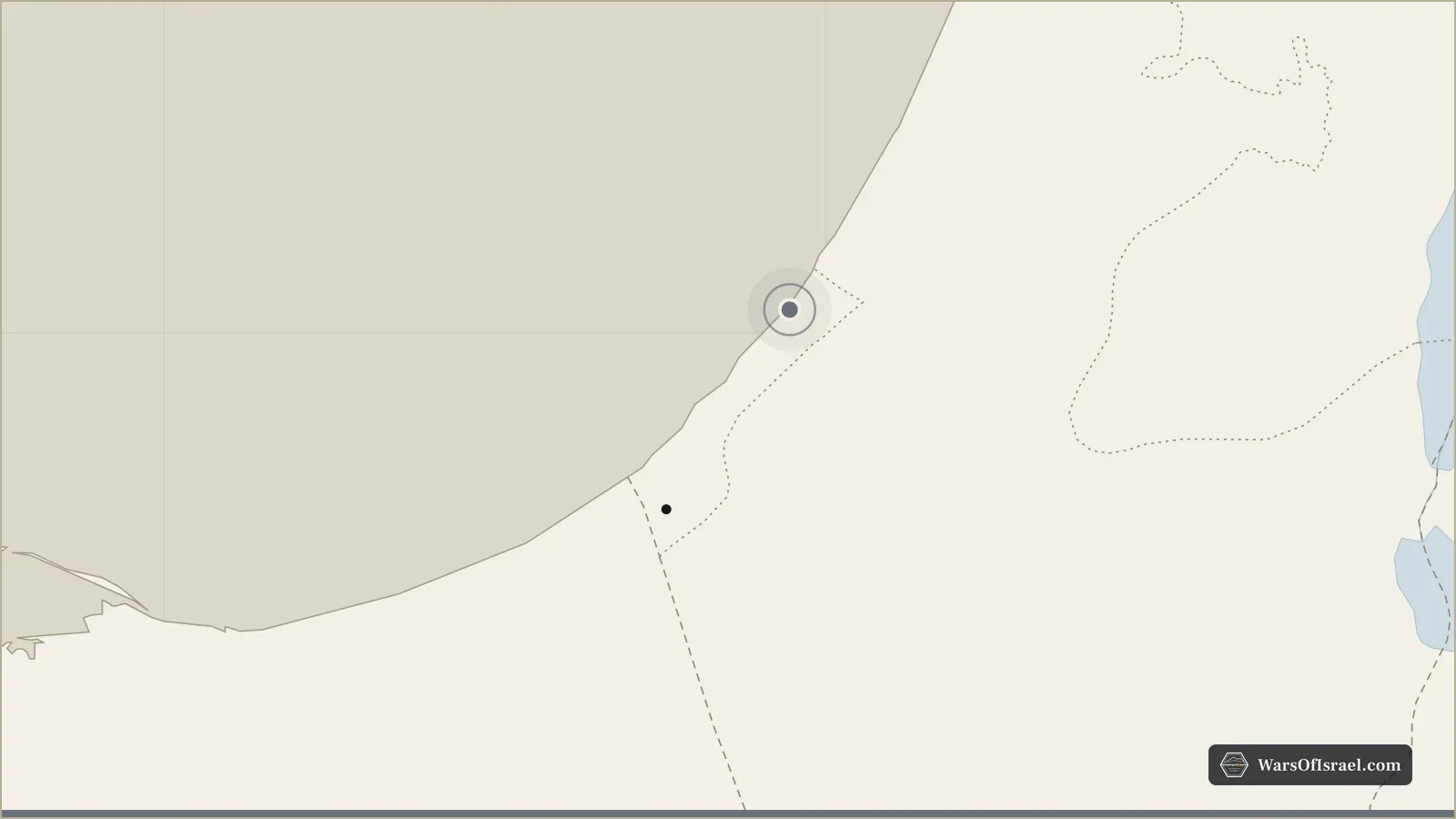
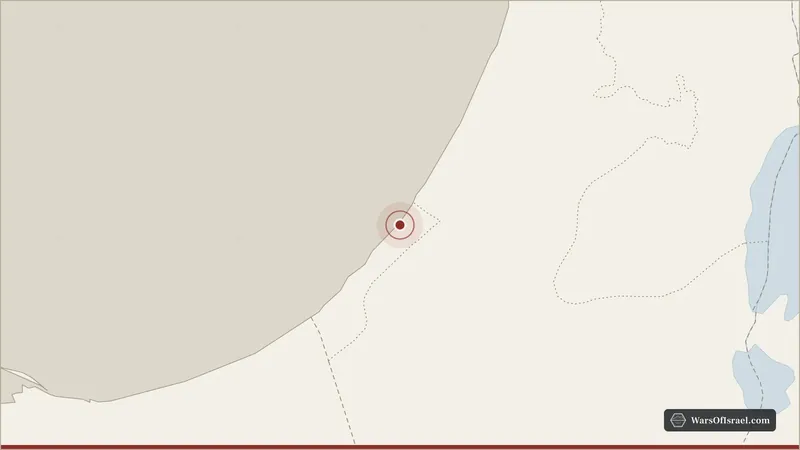
Operation Protective Edge (Tzuk Eitan, "Strong Cliff" in Hebrew) was the Israeli military campaign in the Gaza Strip from July 8 to August 26, 2014. It began as an air offensive meant to stop rocket fire by Hamas and Palestinian Islamic Jihad, and within ten days it became something Israel had not planned for at the outset: a ground operation aimed at tunnels that ran under the border fence into Israeli territory. Fifty days later it ended in an open-ended ceasefire that changed neither who ruled Gaza nor the basic terms of the conflict, yet it reshaped how Israel thought about the threat beneath the ground. It was the longest and deadliest of the Israel-Hamas rounds within the Gaza conflict since 2005 until the war that began in October 2023.
A summer that started in the West Bank
The chain of events began far from Gaza. On June 12, 2014, three Israeli teenagers, Naftali Fraenkel, Gilad Shaer and Eyal Yifrah, were abducted while hitchhiking in the Gush Etzion area south of Jerusalem. Israel held Hamas responsible and launched a large search and arrest operation across the West Bank, detaining hundreds of Hamas members, including prisoners who had been released in the 2011 exchange for Gilad Shalit. The three boys' bodies were found on June 30, near Hebron.
Two days later a Palestinian teenager from East Jerusalem, Mohammed Abu Khdeir, was abducted and murdered by Jewish extremists in an act of revenge. Riots spread through East Jerusalem and Arab towns in Israel. In Gaza, rocket fire, which had been sporadic since the November 2012 ceasefire that closed Operation Pillar of Defense, rose sharply, and by early July Hamas itself was claiming the launches. On July 8 the Israeli cabinet approved an air campaign.
The political backdrop mattered as well. Hamas was isolated and short of money: its ally in Cairo, the Muslim Brotherhood government, had fallen in 2013, Egypt had closed most of the smuggling tunnels under the Rafah border, and a reconciliation deal with Fatah signed that spring had brought Hamas few practical gains. Several analysts later argued that this pressure made Hamas readier to accept a long round of fighting, though the movement's own decision-making is not documented in public records.
Forces and aims
Israel's government was led by Prime Minister Benjamin Netanyahu, with Moshe Ya'alon as defense minister and Lieutenant General Benny Gantz as chief of staff. The declared goal was to restore quiet to southern Israel by striking the rocket arsenal and the infrastructure of the armed groups. The IDF's Southern Command later fielded several regular and reserve brigades on the Gaza border, supported by the air force and navy.
On the other side stood Hamas's military wing, the Izz ad-Din al-Qassam Brigades, commanded by Mohammed Deif, alongside Palestinian Islamic Jihad's Al-Quds Brigades and smaller groups. Over the years since Operation Cast Lead they had built a stock of rockets that could reach Tel Aviv, Jerusalem and beyond, and a network of underground passages: tunnels inside Gaza for command, storage and launching, and offensive tunnels dug toward and under the border.
Israel's main defensive tool was Iron Dome, which had first seen large-scale use in 2012. Its batteries engaged only rockets heading for built-up areas, which allowed most of the population to continue daily life between sirens.
The course of the operation
The air campaign, July 8 to 17
For the first ten days the fighting was waged from the air and by rocket. The IDF struck launch sites, weapons stores, command posts and the homes of commanders, often warning residents by phone or with a small munition on the roof before a strike, a practice that critics said did not provide adequate protection. Rockets reached Tel Aviv, Jerusalem, Haifa and the Dimona area. On July 15 Israel accepted an Egyptian ceasefire proposal; Hamas rejected it, saying its demands, chiefly an end to the blockade, had not been addressed, and the firing continued.
The ground phase and the tunnels
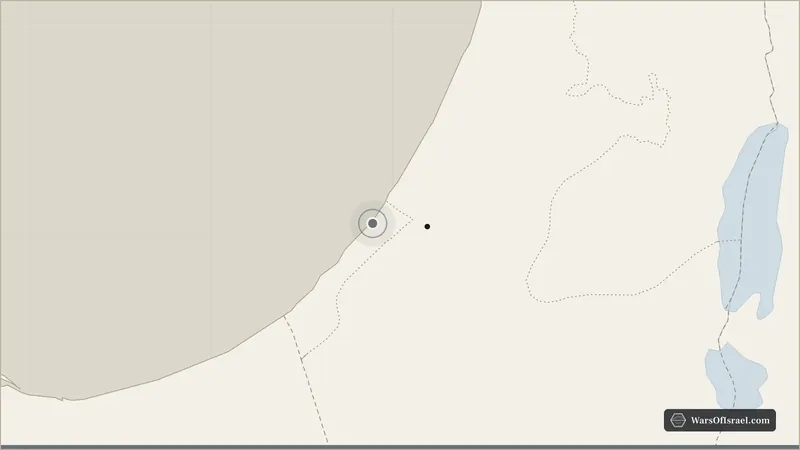
On July 17, hours after a squad of armed men emerged from a tunnel near Kibbutz Sufa, close to the border, the cabinet ordered ground forces into the Strip. Their mission was limited in depth: to find and destroy the offensive tunnels in a belt of land along the border. The fighting was heaviest in the eastern neighborhoods of Gaza City, in Beit Hanoun and in the area of Khan Yunis and Rafah.
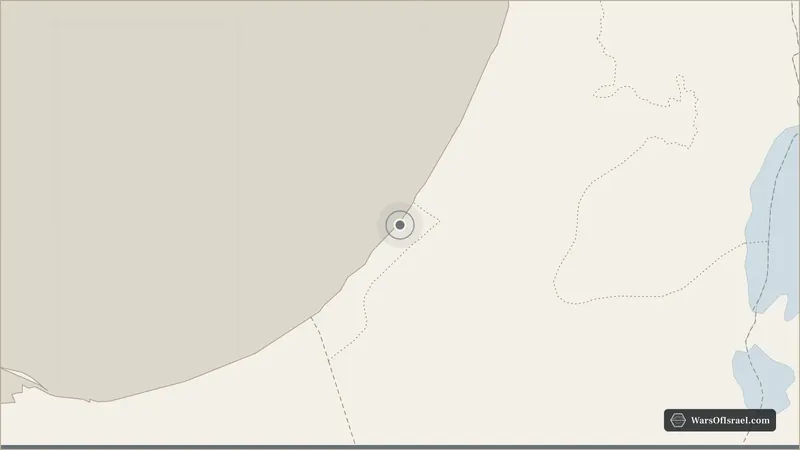
The most costly single battle for the IDF took place in Shuja'iyya, east of Gaza City, on July 19 and 20, where the Golani Brigade suffered heavy losses. One of the soldiers killed, Staff Sergeant Oron Shaul, was taken by Hamas; Israel declared him killed in action on July 25. Over the following weeks Hamas fighters used several tunnels to reach Israeli territory and attack soldiers, killing troops near the border communities. These infiltrations made the tunnel threat tangible to the Israeli public in a way that years of intelligence briefings had not.
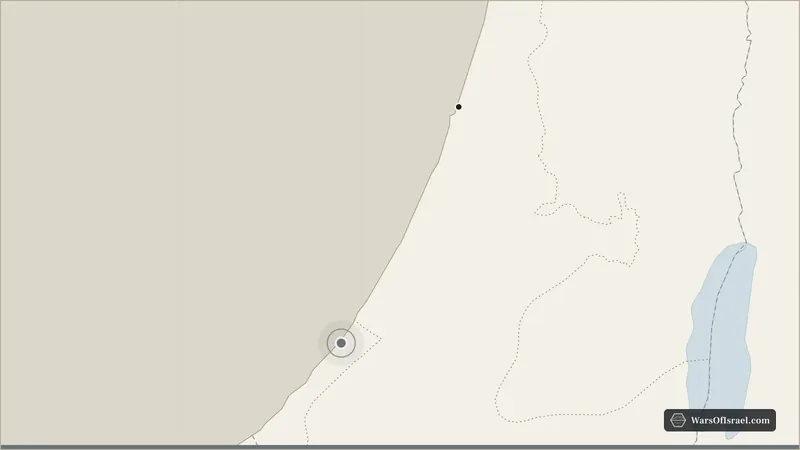
On July 22 a rocket fell in Yehud, near Ben Gurion Airport, and the US Federal Aviation Administration suspended American flights to Israel for about a day and a half, a rare sign that the war was touching Israel's link to the outside world.
Rafah and the final weeks
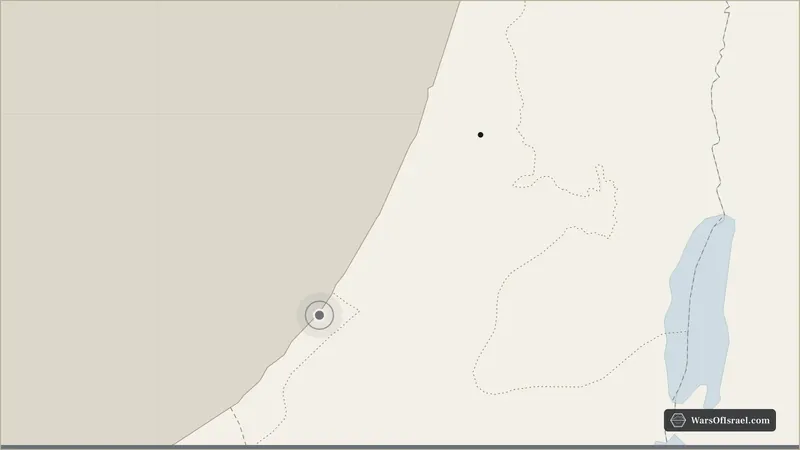
On August 1, shortly after a humanitarian ceasefire was due to begin, Hamas fighters attacked an IDF unit near Rafah. Two soldiers were killed, among them Lieutenant Hadar Goldin, whose body was taken into a tunnel. The IDF answered with intense fire in the Rafah area to try to prevent the abduction from succeeding, and the day became one of the most scrutinized episodes of the war, investigated by human rights groups and by the IDF itself.
Most ground forces left the Strip by August 3, after the IDF reported that it had destroyed 32 tunnels; the total later given was at least 34. A series of short truces followed, interrupted by renewed fire. On August 19, during a lull, Israel struck a house in Gaza City in an attempt to kill Mohammed Deif; his wife and two of his young children were killed, and he survived. Two days later an airstrike in Rafah killed three senior Qassam commanders. On August 22 a four-year-old boy, Daniel Tregerman, was killed by a mortar shell at his home in Kibbutz Nahal Oz. On August 26 Egypt announced an open-ended ceasefire, which both sides accepted.
The human cost
Figures for the war differ by source, and the difference lies mainly in how the dead are classified, not in the overall total. According to Israeli official figures, 67 soldiers and six civilians, one of them a Thai agricultural worker, were killed on the Israeli side. According to the IDF, 4,564 rockets and mortar shells were fired at Israel, and Iron Dome intercepted more than 735 of them.
In Gaza, the UN Human Rights Council's commission of inquiry counted 2,251 Palestinians killed, of whom it identified 1,462 as civilians, including 551 children. The Israeli Foreign Ministry put the total at 2,125 and said that 936 of them were members of armed groups, with several hundred more unclassified. UN OCHA estimated that up to about 520,000 people, around 30 percent of the Strip's population, were displaced at the height of the fighting, and that thousands of homes were destroyed.
Both sides faced accusations of violating the laws of war. The UN commission, which Israel refused to cooperate with, found that both Israel and Palestinian armed groups may have committed war crimes. Israel published its own report, which argued that its forces had acted lawfully against an enemy that fired from and fought within civilian areas, and said that the IDF was investigating specific incidents.
Aftermath and inquiries
The ceasefire of August 26 produced no long-term arrangement. Indirect talks on a port, an airport and the blockade went nowhere, and Gaza's reconstruction was slow. Yet the border was relatively quiet for several years, and the next major round came only in 2021, with Operation Guardian of the Walls.
Inside Israel, the tunnels became the war's defining lesson. In February 2017 the State Comptroller published a report that criticized the security cabinet's preparation for the tunnel threat and the way information had been shared with its members before the fighting. Israel later built an underground barrier along the Gaza border, completed in 2021, designed to block cross-border tunnels.
The fate of Oron Shaul and Hadar Goldin remained an open wound for their families and a recurring issue in Israeli politics for more than a decade. Shaul's remains were recovered by the IDF and the Shin Bet on January 19, 2025, and Goldin's remains were returned to Israel on November 9, 2025, more than eleven years after he was killed. Their return came during the far larger war that began with the October 7 attack, which showed that the confidence many Israelis placed in the barrier and in deterrence after 2014 had been misplaced.
Timeline
- June 12, 2014: Three Israeli teenagers are abducted in Gush Etzion.
- June 30, 2014: The teenagers' bodies are found near Hebron.
- July 8, 2014: Israel launches Operation Protective Edge with an air campaign.
- July 15, 2014: Israel accepts an Egyptian ceasefire proposal; Hamas rejects it.
- July 17, 2014: The ground phase begins after a tunnel infiltration near Kibbutz Sufa.
- July 20, 2014: Heavy fighting in Shuja'iyya; Staff Sergeant Oron Shaul is killed and his body taken.
- August 1, 2014: Lieutenant Hadar Goldin is killed near Rafah and his body taken.
- August 3, 2014: Most IDF ground forces leave the Gaza Strip.
- August 26, 2014: An open-ended ceasefire takes effect.
- January 19, 2025: Oron Shaul's remains are recovered from Gaza.
- November 9, 2025: Hadar Goldin's remains are returned to Israel.