Military operationSecond intifada to the Gaza operations
Operation Cast Lead (2008 to 2009)
How the collapse of a six-month lull led to Israel's first full-scale war in Gaza after the disengagement, and why its casualty figures are still disputed.
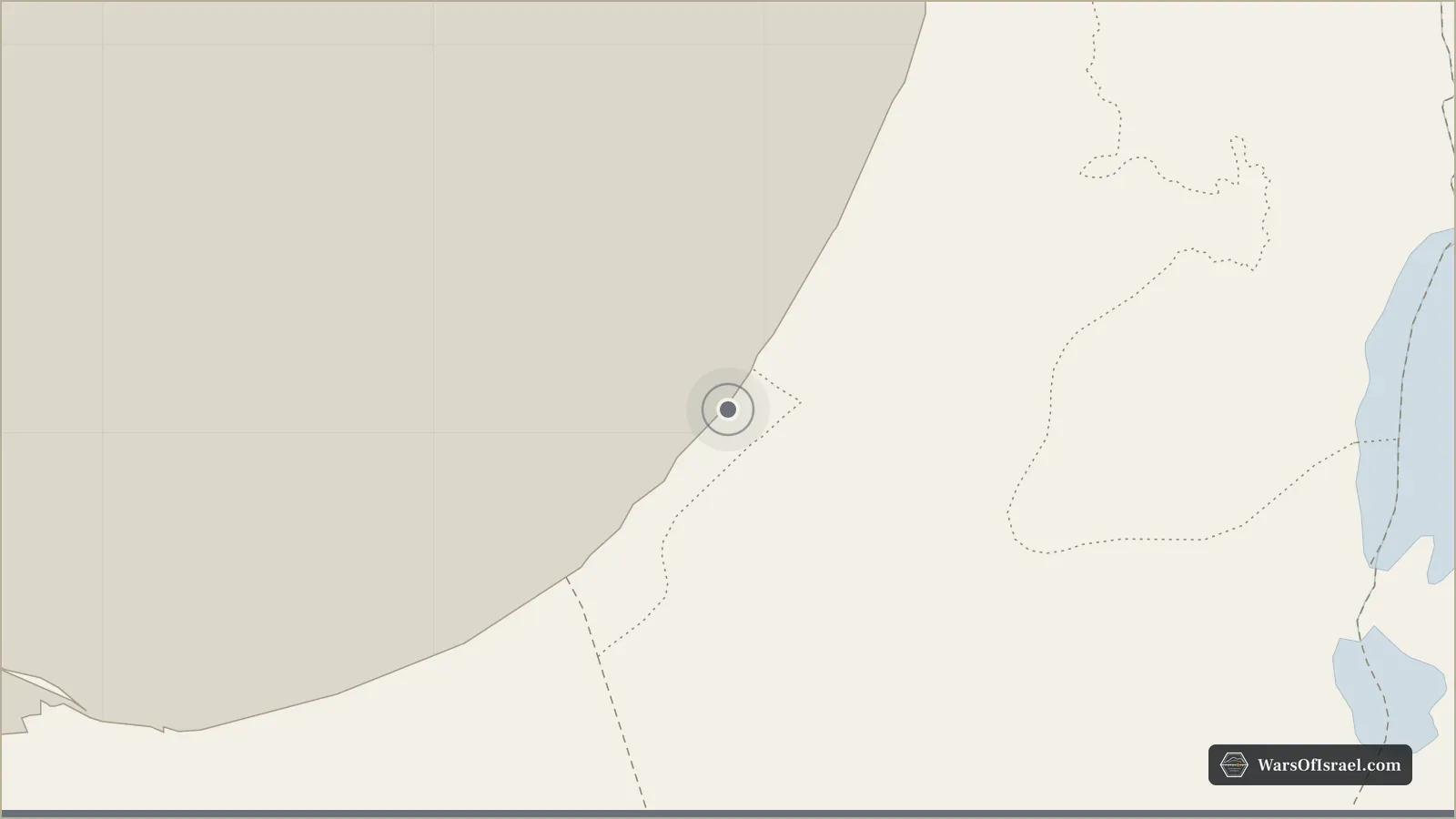
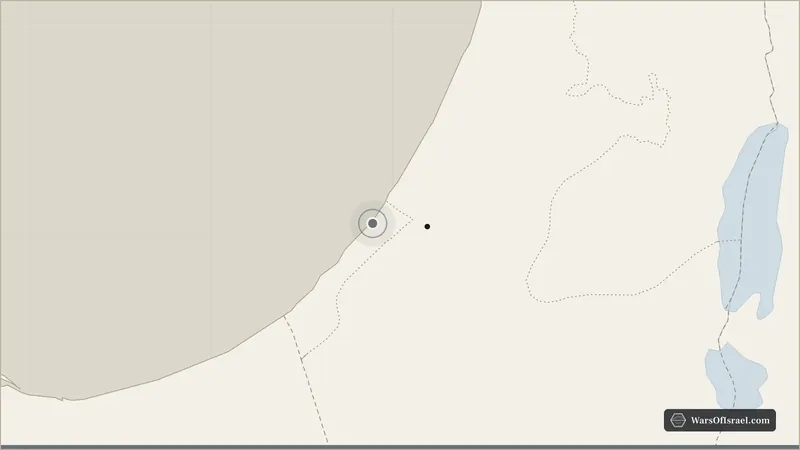
Operation Cast Lead (Mivtza Oferet Yetzuka) was a 22-day Israeli military operation in the Gaza Strip, from December 27, 2008 to January 18, 2009. It opened with one of the heaviest single days of airstrikes in the history of the conflict, continued with a ground invasion from January 3, and ended with a unilateral Israeli ceasefire, followed hours later by a Hamas announcement of its own. Israel's declared aim was to end the rocket and mortar fire on its southern communities and weaken Hamas. The operation achieved a sharp drop in fire for a time, left Hamas in power, killed more than a thousand Palestinians and thirteen Israelis, and produced a UN inquiry, the Goldstone report, that became a lasting battleground of its own. It was the first of the major Gaza wars of the conflict that followed the 2005 disengagement.
The lull that failed
Hamas had ruled Gaza alone since June 2007, and rocket fire on Sderot and the communities near the Strip had continued through the months that followed. On June 19, 2008, a six-month lull mediated by Egypt took effect. In its first months the fire dropped dramatically. Each side accused the other of violating its terms: Hamas said Israel had not eased the blockade as expected, and Israel said Hamas was using the quiet to rearm and dig.
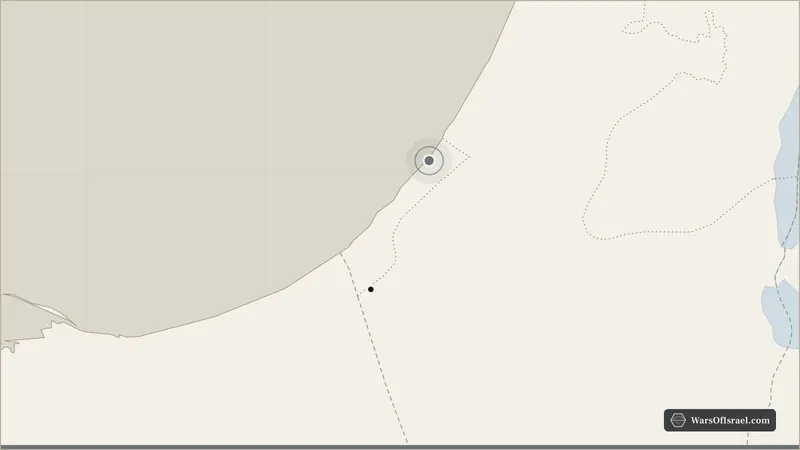
On November 4, 2008, Israeli forces raided a tunnel near Deir al-Balah that the army said was being dug toward the border to capture soldiers, a fear sharpened by the capture of Gilad Shalit two years earlier. Several Hamas fighters were killed, and Hamas answered with heavy rocket fire. When the lull expired on December 19, Hamas announced it would not renew it, and dozens of rockets and mortar shells landed in Israel in the following days. Israel had been preparing an operation for months.
Forces and aims
The decision-makers on the Israeli side were Prime Minister Ehud Olmert, who was in his last months in office, Defense Minister Ehud Barak and Foreign Minister Tzipi Livni. The operation was commanded by Chief of Staff Gabi Ashkenazi and Southern Command chief Yoav Galant. Lessons of the Second Lebanon War shaped it: careful preparation, intelligence collected over months, a heavy role for reserve forces trained beforehand, and an effort to keep media and political messaging under tight control.
On the other side stood the Izz ad-Din al-Qassam Brigades, the armed wing of Hamas, together with Palestinian Islamic Jihad and smaller groups. Hamas had prepared defensive positions, booby-trapped buildings and tunnels in the dense urban areas of the Strip, and held rockets with ranges of up to about 40 kilometers.
The Israeli cabinet's goals were limited and framed in terms of security: a significant reduction in fire and an improved security situation for the residents of the south. Neither the overthrow of Hamas nor the release of Shalit was a declared goal.
The course of the operation
The air phase, December 27 to January 2
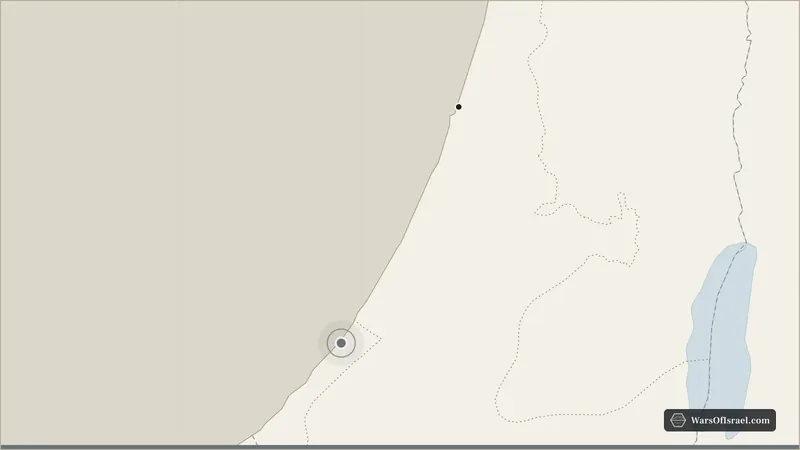
At about 11:30 on the morning of December 27, a Saturday, dozens of Israeli aircraft struck targets across the Strip within minutes. Among the first targets were Hamas police stations and security headquarters, including a police graduation ceremony in Gaza City. Israel considered the police part of Hamas's military apparatus; Palestinian and international human rights organizations counted most of the police killed as civilians, a disagreement that runs through all later casualty counts. In the following days the air force hit rocket launchers, weapons depots, smuggling tunnels along the Egyptian border, government buildings and the homes of Hamas commanders.
Rocket fire continued throughout. Rockets reached Ashdod and Gedera and, for the first time, Beersheba, putting hundreds of thousands more Israelis within range.
The ground phase, January 3 to 18
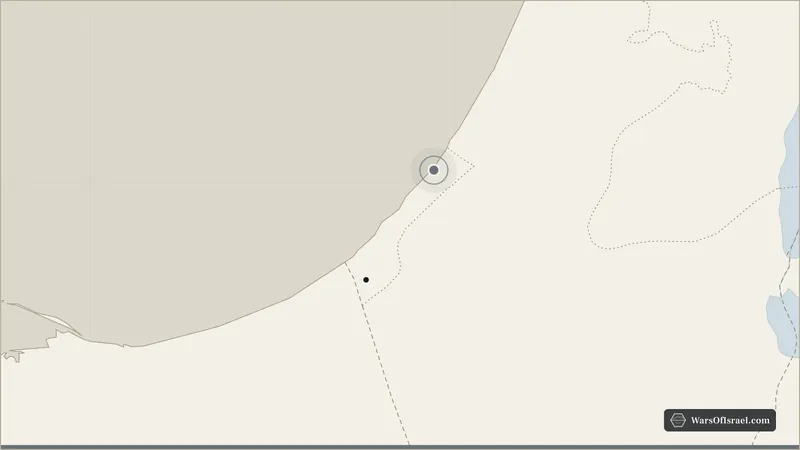
On the evening of January 3, 2009, infantry and armored brigades entered the Strip, cut it in two south of Gaza City and encircled the city's outskirts. The fighting took place mainly in open and semi-built areas on the edges of the towns, in neighborhoods such as Zeitoun, Jabalia and Tel al-Hawa. The army avoided a full assault into the crowded heart of Gaza City and the refugee camps.
Several incidents during the ground phase became the focus of later investigations. On January 6, Israeli mortar fire hit the area by a UN school in Jabalia, al-Fakhura, that was serving as a shelter; reports of the number killed and of whether armed men were present differed. On January 15 Israeli shells struck the UN Relief and Works Agency compound in Gaza City. Israel's use of white phosphorus munitions in populated areas was criticized by human rights organizations, and the army later said it had restricted their use.
On the Israeli side, ten soldiers were killed, four of them in friendly-fire incidents, and three civilians were killed by rockets. On January 18, Israel declared a unilateral ceasefire; Hamas announced a one-week truce about twelve hours later. The last Israeli troops left the Strip on January 21, the day after the inauguration of US President Barack Obama.
Casualties and the dispute over numbers
The numbers of Palestinian dead differ by source, chiefly on the question of who counts as a combatant:
- B'Tselem, the Israeli human rights group, counted 1,391 Palestinians killed, of whom it said 350 took part in hostilities.
- The Palestinian Centre for Human Rights counted 1,417 killed, most of them, in its count, civilians and police.
- The IDF put the number at 1,166, of whom it said 709 were members of armed groups and 295 were uninvolved civilians, with the remainder undetermined.
Thousands of homes were destroyed or damaged, along with factories, government buildings and infrastructure.
The Goldstone report
In January 2009 the UN Human Rights Council created a fact-finding mission, which was headed by the South African judge Richard Goldstone. Israel refused to cooperate, arguing that the council's mandate was one-sided. The mission's report, published on September 15, 2009, accused both the Israeli army and the Palestinian armed groups of war crimes and possible crimes against humanity, and was especially severe toward Israel.
Israel rejected the report as biased and full of errors, and published its own detailed account of the operation and of its military investigations. The report was endorsed by the Human Rights Council in October 2009. On April 1, 2011, Goldstone wrote in The Washington Post that information that had since emerged, including from Israel's own investigations, led him to believe that Israel had not intentionally targeted civilians as a matter of policy. The three other members of the mission said that nothing had emerged to change the report's findings.
Outcome and significance
In the short term Israel achieved its stated goal. Rocket fire fell to its lowest level in years and stayed low for a time. Hamas, however, stayed in power, rebuilt its forces and acquired longer-range rockets, and the blockade remained the central grievance in Gaza. The operation established a pattern that would recur in Operation Pillar of Defense in 2012 and Operation Protective Edge in 2014: a round of intense fire, a limited ground operation or none, an Egyptian-brokered or unilateral ceasefire, and a fierce international argument over civilian casualties and the laws of war.
The operation also left marks inside Israel. Its legal aftermath led the army to strengthen its internal investigation mechanisms and the role of military lawyers in targeting decisions. In Gaza, the families who lost relatives and homes in those three weeks became part of a collective memory of repeated destruction that each later round deepened.
Timeline
- June 19, 2008: An Egyptian-brokered lull takes effect between Israel and Hamas.
- November 4, 2008: Israeli forces raid a tunnel near Deir al-Balah; rocket fire resumes.
- December 19, 2008: The lull expires and Hamas declines to renew it.
- December 27, 2008: Operation Cast Lead opens with a wave of airstrikes across Gaza.
- January 3, 2009: Israeli ground forces enter the Strip.
- January 6, 2009: Mortar fire hits near the al-Fakhura UN school in Jabalia.
- January 18, 2009: Israel declares a unilateral ceasefire; Hamas announces a truce hours later.
- January 21, 2009: The last Israeli troops leave the Gaza Strip.
- September 15, 2009: The Goldstone report is published.
- April 1, 2011: Goldstone publishes his reconsideration in The Washington Post.