ConflictSecond intifada to the Gaza operations
Gaza and Israel: the armed conflict from the 2005 disengagement to 2023
How an Israeli withdrawal meant to reduce friction became eighteen years of rockets, blockade and rounds of war that no side managed to end.
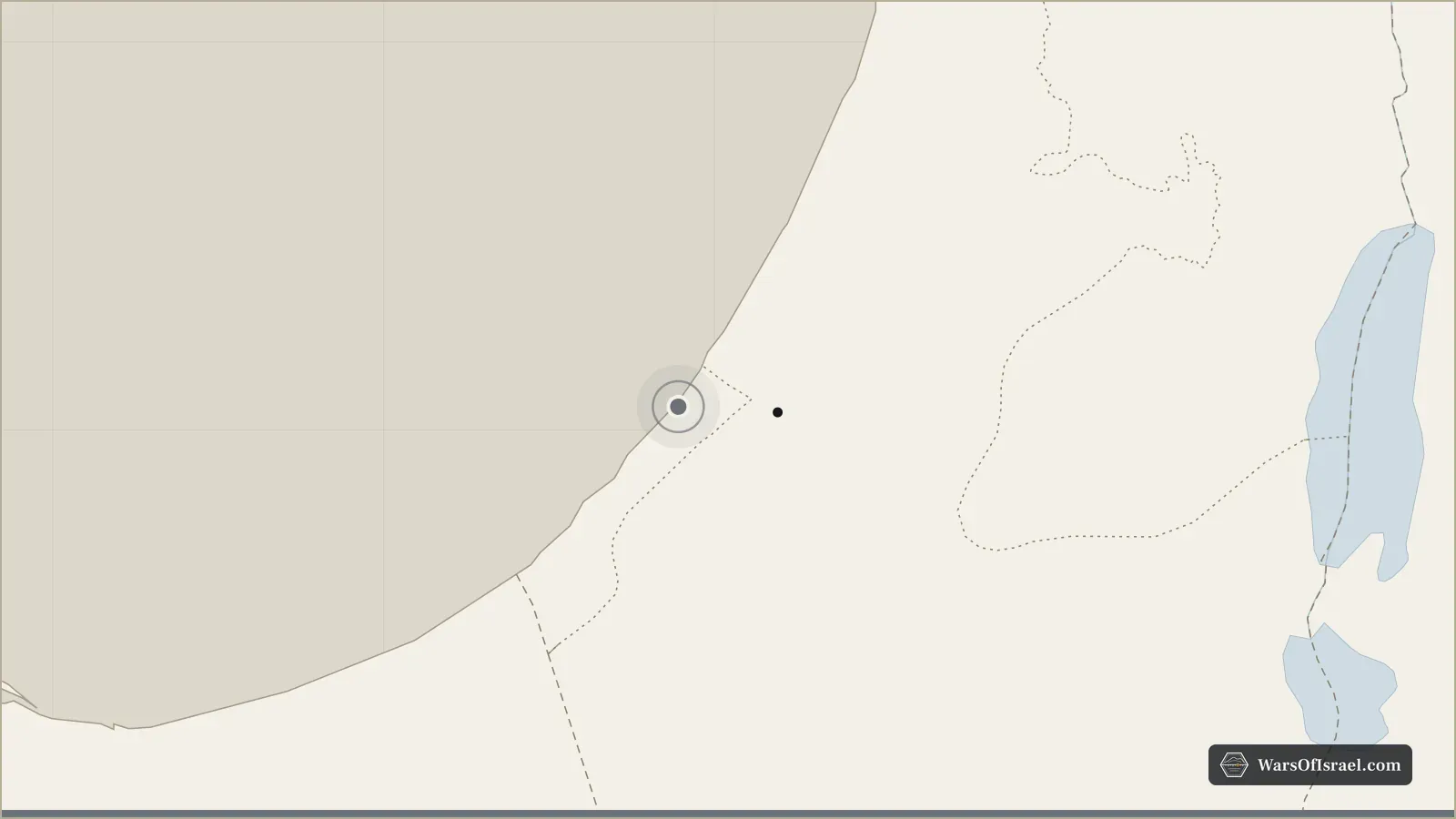
At seven in the morning on September 12, 2005, the last Israeli soldiers drove out of the Gaza Strip through the Kissufim crossing, ending thirty-eight years of Israeli military presence inside the territory, as a UN situation report issued that day (opens in a new tab) recorded. The government of Ariel Sharon had argued that leaving would reduce friction and free the army from guarding isolated settlements. Instead, the narrow coastal strip became the source of the most persistent armed conflict Israel faced in the next two decades: thousands of rockets and mortar shells, a blockade that shaped the lives of some two million people, five major military operations and many smaller rounds, and finally the attack of October 7, 2023, which ended the period and began a war of a different order.
A withdrawal without an agreement
The disengagement plan was unilateral by design. Sharon, who had championed settlement for most of his career, concluded during the Second Intifada that holding Gaza cost more than it gave. In August 2005 Israel evacuated all 21 settlements in the Strip, along with four in northern Samaria, and dismantled its bases. The army handed nothing to a negotiating partner; it simply left, keeping control of Gaza's airspace, its territorial waters and most of its land crossings.
That arrangement left the question of who would govern Gaza open, and the answer came quickly. In the Palestinian legislative elections of January 25, 2006, Hamas won a majority of seats. Israel, the United States and the European Union refused to deal with a Hamas-led government unless it recognized Israel, renounced violence and accepted previous agreements. Hamas refused. Rocket fire, which had begun during the Second Intifada with crude Qassam rockets aimed at Sderot and the communities around Gaza, continued and grew.
Shalit, the takeover and the blockade
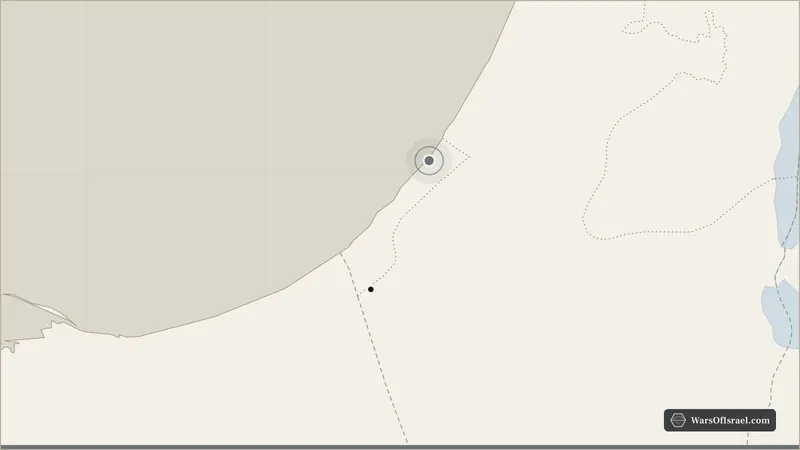
On June 25, 2006, armed men from Hamas, the Popular Resistance Committees and the Army of Islam crossed into Israel through a tunnel near Kerem Shalom, attacked a tank crew, killed two soldiers and took a third, Corporal Gilad Shalit, back into Gaza. Three days later Israel launched Operation Summer Rains, the first major ground and air operation in the Strip since the withdrawal. It went on, with a second phase called Autumn Clouds, until a ceasefire on November 26, 2006. Shalit stayed in captivity.

The Palestinian political split then turned violent. Between June 7 and 15, 2007, Hamas fighters defeated the forces loyal to Fatah and President Mahmoud Abbas and took full control of the Strip. From then on Gaza and the West Bank were governed by rival Palestinian authorities. Israel tightened restrictions on the movement of goods and people, and Egypt largely closed the Rafah crossing on its side. On September 19, 2007, Israel's security cabinet declared Gaza "hostile territory," a designation that allowed it to limit fuel and electricity supplies and the passage of goods.
The blockade became the central fact of life in Gaza and the central point of dispute about it. Israel described the restrictions as necessary to keep weapons and materials for rockets and tunnels away from Hamas. United Nations agencies and human rights organizations described them as collective punishment of a civilian population and documented their effect on the economy, water, power and health care. Under the border with Egypt, a network of smuggling tunnels carried both consumer goods and weapons.
The forces on each side
The Israel Defense Forces, through Southern Command and the Gaza Division, faced several armed groups rather than one. The largest was Hamas's armed wing, the Izz ad-Din al-Qassam Brigades, which developed over these years from a guerrilla force into an organized military with brigades, a rocket arsenal of increasing range, naval and aerial units, and an extensive network of underground tunnels. Palestinian Islamic Jihad and its al-Quds Brigades, backed closely by Iran, was the second force and at times fired independently of Hamas. Smaller groups, among them the Popular Resistance Committees, added to the fire.
Israel's tools evolved as well. Air power and precision strikes remained central, alongside periodic ground incursions. The single largest change was defensive. On April 7, 2011, the Iron Dome system made its first operational interception, of a Grad rocket fired toward Ashkelon. Within a few years Iron Dome batteries protected most of Israel's cities, and the balance of every later round shifted: rockets still fell and killed, but far fewer than their numbers would once have implied. On the ground, the threat moved underground, and from 2014 onward the attack tunnels that crossed under the border became an Israeli priority of the first rank. Israel answered with an engineering project on a national scale: a barrier that combined a deep underground wall, sensors and a tall fence above ground along the entire Gaza border, declared complete at the end of 2021. Its designers had in mind fighters who would come under the ground. On October 7, 2023, they came over it.
The course of the conflict
From the lull to Cast Lead, 2008 to 2009
An Egyptian-brokered six-month lull took effect on June 19, 2008. It reduced fire sharply but broke down in November, after an Israeli raid on a tunnel near Deir al-Balah on November 4 and the heavy rocket fire that followed. When the lull expired in December, Israel opened Operation Cast Lead on December 27, 2008, with a wave of airstrikes, and sent ground forces into the Strip on January 3, 2009. By the time Israel declared a unilateral ceasefire on January 18, at least 1,166 Palestinians had been killed according to the IDF, and 1,391 according to the Israeli human rights group B'Tselem; the two counts differed sharply on how many were combatants. Thirteen Israelis were killed. A UN fact-finding mission led by Richard Goldstone accused both Israel and the Palestinian armed groups of serious violations, a report Israel rejected.
Flotillas, a prisoner exchange and Pillar of Defense, 2010 to 2012
The blockade itself became a battlefield in 2010, when Israeli naval commandos boarded a Turkish-led flotilla trying to sail to Gaza on May 31, and nine activists aboard the Mavi Marmara were killed in the clash on deck. Israel then eased the list of goods allowed into the Strip, though the naval blockade stayed in force.
On October 18, 2011, after five years of negotiations, Gilad Shalit was released in exchange for 1,027 Palestinian prisoners held in Israel. Among those freed was Yahya Sinwar, who would later lead Hamas in Gaza. A year later, on November 14, 2012, Israel killed the head of Hamas's armed wing, Ahmed Jabari, opening Operation Pillar of Defense. For eight days rockets reached the Tel Aviv area for the first time since the 1991 Gulf War, Iron Dome faced its first large test, and Egypt brokered a ceasefire on November 21 without an Israeli ground operation.
Protective Edge, 2014
The longest and deadliest round before 2023 began on July 8, 2014, after the abduction and murder of three Israeli teenagers in the West Bank, a wave of arrests and escalating rocket fire. Operation Protective Edge lasted fifty days, until August 26. Its ground phase focused on the cross-border attack tunnels, several of which Hamas fighters used to emerge inside Israel. According to the UN Office for the Coordination of Humanitarian Affairs, 2,205 Palestinians were killed, at least 1,483 of them civilians, and 71 people were killed on the Israeli side, 66 of them soldiers. Large parts of neighborhoods such as Shujaiyya in Gaza City and areas of Beit Hanoun and Rafah were destroyed.
Border protests, short rounds and Guardian of the Walls, 2018 to 2021
From March 30, 2018, mass protests at the border fence, known as the Great March of Return, brought weekly confrontations that lasted well into 2019. Palestinians were killed and wounded in large numbers by Israeli fire at the fence, while incendiary balloons and kites burned fields and forests on the Israeli side. Israel said Hamas used the protests as cover for attacks on the fence; Palestinian and international organizations said soldiers fired on unarmed protesters. Short rounds of fighting punctuated the period, among them Operation Black Belt against Palestinian Islamic Jihad in November 2019, which began with the killing of the group's northern Gaza commander, Baha Abu al-Ata.
In May 2021, amid tension in Jerusalem, Hamas fired rockets toward Jerusalem on May 10. Israel answered with Operation Guardian of the Walls, eleven days of air and artillery strikes, including on the underground network that the IDF called "the Metro." Inside Israel, the fighting coincided with severe violence between Jews and Arabs in mixed cities.
Containment and its limits, 2021 to 2023
The rounds that followed were aimed at Palestinian Islamic Jihad while Hamas stayed out: Operation Breaking Dawn on August 5 to 7, 2022, and Operation Shield and Arrow from May 9 to 13, 2023. Israel's security establishment came to believe that Hamas had been deterred and that economic measures, including permits for workers from Gaza to enter Israel, gave it reasons to keep the quiet. That assessment proved catastrophically wrong.
Outcome and consequences
Over eighteen years, no round of fighting changed the basic equation. Hamas remained in power, absorbed heavy blows and rebuilt; Israel struck, withdrew and waited for the next escalation. Israeli officials and analysts called the approach "mowing the grass," the idea that periodic operations could degrade Hamas's capabilities without the cost of reoccupying Gaza. Critics in Israel argued that it postponed a decision and allowed the enemy to grow; critics abroad pointed to the toll on Gaza's civilians and the effect of the blockade.
For the residents of Sderot and the communities near the border, the period meant sirens, shelters and fifteen seconds or less to reach safety. For Gaza's population, it meant repeated destruction, unemployment, restrictions on movement, and a political authority that answered to no elections after 2006. Ceasefires were brokered again and again, usually by Egypt, sometimes with Qatar and the United Nations, and none produced a lasting arrangement.
The arrangements that did exist were practical rather than political. From 2018, Qatari funds paid for fuel, salaries and aid to poor families in Gaza, transferred with Israel's consent in the belief that economic relief would buy quiet. Israel granted thousands of work permits to Gaza residents in the following years. Each measure had its defenders, who saw it as a way to separate the civilian population from Hamas, and its critics, who argued that it strengthened Hamas's hold on the Strip and its ability to prepare for war. The Palestinian Authority in Ramallah, which had lost Gaza in 2007, never regained it, and the repeated reconciliation agreements between Fatah and Hamas were not carried out.
Legacy and memory
The period ended at dawn on October 7, 2023, when Hamas-led fighters breached the border in dozens of places and attacked Israeli communities, army posts and a music festival. The October 7 attack and the Israel-Hamas war that followed reopened every assumption of the preceding years: the value of the disengagement, the policy of containment, the reliance on deterrence and technology, and the belief that Hamas preferred governing to fighting. In Israel, the years from 2005 to 2023 are now often read backward from that morning, as a long prelude whose warning signs were not understood. Whether that reading is fair to the decisions taken at each stage is a question historians will continue to debate.
Timeline
- September 12, 2005: The last IDF forces leave the Gaza Strip, completing the disengagement.
- January 25, 2006: Hamas wins the Palestinian legislative elections.
- June 25, 2006: A raid near Kerem Shalom kills two soldiers; Gilad Shalit is taken into Gaza.
- June 15, 2007: Hamas completes its takeover of the Gaza Strip after fighting with Fatah.
- September 19, 2007: Israel's security cabinet declares Gaza "hostile territory."
- December 27, 2008: Operation Cast Lead begins.
- April 7, 2011: Iron Dome makes its first operational interception.
- October 18, 2011: Gilad Shalit is released in exchange for 1,027 Palestinian prisoners.
- November 14, 2012: Operation Pillar of Defense begins with the killing of Ahmed Jabari.
- July 8, 2014: Operation Protective Edge begins; it ends on August 26.
- May 10, 2021: Hamas fires rockets toward Jerusalem; Operation Guardian of the Walls begins.
- October 7, 2023: Hamas-led forces attack southern Israel, ending the period.
Battles and operations in this war
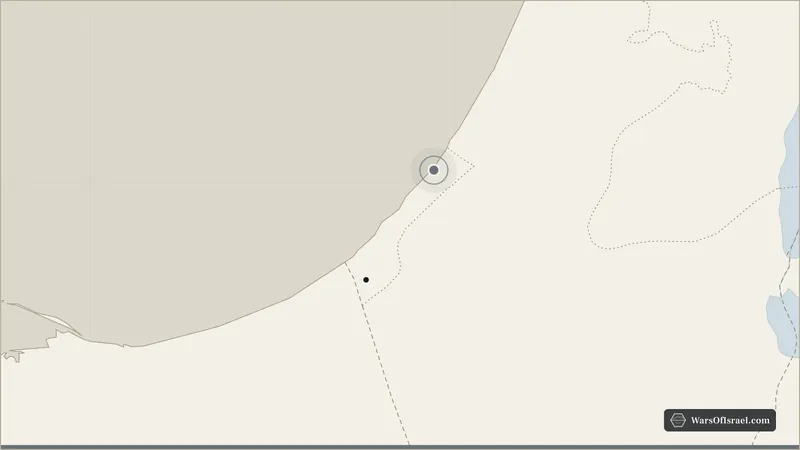
- June 28, 2006 to November 26, 2006Operation Summer Rains (2006)Military operation
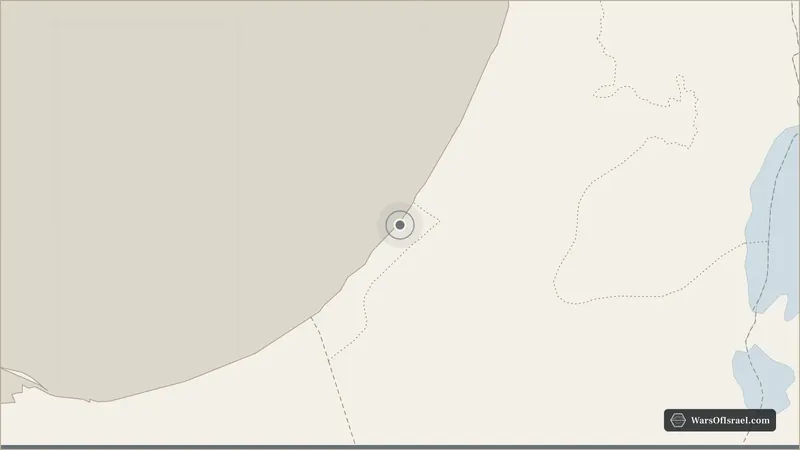
- December 27, 2008 to January 18, 2009Operation Cast Lead (2008 to 2009)Military operation
- November 14, 2012 to November 21, 2012Operation Pillar of Defense (2012)Military operation
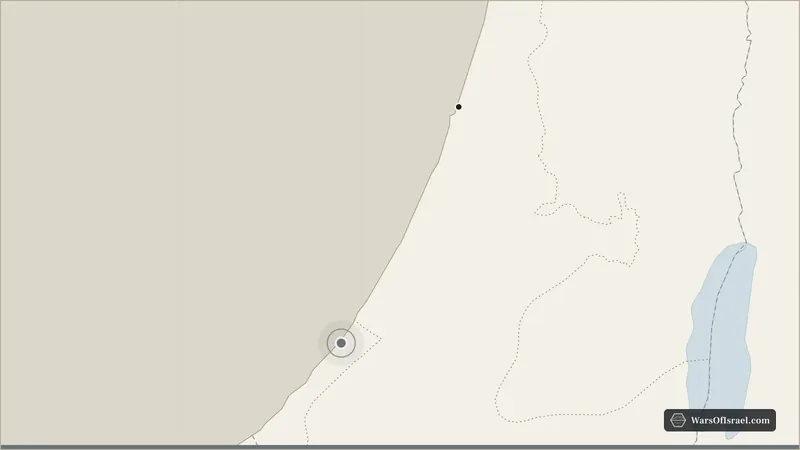
- July 8, 2014 to August 26, 2014Operation Protective Edge (2014)Military operation
- November 12, 2019 to November 14, 2019Operation Black Belt (2019)Military operation
- May 10, 2021 to May 21, 2021Operation Guardian of the Walls (2021)Military operation
- August 5, 2022 to August 7, 2022Operation Breaking Dawn (2022)Military operation
- May 9, 2023 to May 13, 2023Operation Shield and Arrow (2023)Military operation