Military operationSecond intifada to the Gaza operationsReference entry
Operation Summer Rains (2006)
How the capture of one soldier on the Gaza border led to Israel's first major operation in the Strip after the disengagement.
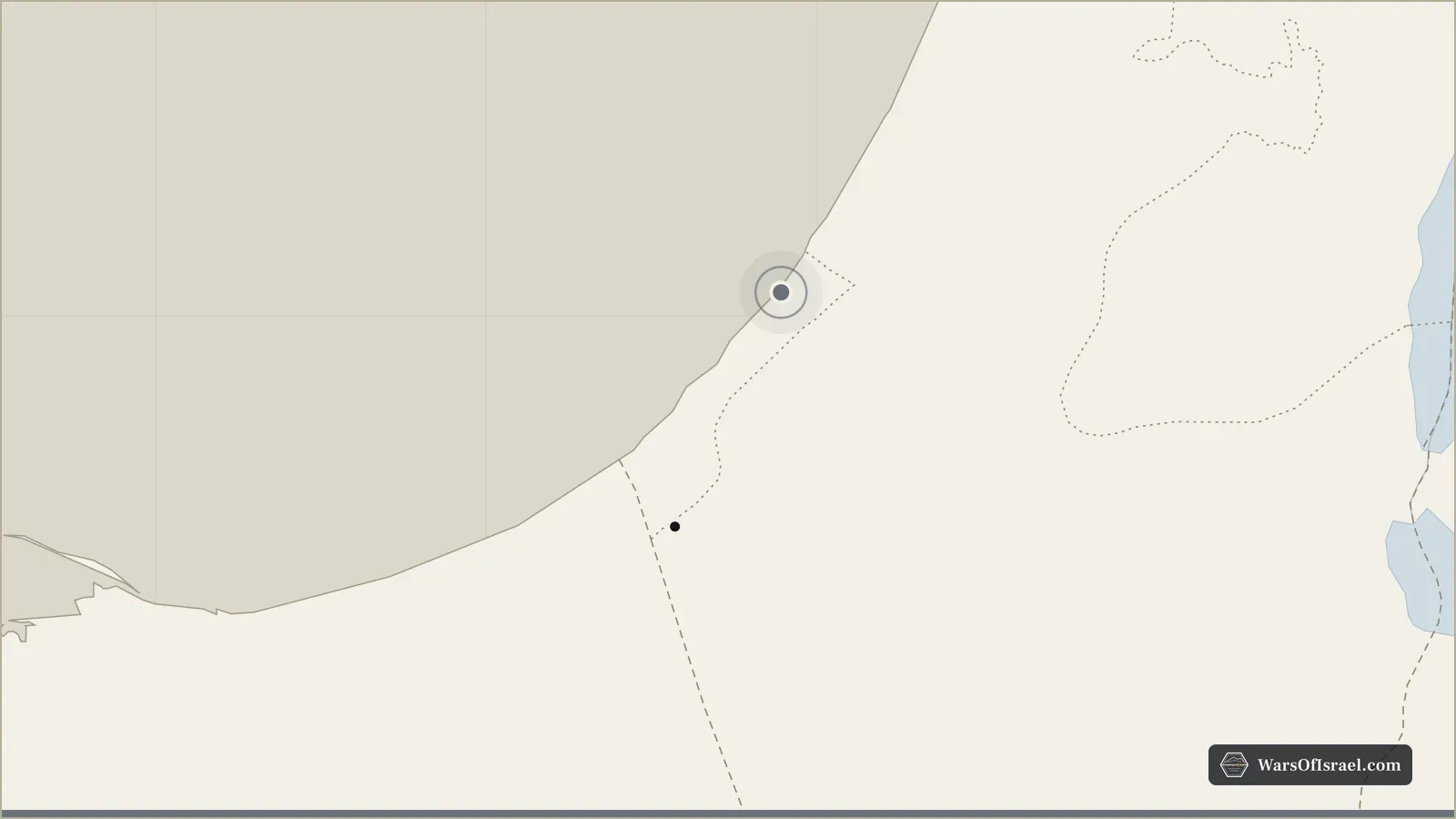
Operation Summer Rains (Mivtza Geshem Kayitz) was the Israeli military operation in the Gaza Strip that began on June 28, 2006, three days after armed Palestinians captured Corporal Gilad Shalit in a raid on the border near Kerem Shalom. It combined airstrikes, a strike on Gaza's power station, ground incursions and mass arrests of Hamas officials in the West Bank, and it continued in a second phase, Operation Autumn Clouds, until a ceasefire took effect on November 26, 2006. It did not bring Shalit home. It was the first major operation of the conflict between Israel and Gaza after the 2005 disengagement.
Background: the raid at Kerem Shalom
Israel had withdrawn its soldiers and settlers from the Gaza Strip in September 2005. In January 2006 Hamas won the Palestinian legislative elections, and rocket fire from Gaza on Sderot and nearby communities continued. In the early morning of June 25, 2006, a team of fighters emerged from a tunnel dug under the border near Kerem Shalom, at the southern tip of the Strip, and attacked an army position and a tank crew. Two soldiers, Second Lieutenant Hanan Barak and Staff Sergeant Pavel Slutsker, were killed. Gilad Shalit, a 19-year-old tank gunner, was wounded and taken into Gaza. Two of the attackers were killed.
Responsibility was claimed jointly by Hamas's armed wing, the Izz ad-Din al-Qassam Brigades, the Popular Resistance Committees and a smaller group calling itself the Army of Islam. On June 26 they issued demands for the release of Palestinian prisoners held in Israel. The government of Prime Minister Ehud Olmert refused to negotiate under those terms and prepared a military response.
What happened
In the early hours of June 28, Israeli aircraft struck bridges inside the Strip and the Gaza power station, cutting much of the territory's electricity supply for months. Ground forces moved into southern Gaza near Rafah and later into the north. On June 29, Israeli forces in the West Bank arrested dozens of senior Hamas figures, among them cabinet ministers of the Palestinian Authority government and members of the Palestinian Legislative Council. Israel said the arrests targeted members of a terrorist organization; the Palestinian Authority and many foreign governments condemned them as an attack on elected officials.
Fighting continued through the summer, overshadowed from July 12 by the much larger Second Lebanon War in the north. Israeli forces conducted repeated raids into the Strip to hit rocket crews, tunnels and armed cells, while rocket fire on Sderot and the western Negev went on. On November 1, Israel opened Operation Autumn Clouds in Beit Hanoun, in the northern Strip, a center of rocket launches. On November 8, Israeli artillery shells struck homes in Beit Hanoun and killed members of one extended family; the army attributed the deaths to a technical malfunction, and the incident drew wide international condemnation.
Casualty figures for the whole period are attributed by source. According to the Israeli human rights group B'Tselem, 416 Palestinians were killed in Gaza between June 28 and the end of November 2006, a count that includes both armed men and civilians. The Qassam Brigades said that 124 of its own fighters had been killed by late November. On the Israeli side, five soldiers and six civilians were killed in the same period.
Outcome and significance
Under pressure from the toll and with Egyptian mediation, Israel and the Palestinian groups agreed to a ceasefire that took effect on November 26, 2006, and Israeli forces left the Strip. The operation had failed to achieve its most visible goal. Shalit remained in Hamas captivity for more than five years, until he was released on October 18, 2011, in exchange for 1,027 Palestinian prisoners. Rocket fire did not stop.
The operation set a pattern that would recur over the following seventeen years: a dramatic trigger, a combination of air power and limited ground raids, a heavy toll in Gaza, continued fire on the communities near the border, and a ceasefire that solved none of the underlying issues. It also showed for the first time the danger of cross-border tunnels, a threat that would grow until it became central in 2014. Within a year Hamas had taken full control of the Strip, and the next major round, Operation Cast Lead, began in December 2008.