Military operationSix-Day War to Yom KippurReference entry
The raid on Green Island (1969)
Why Israel attacked a small concrete fortress at the southern end of the Suez Canal, how the night assault unfolded, and how it opened the way to the air campaign of summer 1969.
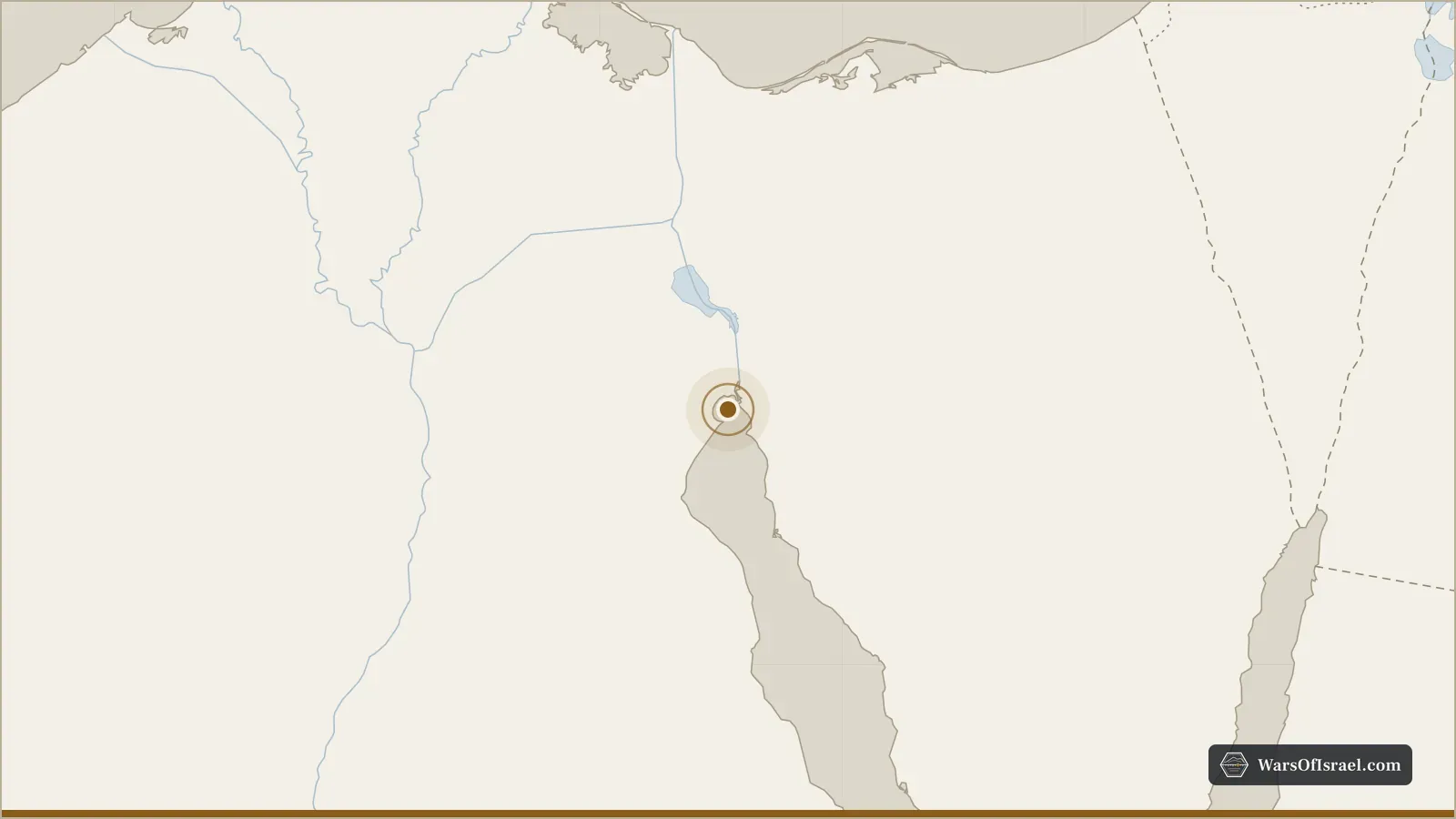
The raid on Green Island, known in the IDF as Operation Bulmus 6, was a night assault by Israeli naval commandos and Sayeret Matkal on a fortified Egyptian island at the southern end of the Suez Canal, carried out on the night of July 19 to 20, 1969. The attackers took the island and destroyed its installations, but six of them were killed and eleven wounded. The raid is remembered as one of the hardest commando actions of the War of Attrition, and as the opening move of an Israeli shift from defense to escalation along the canal.
A fortress in the gulf
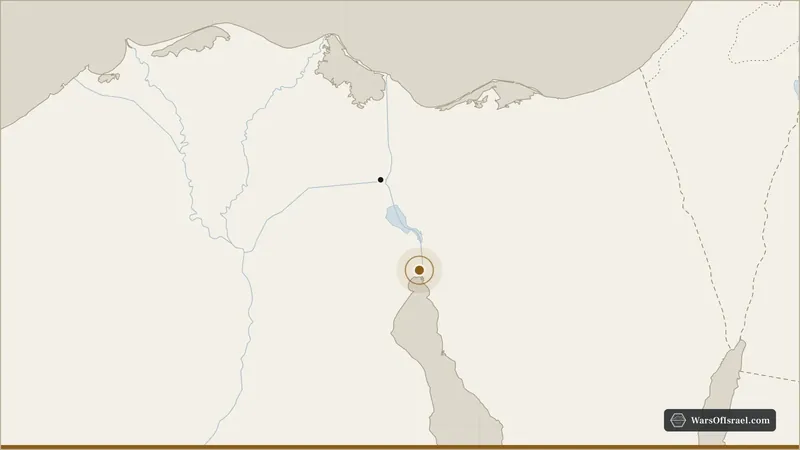
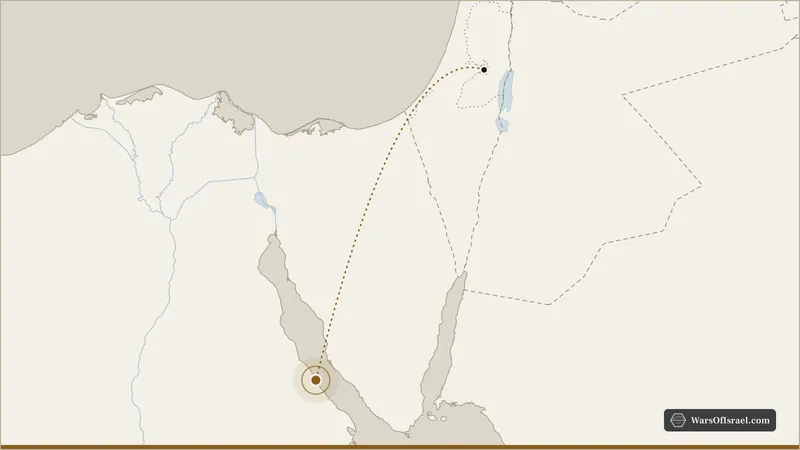
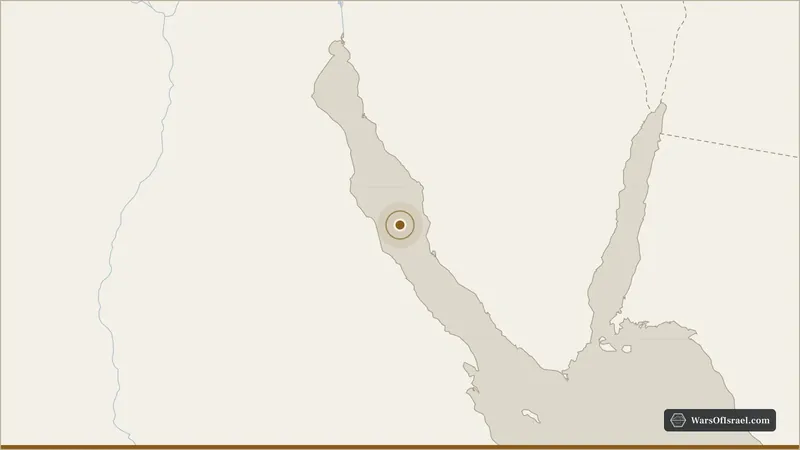
Green Island is a tiny artificial island, about 145 meters by 50, in the Gulf of Suez a few kilometers south of the city of Suez. The British built it during the Second World War to guard the approach to the canal: a reinforced-concrete fort on a coral base, with a tower, gun positions and a seawall ringed by barbed wire. In 1969 Egypt garrisoned it with infantry and commandos and equipped it with anti-aircraft guns and a radar station that covered the northern Gulf of Suez.
By the summer of 1969, Nasser's declared war of attrition was taking a steady toll on the Bar-Lev Line, and the Israeli command was looking for ways to hit back hard. The island's air defenses and radar stood in the way of a larger plan: to send the Israeli Air Force against Egyptian positions along the canal. Removing the island's guns, and showing that no Egyptian position was out of reach, became the aim of Bulmus 6. According to the IDF and Defense Establishment Archives, the target was an early-warning radar and electronic intelligence station.
The assault
The force, commanded by Lieutenant Colonel Zeev Almog of Shayetet 13, approached the island from the sea in rubber boats, with the final stretch covered by swimmers and divers. Shortly before two in the morning the first wave of naval commandos climbed the seawall and cut through the wire, and fighting broke out at close quarters across the fortress. Sayeret Matkal teams reinforced the assault and the attackers cleared the positions one by one and set demolition charges.
The Israeli losses were heavy for a force of that size: three soldiers from Shayetet 13 and three from Sayeret Matkal were killed, and eleven were wounded. Egyptian losses on the island were much higher. Contemporary reports, including Time magazine, put the Egyptian dead at about 80, nearly the whole garrison, some of them killed when Egyptian artillery on the mainland shelled the island during the fighting. Egypt did not publish its own figure.
One of the naval commandos, Ami Ayalon, was wounded in the fighting and continued to lead his team. He was awarded the Medal of Valor, Israel's highest military decoration, and later commanded the Israeli Navy and headed the Shin Bet.
What followed
On July 20, the day after the raid, the Israeli Air Force launched Operation Boxer, a sustained campaign against Egyptian artillery, air defenses and positions along the canal that ran through the end of July and set the pattern for the following months. Israel regarded Bulmus 6 and the air campaign together as the moment it seized the initiative from the Egyptian army, the view taken in the IDF archives' own account of the raid.
The price of the night, close to half of the assault teams killed or wounded, stayed with the units involved. The raid nonetheless marked a turning point in the role of Shayetet 13, which went on to carry out dozens of raids along the canal until the ceasefire of August 1970. Along with the later Operation Rooster 53, it became a model of the long-range, small-unit operations that defined Israel's conduct of the war.