The War of Attrition (1967 to 1970)
Why the fighting that followed the Six-Day War turned into a long, costly war along the Suez Canal, the Jordan Valley and the Golan, and what it left behind for 1973.
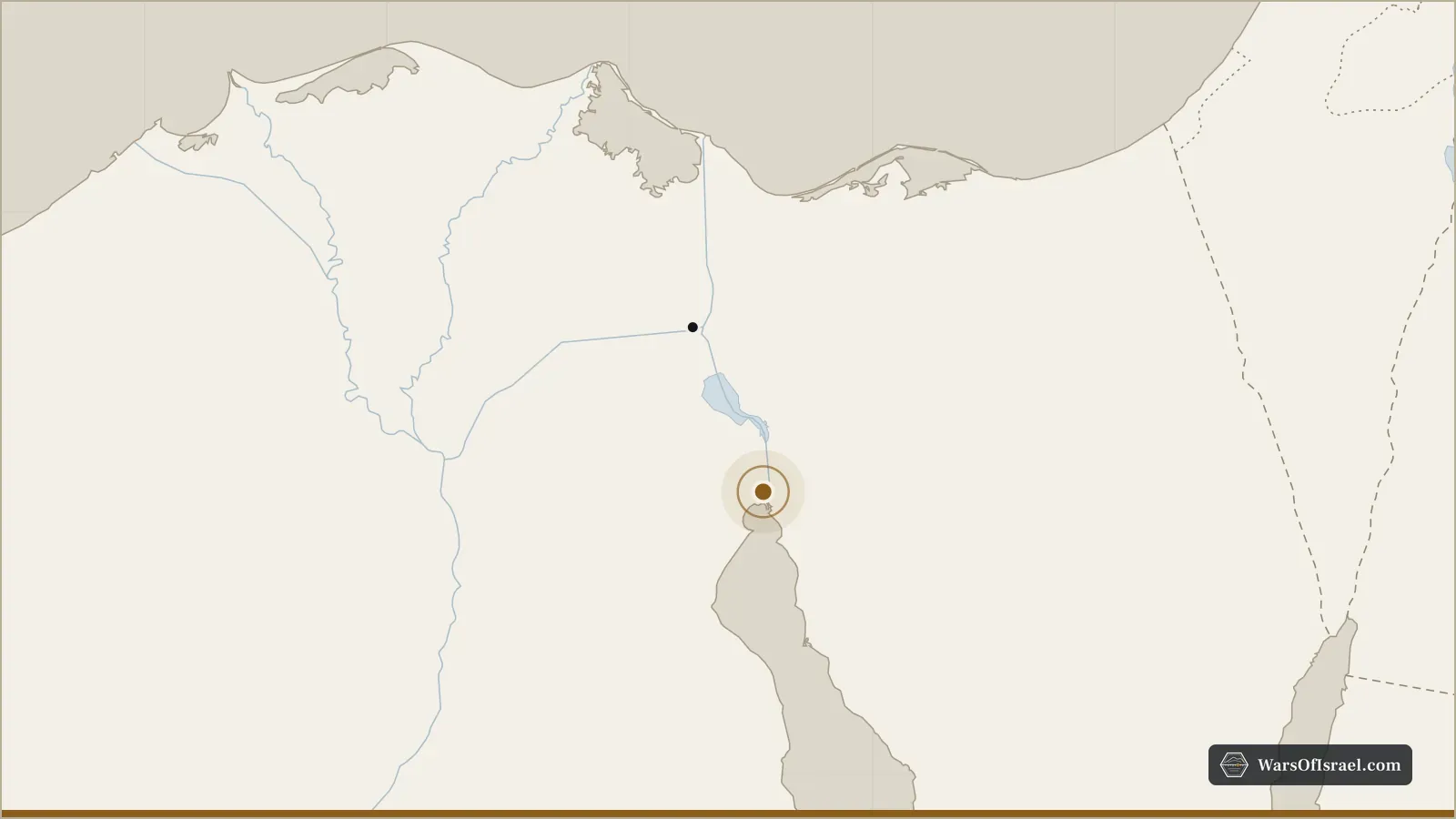
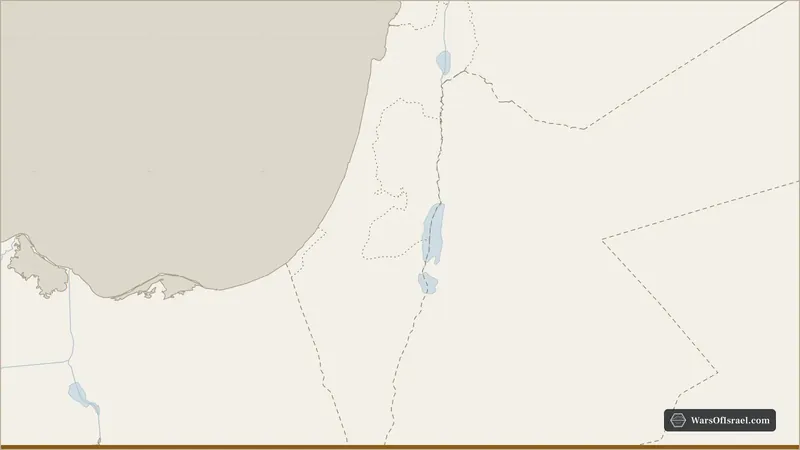
The War of Attrition was the war Israel did not expect to fight after its victory in June 1967. Between July 1967 and August 1970, Egypt, and to a lesser degree Jordan, Syria and Palestinian armed groups, tried to wear Israel down along the new ceasefire lines, betting that a small country with a citizen army could not absorb a steady stream of casualties. Israel answered with fortifications, commando raids, deep air strikes and finally a direct clash with Soviet pilots. The war ended in a ceasefire on August 7, 1970, with the lines exactly where they had been. Neither side won what it wanted, and both drew lessons that shaped the October 1973 war.
A ceasefire that never settled
The Six-Day War left Israel holding the Sinai Peninsula up to the east bank of the Suez Canal, the West Bank up to the Jordan River and the Golan Heights. For Egypt, the defeat was a national humiliation, and President Gamal Abdel Nasser rejected any settlement that left Israeli troops on the canal. The Arab summit at Khartoum in late August 1967 adopted its well-known refusal of peace, recognition and negotiation with Israel, and UN Security Council Resolution 242 of November 22, 1967 offered a framework of land for peace that each side read differently.
The first clash came within weeks. On July 1, 1967, Egyptian commandos took up a position near Ras al-Ish, on the east bank of the canal south of Port Said, and fought an Israeli force there. Israeli and Egyptian accounts still disagree about who came out ahead. On October 21, 1967, Egyptian missile boats sank the Israeli destroyer INS Eilat off Port Said, killing 47 sailors, the first warship in history sunk by surface-to-surface missiles. Israel replied with artillery fire on the oil refineries of Suez, and much of the canal-zone population was later evacuated.
Causes and the logic of attrition
Nasser's strategy rested on a simple calculation. Egypt had a large army, a population many times Israel's and the backing of the Soviet Union, which rebuilt its air force and air defenses after 1967. Israel was strong in mobile warfare but sensitive to losses and dependent on reservists. A static war of shelling and raids would, in Egyptian thinking, bleed Israel, push the great powers to impose a withdrawal and restore Egyptian pride without risking another rout in open battle.
Israel's government, led by Levi Eshkol and after his death in February 1969 by Golda Meir, saw the lines of 1967 as secure borders to be held until the Arab states agreed to direct negotiations. The Israeli army, under Chief of Staff Haim Bar-Lev, therefore needed a way to hold a 160-kilometer canal front with limited manpower. This tension, between an attacker willing to accept heavy losses and a defender determined not to give ground, gave the war its character.
The forces and the fronts
The main front was the Suez Canal. Egypt massed most of its rebuilt army west of the canal, with hundreds of artillery pieces. Israel held the east bank with relatively small forces, armored units behind them, and the Israeli Air Force as its main striking arm, flying French Mirage fighters and, from September 1969, American F-4 Phantoms.
The eastern front had a different shape. In the Jordan Valley, the main enemy was Palestinian armed groups, chiefly Fatah, operating from Jordanian territory, often with support from the Jordanian army. Israel fought a long campaign against infiltration there, remembered in Hebrew as the "pursuit years". On the Golan, Syria and Israel exchanged fire periodically, with heavier fighting in early and mid-1970.
The war's third actor arrived in 1970. Under an operation codenamed Kavkaz, the Soviet Union sent air defense units and fighter pilots to Egypt, turning a regional war into a confrontation with a superpower.
The course of the war
Escalation on the canal, 1968
Through 1968, the canal front swung between quiet and sudden barrages. Egyptian artillery fire grew heavier in the autumn, causing serious Israeli losses on the exposed east bank. Israel responded with a commando raid deep into Egypt: on the night of October 30 to 31, 1968, in Operation Shock (Mivtza Helem), a Sayeret Matkal force struck a power station and Nile installations near Nag Hammadi in Upper Egypt, showing that the Egyptian interior was within reach.
The raid bought a pause, and Israel used it to build a line of fortified strongpoints along the canal. Known as the Bar-Lev Line, after the chief of staff, it was built over the winter of 1968 to 1969 and was meant to give soldiers cover from shelling while armor waited in the rear. It would become one of the most debated military decisions in Israeli history.
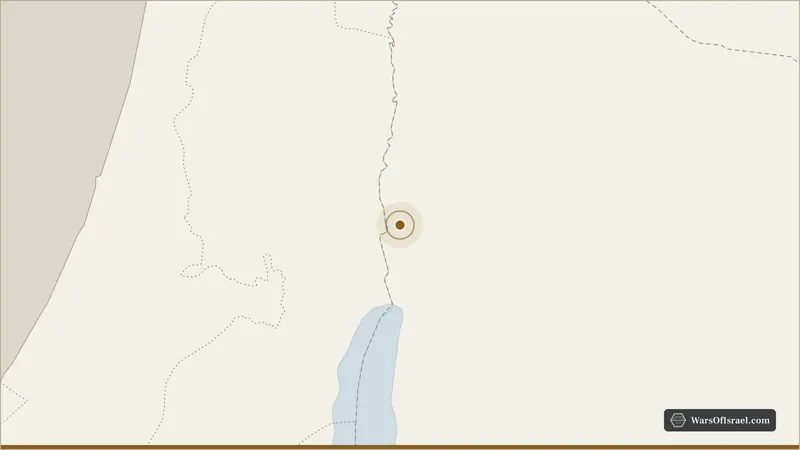
On the eastern front, the battle of Karameh on March 21, 1968, an Israeli raid on Fatah bases in Jordan, became a turning point of a different kind. Israel achieved its main objective but suffered unexpectedly heavy losses, and Fatah turned the battle into a founding legend that brought it thousands of recruits.
Nasser's declared war, 1969
On March 8, 1969, Nasser announced that the ceasefire was no longer in force, and Egypt opened a massive artillery offensive along the canal. The next day, Egyptian Chief of Staff Abdel Moneim Riad was killed by Israeli fire while visiting the front. Egyptian commando raids across the canal followed through the spring, and Israeli casualties on the Bar-Lev Line rose steadily.
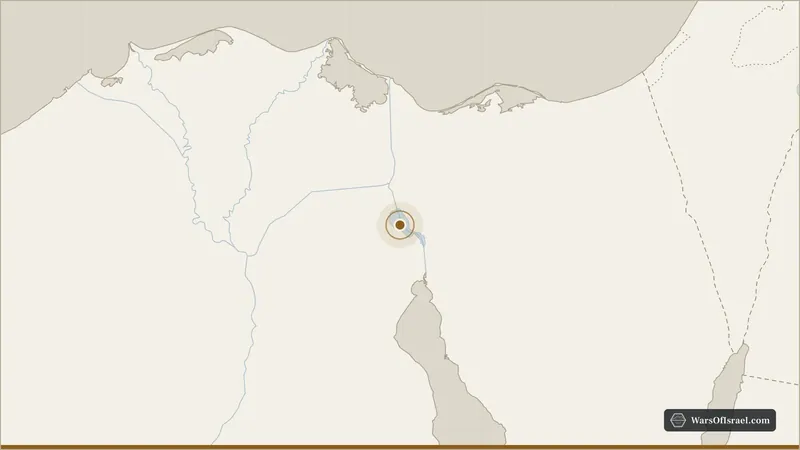
Israel's answer in the summer of 1969 was to move from defense to escalation. On the night of July 19 to 20, naval and Sayeret Matkal commandos stormed the fortified island at the southern end of the canal in the raid on Green Island. The next day, the Israeli Air Force began Operation Boxer, a sustained campaign against Egyptian artillery, air defenses and positions along the canal, using the air force as "flying artillery". In September, Operation Raviv sent an armored force disguised with captured Egyptian vehicles along the western shore of the Gulf of Suez for a daylong raid.
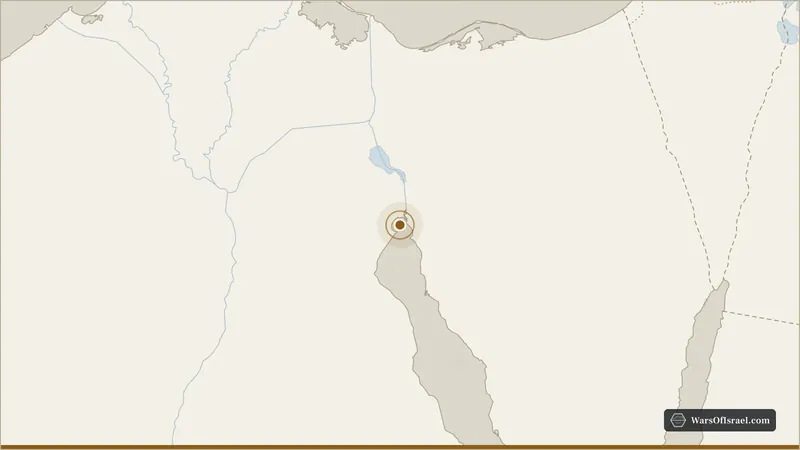
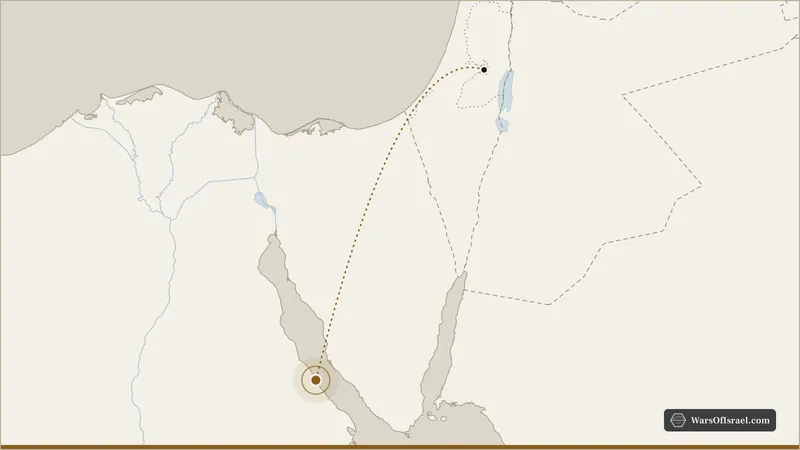
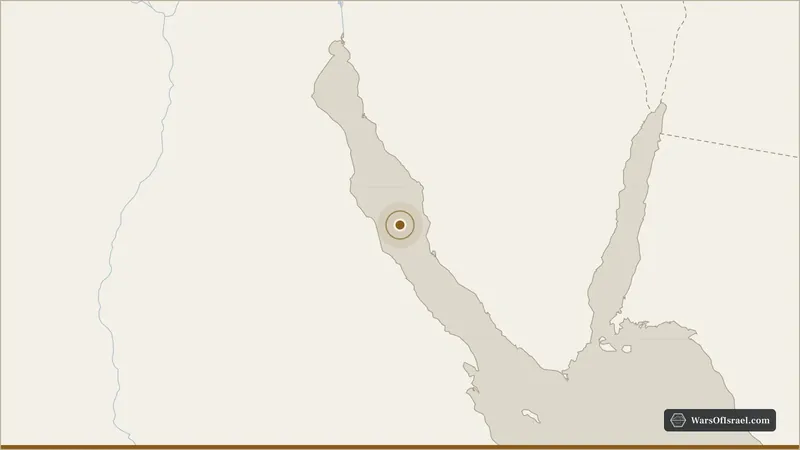
The most unusual operation came at the end of the year. On the night of December 26 to 27, 1969, in Operation Rooster 53, paratroopers seized a new Soviet-made P-12 radar station at Ras Ghareb on the Gulf of Suez, and helicopters carried the entire installation back to Israeli-held Sinai.
Deep strikes and the Soviet answer, 1970
In January 1970, Israel turned to deep-penetration air raids under the name Operation Priha (Blossom). From January 7 to April 13, Phantoms struck military targets near Cairo and in the Nile Delta, aiming to force Nasser to halt the war or to weaken his regime. Two incidents caused civilian deaths that drew international condemnation: an air strike on a factory at Abu Zaabal in February 1970, which Egypt said killed about 80 workers, and the strike at Bahr el-Baqar on April 8, 1970, where, according to Egyptian figures, 46 schoolchildren were killed. Israel said the targets had been military, and the deep raids were stopped after Bahr el-Baqar.
Commando raids continued in parallel. On January 22, 1970, in Operation Rhodes, Israeli paratroopers and naval forces landed on Shadwan Island at the mouth of the Gulf of Suez, held it for about a day and a half and withdrew with 62 Egyptian prisoners and a captured radar set. The pattern was by now familiar: a small, highly trained force, a target far from the canal, and a message that no Egyptian position was out of reach.
The deep strikes had a consequence Israel had not fully foreseen. Nasser flew to Moscow in January 1970 and obtained direct Soviet intervention: surface-to-air missile batteries manned by Soviet crews and squadrons of MiG-21s flown by Soviet pilots. By spring, Israeli aircraft faced Soviet pilots over the Nile Valley, and the missile belt began creeping toward the canal. Israel lost several Phantoms to the new missiles in the summer.
On July 30, 1970, the air war reached its peak. In Operation Rimon 20, Israeli Mirages and Phantoms drew Soviet-flown MiG-21s into an ambush west of the Gulf of Suez and shot down five of them without losing an aircraft of their own.
The ceasefire of August 1970
The diplomatic track ran alongside the fighting. US Secretary of State William Rogers published a peace plan in December 1969 that both sides rejected, and in June 1970 Washington proposed a more limited initiative: a ceasefire and renewed talks through UN envoy Gunnar Jarring. Egypt and Jordan accepted in July, and Israel followed after a fierce debate that led the Gahal party to leave Golda Meir's national unity government.
The ceasefire took effect on August 7, 1970. It included a standstill clause that barred new military installations in a zone along the canal. Within hours, Egypt began moving surface-to-air missile batteries forward into that zone. Israel protested and the United States confirmed the violations, but nothing was reversed. The missile umbrella that Egypt built in those weeks would cover its crossing of the canal three years later.
Nasser died on September 28, 1970, and Anwar Sadat succeeded him. In Jordan, the same summer ended in the civil war of September 1970, known to Palestinians as Black September, in which King Hussein's army fought the Palestinian armed groups and eventually drove them out of the kingdom, largely toward Lebanon.
Casualties and their counting
Casualty figures for the War of Attrition depend heavily on the dates counted and the fronts included, and sources should be compared with that in mind:
- Israel: Ze'ev Schiff counts 921 Israelis killed on all fronts, 694 of them soldiers and the rest civilians; Chaim Herzog gives just over 600 dead and about 2,000 wounded for the war proper.
- Egypt: the lowest estimate, by former Egyptian Chief of Staff Saad el-Shazly, is 2,882 killed and 6,285 wounded; historian Benny Morris estimates about 10,000 Egyptian soldiers and civilians killed.
- The Soviet Union never published a full figure; Ginor and Remez document dozens of Soviet dead.
The figures are drawn from the works listed above; they are not directly comparable, because each author counts a different period.
Outcome, debate and legacy
Israel held every line it had taken in 1967, and many Israeli commanders saw the war as a defensive success. Historians have been more divided. Some, like Herzog, describe an Israeli victory in which Egypt failed to dislodge Israel from the canal. Others, notably Ginor and Remez, argue that the Soviet intervention forced Israel into a ceasefire on unfavorable terms, while David Korn describes a stalemate that Israel misread as a win.
What is less disputed is the legacy. The war convinced many in the Israeli command that the Bar-Lev Line and the air force could hold the canal against any Egyptian attack, a belief that collapsed in October 1973. Egypt, for its part, learned that it could not beat Israel in the air but could neutralize Israeli air power under a dense missile umbrella. Both lessons were tested on October 6, 1973, in the Yom Kippur War. In Israel, the fallen of the War of Attrition are remembered among those of Israel's wars, but the war has never held the place in public memory that 1967 and 1973 hold, perhaps because it ended without a clear moment of victory or defeat.
Timeline
- July 1, 1967: Clash at Ras al-Ish on the east bank of the canal, the first battle after the Six-Day War.
- October 21, 1967: Egyptian missile boats sink the destroyer INS Eilat off Port Said; 47 sailors are killed.
- March 21, 1968: Battle of Karameh in the Jordan Valley.
- October 31, 1968: Operation Shock strikes targets near Nag Hammadi in Upper Egypt.
- March 8, 1969: Nasser declares the ceasefire void and Egypt opens a large-scale artillery offensive.
- July 20, 1969: Israel completes the raid on Green Island and the air force launches Operation Boxer.
- December 27, 1969: The Egyptian P-12 radar seized at Ras Ghareb is flown to Sinai.
- January 7, 1970: Israel begins deep-penetration air raids into Egypt.
- April 8, 1970: Israeli strike at Bahr el-Baqar; the deep raids end soon after.
- July 30, 1970: Five Soviet-flown MiG-21s are shot down in Operation Rimon 20.
- August 7, 1970: The ceasefire takes effect and the War of Attrition ends.
Battles and operations in this war
- March 21, 1968The battle of Karameh (1968)Battle
- July 19, 1969 to July 20, 1969The raid on Green Island (1969)Military operation
- December 26, 1969 to December 27, 1969Operation Rooster 53 (1969)Military operation
- July 30, 1970Operation Rimon 20 (1970)Military operation