News
IDF reports ten arrests near Jenin as the 98th Division completes a separate assignment in Judea
The military says the Arraba suspects planned an attack on civilians; a separate announcement moves the 98th Division back to the General Staff reserve.
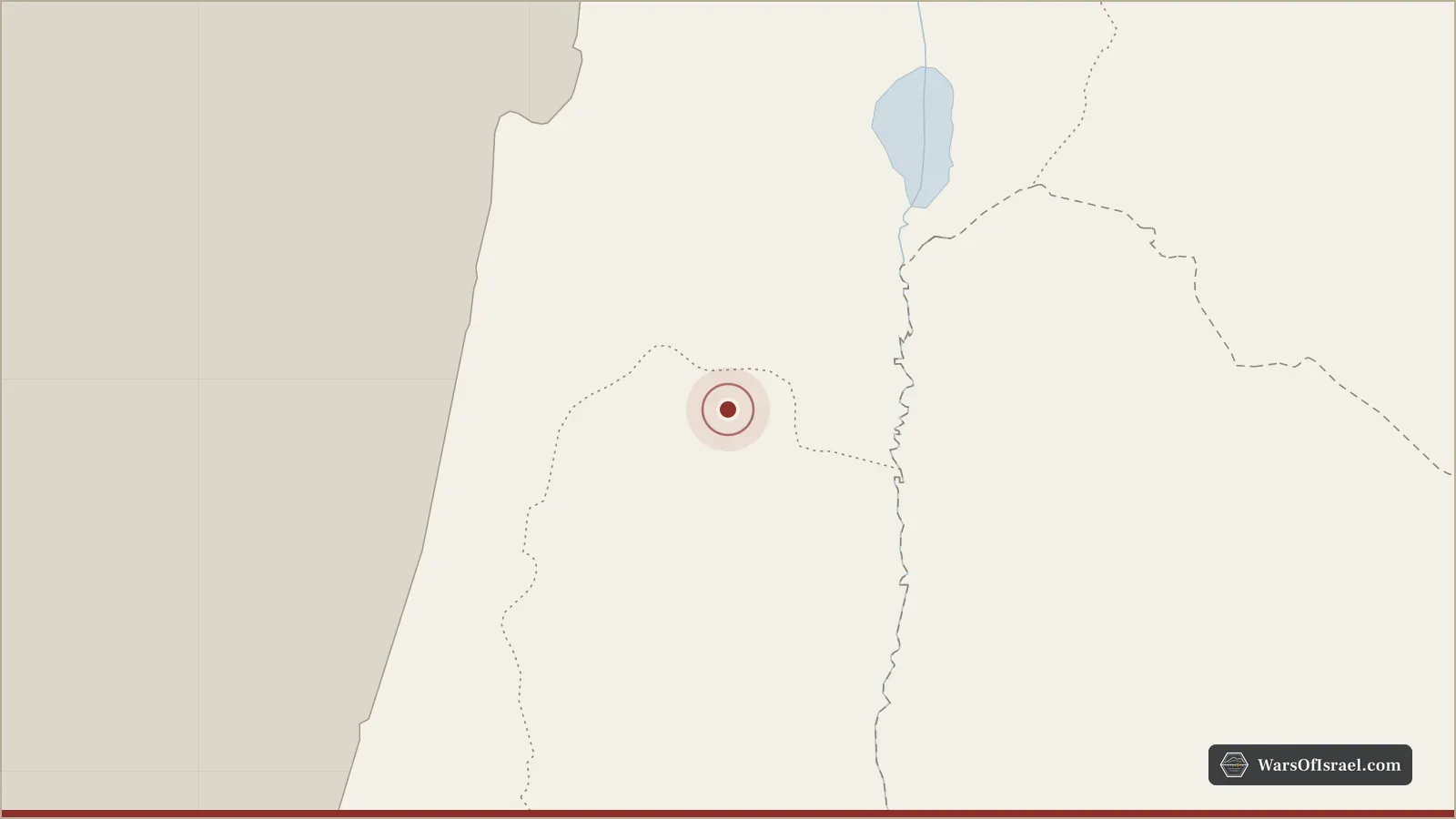
As of November 10, 2026, the IDF says Israeli forces have arrested ten people in Arraba, near Jenin, suspected of organizing a terrorist network to attack Israeli civilians in northern Samaria. The arrests took place on November 9. They followed a separate November 8 announcement that the 98th Division headquarters had completed its command assignment in the Judea and Etzion sectors and would become a General Staff reserve.
The two announcements describe activity in different parts of Judea and Samaria. They do not establish a connection between the suspected Arraba plot and the division’s change of assignment, or announce an end to security operations across the territory.
What the military reported in Arraba
According to the IDF’s November 9 statement, troops from the Paratroopers reconnaissance unit and Duvdevan, together with Border Police, carried out the arrests under Shin Bet intelligence guidance. The military said the suspects were transferred for further questioning.
The Jerusalem Post also reported the ten arrests and the military’s account of a planned attack on civilians. Its article identifies the IDF as the source. That provides another published account of the announcement, rather than a separate examination of the intelligence or evidence against the detainees.
The public statement does not name the suspects, identify a particular civilian target or give a date for the attack it says they intended to carry out. It also does not publish the underlying intelligence. Those omissions limit what can be said about the plot’s preparation and the role attributed to each person. An announcement of arrests does not establish that charges have been filed or that a court has determined guilt.
A separate command assignment ends farther south
The IDF’s November 8 account of the 98th Division’s assignment (opens in a new tab) concerns the Judea and Etzion territorial brigades. The military said the division headquarters had been activated on September 25 to strengthen command, control, defense and offensive activity in that area.
For that assignment, the army reported more than 1,500 activities, more than 140 suspects arrested and approximately 35 firearms located. Those are cumulative military figures for the period and sectors described in the announcement. They are not totals for the Arraba operation and should not be combined with its ten arrests.
The army also said the headquarters had adapted experience from fighting in Gaza and Lebanon and worked closely with the Judea and Samaria Division. Its next stated role is as a General Staff reserve, with preparations for additional scenarios. The announcement does not identify a new deployment destination.
This changes the role of a headquarters, not the status of every force operating in Judea and Samaria. Treating it as a territory-wide withdrawal would go beyond what the military announced.
A new case, not a continuation of every Jenin investigation
The Arraba arrests belong within the longer setting of Israeli counterterrorism operations in Judea and Samaria. But a shared region does not establish shared suspects or a common chain of command. Each investigation requires its own evidence.
Wars of Israel’s November 4 report on the Jenin rocket investigation concerned six suspects and a separate account of attempted rocket development. That report also distinguished a prosecutor’s declaration from the filing of an indictment. The November 9 military announcement does not identify the Arraba detainees as members of that earlier group.
The distinction prevents two different errors: counting separate announcements as one expanding cell, and assuming that a later arrest resolves unanswered questions in an earlier legal proceeding. Neither inference is supported by the new statement.
What the announcements establish
The immediate development is a military account of a disrupted attack plan and the transfer of ten detainees for questioning. The broader organizational development is the completion of a defined command assignment in other sectors. Read together, the announcements describe continued arrest activity alongside a change in how the army allocates a headquarters.
They do not provide a territory-wide measure of the remaining threat. Activity totals record what the army says it did; they do not measure how many networks remain or establish the outcome of each investigation. Likewise, a reserve designation does not reveal which contingency, if any, will require the division next.
For the Arraba case, the unresolved questions concern the evidence, individual allegations and any subsequent charges. For the 98th Division, the public record identifies its reserve role but supplies no next destination. Those are separate questions, and the November 8 and 9 announcements leave both open.