ConflictSecond intifada to the Gaza operationsReference entry
Israeli counter-terrorism operations in the West Bank (2022 to 2025)
How a wave of attacks in 2022 led to four years of escalating Israeli operations in the northern West Bank, ending with troops inside the refugee camps.
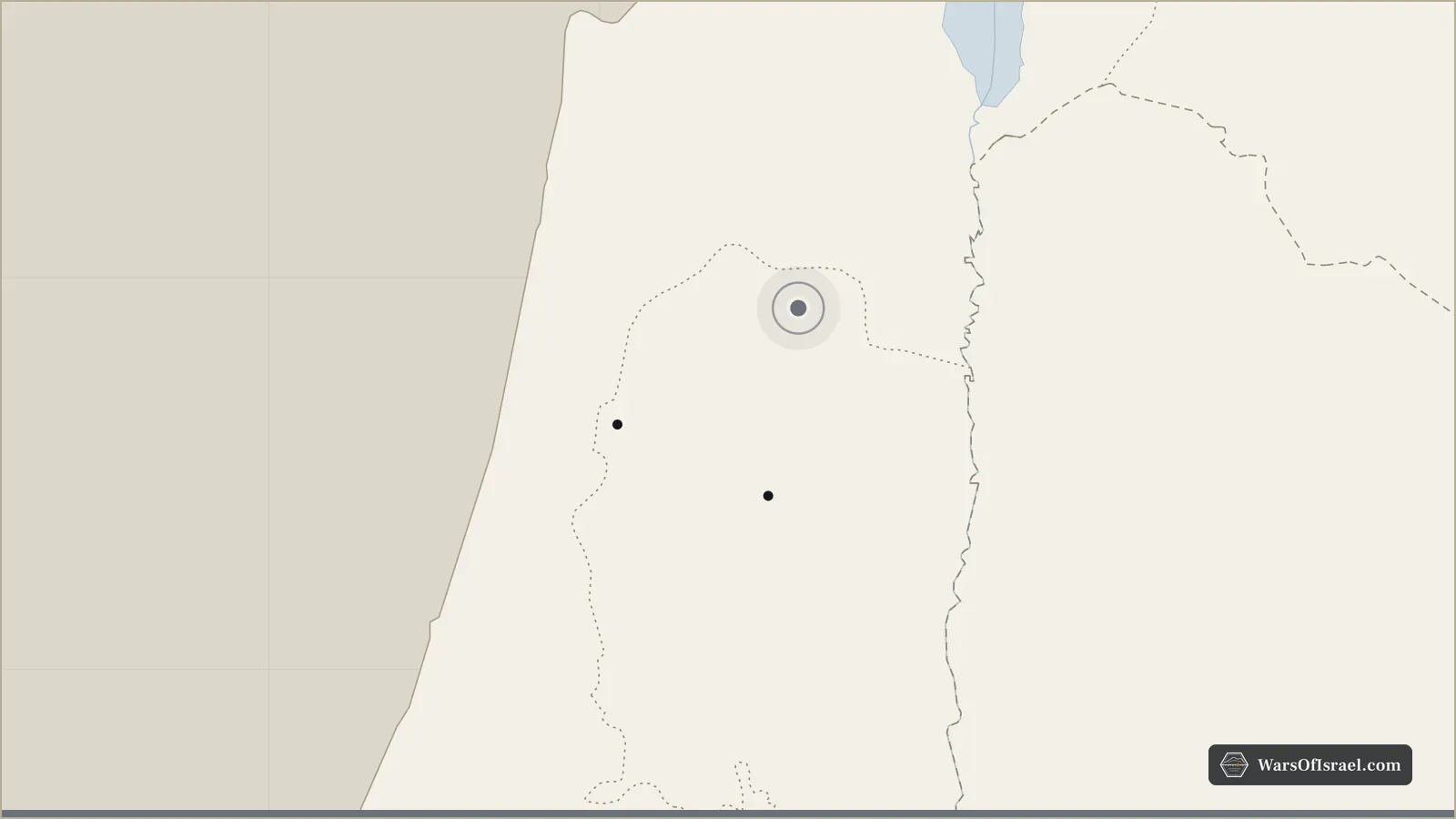
Between 2022 and 2025 the Israel Defense Forces, the Shin Bet and the Border Police carried out a sequence of operations in the West Bank, concentrated in the north, against a new generation of local armed groups based in the refugee camps of Jenin, Tulkarm and Nablus. What began on March 31, 2022, as Operation Break the Wave, a campaign of nightly arrest raids after deadly attacks inside Israel, grew by 2025 into Operation Iron Wall, in which Israeli troops took up positions inside the camps themselves and tens of thousands of residents were displaced. The period was the deadliest in the West Bank since the second intifada.
Background: the attacks of spring 2022 and the new brigades
In March 2022 a series of attacks killed 11 people in Beersheba, Hadera and Bnei Brak in the space of a week; further attacks followed in Tel Aviv and Elad. Several of the attackers came from the Jenin area. Israel launched Break the Wave on March 31, with raids into Palestinian cities to arrest suspects and seize weapons.
The raids met a phenomenon that had been growing since about 2021: local armed groups such as the Jenin Brigade, linked to Palestinian Islamic Jihad, the Tulkarm Brigade and the Lions' Den in Nablus, made up largely of young men without a long organizational past, armed with weapons smuggled or stolen inside Israel, and often operating outside the control of the Palestinian Authority, whose security forces had largely withdrawn from the camps. On May 11, 2022, during a raid in Jenin, Al Jazeera correspondent Shireen Abu Akleh was shot dead; the IDF later said there was a high possibility she had been hit accidentally by Israeli fire. According to an IDF report of December 29, 2022, 31 people were killed in attacks against Israelis that year, and by UN count 2022 was the deadliest year for West Bank Palestinians in well over a decade.
From raids to operations
In 2023 the violence intensified further. After a Palestinian gunman killed two Israeli brothers near Huwara on February 26, settlers rampaged through the town that night; the IDF commander in the area called it a pogrom. In June 2023 Israel used an armed drone in the West Bank for the first time in about two decades. From July 3 to 5 it carried out Operation Home and Garden in the Jenin refugee camp with a brigade-size force of between 1,000 and 2,000 soldiers, according to IDF statements, the largest operation in the city since the battle of Jenin in 2002. Twelve Palestinians were killed, most of them claimed by armed groups as members, and one Israeli soldier was killed.
After October 7, 2023, and the outbreak of the Israel-Hamas war, Israel's tolerance for armed enclaves in the West Bank fell sharply. Airstrikes became routine, and on August 28, 2024, the IDF launched Operation Summer Camps in Jenin, Tulkarm and the al-Far'a camp near Tubas, in which the commander of the Tulkarm Brigade, Muhammad Jabber, known as Abu Shujaa, was killed. In December 2024 the Palestinian Authority launched its own operation against armed men in the Jenin camp.
On January 21, 2025, two days after the start of a ceasefire in Gaza, Israel launched Operation Iron Wall in Jenin and extended it within a week to Tulkarm and Nur Shams. This time the forces did not withdraw. In February tanks were deployed in Jenin for the first time since 2002, and Defense Minister Israel Katz said troops would remain in the camps for an extended period. Buildings were demolished to open roads, and the IDF said it was dismantling infrastructure used by the armed groups.
Cost and significance
According to the UN human rights office, 1,001 Palestinians were killed in the West Bank, including East Jerusalem, by Israeli forces and settlers between October 7, 2023, and October 20, 2025; Israel says that most of those killed in its operations were armed. UNRWA said more than 40,000 people were forced from the northern camps in 2025, and Human Rights Watch put the number at about 32,000 in November 2025, saying the displacement amounted to war crimes. Israel rejected the charge and said the residents had left during counter-terrorism operations. Current figures are tracked in UN OCHA's West Bank situation updates (opens in a new tab).
In September 2025 Israeli security sources told The Jerusalem Post that Hamas networks had re-formed in areas away from the camps now held by the army. The operations had removed the visible armed enclaves, but left open the question of who would govern the camps and whether their residents would return.