News
IDF and Shin Bet say Gaza strike killed Hamas official who held Omer Shem Tov
Israel’s November announcements describe strikes on a former hostage captor, sniper operatives and officials accused of rebuilding Hamas.
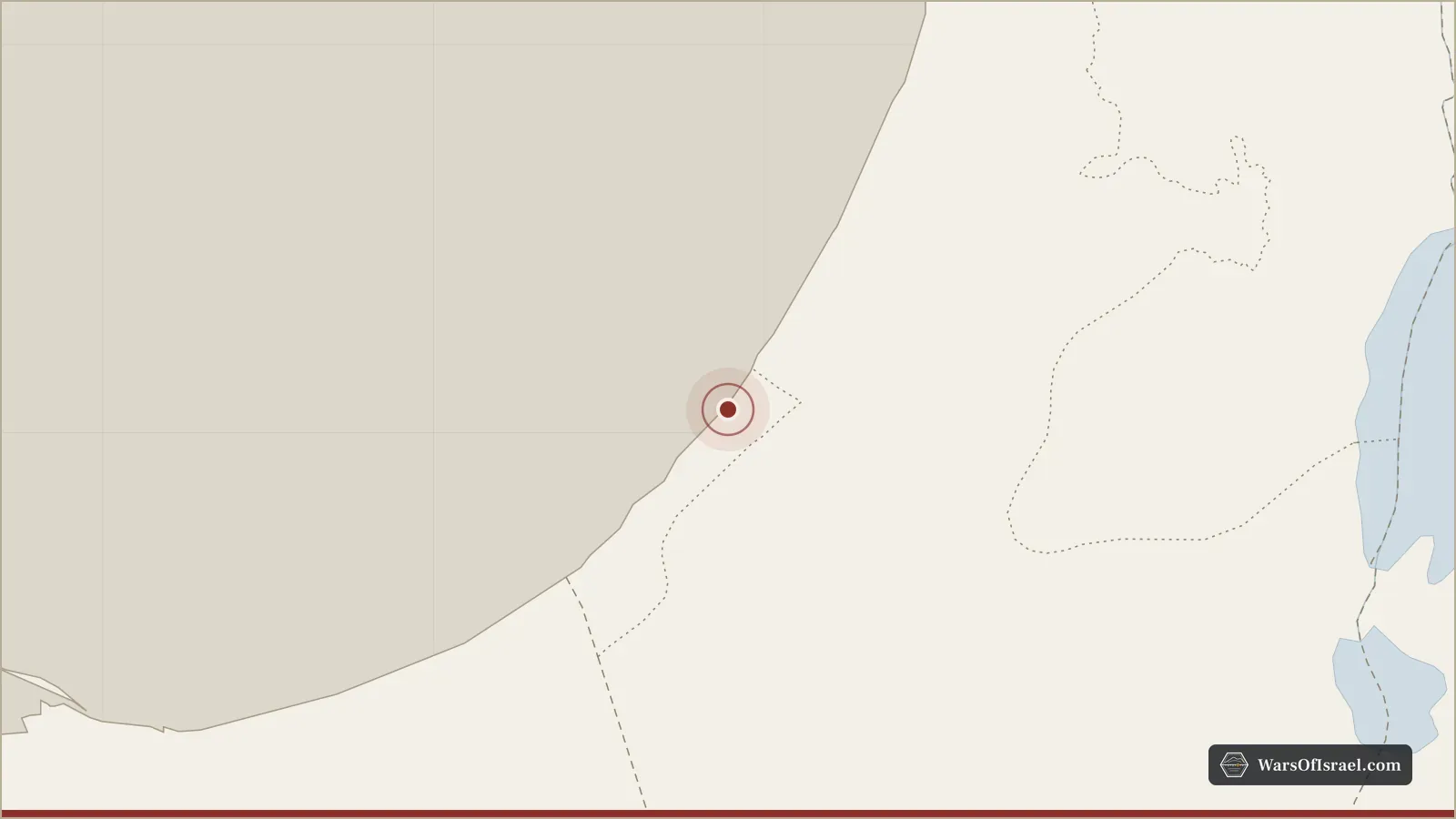
As of November 5, 2026, the IDF and Shin Bet say they have killed Jamal Abu Saeed, a senior Hamas official who held Israeli hostage Omer Shem Tov during the war. The announcement was issued on November 4; the IDF’s account dates the Gaza City strike to November 1. It came alongside separate announcements identifying operatives killed in Khan Yunis and northern Gaza.
The distinction between the strike date and the announcement matters. Israel disclosed several operations together, but they did not all take place on the same day or in the same part of the Strip. The statements describe a campaign against personnel accused of maintaining or rebuilding armed capabilities during the ceasefire.
The official linked to Shem Tov’s captivity
The IDF’s published account (opens in a new tab) identifies Abu Saeed as an operations department head in Hamas’s military wing. Its headline places that department within military intelligence. Both descriptions refer to the same man, whom the military and Shin Bet accused of planning attacks and helping restore Hamas’s capabilities.
According to the Israeli account, Abu Saeed’s responsibilities had extended beyond Gaza. His previous positions included overseeing training for Hamas operatives abroad, commanding an anti-tank battalion and supervising military specializations in the Central Camps Brigade. The announcement also described him as a contact with foreign countries and a repository of organizational knowledge.
The agencies said he had held Shem Tov captive. They did not disclose the location or duration of that custody, or publish the intelligence underlying their identification. The public account therefore establishes Israel’s stated reason for targeting him, without providing a complete reconstruction of his role in the hostage system.
Separate strikes in Khan Yunis
The November 4 announcements also named six operatives whom the IDF and Shin Bet said they had killed in the Khan Yunis area on November 1 and November 2. These were separate from the strike against Abu Saeed in Gaza City.
For November 2, the agencies identified Mahmoud Jihad Mohammad Qafa as the head of a Hamas sniper cell and Asaad Suleiman Salman Qashta as an Army of Islam operative involved in smuggling into Gaza. The IDF’s Hebrew account describes two strikes that day.
For November 1, the military named four others: Hamas cell leader Mohammad Zakaria al-Jamal; Hamas operative Mohammad Amin al-Namas; Nukhba company commander Shaher Mohammad Zaarab; and Palestinian Islamic Jihad sniper operative Mohammad Ali Abu Shaar. Their identities and roles are Israeli security-service claims, rather than findings from an independently examined personnel record.
The announcements place the operations within the same geographical theater covered in the site’s history of the battle of Khan Yunis. They describe targeted airstrikes, without announcing a new ground campaign there.
Northern Gaza’s different timeline
A separate IDF announcement, reported by Israel National News on November 2, named four Hamas operatives killed in northern Gaza. Two of the strikes took place on October 31, while two others dated back to October 22.
The October 31 targets were identified as Nabil Hamad, a department head in Hamas’s recruitment apparatus, and Mohannad Nader Mahmoud Dahdouh, a sniper commander. Israel accused Hamad of helping rebuild the military wing and Dahdouh of participating in attacks on troops.
The older strikes targeted Wael Naif Fahmi Muslim, whom the IDF accused of entering Israel during the October 7, 2023 attack, and Arafat Kamal Muhammad Ar’air, described as a rocket-unit squad commander. Those October 22 strikes belong to the background of the November announcement, rather than the current seven-day operational window.
The sequence also follows the October 30 announcement concerning Ihab Abu Taqiya, previously covered in the report on a commander involved in holding hostages. Abu Saeed is a different target, and the new report should not be read as another account of that earlier strike.
What the announcements establish
Israel’s stated rationale connects the strikes to both past hostage-taking and current military activity. The IDF and Shin Bet accused the targets of preparing attacks and rebuilding capabilities in violation of the ceasefire. Those allegations remain attributed to the agencies making them.
Israel National News also reported the military’s statement that precision munitions and aerial surveillance were used to reduce civilian harm. That account does not establish the absence of civilian casualties. The statements reviewed do not provide a complete civilian casualty assessment, and this report does not infer one from the list of named targets.
The disclosed operations show the military continuing to identify recruitment, sniper, smuggling and command functions as targets. They do not establish how much of Hamas’s overall capacity remains, or whether its ability to replace these personnel has changed. That wider question continues beyond the individual operations in the Israel-Hamas war.