News
IDF official says Hebron operation ended as brigade returns to defensive duties
The reported withdrawal settles the immediate question of the ten-day operation, while military and police accounts describe continuing security work.
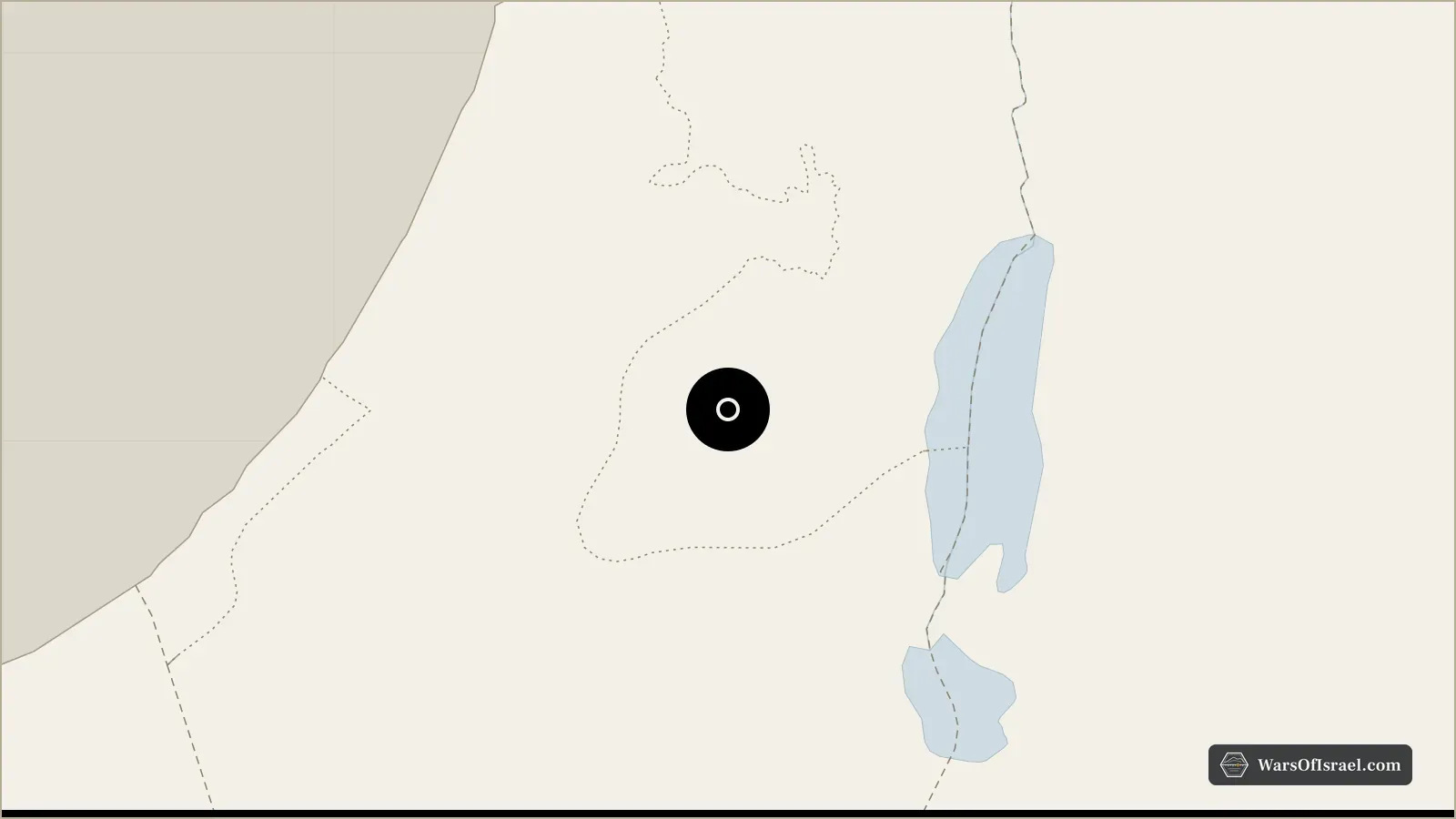
As of November 5, 2026, an IDF official says the ten-day counterterrorism operation in Hebron has ended. The official told JNS that troops withdrew on the morning of November 2 and that the Judea Brigade was focusing on defensive preparations ahead of the Chayei Sarah gathering. Counterterrorism activity across Judea and Samaria would continue, the official said.
The account advances the question left open in the October 31 report on a possible scale-back. It describes the end of that particular operation, not a general withdrawal from the region or a suspension of security missions.
The attack that triggered the operation
The operation followed the October 23 shooting near Yehuda Junction. In its October 29 account of the Hebron operation (opens in a new tab), the IDF identified the two soldiers killed as Staff Sgt. Ron Yonatan Roytman and Sgt. Yuval Shai Svilem, both from the Search and Rescue Brigade. It also reported three soldiers lightly injured.
The military said two attackers who had come from the Hebron area were killed during the encounter. Troops then began searches, questioning and operations against weapons and infrastructure, alongside roadblocks and cordons around Hebron and Halhul.
The response also extended beyond the city. A separate October 25 JNS report, drawing on Israeli military information, described approximately 40 suspects apprehended during activity across Judea and Samaria. The IDF’s later chronology referred to roughly 40 areas and 400 locations in that phase of the response.
Those regional figures are not a final count for the Hebron operation alone. The distinction prevents arrests made elsewhere from being presented as results achieved in one city. The original trigger and launch were covered in the earlier report on the Hebron operation.
The reported results and the remaining gaps
JNS’s November 2 report described the seizure of four weapons and 25 illegal vehicles, the sealing of a shaft and engineering work near the attack site. Its account also reported the demolition of the attackers’ homes. These details came in reporting on the operation’s conclusion, rather than a newly published comprehensive military balance sheet.
The IDF’s October 29 chronology supplies earlier stages of the same response. It said troops found an underground excavation near an attacker’s home while searching more than 500 sites, and sent an electronic device recovered there for examination. The account did not establish the excavation’s purpose.
The chronology also described six suspects taken for questioning during continued operations and the recovery of an M16 rifle, knives, a vest and a replica weapon. Suspect counts from successive statements cannot safely be added without knowing whether the same individuals appear in more than one account.
There is a similar distinction between a seizure and a completed criminal case. The military statements describe what forces say they found and whom they detained. They do not provide judicial outcomes for each suspect or a complete evidentiary account of every item.
A separate explosives operation in Samaria
Security activity elsewhere continued after the reported Hebron withdrawal. Israel National News reported on November 4 that Border Police bomb-disposal personnel and IDF troops had located and destroyed an explosive device in the Nur Shams area on November 3.
According to the police account carried by the outlet, intelligence indicated the presence of an older device in the Ephraim Brigade’s sector. Troops searched the area, found it and carried out a controlled detonation. Police suspected it had been intended to target security forces.
The description of an older device is significant: the report does not establish that it was planted after the Hebron operation ended. Nor does it connect the people responsible for it to the October 23 attack. It is a separate example of the work that continues under the broader regional security mission.
Police said destroying the device removed the threat it posed to forces in that area. The announcement did not name its maker or give a date for its placement, so those details remain outside the established account.
A change of mission, with regional operations continuing
The practical development in Hebron is a shift from a concentrated operation to defensive duties. JNS linked the brigade’s immediate preparations to the Chayei Sarah gathering, but its report does not provide a public list of checkpoints being removed or a street-by-street access plan.
The end of the operation therefore should not be treated as an assurance that every local restriction has disappeared. The published information supports the narrower conclusion that the specific mission has ended while other military tasks remain.
That distinction fits the wider history of Israeli counterterrorism operations in Judea and Samaria: a named or concentrated operation and continuing regional activity are different levels of military action. In this case, the November 2 account answers when the immediate Hebron operation ended. It does not declare the wider threat removed, give a complete final arrest total or explain every decision behind the change in deployment.