News
Hebron withdrawal remains undecided as commanders and political leaders disagree
Reports of a possible reduction in forces leave residents' return unresolved, while later military announcements and two legal proceedings require separate treatment.
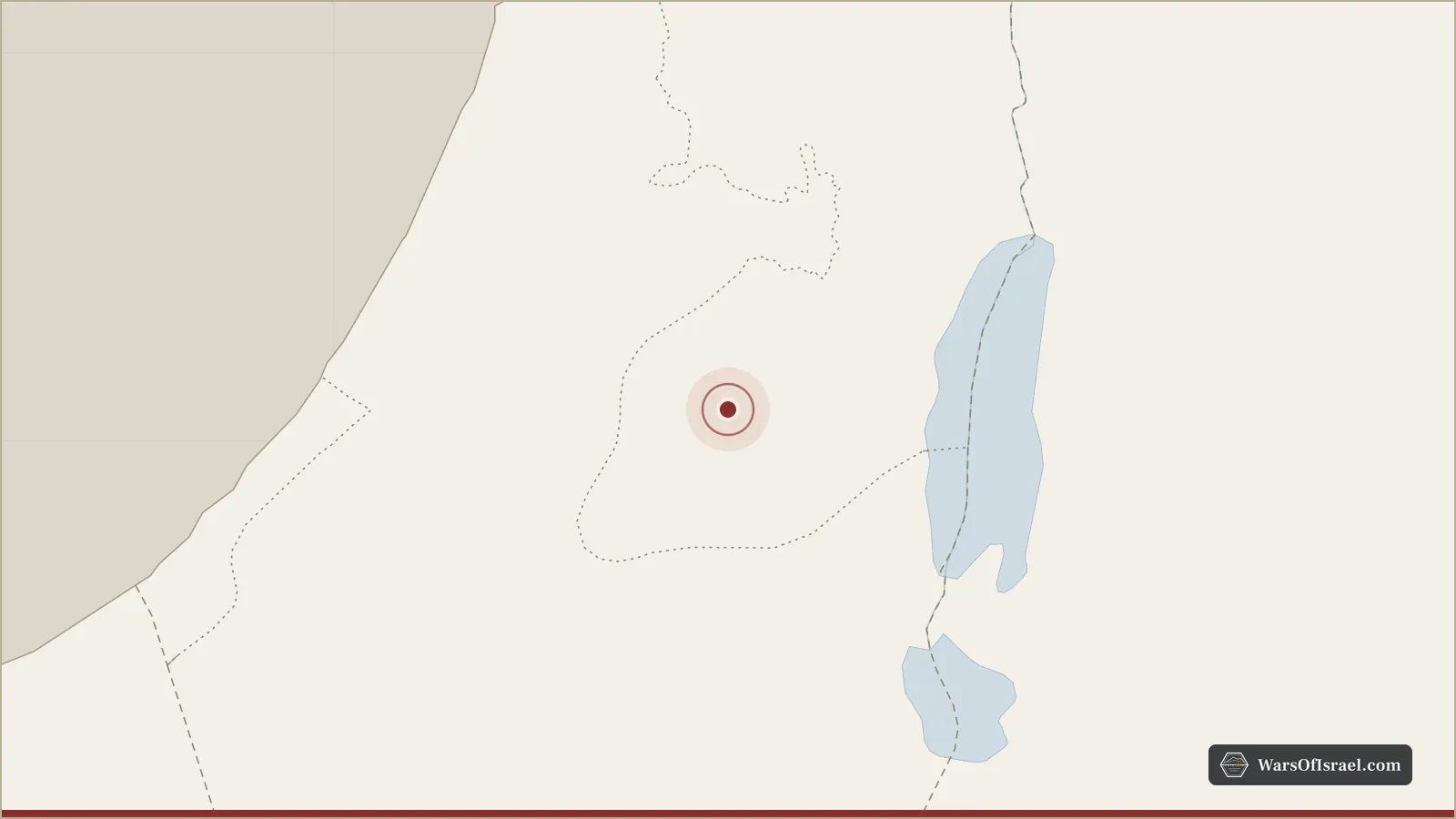
As of October 30, 2026, reports that Israel could reduce or end its deployment in an evacuated Hebron neighborhood had not become an announced withdrawal decision. Senior commanders reportedly favored leaving, while Prime Minister Benjamin Netanyahu and Defense Minister Israel Katz had insisted that troops remain. The dispute followed the October 23 shooting attack that killed two Israeli soldiers, and continued after Israel's October 27 election.
The immediate question was whether holding the neighborhood still served a military purpose. It was also a question of when Palestinian residents could return. Reporting on the command dispute, the scale of displacement and separate court proceedings describes different parts of that question, which should not be collapsed into a single account of an agreed policy.
Commanders' assessments and the political leadership's position
Walla military correspondent Amir Bohbot reported on October 27 that Chief of Staff Eyal Zamir, Central Command chief Avi Bluth and 98th Division commander Meni Liberty favored withdrawal. Officers told Walla the operation had exhausted its purpose and that remaining in the neighborhood risked worsening tension and encouraging further attacks. The Jerusalem Post carried Bohbot's reporting and explicitly credited Walla for revealing the disagreement.
The same reporting described Netanyahu and Katz as opposing withdrawal. Security officials defending continued deployment argued that the operation had exposed a substantial local Hamas network and invoked the experience of operations in northern Judea and Samaria. They said maintaining an Israeli presence could prevent armed organizations from rebuilding and deny the Palestinian Authority a foothold in areas under military control.
These are competing assessments reported by journalists, not published minutes of a command meeting. Walla also reported that investigators were examining possible direction of the Hebron network from Hamas operatives in Turkey. An inquiry into that possibility is not evidence that overseas direction has been established.
On October 29, the Post's Yonah Jeremy Bob separately reported that a reduction or exit might occur over the approaching weekend. He expressly described the outcome as uncertain. Expectations that Netanyahu might become more flexible after the election were presented as expectations, not as a decision or a demonstrated explanation of his motives.
The searches changed the evidence available
The officers' October 27 argument included the claim that hundreds of searches in the evacuated neighborhood had found no weapons, ammunition or weapons-production facilities. That was an account of a particular area at a particular stage, not a final inventory of the entire Hebron operation.
On October 28, Srugim reported an IDF announcement that an M16 rifle, knives, a vest and a replica pistol had been seized in Hebron. It also reported six arrests in villages in the Judea Brigade area, including suspected Hamas members. The report did not establish that all those findings came from the neighborhood at the center of the withdrawal dispute.
On October 30, the IDF separately announced that it had demolished the homes of the two gunmen involved in the October 23 attack. It identified the fallen soldiers as Ron Yonatan Roitman and Yuval Shai Soilem. The announcement shows that operations continued while the withdrawal question remained unresolved; it does not itself answer whether the wider residential deployment would be reduced.
The site's report on the launch of the Hebron operation covers its immediate trigger. By October 30, the issue had moved from the opening searches to the rationale and conditions for remaining.
Displacement figures describe different populations
The Post's October 29 report referred to at least 2,000 evacuated Palestinians. Earlier military information, reported by Walla on October 24, described approximately 2,000 residents of the relevant area and their connection to the Jaba'a clan, which the military associated with Hamas. The military's characterization of a clan does not establish individual involvement by every resident.
The Post also reported municipal figures cited in an Adalah petition: 780 affected families comprising up to 4,969 people. The petition concerned Ein Deir Baha and al-Jalda in western Hebron and challenged evacuations, demolitions and restrictions on returning home and accessing services.
These figures should not be presented as interchangeable counts of confirmed evacuees. They come from different sources, use different descriptions of who was affected and were reported at different stages. The petition also describes restrictions on residents who stayed home. Its affected-population figure should therefore not automatically be labeled a count of people who left.
According to the Post, Adalah filed the petition on October 29 for the municipality and seven residents. Separately, ACRI executive director Noa Sattath condemned the measures as collective punishment. The Post reported that Finance Minister Bezalel Smotrich had described demolitions as deterrence and as exacting a price for the attack. These are attributed characterizations, not a judicial determination of the entire operation's legality.
Two legal proceedings and an unresolved return timetable
The procedural history requires care. In an October 26 report, the Post described a separate petition concerning two commercial compounds near Hebron's northern entrance. It reported that Justice Gila Canfy Steinitz had requested the state's response and expected the existing situation to be preserved pending a further decision. That account concerns the business-demolition case, not a ruling on the broader evacuation petition filed on October 29.
The available reporting does not justify treating that procedural direction as a blanket ruling on every later demolition. Nor does a request for a state response settle the merits of residents' claims.
The wider background includes Israeli counterterrorism operations in Judea and Samaria and the separate dispute over return timetables for evacuated northern camps. In Hebron, the practical issues remained specific: whether troops would leave the neighborhood, what conditions would govern residents' return, and what explanation the state would give for continued restrictions. None was resolved by a reported expectation of flexibility after election day.