News
Houthi strikes on Riyadh airport widen the Yemen war, and reports describe an Israeli intelligence role on Saudi Arabia's side
How the renewed war between the Houthis and Saudi Arabia, fought far from Israel's borders, touches Israel's security and its regional diplomacy.
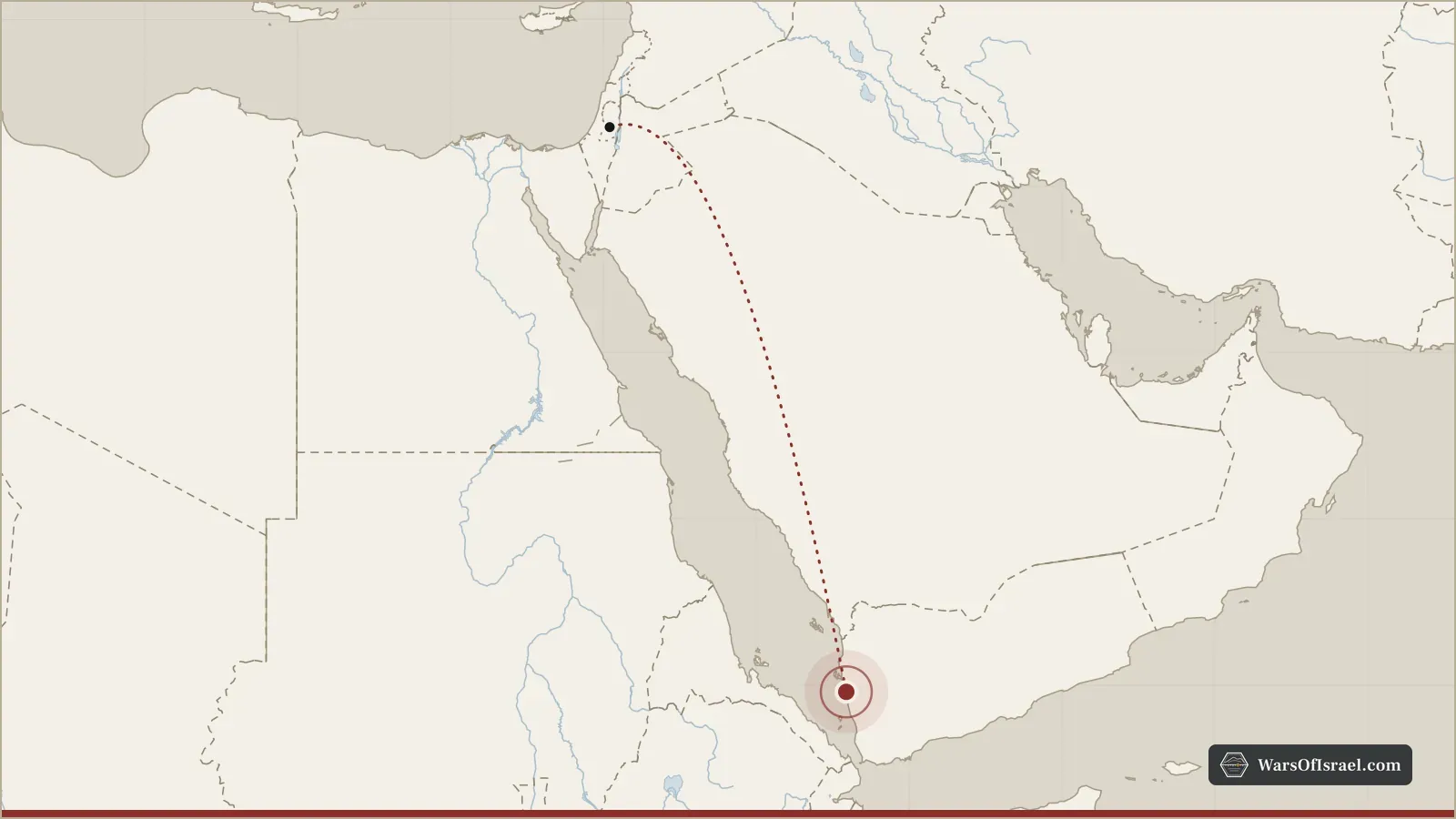
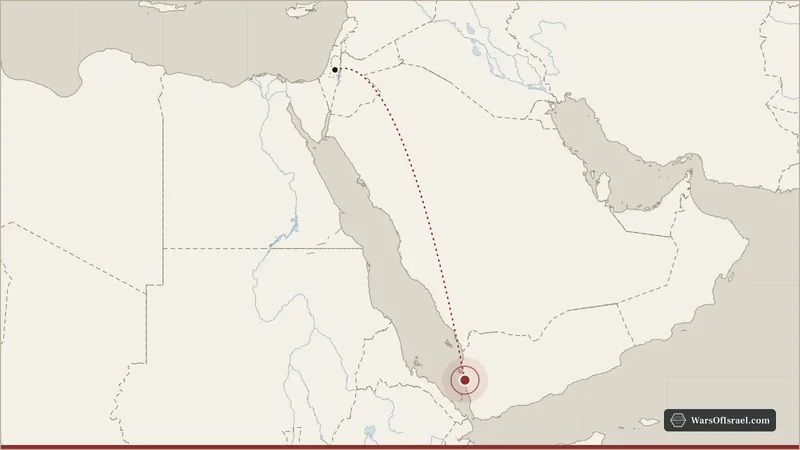
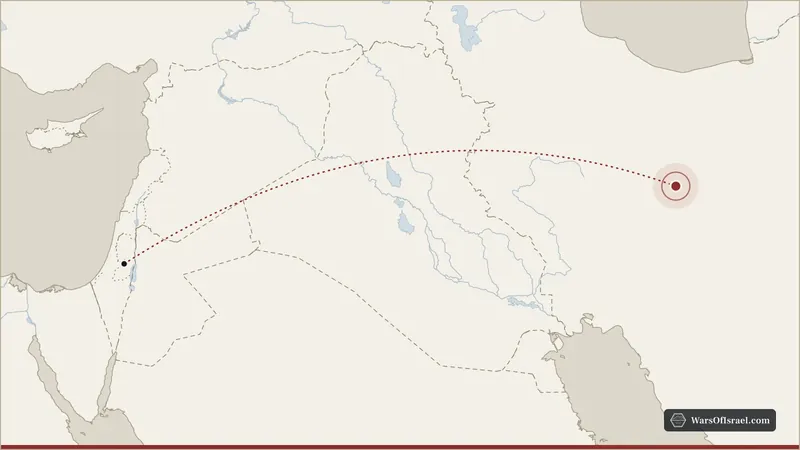
The Houthi movement in Yemen, which fired missiles and drones at Israel for much of the war that began on October 7, 2023, has turned its heaviest fire on Saudi Arabia. On October 10, 2026, a Houthi missile attack on King Khalid International Airport in Riyadh killed at least 12 people and wounded 309, according to Saudi authorities cited by Reuters, which called it the deadliest attack in the kingdom in more than a decade. Attacks on the airport continued on the following days. For Israel the war is distant but not foreign: Israeli intelligence is reported to be helping Saudi Arabia through the US military, President Donald Trump has publicly praised that help, and a new report says the Houthis are trying to build a missile with the range to reach Israel. In reviewing the reporting for September 18 to October 18, 2026, Wars of Israel found no confirmed report of a Houthi attack on Israel.
The attacks on Riyadh
The facts of the airport attacks are confirmed by Reuters, the Associated Press and Al Jazeera. Reuters reported that the October 10 strike was the third on the airport that week, that the two earlier attacks had killed four people and damaged a commercial airliner, and that the dead on October 10 included four Saudis, two Bangladeshis and one person each from the United States, Jordan, Palestine, Syria, Sudan and Egypt, according to the Saudi civil aviation authority. Later reports cited by Al Jazeera put the toll of that strike at 13. On October 11 a further attack killed one person and wounded 11, the Saudi civil aviation authority said, according to Reuters as cited by the Times of Israel.
On October 12 the Saudi-led coalition said it had intercepted three Houthi ballistic missiles aimed at Riyadh and Khamis Mushait, according to Al Jazeera. Houthi spokesman Yahya Saree said the group was targeting the Riyadh airport and warned international airlines away from Saudi airports other than those of Mecca and Medina. Saudi officials opened an inquiry into how the defenses were penetrated; two regional officials told the AP that drones were launched first to clear a path for cruise and ballistic missiles. The Times of Israel reported on October 16 that the coalition said the airport had been targeted at least 20 times that month.
How the Yemen war reignited
The background is documented by Reuters: Saudi Arabia entered Yemen's war in 2015, and a 2022 Saudi-Houthi arrangement froze the conflict. That truce unraveled during the summer of 2026, as the Houthis launched a campaign against the kingdom and took the Bab el-Mandeb chokepoint from Saudi-backed government forces. According to the Times of Israel, the civil war flared again in July. The Saudi-backed Yemeni government began a new offensive in the week of the airport attack, Reuters reported.
Responsibility is disputed in public statements. Saudi deputy minister Rayed Krimly said on October 15 that Iran continues to "arm, train and support" the Houthis and that their escalation "is encouraged by Iran," according to the Times of Israel. Iran's foreign ministry spokesman Esmaeil Baghaei rejected "any claim that Iran has played a role" and offered mediation. On October 15 the UN Security Council condemned the Houthi attacks on Saudi Arabia "in the strongest terms," the Times of Israel reported.
Israel's reported role
Israel's part in this war is reported, not officially declared. On September 15, 2026, regional diplomatic sources told Ynet that Israel was providing Saudi Arabia with intelligence on the Houthis, routed through US Central Command, and that the aid "does not involve operational support or direct Israeli participation in the fighting." Israel has not officially confirmed the arrangement. Asked on October 13 whether Saudi Arabia had requested help, Prime Minister Benjamin Netanyahu said that "there are barely any Middle Eastern states that aren't asking us for help," according to the Times of Israel. On October 16 Trump told reporters that "Israel's been very helpful to Saudi Arabia" and that Saudi-Israeli normalization could return "maybe more than ever"; the Times of Israel noted that it was unclear whether he meant help against the Houthis specifically.
The longer-term concern for Israel was set out in a Wall Street Journal report summarized by The Week on October 15, 2026. Citing the arms monitor Conflict Armament Research, it said the Houthis are trying to produce their own version of Iran's Kheibar Shekan ballistic missile, with a possible range of up to 2,000 kilometers, after Yemeni authorities intercepted two shipments of missile components from a Chinese supplier in 2025. The extent of their progress is unclear, the report said.
What it means for Israel
The analysis of Wars of Israel is that the Yemen war has changed the Houthis' place in Israel's threat picture without removing them from it. The record of the Israel-Houthi conflict since 2023 shows a group that kept attacking Israel through the Gaza war and resumed fire during the 2026 war with Iran. For now its missiles are aimed at Riyadh, and Israel's reported contribution is intelligence rather than strikes. But the same campaign that pulls Saudi Arabia and Israel closer, as Trump suggested, also gives the Houthis combat experience against modern air defenses. As of October 18, 2026, neither the war in Yemen nor the Houthi threat to Israel has ended.