ConflictSince October 7, 2023Reference entry
Israel and the Houthis in Yemen (from 2023)
How a movement based 2,000 kilometers away became an active front against Israel, and how Israel learned to strike back at that distance.
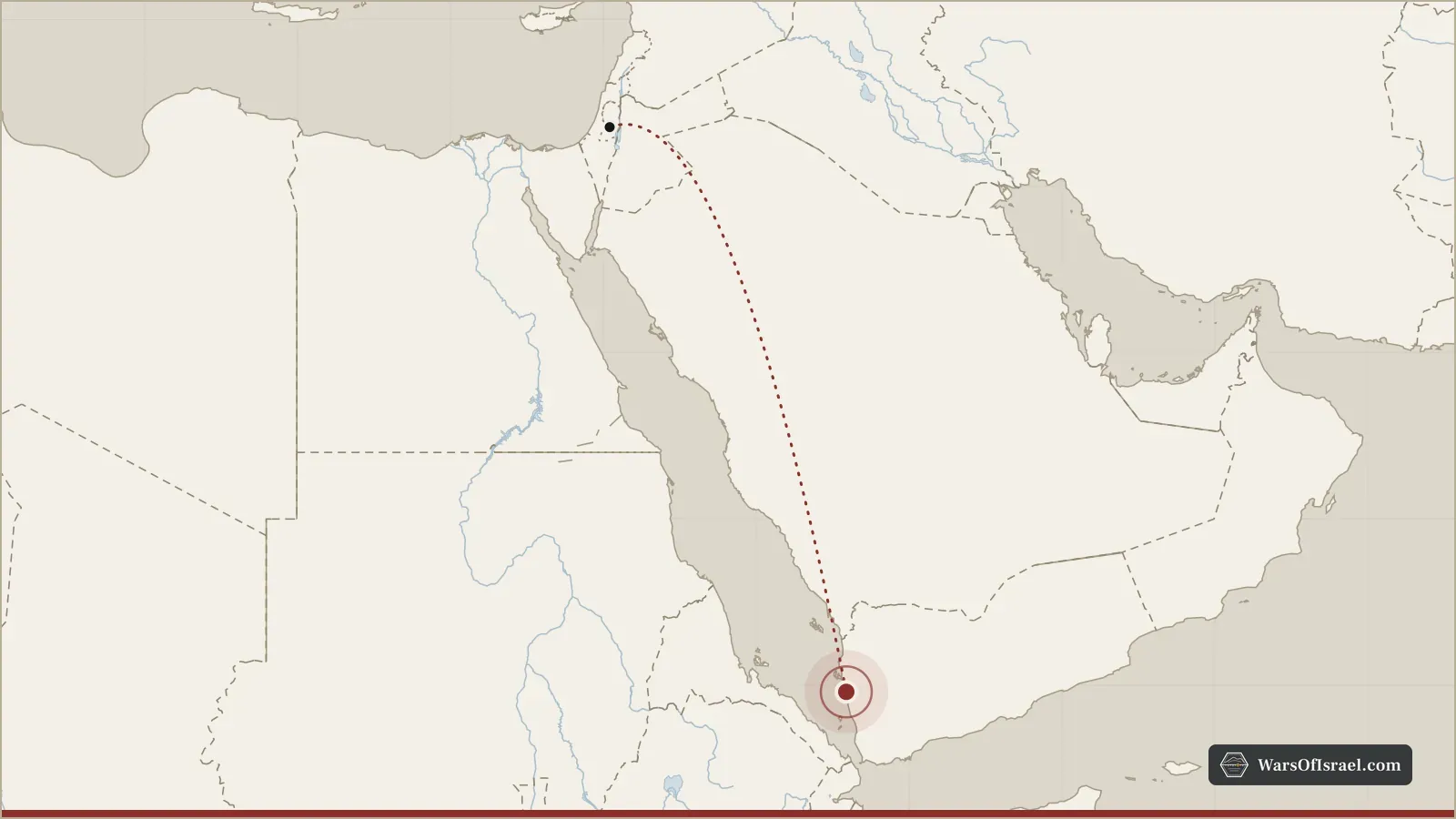
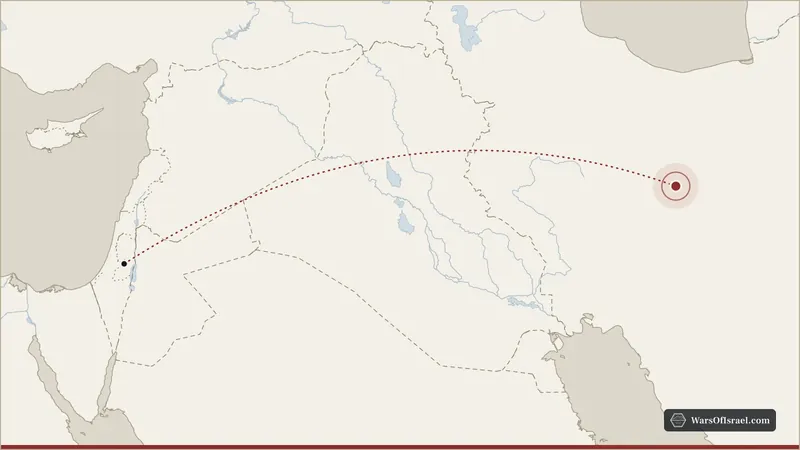
On October 19, 2023, twelve days after the Hamas attack on southern Israel, the US destroyer USS Carney shot down cruise missiles and drones over the Red Sea that the Pentagon said had been launched from Yemen and were possibly heading toward Israel. The Houthi movement, which calls itself Ansar Allah and controls Sanaa and much of northern Yemen, went on to fire hundreds of missiles and drones at Israel, to attack merchant shipping in the Red Sea and to declare a blockade of Israeli ports. Israel, about 2,000 kilometers away, answered from July 2024 with strikes on ports, power stations, Sanaa airport and, in August 2025, the Houthi government. The front went quiet in October 2025, flared again in 2026 and remained open as of October 2026.
Background: a movement allied with Iran
The Houthis grew out of a Zaydi Shiite revivalist movement in northern Yemen in the 1990s, took Sanaa in September 2014 and from 2015 fought a Saudi-led coalition backing the internationally recognized government. Iran supplied them with missiles and long-range drones. Before 2023 they had never attacked Israel.
After October 7, 2023, the Houthis declared that they were joining the war in support of Gaza. Their spokesman Yahya Saree first claimed launches at Israel on October 31, 2023. Most of the early missiles were aimed at Eilat and were intercepted by Israel's Arrow system, in its first operational interceptions, or by US and other warships.
What happened
The Red Sea and the attack on Tel Aviv, 2023 to 2024
On November 19, 2023, Houthi forces landed by helicopter on the Galaxy Leader, a car carrier linked to an Israeli businessman, and took it and its 25 crew to Hodeidah. Attacks on merchant ships followed, first those they said were linked to Israel and later many others. Shipping diverted around Africa, Eilat port almost stopped working, and from January 12, 2024 US and British forces struck the Houthis.
On July 19, 2024, a Houthi drone struck an apartment building on Ben Yehuda Street in Tel Aviv, killing one man and injuring about ten people. The next day Israel carried out its first strike in Yemen, Operation Outstretched Arm (Yad Aruka), hitting fuel tanks and cranes at Hodeidah port. Further Israeli strikes followed on September 29 and in December 2024, including Sanaa International Airport on December 26, after Houthi missiles hit Ramat Gan and Jaffa.
The campaign of 2025
The Houthis paused during the Gaza ceasefire that began on January 19, 2025, released the Galaxy Leader crew on January 22 and resumed after the fighting in Gaza restarted in March. A US air campaign in Yemen from March 15 ended in a US and Houthi truce mediated by Oman on May 6, 2025, which did not cover Israel.
On May 4, 2025, a Houthi ballistic missile landed in a grove near Terminal 3 of Ben Gurion Airport, injuring several people and driving many foreign airlines away. Israel struck Hodeidah on May 5 and Sanaa airport on May 6. On August 28, 2025, Israeli aircraft struck a meeting of senior Houthi officials in Sanaa. The Houthis confirmed on August 30 that Prime Minister Ahmed al-Rahawi and several ministers had been killed, and on October 16, 2025 that chief of staff Muhammad al-Ghamari had died of wounds from an Israeli strike. In September 2025 a Houthi drone hit the passenger terminal at Ramon Airport near Eilat, and on September 24 a drone struck the center of Eilat and injured about 22 people, according to Magen David Adom.
After the Gaza ceasefire, 2025 to 2026
When the Gaza ceasefire took effect on October 10, 2025, the Houthis halted their attacks. After the United States and Israel went to war with Iran on February 28, 2026, after the June 2025 war, the Houthis entered that war on March 28, 2026 with a ballistic missile launch at southern Israel, followed by more in early April. They paused after the April ceasefire in the Iran war and fired again in June. Later in 2026 they mostly targeted Saudi Arabia and Yemeni government forces; on October 17, 2026, according to France 24, they claimed a missile strike on the airport in Aden.
Significance
The conflict with the Houthis was the longest-range war Israel has fought. It showed that a movement armed by Iran could disrupt a global trade route, close an Israeli port in practice and send millions of Israelis to shelters with one missile. It also pushed Israel to strike repeatedly 2,000 kilometers from home. Unlike Hamas and Hezbollah, the Houthis kept their territorial base, and as of October 2026 they could reopen the front at will. The Houthi front belongs to the wider story of the Israel and Hamas war.