News
US expands Iranian-backed network case with accusations over a plot against RAF Fairford
The November 10 superseding indictment adds two defendants and describes a September plot, including messages prosecutors say were sent from jail.
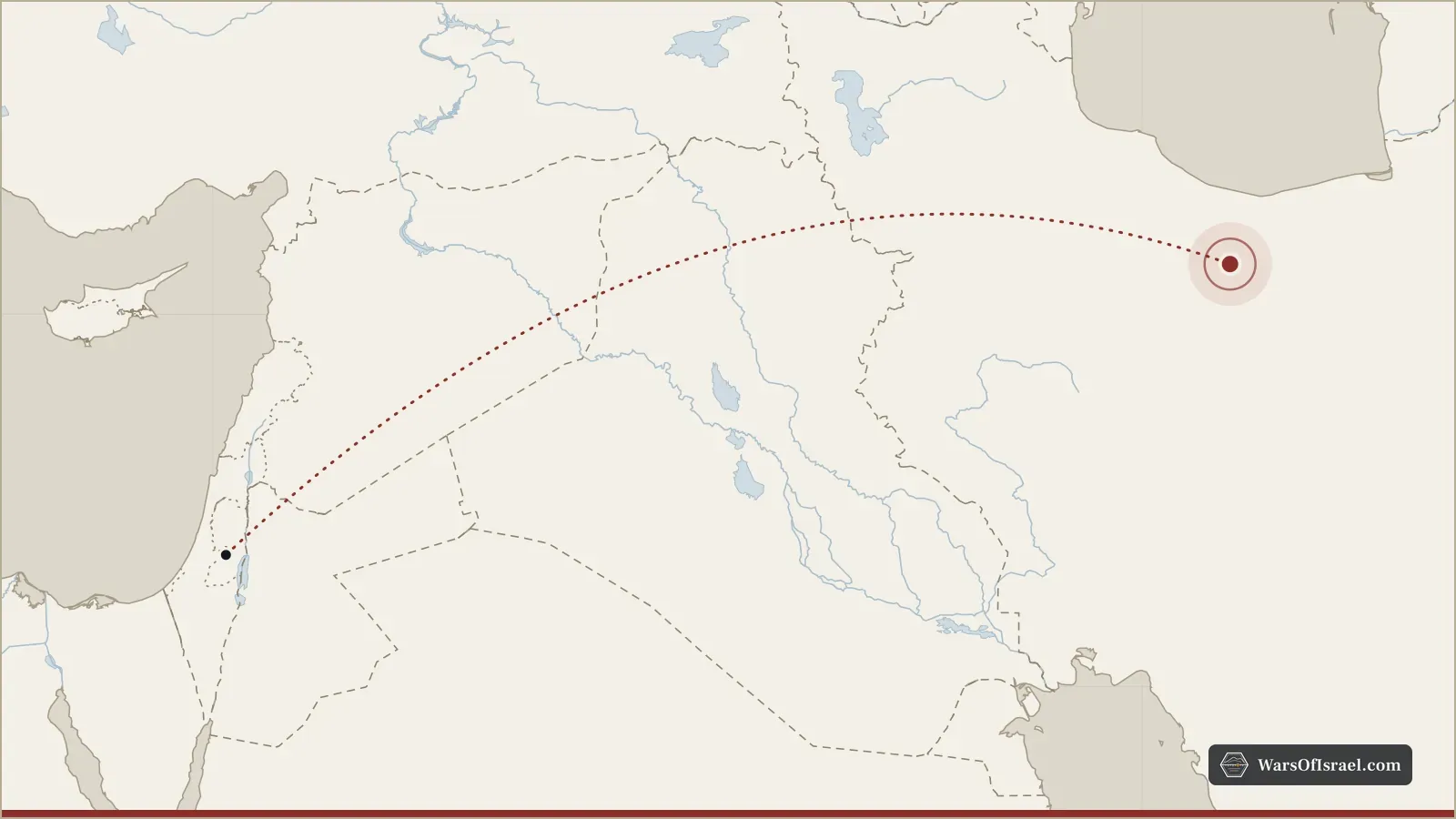
As of November 11, 2026, US prosecutors have expanded a terrorism case against an accused Iranian-backed operative to include two additional defendants and a claimed connection to a September plot against RAF Fairford in Britain. The Justice Department announced the eight-count superseding indictment on November 10. It says the defendants supported Iran's Islamic Revolutionary Guard Corps and the Iraqi group Kata'ib Hezbollah. These are prosecution allegations, not findings of guilt; all three defendants are presumed innocent unless proved guilty in court.
The new filing expands an existing case
The defendants named in the court document are Mohammad Baqer Saad Dawood al-Saadi, Mohsen Mohajeri and Mohammed Ali al-Hassani. The Justice Department describes al-Saadi as an Iranian-Iraqi dual national, Mohajeri as Iranian and al-Hassani as Iraqi. The department says the IRGC and Kata'ib Hezbollah are US-designated foreign terrorist organizations.
The November 10 Justice Department announcement (opens in a new tab) describes a case encompassing nearly 20 attacks and attempted attacks in Europe and the United States. Its charges include conspiracies to provide material support to the two organizations, a conspiracy to bomb a place of public use and terrorism financing. Not every count applies to every defendant, according to the department's published charge table.
Al-Saadi had already been indicted in May. The Southern District of New York's May 28 announcement described accusations concerning attacks in Europe and an attempted attack on a New York synagogue. That earlier announcement said he had been detained abroad and transferred to FBI custody on May 14.
The November development is therefore an expansion of an existing prosecution, not the first disclosure of the entire alleged network. The new filing names Mohajeri and al-Hassani alongside al-Saadi and adds the Fairford account to the publicly described case.
The Fairford accusation concerns events in September
According to the November announcement, RAF Fairford housed American military personnel and aircraft at the time of the suspected plot. Prosecutors accuse al-Hassani of organizing it while he and Mohajeri were in Iran, relying on contacts in Britain. They also accuse al-Saadi of attempting to coordinate with them while imprisoned in New York awaiting trial.
The department says al-Saadi used telephone calls with relatives to pass coded messages through intermediaries. That is the prosecution's interpretation of the communications. The announcement is not a judicial ruling that the calls carried the meaning prosecutors assign to them.
The Justice Department dates the attempted operation to September 26 and describes British authorities recovering vehicles and arresting their occupants in the early hours of September 27. Its account describes a disrupted plot, not a successful attack on the base. The filing's publication on November 10 should not be mistaken for the date of the suspected operation.
The connection between the calls, the defendants abroad and the activity in Britain is a central part of the case prosecutors must prove. A chronology can show events occurring close together; the legal claim that they formed a coordinated conspiracy requires evidence connecting the participants and their intentions.
Prosecutors connect the case to attacks on Jewish targets
The November release describes attacks carried out under the name Harakat Ashab al-Yamin al-Islamiya, abbreviated HAYI, which prosecutors characterize as a front for Kata'ib Hezbollah and other designated groups. It says HAYI claimed responsibility for 18 European attacks in the spring of 2026, seven of them in Britain.
Those figures overlap with the department's broader description of nearly 20 attacks and attempted attacks. They should not be added together to produce a larger total. Nor does a claim of responsibility establish each defendant's role in every incident.
The department says its evidence includes recordings and images connecting the defendants to planning, directing and publicizing attacks. The earlier May announcement similarly described material taken from al-Saadi's phone and statements investigators said he made after entering US custody. Those descriptions identify the evidence the prosecution intends to use; they do not replace its examination in court.
The relevance to Israel's security extends beyond the location of the suspected British plot. In the May announcement, US officials explicitly described the case as involving threats to American and Israeli interests. The site's history of the 2026 Iran war provides the military background, while its October report on the Iran front addresses the wider issue of threats outside the immediate battlefield.
What the announcement does and does not establish
The filing establishes that US prosecutors have brought an expanded set of accusations. It does not establish that all three men committed the charged offenses, that every claimed attack succeeded or that a specific Iranian leader authorized each incident. The November release announces no verdict.
The official material examined for this report does not include a defense response to the new indictment. It therefore cannot resolve disputes over the interpretation of recorded calls, the completeness of the evidence or individual responsibility. The May and November releases are also accounts from the same prosecuting authority, rather than independent corroboration of its allegations.
The substantive development is the formal addition of defendants and the Fairford allegations to the US case. Whether the evidence proves the claimed links between an overseas network, imprisoned suspects and attacks on civilian and military targets remains a matter for the court.