The Israel and Iran war of 2026 (Operation Roaring Lion)
How Israel and the United States went to war with Iran a second time in eight months, what the forty days of fighting cost, and why the ceasefire that followed never became peace.
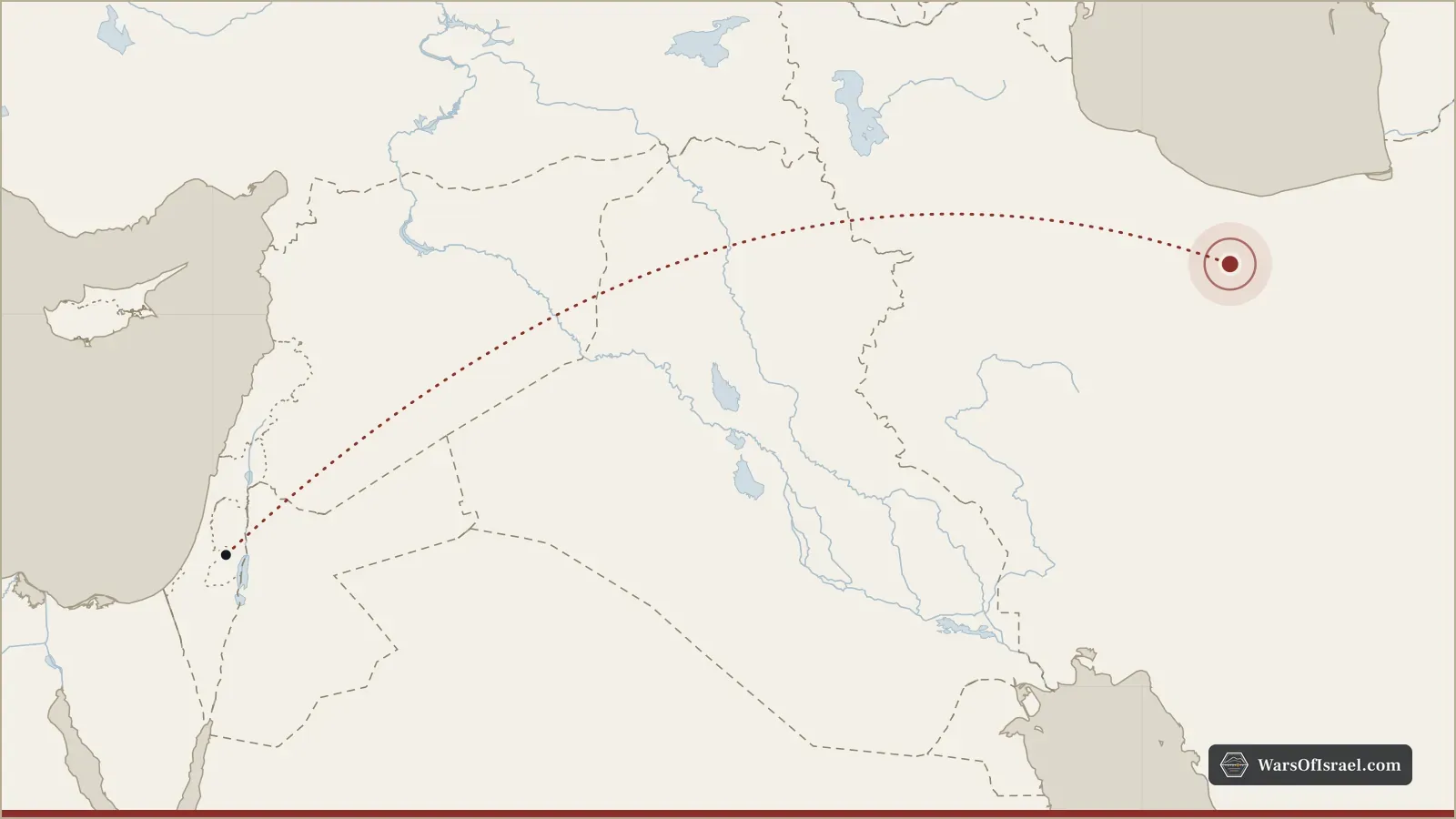
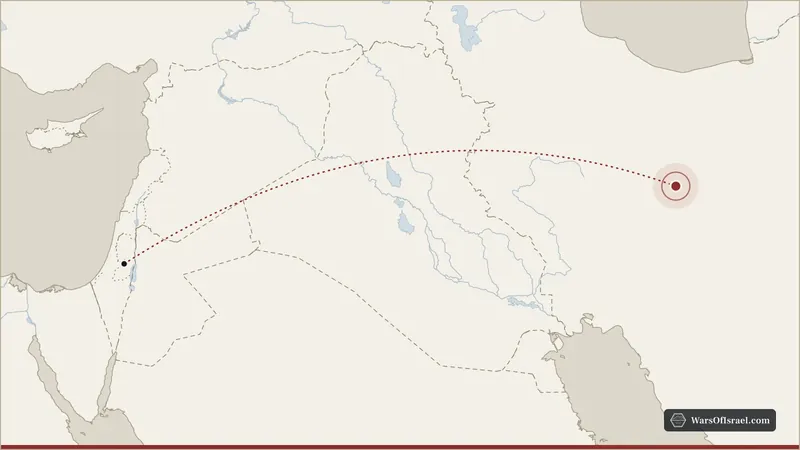
On the morning of February 28, 2026, Defense Minister Israel Katz announced that Israel had launched a preemptive strike against Iran. Within the hour President Donald Trump said that the United States, too, had begun major combat operations. Israel called its part of the campaign Operation Roaring Lion (in Hebrew, Mivtza Sha'agat HaAri), a name chosen by Prime Minister Benjamin Netanyahu as a deliberate echo of Rising Lion, the operation of June 2025; the American name was Operation Epic Fury. The first wave killed Iran's Supreme Leader, Ali Khamenei, in his compound in Tehran. Iran answered with ballistic missiles at Israeli cities and at American bases and Gulf states, and choked shipping in the Strait of Hormuz. After forty days a ceasefire mediated by Pakistan took effect on April 8. It held between Israel and Iran, with one exception in June, but the American and Iranian arrangement broke down on July 8, and as of October 18, 2026 the war between Washington and Tehran had not formally ended.
Eight months after the twelve days
The June 2025 war had ended with a ceasefire on June 24, 2025, and with a question no one could answer: how much of Iran's nuclear program had survived. Iran suspended cooperation with the International Atomic Energy Agency in July 2025, so the fate of its stock of highly enriched uranium could no longer be verified. At the end of September 2025, after Britain, France and Germany invoked the snapback mechanism of the 2015 nuclear agreement, UN sanctions on Iran were reimposed.
Inside Iran, the winter brought a different kind of crisis. Security forces put down a wave of anti-government protests in December 2025 and January 2026; the US-based Human Rights Activists News Agency (HRANA) later put the death toll of that crackdown at more than 7,000. In February 2026 American and Iranian negotiators, meeting through Omani mediation, failed to reach a nuclear agreement, while the United States assembled its largest military presence in the region in years.
Around Israel, the regional map had shifted since 2023. The war with Hamas in Gaza had passed through a ceasefire in October 2025, and the war with Hezbollah of 2023 to 2024 had left Iran's strongest ally badly weakened, though still armed. Israel had also struck Iran directly in October 2024 before the open war of 2025. For Israel the long-term logic had not changed. Its leaders argued that Iran was rebuilding its missile force and could not be allowed to recover the nuclear capability it had lost. What was new was the scale of American participation. In June 2025 the United States had joined at the end, with a single strike on Fordow. In 2026 it fought from the first hour.
The aims and the forces
The two allies stated their aims differently. Netanyahu spoke of removing the "existential threat" posed by the regime in Tehran; British parliamentary researchers, summarizing the public record in July 2026, described the joint aims as degrading Iran's nuclear and ballistic missile programs and inducing a change of regime. On the Iranian side the Revolutionary Guards (IRGC) commanded the missile and drone forces that would carry the response, while Hezbollah in Lebanon, the Houthis in Yemen and Iraqi militias formed the network Iran had built over four decades.
The forces were badly mismatched in the air. The Israeli Air Force flew about 8,500 sorties in the forty days that followed, according to the military, alongside a far larger American air and naval effort. Iran's strength lay in its arsenal: the IDF assessed that Iran held about 2,500 ballistic missiles when the war began.
The course of the war
The first strike
The opening blow was aimed at the top of the state. According to the IDF, about 40 senior commanders were killed within the first 40 seconds. Khamenei died in the strike on his compound; Iranian state media confirmed his death early on March 1, after initial denials. Several members of his family were killed with him, according to the Fars news agency. On March 8 the Assembly of Experts named his son, Mojtaba Khamenei, as Supreme Leader.
On the first day a strike also hit a girls' primary school in Minab, in southern Iran. Iranian authorities told The New York Times that at least 175 people were killed. On March 11 the newspaper reported that a preliminary US military investigation had found the United States responsible: a Tomahawk missile aimed at an IRGC naval base, using outdated target data. Human Rights Watch said the findings pointed to a violation of the laws of war that could not be dismissed as a blameless mistake.
Iran's missiles
Iranian missiles were already in the air over Israel by mid-morning on February 28. A woman was killed when a missile hit a residential building in Tel Aviv. The next afternoon, March 1, a missile that evaded the interceptors destroyed a synagogue in Beit Shemesh and badly damaged the public shelter beneath it, killing nine people. It was the deadliest single impact of the war.
The pace of fire told its own story. Iran launched about 80 missiles at Israel on the first day, about 60 on the second and about 30 on the third, then settled into an average of 10 to 20 a day, according to figures compiled by The Times of Israel. In all, about 650 ballistic missiles were fired at Israel by April 8, and more than half carried cluster warheads, which scatter bomblets over a wide area and are harder to stop. Missiles killed two people in Yehud on March 9 and an elderly couple in Ramat Gan on March 18. On March 21 missiles struck Dimona and Arad in the Negev, wounding dozens; in Arad alone 71 people were hurt. On April 5 a missile killed four members of one family in Haifa.
Israel was not the only target. From the first day Iran fired at American bases and at Gulf states, with blasts reported in Bahrain, Qatar, Kuwait, the United Arab Emirates and Saudi Arabia. Shipping through the Strait of Hormuz, the route for a large share of the world's oil, slowed almost to a halt as Iran attacked tankers.
Israel's air campaign
Israeli aircraft struck across Iran for forty days. By the IDF's count they carried out more than 10,800 strikes on more than 4,000 targets and dropped over 18,000 bombs. The military said about 60 percent of Iran's estimated 470 ballistic missile launchers had been destroyed or disabled, and about 85 percent of its air defenses. Strikes also hit missile production, two of Iran's largest steel plants, and railway lines and bridges.
The killing of senior figures continued. On March 17 Katz announced that an overnight strike had killed Ali Larijani, the secretary of Iran's Supreme National Security Council, together with the commander of the Basij militia, Gholamreza Soleimani; Tehran confirmed both deaths the next day.
The other fronts
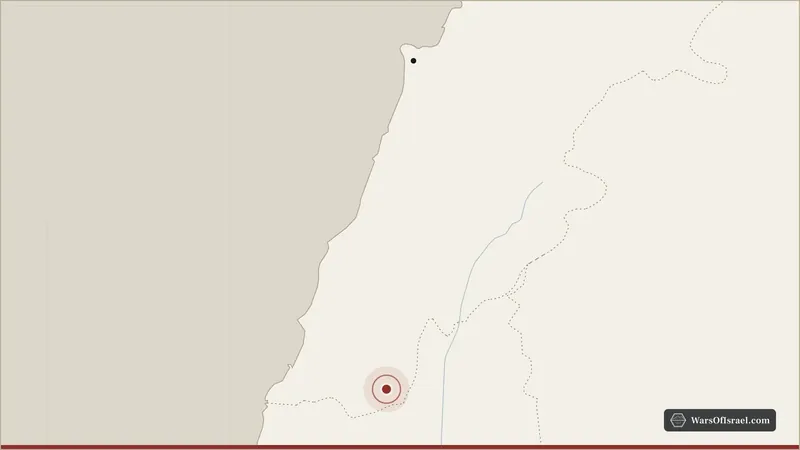
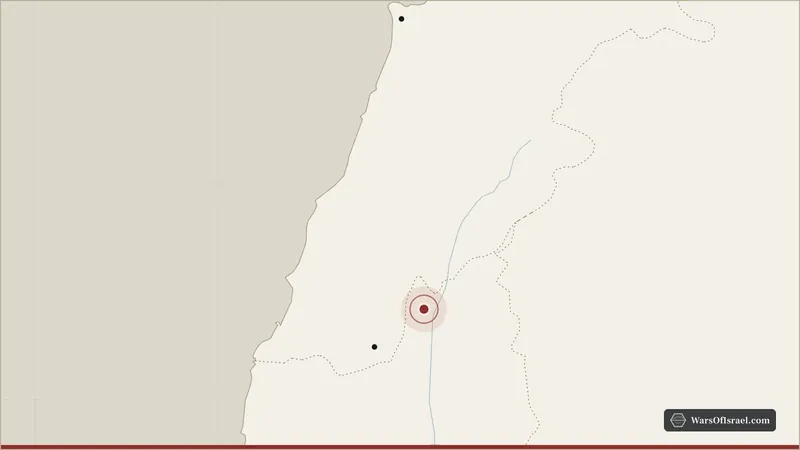
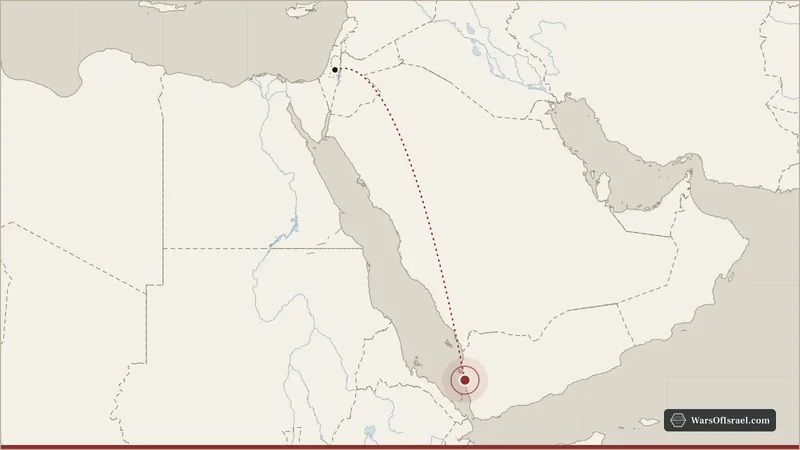
On March 2, two days into the war, Hezbollah fired at northern Israel for the first time since the ceasefire of November 2024, reopening the war described in the 2026 war with Hezbollah in Lebanon. On March 28 the Houthis in Yemen claimed their first missile launch at Israel of the war, adding a third front to a conflict that had begun in 2023. In Iraq, pro-Iranian militias attacked American sites.
The ceasefire and its collapse
On the evening of April 7 (US time), less than two hours before a deadline he had set for Iran, Trump announced a two-week ceasefire. Pakistan had mediated it, with support from Egypt and Turkey. Iran's last missiles at Israel were fired at about 3:30 a.m. on April 8. Lebanon became the first dispute: Pakistan and Iran said the ceasefire covered all fronts, while Israel and the United States said it did not, and Israel launched heavy strikes on Lebanon that same day.
Talks in Islamabad on April 11 and 12 ended without agreement, and on April 13 the United States imposed a naval blockade on Iranian ports. On April 21 Trump extended the ceasefire with no fixed end. The only direct exchange between Israel and Iran after April 8 came on June 7, when Iran fired missiles at the Ramat David airbase, saying Israel had crossed "all red lines" by striking Beirut's southern suburbs. The IDF said its defenses intercepted the missiles. Trump said he would tell Netanyahu not to retaliate, but early on June 8 Israeli aircraft struck what the IDF called military targets in western and central Iran, including a petrochemical complex at Mahshahr.
On June 17 the presidents of the United States and Iran signed a 14-point memorandum of understanding, known as the Islamabad Memorandum, which set a 60-day period for talks on shipping in Hormuz, the nuclear and missile programs and sanctions. Israel was not a party to it, and National Security Minister Itamar Ben Gvir said publicly that the agreement did not bind Israel.
It lasted three weeks. On July 8 Iran attacked commercial ships in the Strait of Hormuz, the United States struck back near the strait and, for the first time in months, at infrastructure inside Iran, and Iran fired at American bases in Kuwait and Bahrain. Trump declared the ceasefire "over." What followed was a war at sea between the United States and Iran, with mine-laying, tanker attacks, an American mine-clearing operation that US officials said had cleared the main shipping lanes by August 25, and American strikes across Iran at the beginning of September. Israel stayed out of this phase. According to Reuters, Israel and Iran had not exchanged fire since June.
The cost in lives
Every figure for this war is partial, and the totals come from different dates. According to the Israeli Health Ministry, as compiled by The Times of Israel on April 10, 2026, Iranian missiles killed 20 civilians and foreign nationals in Israel, and four Palestinians were killed in the West Bank; all 24 were civilians, and most were outside protected spaces when the missiles hit. More than 7,000 people were wounded, and the Home Front Command counted more than 5,500 displaced from damaged homes.
In Iran the toll was far higher. HRANA counted 3,636 dead by April 7, 2026, among them 1,701 civilians. The IDF estimated that about 5,000 Iranian soldiers had been killed. American losses were reported at 18 service members killed and more than 750 wounded, according to Reuters figures cited in September 2026. Iranian strikes also killed civilians and soldiers in several Gulf states. The site's guide to reading casualty figures explains why such counts diverge.
Where things stood in October 2026
As of October 18, 2026, there was no peace agreement and no formal end to the war between the United States and Iran. The Strait of Hormuz remained largely closed or restricted, the American blockade of Iranian ports was still in force, and attacks on tankers continued; the Institute for the Study of War reported two more on October 16. Its update of October 17 found nothing significant to report on American military operations or on negotiations.
In Israel, attention had shifted to the Knesset election set for October 27. In an interview with Army Radio on October 14, Netanyahu said he did not favor a preemptive strike on Iran before the vote, while warning that Israel would respond forcefully if attacked. Three days later he said that "if you don't get rid of this regime in Iran, it will come back." Israeli officials had said that Iran held more than 400 kilograms of uranium enriched to 60 percent, and its whereabouts remained a central uncertainty.
The record so far suggests a paradox. The war removed the man who had led Iran since 1989 and destroyed much of the missile force Israel feared most, yet the regime survived under his son, the strait became Iran's main lever, and the question the war of June 2025 left open, whether either side could end the conflict on its own terms, was still unanswered.
Timeline
- February 28, 2026: Israel and the United States attack Iran; Supreme Leader Ali Khamenei is killed in Tehran and Iran fires missiles at Israel and the Gulf.
- March 1, 2026: Iranian state media confirm Khamenei's death; a missile kills nine people in Beit Shemesh.
- March 2, 2026: Hezbollah fires at northern Israel, opening the Lebanese front.
- March 8, 2026: The Assembly of Experts names Mojtaba Khamenei Supreme Leader.
- March 17, 2026: Israel announces the killing of Ali Larijani in an overnight strike.
- March 28, 2026: The Houthis claim their first missile launch at Israel in the war.
- April 8, 2026: A two-week ceasefire mediated by Pakistan takes effect after about 650 Iranian ballistic missiles fired at Israel.
- April 13, 2026: The United States begins a naval blockade of Iranian ports after talks in Islamabad fail.
- June 7, 2026: Iran fires missiles at the Ramat David airbase; Israel strikes targets in Iran early the next day.
- June 17, 2026: The United States and Iran sign the Islamabad Memorandum.
- July 8, 2026: Iranian attacks on shipping in Hormuz end the ceasefire; Trump declares it over.
- October 14, 2026: Netanyahu says he does not favor a strike on Iran before the October 27 election.