News
Rubio says Iran talks are short of a breakthrough as Trump keeps diplomacy and military pressure in play
Public statements on November 8 and 9 show different assessments of the diplomatic outlook, without a published agreement or a new strike timetable.
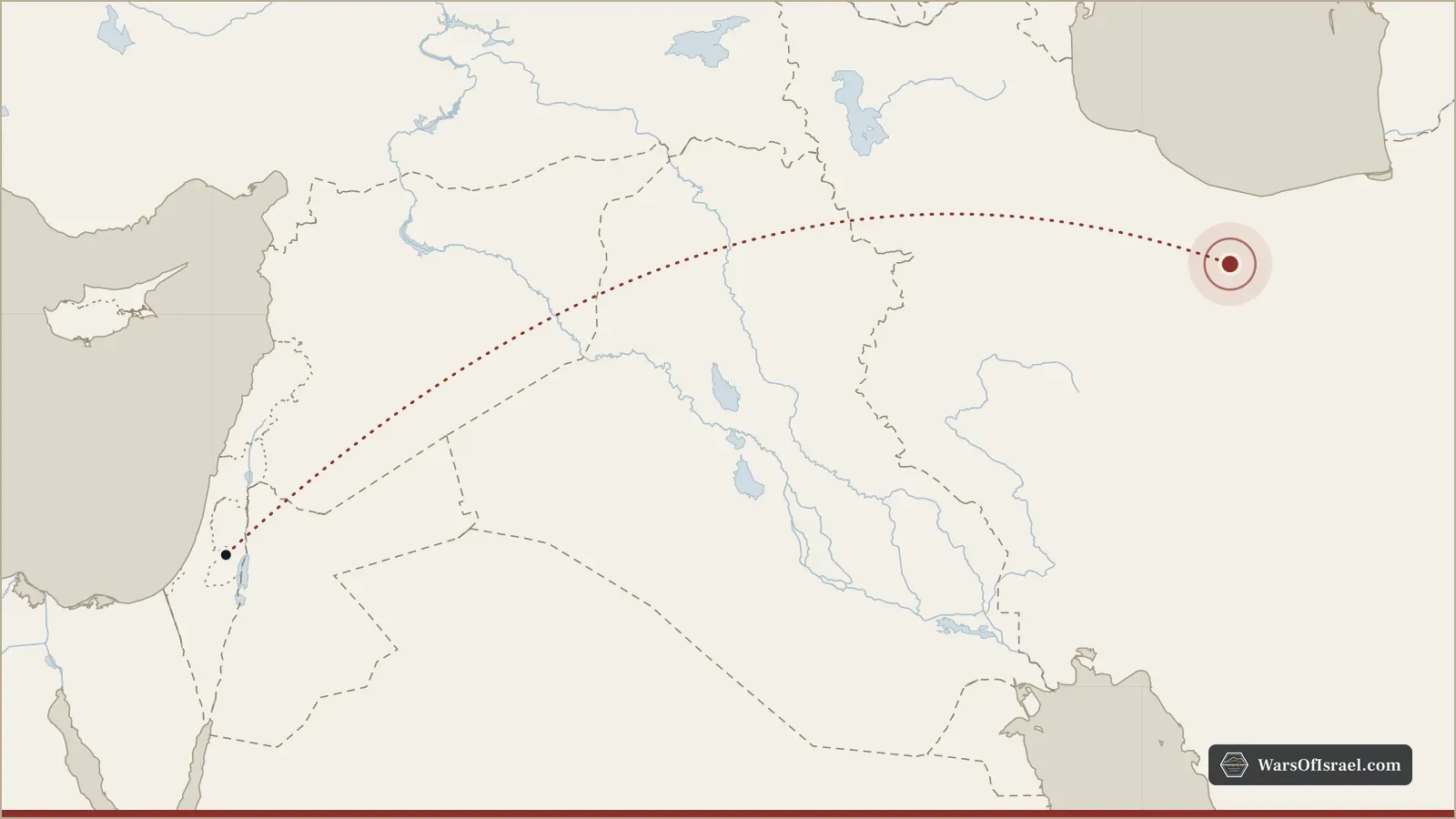
As of November 10, 2026, Washington’s public account of diplomacy with Iran remains short of an agreement. Secretary of State Marco Rubio said on November 8 that the talks had made little progress and were not approaching a breakthrough. President Donald Trump sounded more optimistic in remarks reported on November 9, while keeping further military action available. Neither account presented agreed terms or a timetable for new strikes.
The distinction matters for Israel: a president’s confidence in a possible settlement is not the same as a completed negotiation, and a warning that forces are prepared to act is not an announcement that an attack has been ordered.
Rubio describes negotiations that have not delivered
Speaking before traveling to Paris for a G7 meeting, Rubio said several countries were continuing to engage Iran with proposals, according to separate reports by Israel National News, JNS and The Jerusalem Post published on November 9. He described Iran’s demands as unacceptable and unrealistic and said the exchanges had not been productive.
That was the American secretary of state’s assessment of the talks. The reports do not provide the complete negotiating texts or an agreed record of what either side has accepted. His criticism therefore establishes Washington’s stated objection, rather than proving every disputed detail of Iran’s position.
Rubio also said Trump preferred a diplomatic solution and would pursue one if possible. In The Jerusalem Post’s account, he tied possible defensive action to threats against American forces or shipping. That language preserves an option; it does not identify an operation date, target list or Israeli role.
Read together, his comments leave room for continued negotiations despite the lack of results he described. They do not say that all diplomatic channels have closed.
Trump’s optimism does not supply agreed terms
Israel National News reported on November 9 that Trump told reporters he saw movement toward ending the confrontation and did not expect further military action to be necessary, while saying the United States remained prepared to act. The report also described his insistence that Iran must not acquire a nuclear weapon.
Trump also told CBS he was not seeking escalation.
The November 9 remarks are a presidential statement of expectations, not evidence that Iran has accepted Washington’s conditions. Trump’s confidence and Rubio’s caution can be reported together without assuming that one cancels the other, or that the difference proves a dispute inside the administration.
The practical question is what either statement commits the United States to doing. Neither public account supplies a signed text, a verification arrangement or a schedule for ending military pressure. A reader can therefore distinguish an intention to negotiate from an agreed outcome without predicting that the talks will necessarily succeed or fail.
Israel’s warning and Qatar’s documented contacts
Israel’s defense minister, Israel Katz, gave a more cautionary assessment on November 8. Speaking at a memorial ceremony for soldiers killed in the 1956 Sinai campaign, he said Iran was renewing efforts to obtain nuclear weapons and that Israel’s mission remained incomplete, JNS reported.
Katz’s statement is an attributed warning by the defense minister. The published account does not include the intelligence behind it, a technical account of nuclear activity or a timetable for acquiring a weapon. It should not be recast as an independently demonstrated nuclear breakthrough or an announced Israeli strike decision.
There is also a separately documented diplomatic channel. Qatar’s official account of a November 6 call (opens in a new tab) says Emir Sheikh Tamim bin Hamad Al Thani and Trump discussed regional de-escalation and efforts to narrow differences between the parties. It records the emir emphasizing dialogue, freedom of navigation and the security of energy supplies. It does not publish negotiated nuclear terms.
That call formed part of the context in the site’s November 6 report on Iran warnings and Qatari diplomacy. The substantive addition is the subsequent set of public assessments on November 8 and 9, not a claim that the earlier call produced an agreement.
What would change the picture for Israel
The broader military context is covered separately in the histories of the June 2025 conflict with Iran and the 2026 war. Those histories do not establish what governments will decide next.
The statements examined here leave three consequential issues unresolved: the terms the parties could accept, the means of checking nuclear commitments and the conditions under which military action might resume. Public optimism does not answer those questions, and a pessimistic assessment does not settle them either.
For Israel, the immediate picture is continued uncertainty about the outcome of American diplomacy alongside a warning from its defense minister. A published agreement, a documented change in nuclear commitments or an official operational decision would materially change that picture. The November 8 and 9 statements provide none of those outcomes.