News
Trump leaves further Iran strikes open as Qatar reports new diplomatic contacts
Qatar reports contacts with both capitals while Trump repeats his nuclear red line and leaves further military action undecided.
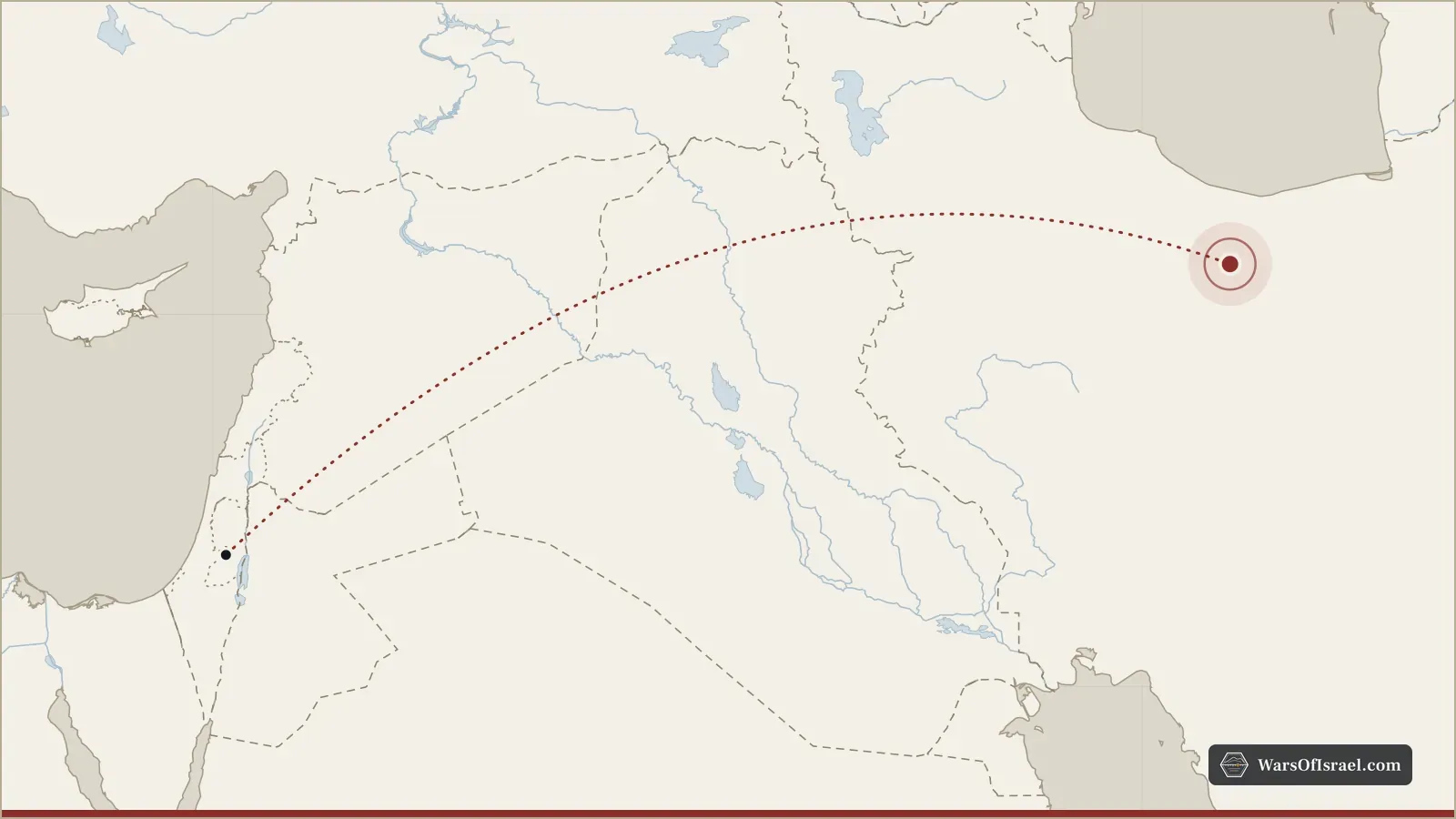
As of November 6, 2026, US President Donald Trump has left further strikes on Iran open while Qatar continues diplomatic contacts with Washington and Tehran. Trump told reporters on November 5 that he would prefer to avoid additional destruction but could order more military action. On November 6, Qatar announced a call between its emir and Trump about reducing regional tensions and advancing negotiations. Neither announcement set out an agreed settlement or an attack timetable.
Trump keeps the military option open
Speaking in the Oval Office, Trump said American forces remained ready to act and repeated his commitment to preventing Iran from obtaining a nuclear weapon, according to Israel National News. His remarks described a possible next step, rather than announcing that a new operation had begun.
Anadolu's Washington correspondent, Rabia Iclal Turan, separately reported his warning and his assertion that Washington would decide whether to go further. Trump also claimed that Iran could not act on its nuclear program without American approval. That assertion describes the president's position; it does not establish an inspection arrangement or Iranian acceptance of US supervision.
The distinction matters because a threat can serve several purposes at once. It can signal willingness to use force, pressure an adversary and preserve room for negotiations. The November 5 remarks, taken on their own, do not resolve which course Trump will choose. They also contain no announced Israeli operational role.
Qatar reports contacts with both sides
Qatar supplied a separate, attributable account of the diplomatic activity. Its Foreign Ministry said Prime Minister and Foreign Minister Mohammed bin Abdulrahman Al Thani spoke with Iranian Foreign Minister Abbas Araghchi on November 5. Doha described the call as touching on wider regional matters, steps to ease friction and a push toward a broader settlement, with Qatar flagging the importance of keeping shipping lanes open.
A day later, Qatar's official news service reported that Emir Tamim bin Hamad Al Thani took a call from Trump. Its account of the November 6 conversation (opens in a new tab) described an effort to close gaps between the sides and keep talks moving. The emir's comments centered on continued dialogue, open sea lanes and protecting energy shipments.
These accounts establish that Doha was publicly reporting contacts with both capitals on consecutive days. They do not disclose what concessions either side accepted. The November 6 readout uses broad regional language and does not identify an agreed nuclear text. It should therefore be read as evidence of an active diplomatic channel, without treating the existence of that channel as a breakthrough.
The nuclear question extends beyond a strike decision
Trump's warning followed a series of conditional statements. JNS reported on November 2 that, at a November 1 rally in Dubuque, Iowa, he said envoy Steve Witkoff was trying to secure an agreement and that stronger military action remained possible if diplomacy failed.
In a November 3 Financial Times interview, as reported by JNS on November 4, Trump said there was no immediate plan for additional strikes. He nevertheless maintained that US forces were prepared. The interview also addressed enriched uranium believed to remain beneath damaged Iranian nuclear facilities. The material's disposition was presented as a subject of discussions, not a completed removal operation.
Taken together, those statements identify a continuing problem: damaging facilities and agreeing what happens to nuclear material are different tasks. A military assessment concerns what a strike destroyed. A negotiated arrangement would also need to specify obligations and a means of checking compliance. Trump's confidence about American military power does not, by itself, supply those details.
The site's account of the June 2025 Israel-Iran war provides the earlier military context. The 2026 confrontation is a separate record; neither should be treated as evidence that a new November operation has been authorized.
What the announcements mean for Israel
The new material advances the story beyond the site's October report on the US pause and Iran front: Trump's November 5 warning is now accompanied by publicly documented Qatari contacts on November 5 and 6. It supports a report about military pressure continuing alongside mediation.
It does not support a countdown to war. An attack date, the scale of any operation and any Israeli participation remain unspecified in these announcements. Nor do the Qatari readouts establish that negotiations have settled the nuclear dispute. For Israel, the immediate significance is the continued uncertainty over the American course while a regional intermediary remains engaged with both governments.
A substantive change would be an announced agreement with identifiable commitments, an official decision to resume a major operation, or a documented change in the parties' positions. As of November 6, the statements examined here establish neither an agreed outcome nor a publicly announced timetable for renewed strikes.