News
Israel reportedly asks Lebanon to prevent Hezbollah joining renewed Iran fighting
The reported message sought Lebanese army deployment and checkpoints, while a separate military account described weapons discoveries.
Israel asked Lebanon, through American mediators, to prevent Hezbollah from opening another front if fighting with Iran resumes, according to a Kan report carried by Israel National News on November 2, 2026, and subsequently by i24NEWS. The reported message warned that Hezbollah's intervention would bring renewed fighting to Lebanon.
The request has not been established by a published diplomatic document or an official acknowledgment from the three governments in the sources reviewed through November 4. i24NEWS attributed the account to an unnamed Israeli security source speaking to Kan. The follow-on reports describe the same reporting chain, rather than separate confirmations of a negotiated arrangement.
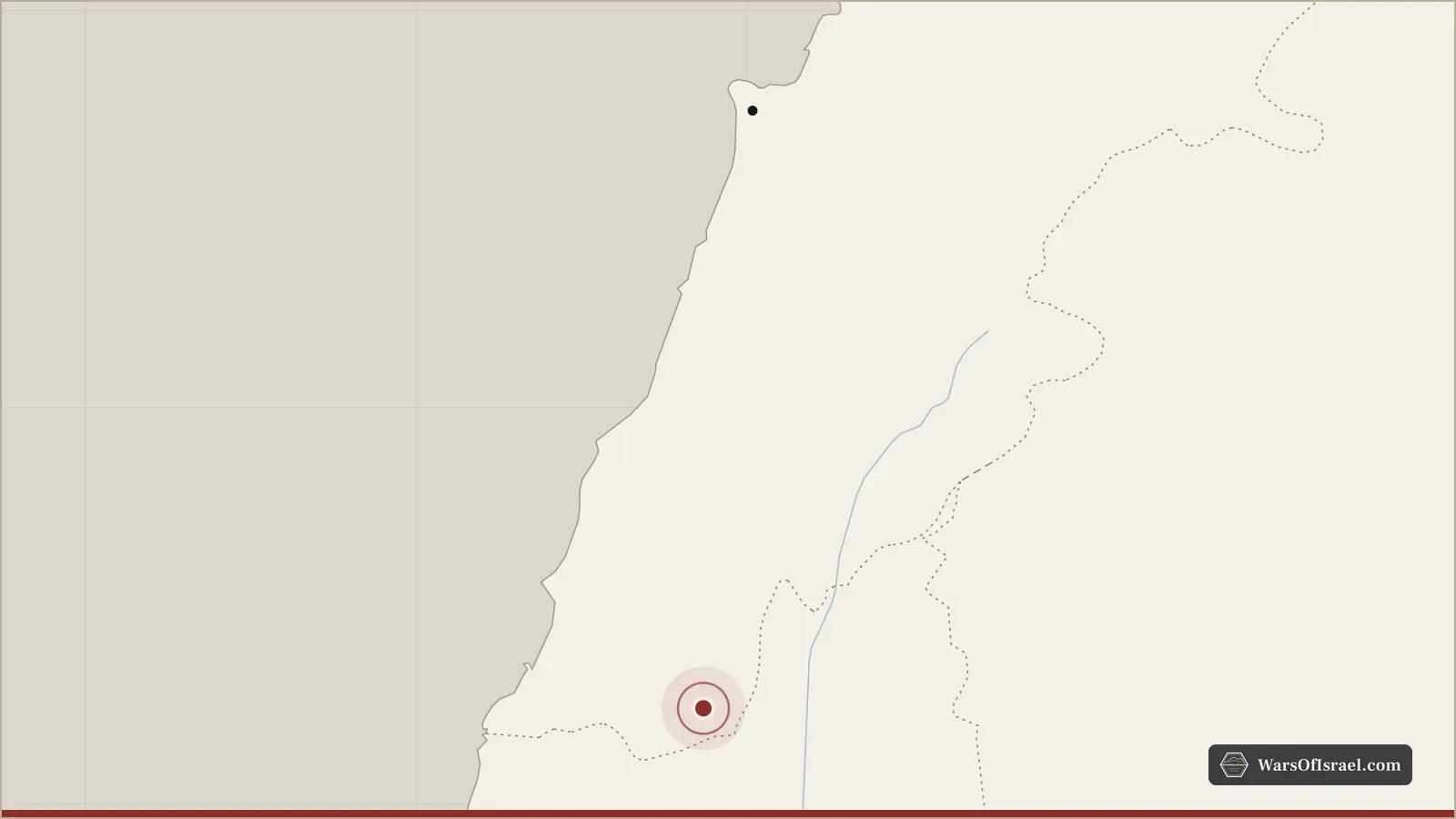
A different development preceded that report: on November 1, the IDF said troops found weapons in a southern Lebanon home and discovered a separate explosive-drone storage site in the area. That military account provides context for continuing operations, but does not confirm the diplomatic message.
The reported request concerns Lebanese army deployment
According to Israel National News's account of the Kan report, Israel sought a renewed Lebanese army deployment and checkpoints in areas where Hezbollah members live. The concern described was that pressure from Tehran could draw Hezbollah into renewed fighting if the conflict with Iran escalated again.
The reporting did not identify the American intermediary, the Lebanese official receiving the message or its precise delivery date. It also did not establish that Lebanon had agreed to the requested measures. A request for roadblocks is not evidence that roadblocks have been erected or that the Lebanese army has issued a deployment order.
The originating report dates to November 2. Its account of intensified Israeli airstrikes refers to the preceding three weeks, mainly against Hezbollah infrastructure in open areas where the Lebanese army had not deployed. No strike-by-strike record or independently established total accompanied that description. The period should not be shifted forward simply because i24NEWS published its follow-up on November 3.
A house search and a separate drone depot
Walla's November 1 report attributed the military findings to the IDF spokesperson. It said troops from Brigade 769, operating under Division 91, found weapons in a civilian home in al-Khiam. The house also contained a children's room bearing symbols associated with Hezbollah, according to that account.
The report separately described an explosive-drone storage site found and destroyed during another operation in the area. It also mentioned additional military equipment and weapons discovered during the activities. It did not establish that the depot was in the same property as the house, or that all the weapons were found inside the children's room.
JNS carried a matching account of the findings. Both reports substantially reflected the military's description; their publication by two outlets does not amount to two independent inspections of the sites. The accessed accounts did not supply the exact search dates, a full inventory, ownership records or a response from the property's occupants.
The details add to the site's earlier coverage of IDF weapons finds and Lebanese army enforcement. They should be understood as a new military announcement, without assigning the older report's dates or locations to these searches.
State authority remains the central security question
The reported diplomatic request would place the immediate burden on the Lebanese army to prevent Hezbollah's participation in another conflict. It sits within the wider dispute over armed authority in southern Lebanon and the course of the 2026 war with Hezbollah.
Security Council Resolution 1701 provides the institutional background. It calls for an area between the Blue Line and Litani River without armed personnel or weapons other than those of the Lebanese government and UNIFIL, and assigns the international force a supporting role alongside Lebanese troops. The resolution is not proof that the arrangement has been implemented throughout that area.
Nor does the resolution establish the terms of the reported November message. An instruction sought through mediators, a military weapons-discovery announcement and an existing UN framework are distinct pieces of the story. None alone demonstrates that Lebanon has accepted a new condition or that Hezbollah has decided to enter renewed fighting.
No confirmed Lebanese answer in the reporting
The sources reviewed did not include a Lebanese government or army response to the specific request, or an American acknowledgment of carrying it. That gap should not be described as a refusal to comment, because no documented inquiry and refusal was obtained.
The site's earlier report on US-Israel-Lebanon diplomacy and withdrawal claims likewise distinguished reported positions from confirmed decisions. The same distinction matters here: Israel's reported warning concerns a possible future escalation. It does not establish a Lebanese agreement, a US ultimatum or a timetable for renewed war.