News
Unconfirmed Trump withdrawal report meets Israel's Hezbollah disarmament condition
The reported offer rests on one unnamed Gulf source, while the existing security process and the parties' stated conditions leave major decisions unresolved.
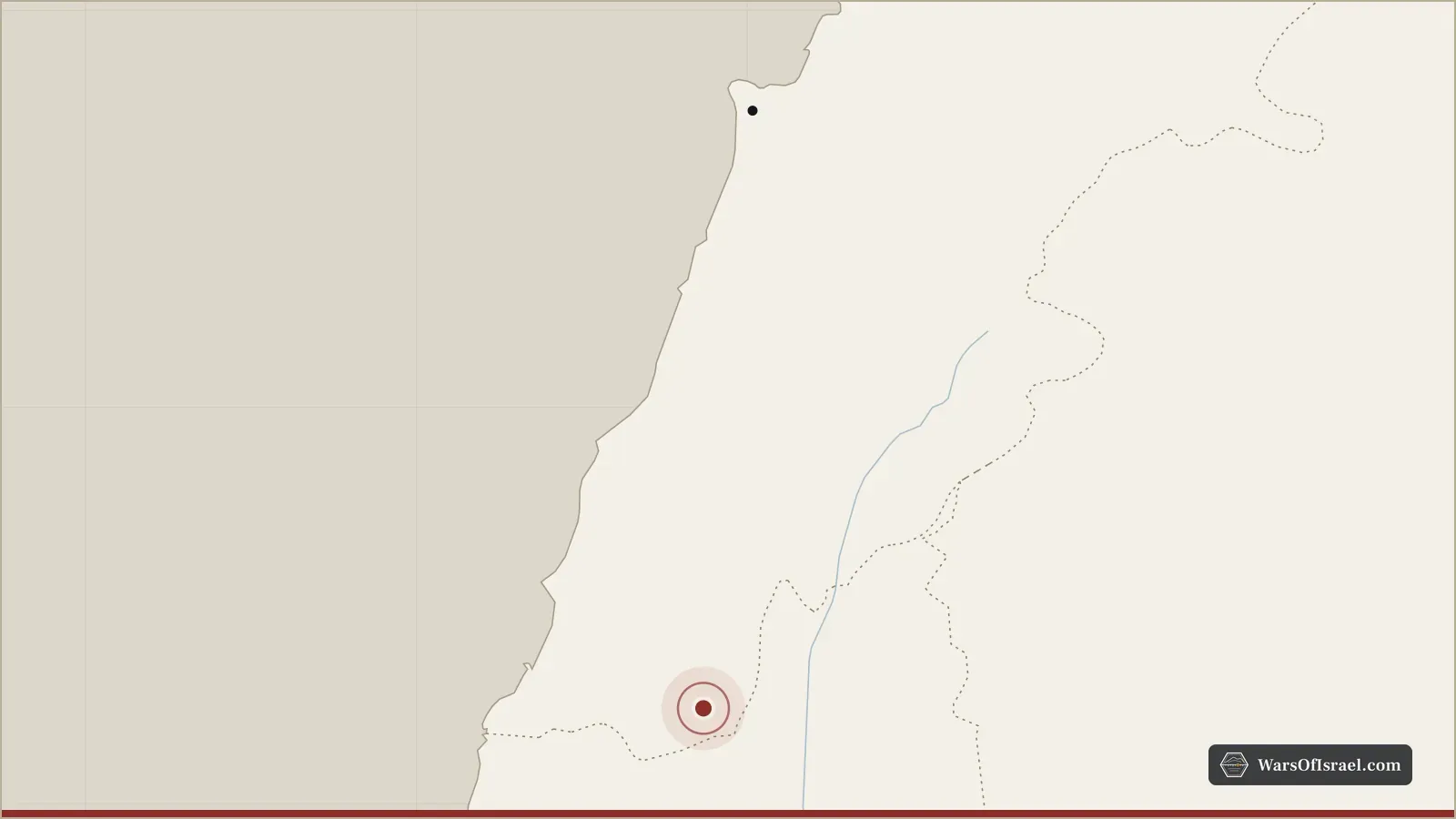
As of October 30, 2026, a Lebanese newspaper's report that President Donald Trump had promised to secure a full Israeli withdrawal from southern Lebanon in exchange for Beirut joining the Abraham Accords remained unconfirmed. The Jerusalem Post relayed the claim from Ad-Diyar and reported that senior Israeli officials continued to condition withdrawal on Hezbollah's disarmament throughout Lebanon. No agreed withdrawal timetable or Lebanese acceptance of normalization was established by that reporting.
The distinction matters because an American diplomatic assurance, an Israeli decision to move troops and a Lebanese decision to establish peaceful relations are separate steps. The report described a possible connection between them. It did not demonstrate that the three governments had reached a new bargain or removed the security conditions already under discussion.
What the report claimed and what Israel said
The Post's Anna Barsky reported on October 30 that Ad-Diyar journalist Nour Naameh had quoted an unnamed senior Gulf diplomatic source describing the supposed American assurances as official commitments. The account did not name the diplomat or the country represented, supply supporting documents, identify when the assurances were made or specify to whom they were conveyed.
The Post also noted the absence of White House confirmation in the report. All Israel News repeated the Ad-Diyar account, but that repetition does not constitute a second independent confirmation of Trump's purported promise. Both reports lead back to the same unnamed-source claim.
The Israeli officials quoted by the Post said withdrawal required Hezbollah's disarmament across Lebanon, rather than only in a strip near the Israeli border. They did not rule out a peace agreement after the threat to residents of northern Israel had been removed. Those officials were not named; their comments should be understood as the position they communicated to the newspaper, not as a newly published cabinet decision.
The two accounts consequently leave an essential question unanswered: would any proposed normalization arrangement implement the existing security conditions, change them or merely describe a hoped-for outcome? The published claim does not supply that answer.
A security framework already exists
The dispute does not begin with the October 30 report. All Israel News reported on June 27 that Israel and Lebanon had signed a US-backed framework the previous day, linking phased Israeli withdrawal with disarmament and the Lebanese Armed Forces taking responsibility for vacated areas. It described the framework as a process toward peace, rather than a completed peace agreement.
In its account, Israeli Ambassador Yechiel Leiter said withdrawal would depend on conditions on the ground rather than a fixed calendar. That distinction helps explain why an expectation of eventual withdrawal cannot be treated as a dated military commitment.
JNS correspondent Mike Wagenheim reported from President Joseph Aoun's July 21 White House visit that Trump supported strengthening the Lebanese army and wanted Lebanon eventually to join the Abraham Accords. JNS also described initial pilot-zone withdrawals. This background establishes that both army capacity and normalization were already part of American diplomacy; it does not authenticate the new claim about a particular promise by Trump.
The site's history of the 2026 war with Hezbollah places these negotiations in their military context. The continuing issue is how to translate a framework into arrangements that the parties will implement and accept as sufficient protection.
Lebanese leaders and Hezbollah describe different conditions
Lebanon's president has also focused on who would support security in the south. MTV Lebanon reported that Aoun told Irish Foreign Minister Helen McEntee on October 27 that he wanted UNIFIL to continue, or would welcome a European alternative working with the United Nations if an extension proved impossible. He said such a force could provide technical and logistical assistance to the Lebanese army.
Aoun also argued that Israeli attacks obstructed implementation of the framework and the army's extension of state authority. This was his assessment of the obstacle, distinct from Israel's emphasis on Hezbollah's weapons. The question of an international presence is covered in the site's report on UNIFIL's approaching departure.
The Post's October 30 account described Prime Minister Nawaf Salam as insisting that Lebanon's own security forces alone should exercise authority throughout the country. Hezbollah Secretary-General Naim Qassem took a different position on the group's weapons. In an October 28 statement reported by Al Kalima Online, he rejected discussing disarmament while Israeli forces remained and attacks continued. Lebanon24 separately reported his rejection of the framework as contrary to Lebanon's constitution and the Taif agreement.
Qassem also portrayed an Iran-US understanding as helpful to Hezbollah. That political assessment does not establish that Iran has issued new operational instructions to the organization, or that Washington and Tehran have settled Lebanon's security arrangements.
The decisions still missing
Taken together, the stated positions reveal a sequencing dispute: Israeli officials require disarmament before withdrawal, while Qassem makes an Israeli departure a precondition for discussing the group's weapons. Aoun and Salam emphasize state authority and the institutions needed to sustain it. None of those positions amounts to Lebanese acceptance of the Abraham Accords.
A confirmed diplomatic advance would need more than another repetition of the unnamed source's claim. Relevant evidence would include an attributable American statement, the parties' agreed security conditions and a Lebanese decision on normalization. As of the October 30 reporting examined here, the proposed exchange remained a reported possibility, while disarmament and implementation remained the substantive obstacles.