News
IDF reports weapons finds and challenges Lebanese army enforcement
New IDF figures describe weeks of searches in southern Lebanon. A separate weapons-transfer case raises an attributed allegation of failures in Lebanese army enforcement.
On 20 October 2026, the Israel Defense Forces reported destroying more than 540 terrorist infrastructure sites during recent weeks of operations in southern Lebanon. In a separate disclosure that day, the military said Hezbollah had continued using a weapons-storage site after the Lebanese army said it had addressed it.
The two announcements describe different parts of the same security problem: finding weapons on the ground and determining whether sites referred for enforcement have actually been cleared. The operational totals are IDF figures. The allegation concerning the Lebanese army is the Israeli military’s account, rather than an independently established finding about the institution as a whole.
What the ground forces reported finding
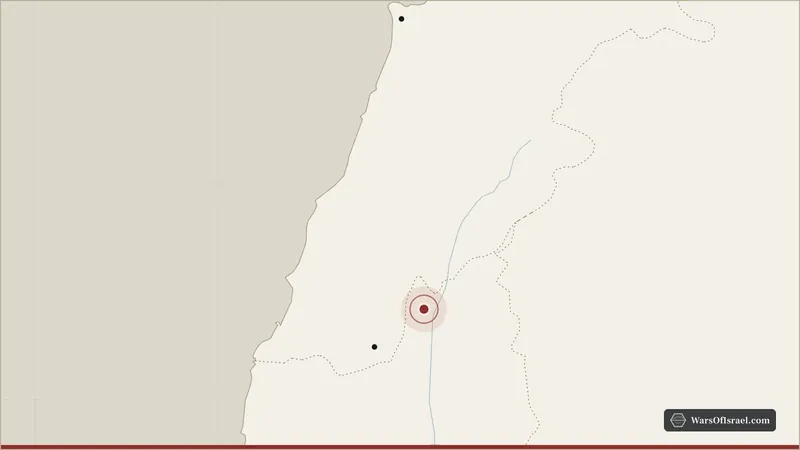
In its operational statement, the IDF said forces under the 91st Division operated around al-Khiam, Tayr Harfa, Meiss El Jabal and Majdal Zoun. It identified participating formations as the 300th, 769th and 4th brigades and the infantry training school.
The military reported finding more than 150 weapons during those operations. Its list included rockets, rocket-propelled grenades, anti-tank missiles, longer-range anti-tank missiles, launchers, rifles, pistols, explosives and ammunition magazines. Weapons-storage facilities were among the infrastructure it said it destroyed.
The figures cover activity over several weeks, not a single raid on 20 October. Nor does the statement give a separate numerical breakdown for each village or each category of weapon. The total for infrastructure sites and the total for weapons therefore measure different things and should not be combined into one count.
The IDF also said troops from the infantry training school and the Gefen battalion of Bahad 1 participated in locating weapons and destroying infrastructure. Its announcement described the purpose of the operations as removing threats to Israel.
These are reported discoveries and destruction totals within the military’s stated operating area. They do not establish how many weapons remain elsewhere in southern Lebanon or provide a comprehensive measure of Hezbollah’s surviving arsenal.
The storage site referred for enforcement
The separate disclosure concerned a site in the Kfarra area. In statements reported by JNS and The Jerusalem Post, the IDF said it had referred the Hezbollah storage asset to the Lebanese army in December 2025 through the US-led monitoring mechanism.
According to the Israeli account, the Lebanese army subsequently reported that it had dealt with the site. The IDF said Hezbollah activity was detected there months later.
The military released footage that it described as showing Hezbollah personnel placing stored weapons onto a truck. It said Israeli forces then struck the vehicle after identifying the transfer. That is the military’s identification of the people and cargo shown, not independent verification of every element of the footage.
The sequence described by the IDF is consequential because removing weapons from a previously reported site can preserve those weapons for use elsewhere. A site’s status and the fate of the weapons inside it are therefore separate questions.
The Jerusalem Post reported that the IDF did not disclose the date of the truck strike. The publication of the footage on 20 October should consequently not be read as evidence that the strike occurred that day.
An allegation about coordination and its limits
The IDF’s Military Intelligence Directorate also alleged that elements within the Lebanese army had coordinated with Hezbollah over enforcement activity. The Israeli military said that coordination helped delay or obstruct operations and gave Hezbollah advance opportunities to move weapons.
The allegation concerns elements within the force. The material described publicly does not identify those individuals or establish a chain of command for the alleged coordination. It also does not justify assigning the conduct alleged in particular instances to every Lebanese soldier.
The IDF called on the Lebanese army to act more decisively against Hezbollah weapons and infrastructure. It framed its own monitoring as an effort to prevent the organization from rebuilding capabilities that threaten Israel.
The practical distinction running through the disclosures is between a reported enforcement action and its verified outcome. The 91st Division’s figures describe what Israeli forces say they removed or destroyed. The Kfarra case describes what the IDF says remained available despite a previous report of action. Taken together, the announcements set out Israel’s stated concern about weapons surviving both searches and administrative assurances.