News
IDF reports more than 340 weapons seized near Beaufort and the Litani as Zamir presses northern defenses
The weapons announcement follows a new warning to Hezbollah and an order to accelerate the use of robotics in combat units.
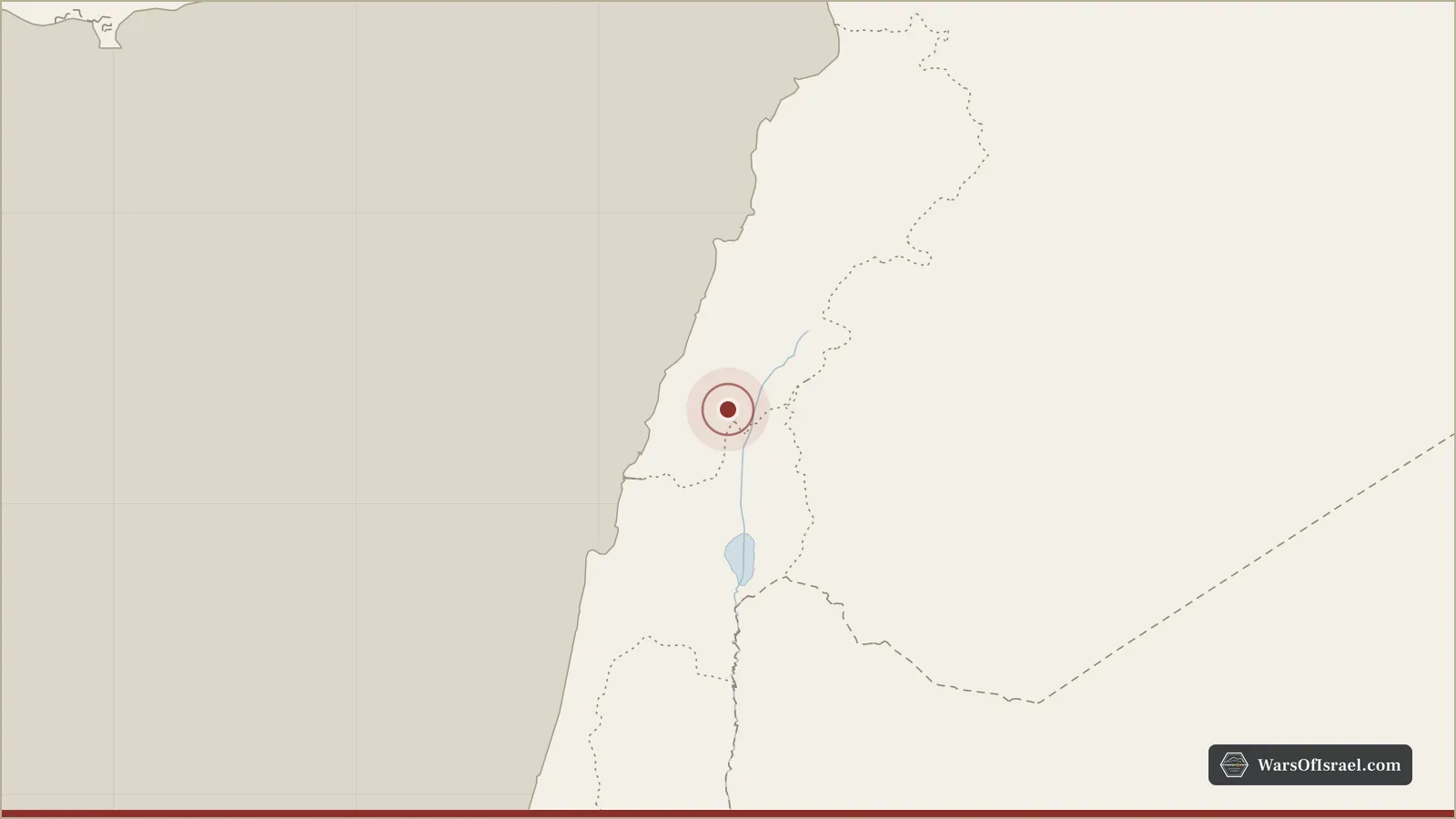
As of November 5, 2026, the IDF says its 188th Brigade has found more than 340 weapons and other military items in the Beaufort Ridge and Litani River areas of southern Lebanon, including a roughly seven-meter-deep shaft inside a civilian home. The announcement followed Chief of Staff Lt. Gen. Eyal Zamir’s November 4 visit to the northern front, where he warned Hezbollah against rebuilding and ordered faster integration of robotic systems into combat units.
The developments concern different parts of the same military effort: searching areas where troops are deployed, preventing Hezbollah from reestablishing capabilities and changing how Israeli forces protect themselves while carrying out those tasks. Neither announcement sets a new withdrawal timetable.
What the 188th Brigade reported finding
The IDF’s November 5 announcement (opens in a new tab) says the brigade, operating under the 36th Division, located RPG rockets, anti-tank missiles, mortar rounds, firearms, explosive devices, grenades and ammunition. The total covers a range of items, rather than 340 weapons of one type.
The military did not give a separate count for each category or specify the dates on which every cache was found. The announcement should therefore be read as a report on the brigade’s operations, not as a claim that all the equipment was seized in one raid on November 5.
Troops also found medical supplies and equipment for staying underground in the shaft discovered inside a home, according to the IDF. Its published account identifies the depth but does not describe the length or connections of any wider tunnel network. The military’s headline says the shaft was destroyed.
The Jerusalem Post and Israel National News carried the announcement separately. Both accounts identify the IDF as the source of the discoveries; they do not constitute independent inspections of the site. Israel National News also reported the army’s stated commitment to the ceasefire agreement while continuing to remove threats.
A brigade rotation within a longer campaign
According to the military, the 188th Brigade moved to Lebanon after approximately one year and eight months of combat activity in Gaza and a period of training. Its current deployment places it in terrain associated with both the Litani and the history of Beaufort.
A separate November 3 report by Israel National News described the 7th Brigade completing eight months of operations in southern Lebanon. Citing the IDF, it put the number of destroyed Hezbollah infrastructure sites at approximately 3,500 and described work with the Yahalom combat engineering unit against underground complexes.
Those figures cover a different formation and a much longer period. They cannot be added to the 188th Brigade’s weapons count to create a combined measure of Hezbollah’s losses. One concerns infrastructure sites; the other concerns weapons and military equipment.
The announcements nevertheless show continuing work against underground facilities and weapons stores within the 2026 Lebanon campaign. The completion of one brigade’s assignment does not, by itself, establish that the wider mission has ended.
Zamir’s warning and the robotics order
On November 4, Zamir visited Northern Command and the 91st Division, toured the Khiam area and met brigade commanders, according to the IDF’s account. He said attempts by Hezbollah to establish infrastructure, strengthen its forces or threaten northern Israeli communities would draw an immediate and forceful response.
The visit also included a demonstration of a combat robotics team model presented by the 769th Brigade and the 869th intelligence collection battalion. Zamir ordered the military to accelerate the integration of robotic capabilities into fighting units.
He described the aim as placing technological and robotic equipment ahead of, and alongside, soldiers to improve effectiveness and protection. The published statement supplies a command priority, but no procurement value, equipment quantities or timetable for deployment across the army.
Zamir also described Hezbollah as serving Iran’s interests at Lebanon’s expense. That is the Israeli chief of staff’s assessment, rather than a conclusion established by the weapons inventory alone.
The distinction between discoveries and disarmament
The November 5 announcement follows an earlier disclosure from the Khiam area. On November 1, The Jerusalem Post reported an IDF account of the 769th Brigade finding firearms and magazines in a civilian house, as well as rockets, ammunition and explosive drones elsewhere. The military also said an explosive-drone storage site had been dismantled.
The new discoveries add specific locations and equipment to the question examined in the earlier report on weapons enforcement in Lebanon. They do not provide a complete inventory of Hezbollah’s remaining arsenal or establish when each item reached the area.
For northern Israeli communities, the stated military objective remains preventing attacks. The evidence released on November 4 and November 5 describes how the IDF says it is pursuing that objective: continued searches, action against underground facilities and a push to expand technological protection for troops. It does not announce that Hezbollah has been fully disarmed or that the border’s longer-term arrangements have been settled.